
Pump for Recumbent Bikes: The Easy Inflation Secret

Quick Summary: Choosing the right pump for your recumbent bike means considering valve type (Schrader or Presta), hose length (longer is often better), pump type (floor or mini), and pressure gauge accuracy. A floor pump with a long hose and dual-head is ideal for home use, while a mini-pump is a good choice for on-the-road repairs. Ensure the pump can reach the recommended PSI for your tires and that it’s compatible with your valve type.
Recumbent bikes offer a comfortable and unique riding experience, but their tire inflation can sometimes be tricky. The unusual frame geometry and tucked-away wheels can make it hard to reach the valves with a standard bike pump. Don’t worry, though! Getting the right pump and knowing how to use it will make inflating your recumbent bike tires a breeze. This guide walks you through everything you need to know to keep your tires properly inflated and your rides smooth and enjoyable. Let’s get started!
Understanding Your Recumbent Bike Tire Needs

Before diving into pump selection, it’s important to understand the specific inflation needs of your recumbent bike. This includes identifying the valve type, tire pressure requirements, and accessibility challenges.
Identifying Your Valve Type
The first step is determining what type of valve your recumbent bike tires use. There are two common types:
- Schrader Valve: Similar to those found on car tires, Schrader valves are wider and have a spring-loaded pin in the center. They are more robust and easier to use.
- Presta Valve: Presta valves are narrower and have a locking nut at the tip. You need to unscrew the nut before inflating and screw it back on afterward. Presta valves are often used on higher-performance bikes because they can handle higher pressures.
Knowing your valve type is crucial because you’ll need a pump that’s compatible with it. Some pumps have dual heads that work with both valve types, while others are specific to one.
Understanding Tire Pressure Requirements
Every tire has a recommended pressure range, usually printed on the sidewall. This range is typically expressed in pounds per square inch (PSI). Make sure to stay within this range to ensure optimal performance, comfort, and safety.
- Too Low Pressure: Riding with underinflated tires can lead to pinch flats (where the tube gets pinched between the tire and the rim), increased rolling resistance (making it harder to pedal), and poor handling.
- Too High Pressure: Overinflating your tires can result in a harsh ride, reduced grip, and even tire blowouts.
Use a pump with an accurate pressure gauge to ensure you’re inflating your tires to the correct PSI. Start with the lower end of the range if you prioritize comfort or are riding on rough surfaces, and increase the pressure if you want a faster, more efficient ride on smooth pavement.
Addressing Accessibility Challenges
Recumbent bikes often have unique frame designs that can make it challenging to access the tire valves. The wheels might be tucked away, or the valve stems might be at an awkward angle. This means you’ll need a pump with a hose long enough to reach the valve comfortably.
Types of Bike Pumps for Recumbent Bikes

Now that you understand your recumbent bike’s tire needs, let’s explore the different types of bike pumps available.
Floor Pumps
Floor pumps, also known as track pumps, are the most common type of pump for home use. They are efficient, stable, and typically have an accurate pressure gauge. Look for these features when choosing a floor pump for your recumbent bike:
- Long Hose: A longer hose is essential for reaching the valves on recumbent bikes. Aim for a hose that’s at least 36 inches long.
- Dual Head: A pump head that works with both Schrader and Presta valves is convenient. Some pumps have a switch to select the valve type, while others automatically adjust.
- Accurate Gauge: An easy-to-read gauge is crucial for inflating your tires to the correct pressure. Digital gauges are more precise, but analog gauges are generally more durable.
- Stable Base: A wide, stable base will prevent the pump from tipping over while you’re using it.
Here’s an example of Floor Pump Features:
| Feature | Description | Benefit |
|---|---|---|
| Long Hose | At least 36 inches in length | Easier access to valves on recumbent bikes |
| Dual Head | Compatible with both Schrader and Presta valves | Versatile and convenient |
| Accurate Gauge | Easy-to-read digital or analog gauge | Precise inflation control |
| Stable Base | Wide and sturdy base | Prevents tipping during use |
Mini-Pumps
Mini-pumps are small, portable pumps that you can carry with you on your rides. They are not as efficient as floor pumps, but they are essential for fixing flat tires on the road. Consider these factors when selecting a mini-pump for your recumbent bike:
- Length and Weight: Choose a pump that’s compact and lightweight so it won’t weigh you down.
- Hose: A mini-pump with a short, flexible hose is easier to use than one that attaches directly to the valve.
- Valve Compatibility: Make sure the pump is compatible with your valve type. Some mini-pumps have reversible heads for Schrader and Presta valves.
- Inflation Power: Look for a pump that can inflate your tires to a reasonable pressure (at least 80 PSI) without requiring excessive effort.
CO2 Inflators
CO2 inflators use cartridges of compressed carbon dioxide to quickly inflate tires. They are lightweight and convenient, but they have some drawbacks:
- One-Time Use: Each CO2 cartridge can only inflate one tire.
- Cost: CO2 cartridges can be expensive over time.
- Waste: Empty CO2 cartridges need to be disposed of properly.
If you choose to use a CO2 inflator, practice using it at home before relying on it on the road. You’ll also need to carry extra cartridges and a way to protect your hands from the cold CO2.
Electric Pumps
Electric pumps are a relatively new option for inflating bike tires. They are powered by a rechargeable battery and can inflate tires quickly and easily. Electric pumps are a good choice if you have difficulty using a manual pump or if you want to inflate multiple tires quickly.
- Portability: Electric pumps are generally small and lightweight, making them easy to carry with you.
- Ease of Use: Simply attach the pump to the valve and press a button to inflate the tire.
- Inflation Speed: Electric pumps can inflate tires much faster than manual pumps.
- Battery Life: Make sure the pump has enough battery life to inflate your tires multiple times.
Step-by-Step Guide to Inflating Recumbent Bike Tires

Now that you’ve chosen the right pump, let’s walk through the process of inflating your recumbent bike tires.
Step 1: Prepare Your Bike and Pump
- Position Your Bike: Place your recumbent bike on a stable surface.
- Prepare the Valve: For Presta valves, unscrew the locking nut at the tip.
- Check the Pump Head: Make sure the pump head is set to the correct valve type (Schrader or Presta).
Step 2: Attach the Pump Head to the Valve
- Firmly Attach: Press the pump head onto the valve, ensuring a tight seal. You should not hear any air leaking.
- Lock the Lever (if applicable): Some pump heads have a lever that locks the head onto the valve. Engage the lever to ensure a secure connection.
Step 3: Inflate the Tire
- Start Pumping: Begin pumping in a smooth, steady motion.
- Monitor the Gauge: Keep an eye on the pressure gauge and stop when you reach the desired PSI.
- Listen for Leaks: If you hear air leaking, check the connection between the pump head and the valve.
Step 4: Remove the Pump Head
- Release the Lever (if applicable): Disengage the locking lever on the pump head.
- Carefully Remove: Gently pull the pump head straight off the valve.
- Close the Valve: For Presta valves, screw the locking nut back on.
Step 5: Check the Tire Pressure
- Use a Gauge: Use a separate pressure gauge to double-check the tire pressure. This is especially important if your pump’s gauge is not very accurate.
- Adjust as Needed: Add or release air as needed to reach the desired PSI.
Tips for Maintaining Your Bike Pump

To keep your bike pump in good working condition, follow these maintenance tips:
- Clean the Pump Head: Regularly clean the pump head to remove dirt and debris that can interfere with the seal.
- Lubricate the Piston: Apply a small amount of silicone grease to the piston of your floor pump to keep it moving smoothly.
- Check the Hose: Inspect the hose for cracks or leaks. Replace the hose if necessary.
- Store Properly: Store your pump in a dry place to prevent rust and corrosion.
Here’s an example of Bike Pump Maintenance Schedule:
| Maintenance Task | Frequency | Description |
|---|---|---|
| Clean Pump Head | Monthly | Remove dirt and debris to ensure a good seal. |
| Lubricate Piston | Every 3-6 months | Apply silicone grease for smooth operation. |
| Inspect Hose | Monthly | Check for cracks or leaks. Replace if needed. |
| Proper Storage | After each use | Store in a dry place to prevent rust. |
Troubleshooting Common Pumping Problems
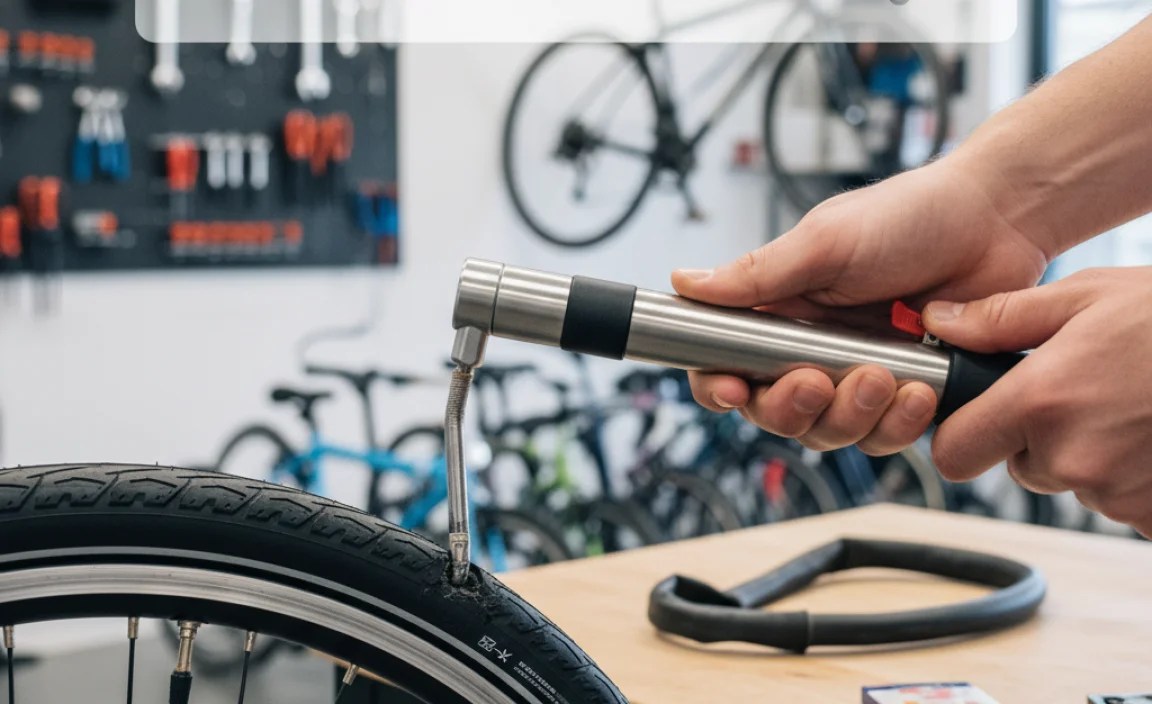
Even with the right pump and technique, you might encounter some problems. Here are some common issues and how to solve them:
- Air Leaking Around the Valve:
- Make sure the pump head is securely attached to the valve.
- Check the pump head for wear or damage.
- Ensure the valve core is tight. You may need a valve core tool to tighten it.
- Pump Not Inflating the Tire:
- Make sure the pump head is set to the correct valve type.
- Check the hose for kinks or blockages.
- Ensure the pump is working properly by testing it on another tire.
- Gauge Not Working:
- Check the gauge for damage.
- Replace the gauge if necessary.
- Use a separate pressure gauge to check the tire pressure.
Recommended Pumps for Recumbent Bikes
Here are a few specific pump recommendations to get you started. These pumps are known for their quality, durability, and compatibility with recumbent bikes:
- Topeak Joe Blow Sport III Floor Pump: A reliable floor pump with a long hose, dual head, and accurate gauge.
- Lezyne Micro Floor Drive HP Mini Pump: A compact and efficient mini-pump with a footpad for added stability.
- Serfas E-Lecta Electric Pump: A convenient electric pump that can quickly inflate tires to the desired pressure.
FAQ About Pumps for Recumbent Bikes
What kind of pump do I need for a recumbent bike?
You’ll want a pump with a long hose (at least 36 inches) to easily reach the valves. A floor pump with a dual head (Schrader and Presta) is ideal for home use, while a mini-pump is great for on-the-road repairs.
How do I know what PSI to inflate my recumbent bike tires to?
The recommended PSI range is printed on the sidewall of your tires. Stay within this range for optimal performance and safety.
Can I use a regular bike pump for my recumbent bike?
Yes, but you might need an extension or adapter to reach the valves comfortably, especially if your recumbent bike has tucked-away wheels. A pump with a longer hose is generally more convenient.
What is the difference between Schrader and Presta valves?
Schrader valves are wider and similar to car tire valves, while Presta valves are narrower and have a locking nut at the tip. Schrader valves are more robust, while Presta valves are often used on high-performance bikes.
How often should I inflate my recumbent bike tires?
Check your tire pressure before each ride and inflate as needed. Tires can lose pressure over time, especially in colder weather. Aim to keep your tires within the recommended PSI range.
What should I do if my pump won’t attach to the valve properly?
Make sure the pump head is set to the correct valve type (Schrader or Presta). Also, check the pump head and valve for any damage or debris that might be interfering with the connection.
Is it better to use a floor pump or a mini-pump for my recumbent bike?
A floor pump is best for home use because it’s more efficient and has an accurate gauge. A mini-pump is essential for on-the-road repairs when you need a portable option.
Conclusion
Choosing the right pump for your recumbent bike and knowing how to use it properly can make a big difference in your riding experience. By understanding your valve type, tire pressure requirements, and the different types of pumps available, you can keep your tires properly inflated and enjoy smooth, comfortable rides. Don’t forget to maintain your pump and troubleshoot any common problems to ensure it lasts for years to come. Happy cycling!


