
Pump Gauge at Base: Is Yours Accurate?

**Quick Summary:** Having a pump gauge at the base makes it easier to read pressure while inflating your tires. This design improves stability, reduces strain on the hose, and gives you a clear view of the pressure readings without bending over. It’s a practical feature for accurate and comfortable tire inflation.
Tire pressure is super important for a smooth and safe bike ride. But let’s face it, trying to read a tiny gauge up near the handle of your pump while you’re pumping away can be a real pain. You’re wobbling around, the hose is bending, and you’re probably squinting to see the numbers. It’s frustrating! That’s where a pump gauge at the base comes in handy.
A base-mounted gauge makes checking your tire pressure much simpler and more accurate. It’s all about convenience and getting your tires inflated just right. Ready to learn why this feature is so great and how it can make your cycling life easier? Let’s dive in!
Why a Pump Gauge at the Base Matters

Having the gauge at the base of your bike pump isn’t just a matter of looks. It offers some real advantages that can make your life as a cyclist much easier. Let’s explore why this design is so practical.
Improved Visibility
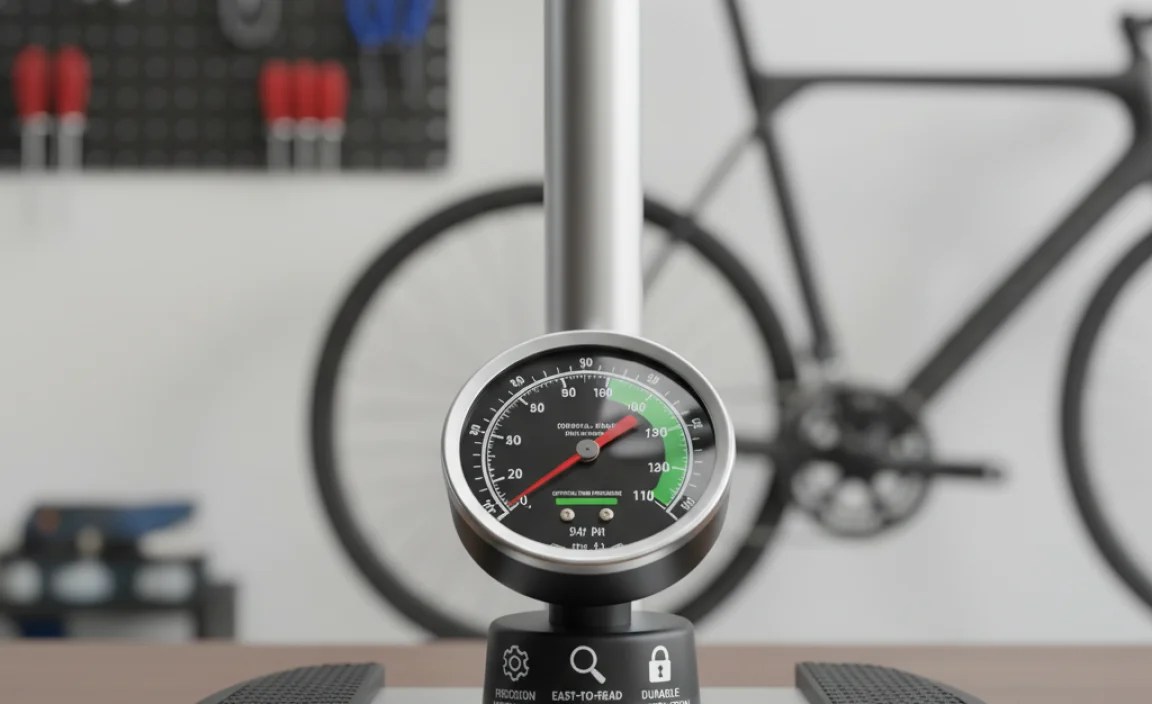
One of the biggest benefits is simply being able to see the gauge clearly. When the gauge is down near the floor, you don’t have to hunch over or strain your neck to read it. This is especially helpful if you wear glasses or have trouble seeing small numbers.
Enhanced Stability
With the gauge at the base, the pump tends to be more stable. The wider base provides a solid foundation, reducing the chance of the pump tipping over while you’re using it. This is especially important when you’re trying to reach higher pressures.
Reduced Hose Stress
Locating the gauge at the base can also reduce stress on the hose. When the gauge is up near the handle, the hose has to bend and twist as you pump. A base-mounted gauge minimizes this, helping to prolong the life of your pump hose.
More Accurate Readings
Because the pump is more stable and the hose isn’t being stressed, you’re more likely to get accurate pressure readings. This is crucial for ensuring your tires are properly inflated, which affects your ride quality, rolling resistance, and even the risk of flats.
Key Features to Look For
When you’re shopping for a bike pump with a gauge at the base, there are a few key features to keep in mind. These will help you choose a pump that’s not only easy to use but also durable and accurate.
Gauge Size and Clarity
The size of the gauge is important. Look for a gauge that’s large enough to read easily, with clear markings and numbers. Some gauges also have a magnifying lens to make the readings even clearer.
Gauge Accuracy
Not all gauges are created equal. Some are more accurate than others. Look for pumps that advertise a high level of accuracy, such as +/- 1 PSI. You can also check reviews to see what other users say about the gauge’s accuracy.
Base Material and Stability
The base of the pump should be made from a sturdy material, such as steel or aluminum. A wide base will provide better stability. Some pumps also have rubber feet to prevent them from slipping on smooth surfaces.
Hose Length and Material
A longer hose gives you more freedom to move around while you’re pumping. The hose should also be made from a durable material that can withstand high pressures without cracking or leaking. Braided hoses are often a good choice.
Valve Compatibility
Make sure the pump head is compatible with both Presta and Schrader valves. Some pumps have a dual head that can be switched between the two types of valves. Others have a single head that automatically adjusts to fit either type.
Types of Bike Pumps with Base Gauges

There are several types of bike pumps that feature a gauge at the base. Each type has its own strengths and weaknesses, so it’s important to choose the one that best suits your needs.
Floor Pumps
Floor pumps are the most common type of bike pump for home use. They’re designed to be used while standing, and they provide plenty of leverage for inflating tires to high pressures. Most floor pumps have a gauge at the base for easy reading.
Pros:
- Easy to use
- Stable and durable
- Can inflate tires to high pressures
- Often have features like dual-head valves and comfortable handles
Cons:
- Bulky and not portable
- Can be more expensive than other types of pumps
Mini Floor Pumps
Mini floor pumps are a smaller, more portable version of floor pumps. They still have a foot base and a handle, but they’re much more compact. Some mini floor pumps also have a gauge at the base, although it may be smaller and harder to read than on a full-size floor pump.
Pros:
- More portable than full-size floor pumps
- Still relatively easy to use
- Can inflate tires to decent pressures
Cons:
- Can be less stable than full-size floor pumps
- May require more effort to inflate tires
- Gauge may be small and harder to read
High-Pressure Pumps
High-pressure pumps are designed for inflating tires to very high pressures, typically for road bikes. They often have a smaller barrel and a longer stroke, which makes it easier to reach those high pressures. Some high-pressure pumps have a gauge at the base, but many have it located near the handle.
Pros:
- Can inflate tires to very high pressures
- Often have features like pressure relief valves
Cons:
- Can be more difficult to use than other types of pumps
- May not be suitable for all types of tires
- Gauge may not be as accurate at lower pressures
How to Use a Bike Pump with a Base Gauge

Using a bike pump with a gauge at the base is pretty straightforward. Here’s a step-by-step guide to help you get started.
- Prepare Your Tire: Make sure your tire valve is accessible and free of dirt or debris. Remove the valve cap if necessary.
- Attach the Pump Head: Firmly attach the pump head to your tire valve. Make sure it’s securely connected to prevent air leaks. Some pumps have a lever that you need to flip to lock the head in place.
- Position Yourself: Stand with your feet on the base of the pump for stability. Make sure you have a clear view of the gauge.
- Start Pumping: Begin pumping the handle up and down in a smooth, consistent motion. Watch the gauge as the pressure increases.
- Monitor the Pressure: Keep an eye on the gauge as you pump. Stop when you reach the desired pressure. Refer to the tire sidewall for the recommended pressure range.
- Remove the Pump Head: Carefully remove the pump head from the tire valve. Some air may escape, but this is normal.
- Check the Pressure: Use a separate tire pressure gauge to double-check the pressure. This will ensure accuracy and help you avoid over- or under-inflating your tires.
- Replace the Valve Cap: Replace the valve cap to protect the valve from dirt and debris.
Troubleshooting Common Issues
Even with a good pump, you might run into some issues from time to time. Here are a few common problems and how to fix them.
Air Leaking Around the Valve
If you hear air leaking around the valve when you’re pumping, it could be due to a loose connection or a worn-out valve. Try reattaching the pump head and making sure it’s securely locked in place. If that doesn’t work, you may need to replace the valve or the pump head.
Gauge Not Reading Accurately
If you suspect your gauge isn’t reading accurately, try comparing it to another gauge. If there’s a significant difference, the gauge may be faulty and need to be replaced. You can also try calibrating the gauge if your pump has that feature.
Pump Handle is Hard to Push
If the pump handle is hard to push, it could be due to a lack of lubrication or a worn-out seal. Try lubricating the pump with a silicone-based lubricant. If that doesn’t help, you may need to replace the seals or other internal parts.
Pump Not Building Pressure
If the pump isn’t building pressure, it could be due to a leak in the hose or a faulty check valve. Inspect the hose for cracks or damage. If the hose is okay, the check valve may need to be cleaned or replaced.
Maintaining Your Bike Pump
To keep your bike pump in good working condition, it’s important to perform regular maintenance. Here are a few tips to help you keep your pump running smoothly.
- Clean the Pump Regularly: Wipe down the pump with a damp cloth to remove dirt and grime. Pay special attention to the pump head and the base.
- Lubricate Moving Parts: Use a silicone-based lubricant to lubricate the pump’s moving parts, such as the handle and the piston. This will help to keep the pump working smoothly and prevent wear and tear.
- Inspect the Hose: Regularly inspect the hose for cracks or damage. Replace the hose if necessary.
- Check the Gauge: Periodically check the gauge for accuracy. If it’s not reading accurately, have it calibrated or replaced.
- Store the Pump Properly: Store the pump in a dry, protected location to prevent rust and corrosion.
Recommended Products
Here’s a table of recommended products for bike pumps with a gauge at the base. These are highly-rated and reliable options available on the market:
| Product Name | Key Features | Pros | Cons |
|---|---|---|---|
| Topeak JoeBlow Sport III | Base-mounted gauge, dual head, steel barrel | Durable, easy to use, accurate gauge | Can be slightly bulky |
| Lezyne Classic Floor Drive | Aluminum construction, accurate gauge, long hose | High quality, stable, efficient | More expensive |
| Serfas TCPG | Large gauge, comfortable handle, durable base | Good value, reliable, easy to read | Not as high-end as other models |
| Park Tool PFP-8 | Durable construction, base-mounted gauge, stable | Trusted brand, reliable, easy to maintain | Basic features |
FAQ
Why is tire pressure important for cycling?
Tire pressure affects rolling resistance, comfort, and the risk of flats. Proper inflation ensures a smoother, faster, and safer ride.
How often should I check my tire pressure?
Ideally, check your tire pressure before every ride. At a minimum, check it once a week to maintain optimal performance.
What is the correct tire pressure for my bike?
The recommended tire pressure is usually printed on the sidewall of your tire. Follow those guidelines, but also consider your weight and riding conditions.
Can I use a car tire gauge for my bike tires?
While you can, bike tire gauges are more accurate for the lower pressures used in bicycle tires. Car tire gauges are designed for higher pressures.
What’s the difference between Presta and Schrader valves?
Presta valves are narrow and have a locking nut, commonly found on road bikes. Schrader valves are wider, like those on car tires, and are common on mountain and hybrid bikes.
How do I convert PSI to BAR?
To convert PSI to BAR, divide the PSI value by 14.5. For example, 58 PSI is approximately 4 BAR.
What should I do if I over-inflate my tires?
If you over-inflate your tires, carefully release some air until you reach the recommended pressure. Use a gauge to ensure accuracy.
Conclusion
A bike pump with a gauge at the base is a simple but effective upgrade that can make a big difference in your cycling experience. It improves visibility, enhances stability, and helps you achieve more accurate pressure readings. By choosing the right pump and keeping it properly maintained, you can ensure your tires are always inflated to the perfect pressure, giving you a smoother, faster, and safer ride. So, invest in a good pump and enjoy the benefits of properly inflated tires on every adventure!


