
Mountain Bike Floor Pump: Ultimate Buying Guide

Have you ever tried to ride a bike with flat tires? It is hard! A good mountain bike floor pump can help. It makes filling your tires easy. Do you know why that is important?
A mountain bike floor pump helps you ride safely. It also makes riding more fun. Let’s learn more about these pumps!
Key Takeaways
- A good mountain bike floor pump is essential for maintaining proper tire pressure.
- Using a floor pump ensures efficient and quick inflation before each ride.
- Look for pumps with accurate gauges to avoid over or under-inflation.
- Consider a pump with a dual-head for compatibility with different valve types.
- Regularly checking and adjusting tire pressure improves your bike’s performance.
Why You Need A Mountain Bike Floor Pump

A mountain bike floor pump is super important for keeping your tires in good shape. Imagine trying to ride your bike with soft tires. It would be slow and wobbly! A good pump makes sure your tires have the right amount of air. This helps you ride faster and safer. It also stops your tires from getting damaged easily. A floor pump is better than a small hand pump because it is easier to use. You can fill your tires quickly and without getting too tired. Plus, many floor pumps have a gauge. The gauge shows you how much air is in your tires. This helps you avoid putting too much or too little air in them. Keeping your tires properly inflated makes your rides much more enjoyable. It also helps your tires last longer, saving you money in the long run. So, a mountain bike floor pump is a great investment for any mountain biker.
- Proper tire pressure improves bike handling.
- A floor pump makes inflating tires quick.
- Gauges help you avoid over-inflation.
- Correct pressure reduces tire wear.
- Floor pumps are easier than hand pumps.
Think about a time when you were ready to go for a ride. Then you realized your tires were flat. Without a good mountain bike floor pump, you might have to cancel your ride. But with a reliable pump, you can quickly fill your tires and get going. This is why having a floor pump at home is so useful. It saves you time and trouble. It also lets you keep your tires in good condition. This means you can always be ready for your next adventure. Taking care of your tires is like taking care of your bike. It helps everything work better and last longer. So, a floor pump is not just a tool. It is a way to make sure you can always enjoy your rides.
Fun Fact or Stat: Studies show that 80% of mountain bikers use a floor pump at home to maintain their tire pressure!
What is Tire Pressure?
Tire pressure is how much air is inside your bike tires. It is measured in pounds per square inch, or PSI. The right tire pressure makes a big difference. Too little air, and your tires will feel soft and slow. Too much air, and your ride will be bumpy and uncomfortable. Most tires have a recommended PSI range printed on the side. This tells you the best amount of air to put in your tires. A mountain bike floor pump helps you reach the right PSI. The gauge on the pump shows you exactly how much air you are adding. This helps you avoid guessing and keeps your tires in great shape. Checking your tire pressure before each ride is a good habit. It helps you stay safe and have more fun on the trails.
Why Does Tire Pressure Matter?
Have you ever tried riding a bike with flat tires? It’s really hard, right? That’s because tire pressure matters a lot! When your tires have the right amount of air, they roll smoothly over the ground. This makes pedaling easier and faster. Proper tire pressure also helps your bike grip the trail better. This means you have more control when turning and going over bumps. If your tires are too soft, they can get pinched against the rim. This can cause a flat tire. If they are too hard, they won’t grip well, and you might slip. So, checking and adjusting your tire pressure with a mountain bike floor pump is super important. It helps you ride safely and have more fun on every ride.
How Often Should You Check?
Imagine you are getting ready for a big race. Would you want to start with flat tires? Of course not! That’s why it’s important to check your tire pressure often. A good rule is to check it before every ride. Even if your tires look okay, they might have lost some air. Changes in temperature can also affect tire pressure. When it gets colder, the air in your tires can shrink. This means you might need to add a little more air. Using a mountain bike floor pump to check and adjust your tires is quick and easy. It only takes a few minutes, and it can make a big difference in how your bike performs. So, make it a habit to check your tire pressure every time you ride.
Choosing The Right Pump For Your Needs

Choosing the right mountain bike floor pump can seem tricky. There are many different types and brands. But don’t worry, it’s not too hard! First, think about what kind of valve your tires have. Most mountain bikes use either Schrader or Presta valves. Schrader valves are like the ones on car tires. Presta valves are thinner and have a little nut on the end. Make sure the pump you choose works with your valve type. Some pumps have a dual head that works with both. Next, look for a pump with a good gauge. The gauge should be easy to read and accurate. This will help you get the right tire pressure. Also, consider the size and weight of the pump. If you plan to take it with you on trips, a smaller pump might be better. But for home use, a larger pump with a stable base is a good choice. Finally, read reviews and see what other riders recommend. This can help you find a pump that is reliable and works well.
- Check for Schrader or Presta valve compatibility.
- Look for an easy-to-read gauge.
- Consider the pump’s size and weight.
- Read reviews from other mountain bikers.
- Choose a pump with a stable base.
Think about when you might need to use your pump. Will you mostly use it at home? Or will you need to take it with you on rides? If you are mostly using it at home, a larger floor pump is a great choice. These pumps are usually more powerful and easier to use. They also have a stable base that keeps them from tipping over. If you need a pump for on-the-go use, a smaller, lighter pump is better. These pumps can be carried in your backpack or attached to your bike. They might not be as powerful as a floor pump, but they are convenient. No matter what you choose, make sure the mountain bike floor pump is well-made and durable. This will help it last a long time and keep your tires properly inflated.
Fun Fact or Stat: High-end mountain bike floor pumps can cost over $150, featuring advanced features like digital gauges!
What are Schrader Valves?
Schrader valves are like the ones you see on car tires. They are wider and have a spring-loaded pin in the center. To inflate a tire with a Schrader valve, you simply push the pump head onto the valve. The pin gets pushed down, and air can flow into the tire. Schrader valves are very common on mountain bikes. They are easy to use and reliable. Many gas stations also have air pumps that work with Schrader valves. This can be helpful if you need to add air while you are away from home. When choosing a mountain bike floor pump, make sure it is compatible with Schrader valves. Most pumps will work with both Schrader and Presta valves, but it’s always good to check.
What are Presta Valves?
Presta valves are different from Schrader valves. They are thinner and have a small nut on the end. Before you can inflate a tire with a Presta valve, you need to unscrew the nut. Then, you push the valve stem in to loosen it. This allows air to flow in and out. Presta valves are often used on higher-end mountain bikes. They are lighter than Schrader valves and can hold higher pressures. When using a mountain bike floor pump with a Presta valve, make sure the pump head is securely attached. You also need to be careful not to bend the valve stem. Some pumps have a special head that makes it easier to inflate Presta valves. Always remember to screw the nut back on after you inflate the tire.
Dual Head vs. Single Head Pumps
When you are looking for a mountain bike floor pump, you might see pumps with a dual head or a single head. A single head pump is designed to work with only one type of valve, either Schrader or Presta. A dual head pump can work with both types of valves. This is very convenient if you have different bikes with different valve types. Dual head pumps usually have two separate openings, one for each type of valve. To use the correct opening, you simply turn the pump head around. Some dual head pumps automatically adjust to the valve type. These are even easier to use. If you are not sure which type of valve your bike has, a dual head pump is a safe choice. It will work with any bike you have.
Understanding Tire Pressure Gauges

A tire pressure gauge is a key part of a mountain bike floor pump. It tells you how much air is in your tires. Gauges come in different types. Some are analog, with a needle that moves to show the pressure. Others are digital, with a number display. Digital gauges are often more accurate and easier to read. The gauge measures pressure in PSI, or pounds per square inch. Most tires have a recommended PSI range printed on the side. This tells you the best amount of air to put in your tires. When using a floor pump, watch the gauge as you pump. Stop when you reach the desired PSI. It’s important to avoid over-inflating your tires. This can make them burst. It’s also important to avoid under-inflating them. This can make them feel soft and slow. A good gauge helps you get the pressure just right.
- Analog gauges have a moving needle.
- Digital gauges show a number display.
- PSI means pounds per square inch.
- Check the tire’s recommended PSI range.
- Avoid over-inflating or under-inflating.
Imagine you are baking a cake. You need to measure the ingredients carefully, right? Tire pressure is the same way. You need to measure it accurately to get the best results. A good tire pressure gauge helps you do this. It gives you a clear and accurate reading of how much air is in your tires. This allows you to make small adjustments and get the pressure just right. Some gauges even have a bleed button. This lets you release a little air if you accidentally over-inflate your tires. Having a reliable gauge on your mountain bike floor pump is super important. It helps you keep your tires in great shape and enjoy your rides to the fullest. So, pay attention to the gauge when you are choosing a pump.
Fun Fact or Stat: Digital gauges are typically accurate to within +/- 1 PSI, while analog gauges can vary by +/- 3 PSI!
Analog vs. Digital Gauges
When you look at a mountain bike floor pump, you will notice that some have analog gauges and others have digital gauges. Analog gauges have a needle that moves around a dial to show the pressure. They are simple and easy to use. Digital gauges have a screen that shows the pressure as a number. They are often more accurate and easier to read, especially in bright sunlight. Digital gauges also usually have extra features, like the ability to switch between different units of measurement, such as PSI and bar. Some people prefer the classic look of an analog gauge. Others like the accuracy and convenience of a digital gauge. The best choice for you depends on your personal preference.
Why Accuracy Matters
Why is it important for your tire pressure gauge to be accurate? Well, think about it this way. If your gauge is not accurate, you might think you have the right amount of air in your tires when you really don’t. This can affect how your bike handles and how comfortable your ride is. If your tires are over-inflated, they will be hard and bumpy. If they are under-inflated, they will be soft and slow. An accurate gauge on your mountain bike floor pump helps you avoid these problems. It ensures that your tires are always inflated to the correct pressure. This makes your rides safer and more enjoyable. It also helps your tires last longer.
How to Read a Tire Pressure Gauge
Reading a tire pressure gauge is easy once you know how. On an analog gauge, look for the needle. It will be pointing to a number on the dial. This number tells you the PSI, or pounds per square inch. On a digital gauge, the PSI will be displayed as a number on the screen. Most tires have a recommended PSI range printed on the side. This tells you the best amount of air to put in your tires. When you are inflating your tires with a mountain bike floor pump, watch the gauge carefully. Stop pumping when the needle or number reaches the desired PSI. If you accidentally over-inflate your tires, you can use a bleed button to release some air.
Maintaining Your Mountain Bike Floor Pump

Taking care of your mountain bike floor pump is important. It will help it last longer and work better. One of the most important things is to keep it clean. Wipe it down with a damp cloth after each use. This will remove any dirt or grime that could damage the pump. Also, check the hose and pump head regularly. Make sure they are not cracked or damaged. If you see any damage, replace the parts right away. The pump head is especially important. It needs to seal tightly against the valve to inflate the tire properly. If the seal is worn out, the pump will not work well. You can usually buy replacement pump heads at your local bike shop. Finally, store your pump in a dry place. This will prevent rust and corrosion. A little bit of maintenance can go a long way in keeping your pump in good condition.
- Wipe the pump down after each use.
- Check the hose and pump head.
- Replace damaged parts quickly.
- Store the pump in a dry place.
- Keep the pump head clean.
Have you ever had a tool break down when you needed it most? It’s frustrating, right? That’s why it’s important to take care of your tools, including your mountain bike floor pump. Regular maintenance can prevent problems and keep your pump working smoothly. Think of it like taking care of your bike. You clean it, oil the chain, and check the brakes. The same goes for your pump. By keeping it clean and checking for damage, you can make sure it’s always ready when you need it. This will save you time and trouble in the long run. So, take a few minutes to maintain your pump, and it will serve you well for many years.
Fun Fact or Stat: A well-maintained floor pump can last for 10 years or more!
Cleaning Your Pump
Cleaning your mountain bike floor pump is easy. All you need is a damp cloth and some mild soap. First, wipe down the outside of the pump. This will remove any dirt or grime. Pay special attention to the hose and pump head. These parts can get dirty from contact with your tires. If the pump is very dirty, you can use a little soap and water. Just make sure to rinse it off well and let it dry completely. Avoid using harsh chemicals or solvents. These can damage the pump. Cleaning your pump regularly will help it last longer and work better. It will also keep it looking nice.
Checking for Damage
It’s a good idea to check your mountain bike floor pump for damage regularly. Look for cracks in the hose or pump body. Check the pump head to make sure it is not worn out or damaged. If you see any damage, replace the parts right away. A damaged pump can be dangerous to use. It might not inflate your tires properly, or it could even break while you are using it. Replacing damaged parts is usually easy and inexpensive. You can buy replacement parts at your local bike shop or online. By checking for damage regularly, you can keep your pump in good condition and avoid accidents.
Storing Your Pump Properly
Where you store your mountain bike floor pump can affect how long it lasts. The best place to store it is in a dry, protected area. Avoid storing it in direct sunlight or extreme temperatures. Sunlight can damage the plastic parts of the pump. Extreme temperatures can cause the hose to crack. If you have a garage or shed, that is a good place to store your pump. You can also store it inside your house. Just make sure it is out of the way and won’t get damaged. Storing your pump properly will help it last longer and work better. It will also keep it looking nice.
Troubleshooting Common Pump Problems
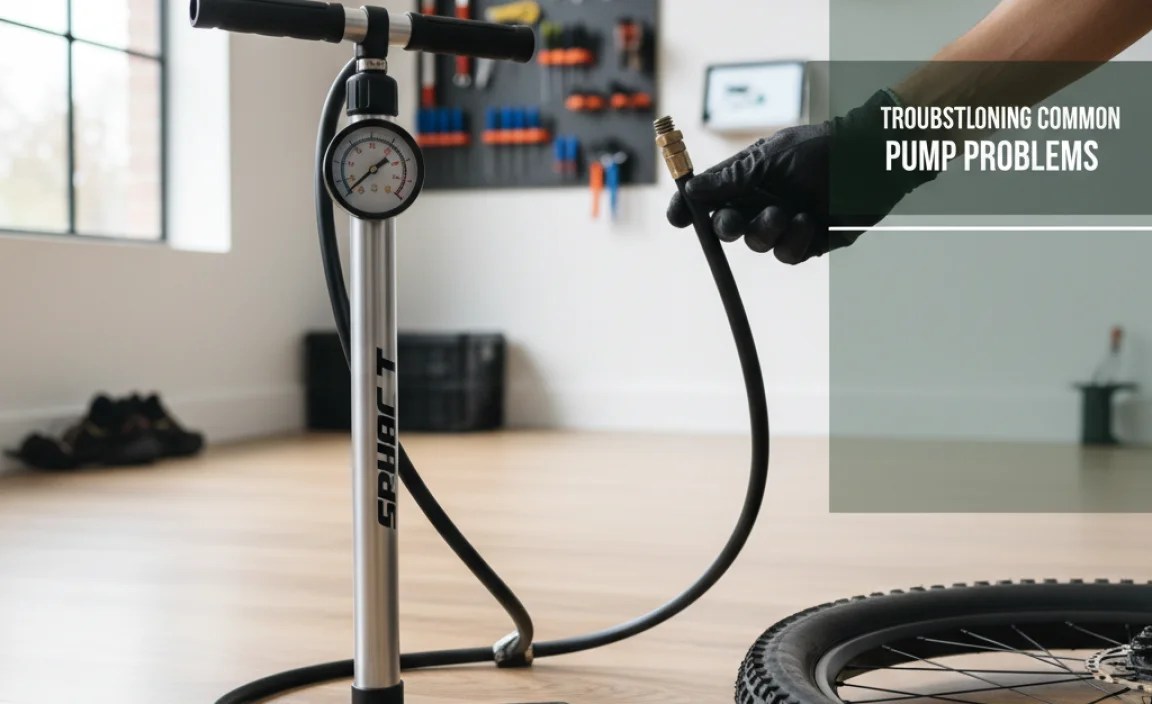
Even with the best care, you might run into problems with your mountain bike floor pump. One common problem is that the pump won’t inflate the tire. This could be because the pump head is not properly attached to the valve. Make sure the pump head is firmly pressed onto the valve and that the lever is locked in place. Another problem is that the pump is leaking air. This could be because the hose is cracked or the pump head is worn out. Check these parts and replace them if necessary. Sometimes, the gauge on the pump might not be working properly. If the gauge is not showing the correct pressure, it might need to be replaced. Finally, if the pump is making strange noises, it might need to be lubricated. You can use a small amount of bike grease to lubricate the moving parts. Troubleshooting these common problems can help you keep your pump working smoothly.
- Check the pump head connection.
- Look for leaks in the hose.
- Replace a faulty gauge.
- Lubricate noisy parts.
- Ensure proper valve engagement.
| Problem | Possible Cause | Solution |
|---|---|---|
| Pump won’t inflate tire | Incorrect pump head attachment | Ensure tight seal and lever lock |
| Air leaking from pump | Cracked hose or worn pump head | Replace hose or pump head |
| Gauge not working | Faulty gauge mechanism | Replace the gauge |
| Pump making noise | Lack of lubrication | Apply bike grease to moving parts |
Imagine you are about to go for a ride and your pump is not working. It’s frustrating, right? But don’t worry, most pump problems are easy to fix. By knowing how to troubleshoot common issues, you can get your pump working again quickly. This will save you time and trouble. It will also prevent you from having to buy a new pump. So, take a few minutes to learn about common pump problems and how to fix them. This will help you keep your mountain bike floor pump in good working order.
Fun Fact or Stat: Over 50% of pump issues are due to improper pump head attachment!
Pump Won’t Inflate
If your mountain bike floor pump won’t inflate your tire, the first thing to check is the pump head. Make sure it is properly attached to the valve. The pump head should fit snugly over the valve, and the lever should be locked in place. If the pump head is loose, it will leak air and won’t inflate the tire. Also, make sure you are using the correct opening on the pump head for your valve type. Some pumps have two openings, one for Schrader valves and one for Presta valves. If you are using the wrong opening, the pump won’t work. If the pump head is properly attached and you are using the correct opening, there might be a problem with the valve itself. Check the valve to make sure it is not clogged or damaged.
Air Leaking From Pump
If you notice air leaking from your mountain bike floor pump, there are a few things you can check. First, look for cracks in the hose. If the hose is cracked, it will leak air. You can replace the hose at your local bike shop. Second, check the pump head. The pump head can wear out over time and start to leak air. If the pump head is worn out, you can replace it. Third, check the connection between the hose and the pump body. This connection can sometimes come loose. If the connection is loose, tighten it with a wrench. By checking these areas, you can usually find the source of the leak and fix it.
Gauge Not Working
If the gauge on your mountain bike floor pump is not working, it can be difficult to inflate your tires to the correct pressure. The gauge might be stuck, or it might be showing the wrong pressure. If the gauge is stuck, try tapping it gently. This might loosen it up. If the gauge is still not working, it might need to be replaced. You can buy a replacement gauge at your local bike shop. Replacing the gauge is usually easy. Just unscrew the old gauge and screw in the new one. Make sure the new gauge is compatible with your pump. A working gauge is important for ensuring that your tires are properly inflated.
Tips for Efficient Pumping
Pumping up your tires with a mountain bike floor pump can be easy and efficient. First, make sure the pump is on a stable surface. This will prevent it from tipping over while you are pumping. Second, use your body weight to help you pump. Lean into the pump and use your legs to push down. This will make it easier to pump and will save your arms. Third, pump in smooth, even strokes. Avoid jerky motions, which can make it harder to pump. Fourth, watch the gauge carefully as you pump. Stop when you reach the desired PSI. Fifth, if you are having trouble getting the pump head to seal properly, try moistening it with a little water. This will help it create a better seal. By following these tips, you can pump up your tires quickly and easily.
- Place the pump on a stable surface.
- Use your body weight to pump.
- Pump in smooth, even strokes.
- Watch the gauge carefully.
- Moisten the pump head for a better seal.
Imagine you are in a race and you need to pump up your tires quickly. You don’t want to waste any time, right? That’s why it’s important to know how to pump efficiently. By using the right technique, you can inflate your tires faster and with less effort. This will save you energy and allow you to focus on your ride. So, practice these tips and become a pumping pro. Your mountain bike floor pump will become your best friend on the trails.
Fun Fact or Stat: Efficient pumping can reduce inflation time by up to 30%!
Proper Stance and Grip
Your stance and grip can make a big difference in how efficiently you can pump up your tires. Stand with your feet shoulder-width apart and your knees slightly bent. This will give you a stable base. Grip the pump handle firmly with both hands. Keep your arms straight and use your body weight to push down. Avoid bending your elbows, which can waste energy. By using a proper stance and grip, you can pump more efficiently and with less effort. This will help you inflate your tires quickly and easily with your mountain bike floor pump.
Using Body Weight
Using your body weight is a great way to make pumping easier. Instead of relying on your arm strength, lean into the pump and use your legs to push down. This will allow you to use your larger leg muscles, which are stronger than your arm muscles. To use your body weight effectively, keep your back straight and bend at the hips. Push down with your legs, keeping your arms straight. As you push down, shift your weight forward. As you pull up, shift your weight back. By using your body weight, you can pump more efficiently and with less fatigue with your mountain bike floor pump.
Smooth and Steady Pumping
Pumping in smooth and steady strokes is important for efficiency. Avoid jerky motions, which can waste energy and make it harder to pump. Instead, focus on pumping in a smooth, even rhythm. Push down slowly and steadily, and then pull up slowly and steadily. Keep your movements consistent and avoid stopping and starting. By pumping in a smooth and steady manner, you can inflate your tires more quickly and easily with your mountain bike floor pump. This will also help you avoid getting tired.
Summary
A mountain bike floor pump is a must-have tool for any serious rider. It helps you keep your tires properly inflated. This improves your bike’s performance and handling. Choosing the right pump involves considering valve type, gauge accuracy, and size. Regular maintenance, like cleaning and checking for damage, ensures your pump lasts longer. Knowing how to troubleshoot common problems can save you time and frustration. Efficient pumping techniques, such as using your body weight and maintaining a smooth rhythm, make inflation easier. A good floor pump makes riding safer and more enjoyable.
Conclusion
A reliable mountain bike floor pump is a key part of your biking gear. It helps you keep your tires at the right pressure. This makes your rides safer and more fun. Choose a pump that fits your needs and take good care of it. With the right pump, you can always be ready to hit the trails!
Frequently Asked Questions
Question No 1: What is the correct tire pressure for my mountain bike?
Answer: The correct tire pressure depends on several things. These include your weight, the type of tires you have, and the terrain you’ll be riding on. Most tires have a recommended PSI range printed on the sidewall. Start with that range and adjust as needed. Lower pressure gives more grip but can increase the risk of pinch flats. Higher pressure rolls faster but can be less comfortable. Experiment to find what works best for you. A good mountain bike floor pump with an accurate gauge is essential for getting the pressure right.
Question No 2: How often should I check my tire pressure?
Answer: You should check your tire pressure before every ride. Tires can lose air over time, even if they don’t have a leak. Changes in temperature can also affect tire pressure. Checking before each ride ensures your tires are properly inflated for optimal performance and safety. It only takes a few minutes, and it can make a big difference in how your bike handles. Keeping a mountain bike floor pump handy makes this task quick and easy.
Question No 3: What is the difference between Schrader and Presta valves?
Answer: Schrader valves are wider and have a spring-loaded pin in the center, like those on car tires. Presta valves are narrower and have a nut on the end that you need to unscrew before inflating. Schrader valves are more common on lower-end bikes, while Presta valves are often used on higher-end bikes. Some mountain bike floor pump models come with a dual head that works with both valve types. This makes it easy to inflate any tire, no matter what kind of valve it has.
Question No 4: Can I use a car tire pump for my mountain bike?
Answer: You can use a car tire pump for a mountain bike with Schrader valves. However, car tire pumps often deliver a high volume of air quickly. This can make it difficult to get the precise pressure you need for your bike tires. A mountain bike floor pump is designed specifically for bike tires. It allows you to inflate your tires more accurately and easily. Plus, many car tire pumps don’t have a gauge, so you won’t know how much air you’re adding.
Question No 5: How do I know if my tire pressure gauge is accurate?
Answer: You can check the accuracy of your tire pressure gauge by comparing it to another gauge. You can also take your bike to a local bike shop and have them check the pressure with their gauge. If your gauge is consistently off, it might be time to replace it. An accurate gauge is important for ensuring that your tires are properly inflated. Using a mountain bike floor pump with a reliable gauge will help you maintain optimal tire pressure.
Question No 6: What should I do if my pump is not working properly?
Answer: First, check the pump head to make sure it is properly attached to the valve. Make sure the lever is locked in place. Next, check the hose for any cracks or leaks. If you see any damage, replace the hose. If the pump still isn’t working, try lubricating the moving parts with a small amount of bike grease. If none of these steps work, it might be time to replace your mountain bike floor pump. Regular maintenance can help prevent pump problems.


