
What Cycle Setting for Power Pumping? A Cyclist’s Guide

Quick Summary: The best cycle setting for power pumping depends on your pump and comfort. Start with the manufacturer’s recommended settings for stimulation and expression modes. Generally, use a faster cycle (more sucks per minute) in stimulation mode to trigger let-down, then switch to a slower, stronger cycle in expression mode to efficiently remove milk. Experiment to find what works best for you, prioritizing comfort and milk output.
Figuring out the right cycle setting on your breast pump can feel like decoding a secret language. You’re not alone! Many new parents struggle with this. It’s frustrating when you’re trying to increase your milk supply and the pump settings seem confusing. But don’t worry, it’s simpler than you think. This guide will break down the cycle settings, explain what they mean, and help you find the perfect setting for effective power pumping. We’ll cover everything from understanding the different modes to troubleshooting common issues. Let’s get started and make power pumping work for you!
Understanding Breast Pump Cycle Settings
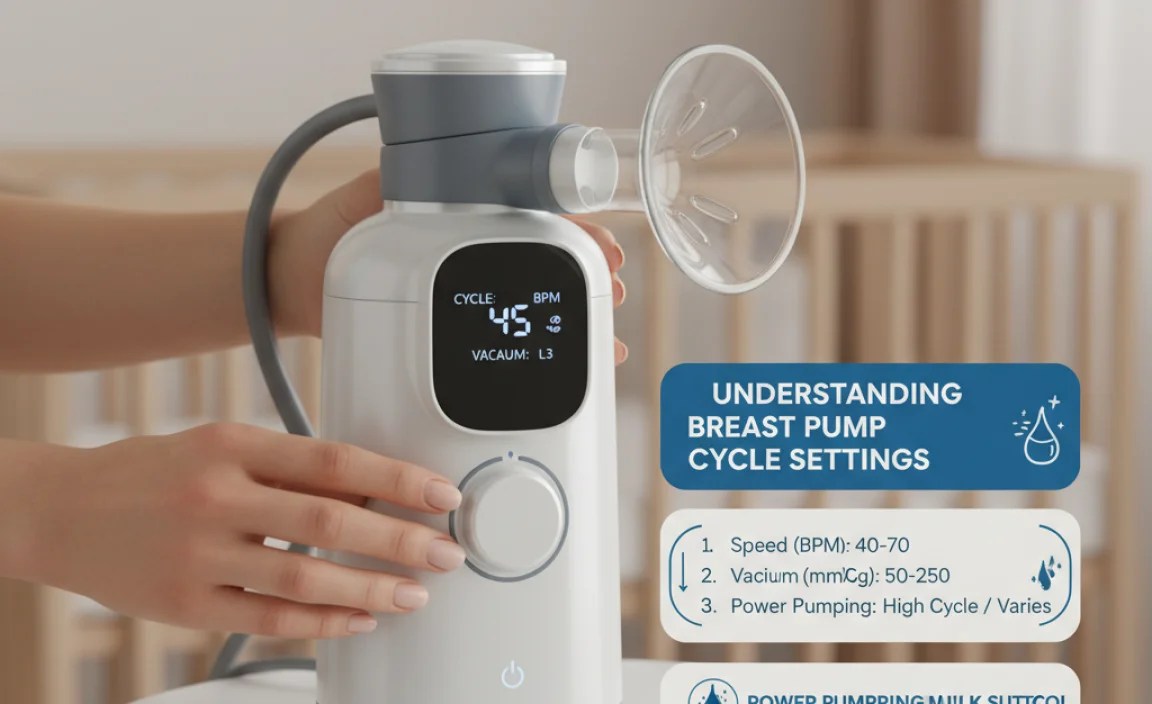
Breast pumps have two main settings: cycle and suction. Cycle refers to the number of times the pump sucks and releases per minute. Suction refers to the strength of the vacuum. Both are important for effective milk expression.
What is Cycle Speed?
Cycle speed, often measured in cycles per minute (CPM), determines how frequently the pump pulls and releases. Think of it as the rhythm of the pump. A faster cycle mimics a baby’s initial rapid sucking to stimulate let-down, while a slower cycle is more effective at removing milk once let-down has occurred.
What is Suction Strength?
Suction strength refers to the vacuum pressure of the pump. It’s how strongly the pump pulls on your nipple. Too little suction, and you won’t express much milk. Too much, and it can be painful and even cause damage. Finding the right balance is key.
Power Pumping Basics
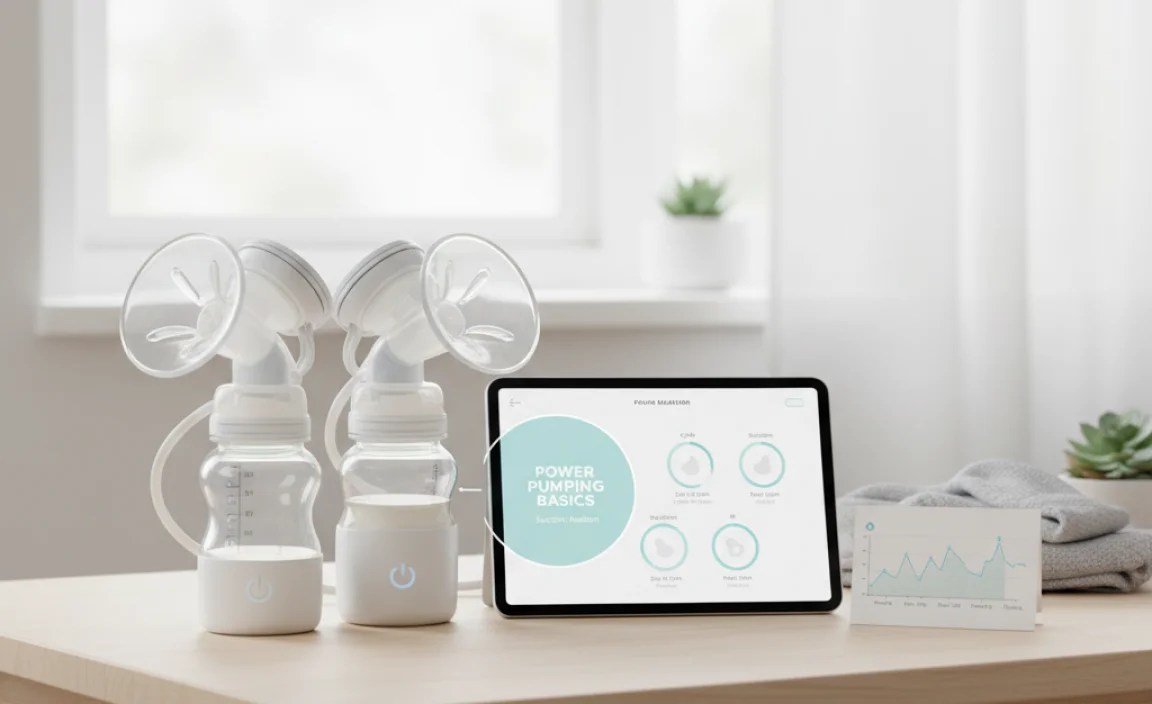
Power pumping is a technique used to mimic cluster feeding and boost milk supply. It involves pumping for a specific schedule over a set period, usually an hour, to signal your body to produce more milk. Here’s a typical power pumping schedule:
- Pump for 20 minutes
- Rest for 10 minutes
- Pump for 10 minutes
- Rest for 10 minutes
- Pump for 10 minutes
During power pumping, cycle and suction settings play a crucial role in maximizing milk output and comfort.
Recommended Cycle Settings for Power Pumping
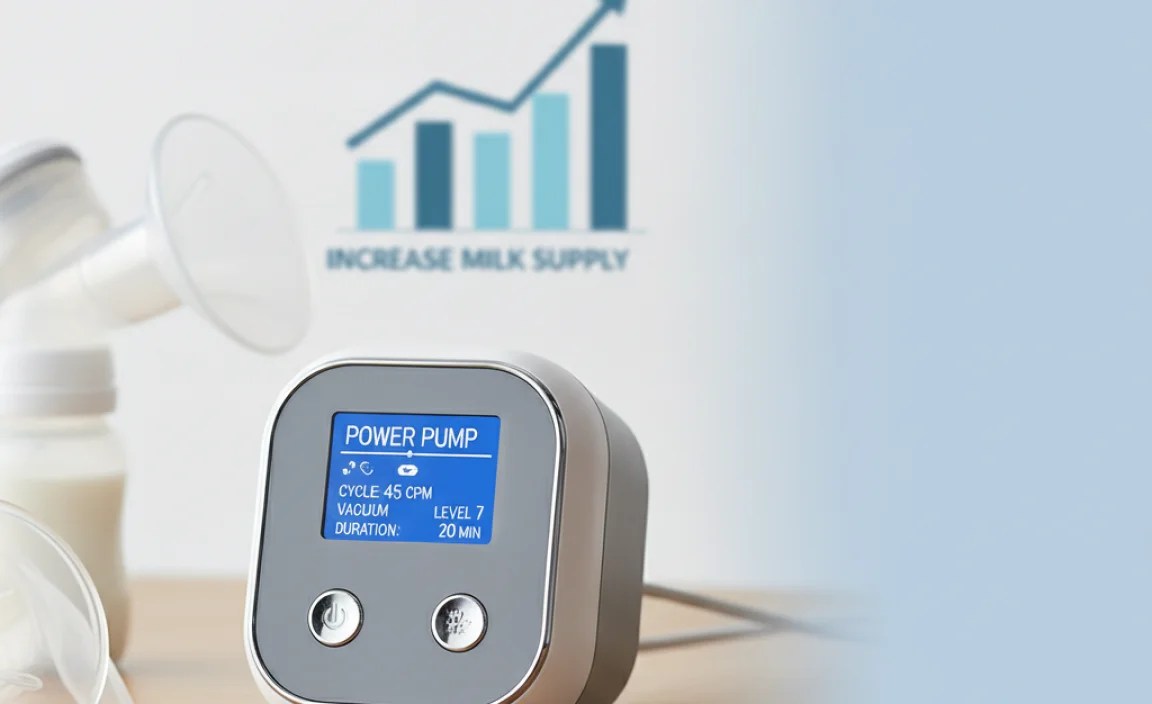
The ideal cycle setting varies from person to person and depends on the specific pump model. However, here are general guidelines to get you started:
Stimulation Mode
The stimulation mode is designed to trigger let-down. It usually involves a faster cycle speed and lower suction strength.
- Cycle Speed: Start with the pump’s preset stimulation mode. This is often around 60-70 CPM. Some pumps allow you to adjust this.
- Suction Strength: Begin with a low suction level and gradually increase it until you feel a comfortable pull. It should not be painful.
Expression Mode
Once let-down occurs, switch to expression mode. This mode typically uses a slower cycle speed and higher suction strength to efficiently remove milk.
- Cycle Speed: Reduce the cycle speed to around 40-60 CPM. This slower pace allows for more complete emptying.
- Suction Strength: Increase the suction to a level that is strong but still comfortable. Again, pain is a sign to reduce the suction.
Step-by-Step Guide to Finding Your Ideal Cycle Setting
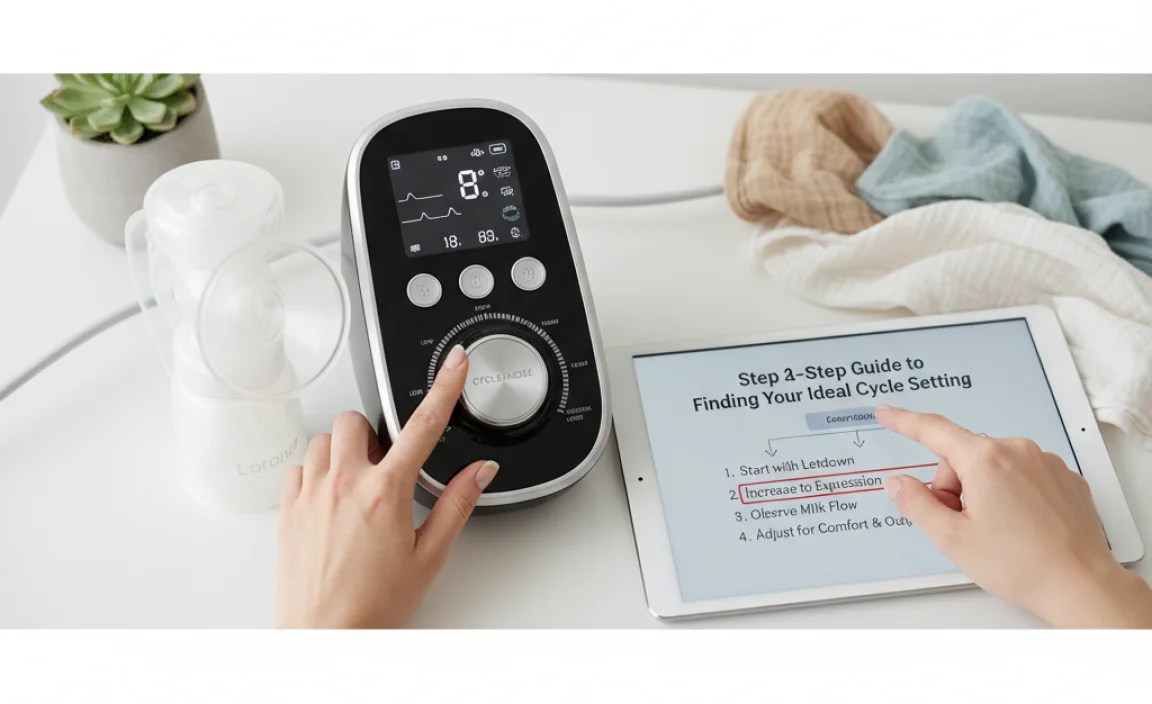
Finding the perfect cycle setting is a process of experimentation. Here’s how to do it:
- Start with the Pump’s Preset Modes: Most pumps have preset stimulation and expression modes. Begin with these to get a feel for the different settings.
- Adjust Suction First: Find the highest suction level that is comfortable for you in both stimulation and expression modes. This is your baseline.
- Experiment with Cycle Speed in Stimulation Mode: If you’re not experiencing let-down, try increasing the cycle speed slightly. If it’s too intense, reduce it.
- Experiment with Cycle Speed in Expression Mode: Once you have a let-down, switch to expression mode. Adjust the cycle speed to find the pace that empties your breasts most efficiently.
- Monitor Milk Output and Comfort: Pay attention to how much milk you’re expressing and how your breasts feel. Discomfort or inadequate milk output means you need to adjust the settings.
- Keep a Log: Record your settings and milk output each session. This will help you identify patterns and find the settings that work best for you.
Troubleshooting Common Issues
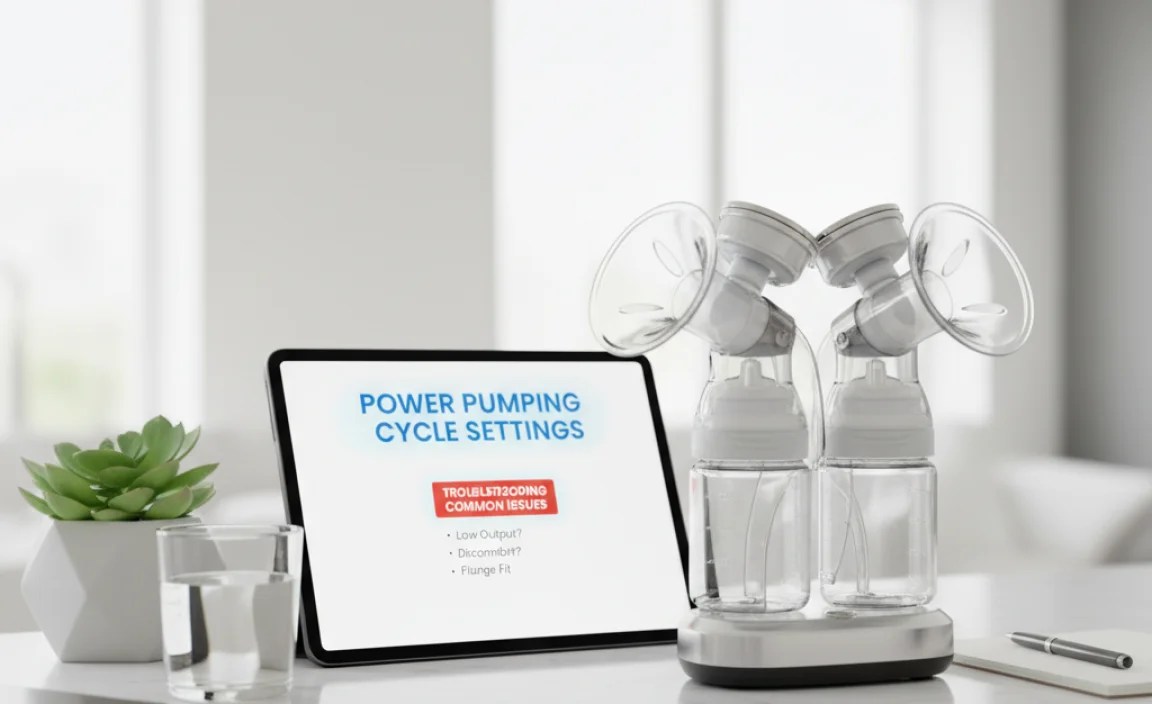
Sometimes, even with the right settings, you might encounter issues. Here are some common problems and how to address them:
- No Let-Down: If you’re not experiencing let-down, try increasing the cycle speed in stimulation mode. Also, make sure you’re relaxed and comfortable. Look at pictures of your baby, listen to calming music, or try massaging your breasts.
- Painful Pumping: Pain is a sign that the suction is too high. Reduce the suction immediately. Also, check the flange size. The flange is the plastic part that comes into contact with your breast. If it’s too small, it can cause friction and pain. Consult a lactation consultant for proper flange sizing.
- Low Milk Output: If you’re not expressing enough milk, try increasing the suction strength in expression mode. Also, make sure the pump parts are properly assembled and that there are no leaks.
- Pump Feels Weak: Check the pump parts for wear and tear. Replace valves and membranes regularly, as they can lose suction over time.
Choosing the Right Breast Pump
The type of breast pump you use can also affect your power pumping success. Here’s a comparison of different types:
| Type of Pump | Pros | Cons | Ideal For |
|---|---|---|---|
| Electric Pump (Double) | Efficient, allows for hands-free pumping, adjustable settings | More expensive, requires a power source | Frequent pumping, building milk supply |
| Electric Pump (Single) | More affordable than double electric, adjustable settings | Less efficient than double electric, requires more time | Occasional pumping, maintaining milk supply |
| Manual Pump | Portable, quiet, no power source needed | Can be tiring, less efficient than electric pumps | Occasional pumping, travel |
| Hospital-Grade Pump | Strongest suction, most efficient, often available for rent | Expensive, not always necessary for everyone | Establishing milk supply, premature babies |
Consider your needs and budget when choosing a breast pump. A double electric pump is generally the best choice for power pumping due to its efficiency and adjustable settings. Some popular brands include Medela, Spectra, and Philips Avent.
Tips for Comfortable and Effective Power Pumping
Here are some extra tips to make power pumping more comfortable and effective:
- Use a Hands-Free Pumping Bra: This will free up your hands to do other things while pumping.
- Stay Hydrated: Drink plenty of water to support milk production.
- Eat a Healthy Diet: Nourishing your body with nutritious foods is essential for milk production.
- Relax: Stress can inhibit let-down. Find ways to relax before and during pumping sessions.
- Massage Your Breasts: Gently massage your breasts before and during pumping to stimulate milk flow.
- Warm Compress: Apply a warm compress to your breasts before pumping to encourage let-down.
- Consult a Lactation Consultant: If you’re struggling with power pumping, a lactation consultant can provide personalized guidance and support. You can find a consultant through the International Lactation Consultant Association (ILCA) at ILCA.org.
Power Pumping Schedule Examples
While the standard power pumping schedule (20 minutes on, 10 minutes off, 10 minutes on, 10 minutes off, 10 minutes on) is effective, here are a couple of variations you can try:
Variation 1: The “Marathon” Power Pump
This variation is for when you have a longer stretch of time available.
- Pump for 30 minutes
- Rest for 10 minutes
- Pump for 20 minutes
- Rest for 10 minutes
- Pump for 10 minutes
Variation 2: The “Quick Burst” Power Pump
This is ideal for fitting in a session during a busy day.
- Pump for 15 minutes
- Rest for 5 minutes
- Pump for 10 minutes
- Rest for 5 minutes
- Pump for 10 minutes
The key is consistency. Choose a schedule that works for you and stick with it for at least a few days to see results.
Real-World Examples of Cycle Settings
Here’s a table showing example cycle and suction settings for different scenarios:
| Scenario | Mode | Cycle Speed (CPM) | Suction Strength (Level) |
|---|---|---|---|
| Initial Stimulation (No Let-Down) | Stimulation | 65 | 3 |
| Stimulation (Experiencing Tingling) | Stimulation | 60 | 4 |
| Expression (Good Milk Flow) | Expression | 50 | 6 |
| Expression (Slowing Milk Flow) | Expression | 45 | 7 |
| Maintaining Supply (Comfortable Pumping) | Expression | 55 | 5 |
Remember, these are just examples. Your ideal settings may vary. Always prioritize comfort and adjust as needed.
The Importance of Flange Size
Using the correct flange size is critical for comfortable and effective pumping. A poorly fitted flange can cause pain, reduce milk output, and even damage your nipples. Here’s how to determine the right flange size:
- Measure Your Nipple Diameter: After a pumping session, measure the diameter of your nipple (not the areola) using a ruler or measuring tool.
- Add a Few Millimeters: Add 2-4 mm to your nipple diameter to determine the correct flange size. For example, if your nipple diameter is 21 mm, you’ll need a 24 or 25 mm flange.
- Observe Your Pumping: When pumping, your nipple should move freely in the flange tunnel without rubbing against the sides. A small amount of areola may be pulled into the tunnel, but excessive areola being pulled in indicates the flange is too large.
Many breast pump manufacturers offer different flange sizes. Experiment to find the one that fits you best. A lactation consultant can also help you with flange sizing.
Debunking Myths About Power Pumping
There are many misconceptions about power pumping. Let’s clear up a few:
- Myth: Power pumping is painful. Fact: Power pumping should not be painful. If you’re experiencing pain, adjust your settings or check your flange size.
- Myth: Power pumping works overnight. Fact: It takes time and consistency to see results from power pumping. Be patient and stick with it.
- Myth: You have to power pump at a specific time of day. Fact: You can power pump at any time that’s convenient for you. However, some people find it more effective to power pump in the morning when milk supply is often higher.
- Myth: Power pumping will solve all milk supply issues. Fact: Power pumping is a helpful tool, but it’s not a magic bullet. Address underlying issues such as latch problems or infrequent feeding.
Finding Support and Resources
Power pumping can be challenging, and it’s important to have support. Here are some resources that can help:
- Lactation Consultants: A lactation consultant can provide personalized guidance and support.
- La Leche League: This organization offers breastfeeding support groups and resources. Visit their website at LLLI.org.
- Online Forums and Communities: Connect with other parents online to share experiences and get advice.
- Healthcare Providers: Your doctor or midwife can provide medical advice and referrals.
FAQ: Power Pumping Cycle Settings
Here are some frequently asked questions about cycle settings for power pumping:
What cycle setting should I use to start power pumping?
Begin with your pump’s default stimulation mode (usually around 60-70 CPM) to trigger let-down, then switch to expression mode (40-60 CPM) for milk removal.
How do I know if my suction is too high?
If you experience pain, redness, or nipple damage, reduce the suction immediately. Pumping should be comfortable.
Can I adjust the cycle speed during a pumping session?
Yes, feel free to adjust the cycle speed as needed to optimize milk flow and comfort. Experiment to find what works best for you.
What if I don’t experience let-down?
Try increasing the cycle speed in stimulation mode, massaging your breasts, or using a warm compress. Relaxation is key.
How long should I power pump each day?
A typical power pumping session lasts about an hour, following a schedule of pumping and resting intervals.
Is it normal for milk output to vary during power pumping?
Yes, milk output can fluctuate. Don’t be discouraged if you don’t see immediate results. Consistency is important.
When should I replace my pump parts?
Replace valves and membranes every few weeks to maintain optimal suction. Follow the manufacturer’s recommendations.
Conclusion
Finding the right cycle setting for power pumping is a journey of experimentation and self-discovery. Start with the guidelines provided, but don’t be afraid to adjust the settings to suit your individual needs and comfort. Remember to prioritize comfort, stay hydrated, and seek support when needed. With patience and persistence, you can successfully boost your milk supply and provide the best nourishment for your baby. Happy pumping!
“`


