
What Causes a Water Pump to Cycle On and Off? A Cyclist’s Guide

Quick Summary: A water pump cycling on and off, also known as short cycling, is usually caused by low water pressure in the system. Common culprits include a faulty pressure tank, a leak in the plumbing, a clogged well screen, or a malfunctioning pressure switch. Diagnosing and addressing these issues promptly can prevent further damage and ensure a consistent water supply.
Ever turned on your faucet and heard your water pump kick on and off repeatedly? It’s annoying, right? This on-again, off-again behavior, known as “short cycling,” isn’t just a nuisance; it can wear out your pump faster and lead to bigger headaches down the road. But don’t worry! Figuring out why your water pump is doing this isn’t as complicated as it seems. We’ll walk through the most common causes and simple steps to troubleshoot them. By the end, you’ll have a clear idea of what’s going on and how to fix it.
Understanding Water Pump Cycling

Before diving into the causes, let’s clarify what we mean by “cycling” and why it’s a problem.
What is Water Pump Cycling?
Water pump cycling refers to the pump turning on and off more frequently than it should. In a healthy system, the pump fills the pressure tank, then shuts off until the water pressure drops to a certain level, at which point it kicks back on. When cycling occurs too rapidly, the pump is working overtime.
Why is Cycling Bad for Your Water Pump?
Excessive cycling puts unnecessary stress on the pump’s motor and components. Each start-up generates heat and mechanical wear. Over time, this leads to premature failure, meaning you’ll be replacing your pump sooner than expected. Plus, the constant starting and stopping can cause fluctuations in water pressure, which can be annoying.
Common Causes of Water Pump Cycling

Let’s explore the most common reasons why your water pump might be short cycling:
1. Faulty Pressure Tank
The pressure tank is a crucial part of your well system. It stores water under pressure, allowing your pump to run less frequently. Inside the tank, there’s an air bladder that maintains the pressure. If this bladder fails, the tank becomes waterlogged, leading to rapid cycling.
How to Check Your Pressure Tank:
- Turn off the pump: Locate the circuit breaker for your well pump and switch it off.
- Drain the tank: Open a faucet somewhere in your house and let the water run until it stops. This depressurizes the system.
- Check the air valve: Find the air valve on top of the tank (it looks like a tire valve). Use a tire pressure gauge to check the air pressure.
- Interpret the results:
- If water comes out of the air valve, the bladder is likely ruptured, and the tank needs replacement.
- If the air pressure is significantly lower than the cut-in pressure of your pump (usually 30-40 PSI), you may need to recharge the tank (more on this below).
Recharging a Waterlogged Pressure Tank:
If the bladder isn’t ruptured, you might be able to recharge the tank.
- With the tank drained and the pump off, use an air compressor to inflate the tank to 2 PSI below the pump’s cut-in pressure. For example, if the pump turns on at 40 PSI, inflate the tank to 38 PSI.
- Turn the pump back on and observe its behavior. If the cycling stops, you’ve solved the problem! If it continues, the bladder is probably damaged.
2. Leaks in the Plumbing
Even small leaks can cause a significant drop in water pressure, triggering the pump to cycle on and off. These leaks can be anywhere in your plumbing system, from the well casing to the faucets in your home.
How to Check for Leaks:
- Inspect visible pipes: Look for any signs of water damage, such as drips, wet spots, or corrosion on pipes and fittings. Pay close attention to joints and connections.
- Check faucets and toilets: A constantly running toilet or a dripping faucet can slowly deplete the water pressure in the system.
- Listen for unusual noises: Sometimes, you can hear the sound of water leaking, even if you can’t see it.
- Monitor your water bill: A sudden increase in your water bill could indicate a hidden leak.
Addressing Leaks:
Repairing leaks promptly is crucial. Small leaks can often be fixed with pipe sealant or new fittings. For larger leaks or leaks within the well casing, you may need to call a professional plumber or well service company.
3. Clogged Well Screen
The well screen is a filter that prevents sediment and debris from entering your well. Over time, this screen can become clogged with minerals, sand, or other particles, restricting water flow to the pump. This reduced flow can cause the pump to cycle on and off as it struggles to maintain pressure.
How to Check and Address a Clogged Well Screen:
Checking and cleaning a well screen is usually a job for a professional. It involves pulling the pump out of the well, inspecting the screen, and cleaning or replacing it as needed. Attempting this yourself can damage the pump or contaminate the well.
4. Malfunctioning Pressure Switch
The pressure switch is a small electrical device that controls when the pump turns on and off based on the water pressure in the system. If the switch is faulty, it may not accurately sense the pressure, causing the pump to cycle erratically.
How to Check Your Pressure Switch:
- Locate the pressure switch: It’s usually mounted on a pipe near the pressure tank.
- Inspect the switch: Look for signs of damage, such as corrosion, cracks, or loose wires.
- Check the contacts: Carefully remove the cover of the switch (after turning off the power!) and inspect the electrical contacts. They should be clean and free of corrosion.
- Test the switch: Use a multimeter to test the continuity of the switch. When the pressure is below the cut-in point, the switch should show continuity. When the pressure is above the cut-off point, it should not.
Replacing a Pressure Switch:
Replacing a pressure switch is a relatively simple and inexpensive repair. Be sure to buy a switch with the correct pressure settings for your pump. Turn off the power, disconnect the wires, unscrew the old switch, and install the new one, following the manufacturer’s instructions.
5. Incorrect Pump Size
If your pump is too powerful for your well, it can fill the pressure tank too quickly, causing it to cycle on and off rapidly. Conversely, if the pump is too small, it may struggle to maintain pressure, leading to frequent cycling.
Determining the Correct Pump Size:
The correct pump size depends on factors such as the depth of your well, the distance to your house, and your household’s water usage. Consult with a well professional to determine the appropriate pump size for your needs.
6. Air in the Well System
Air in the well system can cause pressure fluctuations, leading to pump cycling. This can happen if the water level in the well is low, allowing the pump to suck in air, or if there’s a leak in the suction line.
How to Check for Air in the System:
- Listen for gurgling noises: Air in the system often creates gurgling or sputtering sounds when you turn on a faucet.
- Check the well water level: If the water level is below the pump intake, the pump may be sucking in air.
- Inspect the suction line: Look for leaks or damage in the pipe that connects the pump to the well.
Addressing Air in the System:
If the water level is low, you may need to deepen your well or lower the pump. Repairing leaks in the suction line can also resolve the issue. In some cases, installing an air eliminator can help remove air from the system.
Troubleshooting Steps: A Checklist
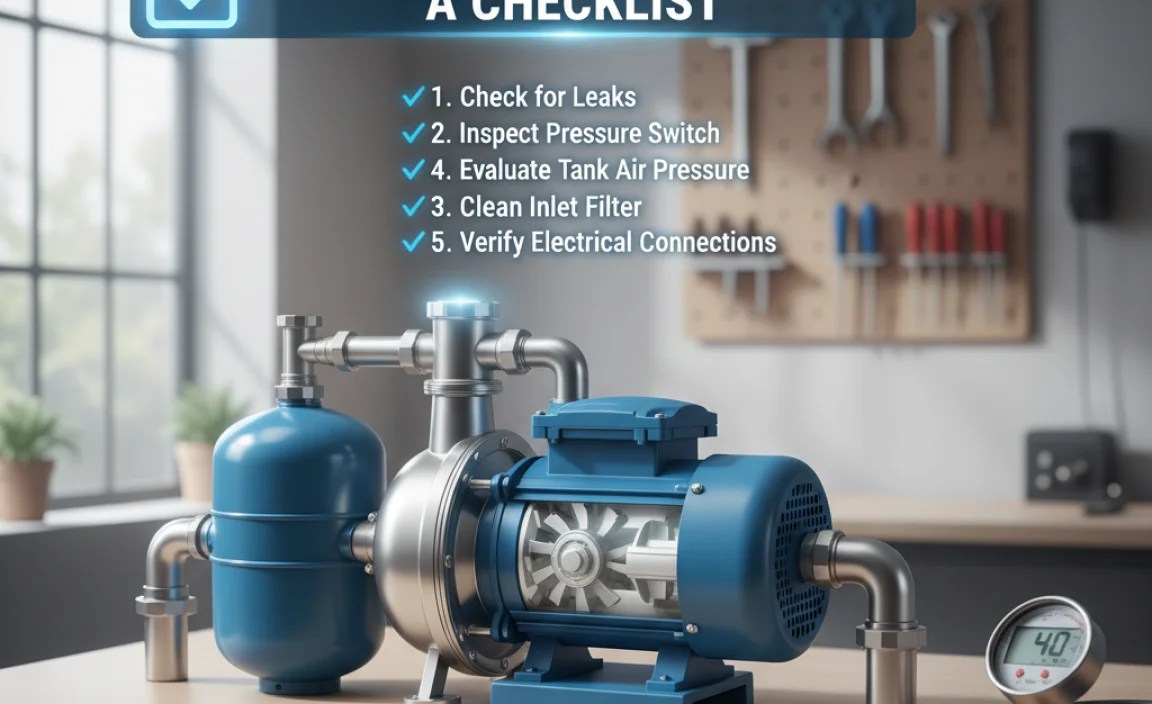
Here’s a handy checklist to help you troubleshoot water pump cycling:
- Check the pressure tank: Is the bladder intact? Is the air pressure correct?
- Look for leaks: Inspect all visible pipes, faucets, and toilets.
- Listen for unusual noises: Can you hear any gurgling or sputtering sounds?
- Check the pressure switch: Is it damaged or corroded? Is it functioning correctly?
- Consider pump size: Is the pump the right size for your well and household needs?
- Check for air in the system: Is the water level low? Are there any leaks in the suction line?
Tools You Might Need

Here’s a list of tools that might come in handy when troubleshooting water pump cycling:
- Tire pressure gauge: For checking the pressure in the pressure tank.
- Air compressor: For recharging the pressure tank.
- Multimeter: For testing the pressure switch.
- Wrenches and pliers: For tightening or replacing fittings.
- Pipe sealant: For repairing small leaks.
- Screwdrivers: For removing covers and tightening screws.
When to Call a Professional

While some of these issues can be addressed with DIY solutions, there are times when it’s best to call a professional. Consider contacting a plumber or well service company if:
- You’re not comfortable working with electricity or plumbing.
- You can’t identify the source of the problem.
- The problem is complex or requires specialized equipment (e.g., pulling the pump out of the well).
- You’re concerned about contaminating your well water.
Preventive Maintenance Tips
Preventing water pump cycling is always better than fixing it. Here are some tips to keep your well system in good shape:
- Regularly check the pressure tank: Monitor the air pressure and recharge it as needed.
- Inspect your plumbing for leaks: Address any leaks promptly.
- Consider a whole-house water filter: This can help prevent sediment from clogging your well screen.
- Schedule regular well inspections: A professional can identify potential problems before they become major issues.
Cost Considerations
Addressing water pump cycling can involve various costs, depending on the cause and the required repairs. Here’s a general overview:
| Issue | Estimated Cost | DIY or Professional |
|---|---|---|
| Recharging Pressure Tank | $0 – $20 (for air compressor rental if needed) | DIY |
| Replacing Pressure Switch | $20 – $50 (for the switch) | DIY |
| Repairing Minor Leaks | $10 – $30 (for pipe sealant and fittings) | DIY |
| Replacing Pressure Tank | $150 – $500 (for the tank) + $100 – $300 (for installation) | DIY or Professional (depending on experience) |
| Well Screen Cleaning/Replacement | $300 – $1000+ (pump removal, cleaning, and re-installation) | Professional |
| Pump Replacement | $500 – $2000+ (pump and installation) | Professional |
FAQ: Water Pump Cycling
Here are some frequently asked questions about water pump cycling:
- Why is my well pump turning on and off so quickly?
- This is likely due to a faulty pressure tank, leaks in your plumbing, or a malfunctioning pressure switch. These issues cause a rapid drop in water pressure, triggering the pump to cycle frequently.
- How do I check my pressure tank?
- Turn off the pump, drain the tank, and check the air pressure at the air valve. If water comes out of the valve, the bladder is likely ruptured. If the air pressure is too low, you may need to recharge the tank.
- Can a leaky toilet cause my water pump to cycle?
- Yes, a constantly running toilet can slowly deplete the water pressure in the system, causing the pump to cycle on and off more frequently.
- Is it safe to drink water from a well with a cycling pump?
- While the cycling itself doesn’t directly contaminate the water, it can indicate underlying problems that could affect water quality. It’s best to address the cycling issue and test your water regularly to ensure it’s safe to drink.
- How long should a well pump last?
- A well-maintained well pump can last 10-15 years or more. However, excessive cycling can significantly shorten its lifespan.
- What is the cut-in and cut-off pressure on my well pump?
- The cut-in pressure is the pressure at which the pump turns on, and the cut-off pressure is the pressure at which it turns off. These settings are determined by the pressure switch and are typically 20 PSI apart (e.g., 40/60 or 30/50).
- Can cold weather affect my well pump?
- Yes, freezing temperatures can cause pipes to freeze and burst, leading to leaks and pump cycling. Insulating your pipes and well house can help prevent this.
Conclusion
Water pump cycling can be a frustrating issue, but understanding the common causes and troubleshooting steps can help you identify and resolve the problem. Whether it’s a simple fix like recharging the pressure tank or a more complex repair requiring a professional, addressing the issue promptly will protect your pump and ensure a reliable water supply. So, grab your tools, follow these steps, and get your water system back on track!
“`


