
What Is a Cycle on a Breast Pump? A Simple Guide

Quick Summary: A cycle on a breast pump refers to one complete suction and release action. It mimics a baby’s natural nursing pattern. Higher cycles mean more sucks per minute. Adjusting the cycle speed can help you find the most comfortable and efficient setting for expressing milk.
Using a breast pump can feel a bit overwhelming at first. There are so many settings and options! One term you’ll often hear is “cycle.” What exactly does that mean? Why should you care? Many new moms find it confusing, but don’t worry! Understanding cycles can make pumping more comfortable and effective.
This guide will break down what a cycle is, how it affects your pumping, and how to adjust it for the best results. We’ll walk through the basics, step-by-step, so you can feel confident and in control. Let’s dive in and make pumping a little easier!
Understanding Breast Pump Cycles

A breast pump cycle is the complete process of suction and release that mimics a baby’s natural sucking motion. Each cycle involves the pump creating a vacuum to draw out milk, followed by a release of that vacuum. The number of cycles per minute is a key setting on most electric breast pumps.
The Two Phases of a Cycle
Each cycle has two main phases:
- Suction Phase: The pump creates a vacuum, gently pulling on your nipple to express milk.
- Release Phase: The vacuum is released, allowing your nipple to relax before the next suction.
Think of it like a wave – it builds up (suction) and then crashes down (release). This rhythmic action is designed to stimulate milk flow effectively.
Cycles Per Minute (CPM)
Cycles per minute (CPM) refers to how many complete suction and release actions the pump performs in one minute. A higher CPM means the pump is working faster, with more frequent suctions. A lower CPM means slower, less frequent suctions.
Most electric breast pumps allow you to adjust the CPM to find a setting that works best for you. This is important because every woman responds differently to different cycle speeds.
Why Cycle Speed Matters

The cycle speed can significantly impact both your comfort and the amount of milk you express. Finding the right cycle speed is crucial for an efficient and comfortable pumping experience.
Comfort
A cycle speed that’s too high can cause discomfort or even pain. It might feel like the pump is pulling too hard or too fast. Conversely, a cycle speed that’s too low might not effectively stimulate milk flow, leading to frustration.
The key is to find a speed that feels gentle yet effective. You should feel a comfortable pulling sensation without any pinching or pain.
Milk Output
The right cycle speed can also optimize your milk output. When the cycle speed matches your body’s natural response, you’re more likely to express more milk in a shorter amount of time.
Typically, a faster cycle speed is used during the let-down phase to stimulate milk flow, and then a slower cycle speed is used to maintain the flow once it’s established.
How to Adjust Cycle Speed

Most electric breast pumps have controls that allow you to adjust both the cycle speed and the suction strength (vacuum). Here’s how to typically adjust the cycle speed:
- Start with the Let-Down Phase: Begin with a faster cycle speed to stimulate your milk to let down. This usually lasts for a few minutes.
- Reduce the Cycle Speed: Once your milk starts flowing, reduce the cycle speed to a slower, more comfortable setting. This will help maintain the milk flow without causing discomfort.
- Experiment: Every woman is different, so experiment with different cycle speeds to find what works best for you. Pay attention to how your body responds and adjust accordingly.
- Monitor Milk Flow: Keep an eye on your milk output. If you notice the flow slowing down, you might need to increase the cycle speed slightly.
Tips for Finding the Right Cycle Speed
- Listen to Your Body: Pay attention to how your nipples feel. If you experience any pain or discomfort, reduce the cycle speed immediately.
- Start Low and Go Slow: Begin with the lowest cycle speed and gradually increase it until you find a comfortable and effective setting.
- Read the Manual: Consult your breast pump’s manual for specific instructions on adjusting the cycle speed and suction strength.
- Consult a Lactation Consultant: If you’re struggling to find the right settings, consider consulting a lactation consultant. They can provide personalized guidance and support.
Understanding Suction Strength (Vacuum)

While cycle speed is important, it’s equally important to understand suction strength, often referred to as vacuum. Suction strength is the amount of pull the pump exerts on your nipple. It’s measured in mmHg (millimeters of mercury).
How Suction Strength Works
Higher suction strength means a stronger pull, which can express milk more quickly. However, too much suction can cause pain, discomfort, and even nipple damage. Lower suction strength is gentler but might not be as effective at expressing milk.
Finding the Right Balance
The key is to find a balance between cycle speed and suction strength that maximizes milk output without causing discomfort. Here’s how to approach it:
- Start Low: Always begin with the lowest suction setting.
- Gradually Increase: Slowly increase the suction until you feel a gentle pull.
- Monitor Comfort: If you feel any pain or discomfort, immediately reduce the suction.
- Adjust as Needed: As your breasts empty, you might need to adjust the suction to maintain the milk flow.
The Relationship Between Cycle Speed and Suction Strength
Cycle speed and suction strength work together to express milk effectively. Here’s how they interact:
- High Cycle Speed + Low Suction: This combination is often used during the let-down phase to stimulate milk flow gently.
- Low Cycle Speed + Moderate Suction: This combination is typically used to maintain milk flow once it’s established.
- High Cycle Speed + High Suction: This combination should be used with caution, as it can cause pain and nipple damage.
Common Breast Pump Settings Explained
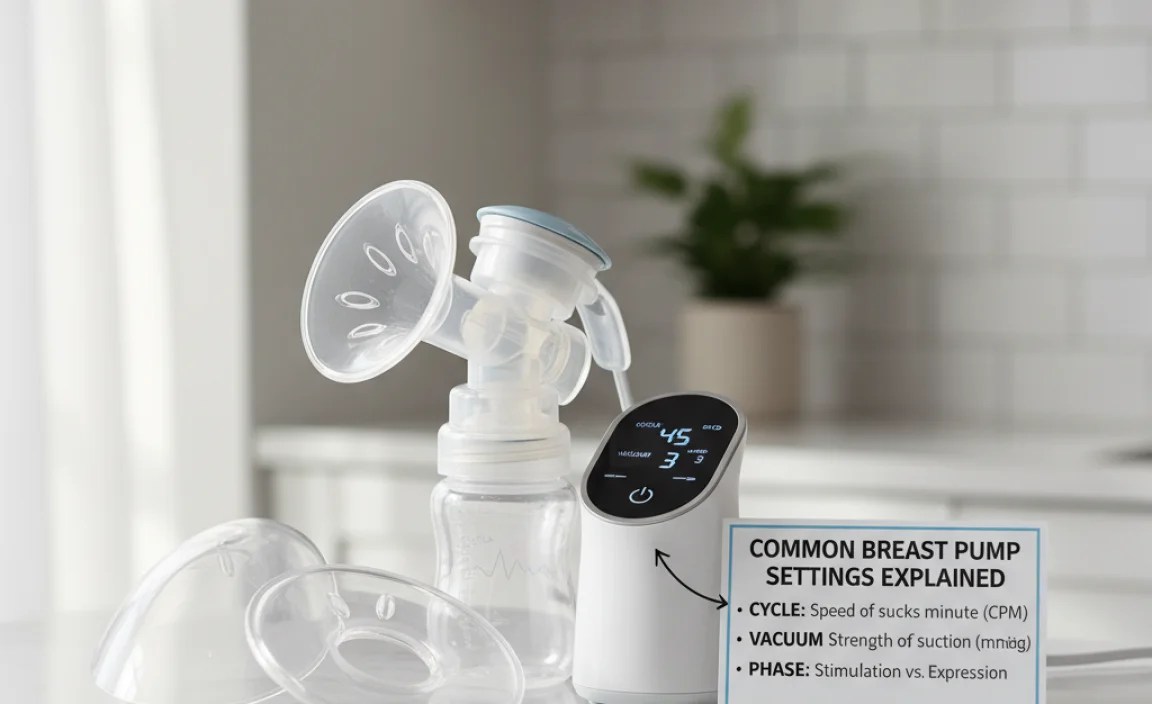
Breast pumps come with various settings designed to mimic different stages of breastfeeding. Understanding these settings can help you customize your pumping experience for optimal comfort and efficiency.
Massage Mode
Massage mode is designed to stimulate the breast and encourage let-down. It typically involves a fast cycle speed and low suction. This mode mimics the rapid, shallow sucks a baby uses to initiate milk flow.
Expression Mode
Expression mode is used to express milk after let-down has occurred. It usually involves a slower cycle speed and adjustable suction strength. This mode mimics the slower, deeper sucks a baby uses to extract milk.
2-Phase Expression
Some breast pumps offer a 2-phase expression feature, which automatically switches between massage mode and expression mode. This feature mimics the natural rhythm of a baby’s nursing and can help optimize milk output.
Customizable Settings
Many advanced breast pumps allow you to customize both the cycle speed and suction strength to create personalized settings. This can be particularly useful if you have specific needs or preferences.
Troubleshooting Common Issues
Even with the right settings, you might encounter some challenges while pumping. Here are some common issues and how to troubleshoot them:
Low Milk Output
If you’re experiencing low milk output, consider the following:
- Check Your Settings: Ensure that your cycle speed and suction strength are optimized for your body.
- Ensure Proper Fit: Make sure your breast shield (flange) fits correctly. An improperly sized flange can restrict milk flow.
- Pump Frequently: Pump regularly to stimulate milk production.
- Stay Hydrated: Drink plenty of water to support milk supply.
- Relax: Stress can inhibit milk flow, so try to relax and create a calm pumping environment.
Pain or Discomfort
If you’re experiencing pain or discomfort, consider the following:
- Reduce Suction: Lower the suction strength immediately.
- Check Flange Size: Ensure that your breast shield (flange) is the correct size.
- Use Lanolin Cream: Apply lanolin cream to soothe sore nipples.
- Take Breaks: Take breaks between pumping sessions to allow your nipples to recover.
Pump Not Working Properly
If your pump isn’t working properly, consider the following:
- Check Power Source: Make sure the pump is properly connected to a power source or that the batteries are fully charged.
- Inspect Tubing: Check the tubing for any cracks or leaks.
- Clean Pump Parts: Ensure that all pump parts are clean and properly assembled.
- Contact Manufacturer: If the pump still isn’t working, contact the manufacturer for assistance.
Choosing the Right Breast Pump
Selecting the right breast pump is a crucial step in ensuring a comfortable and efficient pumping experience. With so many options available, it’s important to consider your individual needs and preferences.
Types of Breast Pumps
There are several types of breast pumps, each with its own advantages and disadvantages:
- Manual Breast Pumps: These pumps are operated by hand and are ideal for occasional use or travel.
- Electric Breast Pumps: These pumps are powered by electricity and are designed for frequent use. They are available in single and double pump models.
- Hospital-Grade Breast Pumps: These pumps are the most powerful and efficient and are often used in hospitals or for women with specific medical needs.
Factors to Consider
When choosing a breast pump, consider the following factors:
- Frequency of Use: If you plan to pump frequently, an electric breast pump is the best option.
- Budget: Breast pumps range in price from affordable manual pumps to expensive hospital-grade pumps.
- Portability: If you need to pump on the go, consider a portable electric pump or a manual pump.
- Features: Look for features such as adjustable cycle speed, suction strength, and 2-phase expression.
- Reviews: Read reviews from other moms to get an idea of the pump’s performance and reliability.
Popular Breast Pump Brands
Some of the most popular breast pump brands include:
- Medela
- Spectra
- Philips Avent
- Lansinoh
- Evenflo
Researching different brands and models can help you find the perfect breast pump for your needs.
Table: Comparing Breast Pump Types
| Type | Pros | Cons | Ideal For |
|---|---|---|---|
| Manual | Affordable, portable, quiet | Can be tiring for frequent use, less efficient | Occasional use, travel |
| Single Electric | More efficient than manual, good for occasional use | Can be time-consuming, requires power | Regular pumping, single breast at a time |
| Double Electric | Most efficient, saves time, can increase milk supply | More expensive, requires power | Frequent pumping, working moms |
| Hospital-Grade | Very powerful, efficient, designed for frequent use | Expensive, often requires a prescription | Medical needs, premature babies |
External Resources for Breastfeeding and Pumping
For further information and support, consider exploring these resources:
- WomensHealth.gov – Breastfeeding: A comprehensive resource on breastfeeding from the U.S. Department of Health and Human Services.
- La Leche League International: Provides mother-to-mother support, encouragement, information, and education to promote breastfeeding.
- CDC – Breastfeeding: Information and recommendations on breastfeeding from the Centers for Disease Control and Prevention.
FAQ: Breast Pump Cycles
Here are some frequently asked questions about breast pump cycles:
- What does “let-down” mean?
- Let-down is the release of milk from your breasts. It’s triggered by hormones and can be stimulated by pumping or breastfeeding. A fast cycle speed on your pump can help initiate let-down.
- How do I know if my flange size is correct?
- Your nipple should move freely in the flange tunnel without rubbing. If it’s too tight or too loose, you need a different size.
- Can I use a breast pump if I have inverted nipples?
- Yes, but you might need to use special techniques or devices to help draw out your nipples. A lactation consultant can provide guidance.
- How often should I replace my breast pump parts?
- Replace valves and membranes every 4-6 weeks, or sooner if you notice reduced suction. Replace tubing if it becomes cracked or damaged.
- Is it normal to feel tingling during pumping?
- Yes, tingling is a common sensation during let-down. It’s a sign that your milk is flowing.
- Can I watch TV while pumping?
- Yes! Many moms find that watching TV or reading helps them relax and can improve milk flow.
- How long does it take to pump?
- Pumping sessions usually last 15-20 minutes. However, this can vary depending on your milk supply and the efficiency of your pump.
Conclusion
Understanding breast pump cycles is a key step in making your pumping experience more comfortable and effective. By adjusting the cycle speed and suction strength, you can find settings that work best for your body and optimize your milk output. Remember to listen to your body, experiment with different settings, and seek support from lactation consultants or other moms when needed.
With the right knowledge and tools, you can confidently navigate the world of breast pumping and provide your baby with the nourishment they need. Happy pumping!
“`


