
How Bike Pump Hoses Work: The Easy Guide

Quick Summary: Bike pump hoses connect the pump to your tire valve, letting you add air. They use either a Schrader (car-type) or Presta (narrow road bike) valve adapter. Some hoses have dual heads, while others need the adapter flipped or swapped. A secure connection is key to prevent leaks and get accurate pressure readings.
Ever struggled with a bike pump hose that just wouldn’t connect right? Or maybe you’re not sure which end goes on which type of tire valve? You’re not alone! Bike pump hoses can seem tricky, but once you understand how they work, inflating your tires becomes a breeze. Getting the right pressure keeps you rolling smoothly and safely.
This guide will walk you through the ins and outs of bike pump hoses. We’ll cover the different types of valves, how to connect the hose properly, and tips for troubleshooting common problems. Let’s get started and make sure your tires are always ready to roll!
Understanding Bike Pump Hoses and Valves

Bike pump hoses are your direct connection to maintaining proper tire pressure. But to use them effectively, you need to know about the different valve types and how they interact with the pump head.
Types of Bike Tire Valves
There are two main types of valves you’ll encounter on bike tires:
- Schrader Valve: This is the same type of valve you find on car tires. It’s wider and sturdier than a Presta valve and has a spring-loaded pin in the center.
- Presta Valve: This valve is narrower and typically found on road bikes and higher-end mountain bikes. It has a valve stem that you need to unscrew before inflating.
Sometimes you may also see a Woods/Dunlop valve, which is common on older bikes or in some countries. However, Schrader and Presta are the most common.
Anatomy of a Bike Pump Hose
Let’s break down the different parts of a typical bike pump hose:
- Hose: This is the flexible tube that carries the air from the pump to the tire valve.
- Pump Head: This is the part that attaches to the valve. It often has two openings – one for Schrader and one for Presta valves.
- Locking Lever: Many pump heads have a lever that you flip to create a tight seal around the valve.
- Internal Mechanisms: Inside the pump head are small parts that allow air to flow in one direction and prevent it from escaping.
How the Hose Connects to the Valve
The magic happens when the pump head connects securely to the valve. Here’s the basic principle:
- The pump head pushes onto the valve, opening the valve core (the part that lets air in).
- The tight seal around the valve prevents air from leaking out as you pump.
- The one-way valve inside the pump ensures that air only flows into the tire, not back into the pump.
Step-by-Step: Connecting Your Bike Pump Hose

Now, let’s get practical. Here’s how to connect your bike pump hose to both Schrader and Presta valves:
Connecting to a Schrader Valve
- Remove the valve cap: Unscrew the plastic cap from the Schrader valve and set it aside.
- Select the correct opening on the pump head: Most pump heads have two openings. Choose the one that’s wider and fits the Schrader valve.
- Push the pump head onto the valve: Press the pump head straight onto the valve, making sure it’s fully seated.
- Engage the locking lever (if applicable): If your pump has a locking lever, flip it to secure the connection. You should feel a snug fit.
- Start pumping: Check for leaks. If you hear air escaping, readjust the pump head and try again.
Connecting to a Presta Valve
- Unscrew the valve stem: Before attaching the pump, unscrew the small nut at the top of the Presta valve. Press it in briefly to release any built-up pressure.
- Select the correct opening on the pump head: Use the narrower opening on the pump head for Presta valves.
- Push the pump head onto the valve: Gently push the pump head straight onto the valve. Be careful not to bend the delicate valve stem.
- Engage the locking lever (if applicable): Flip the locking lever to secure the connection.
- Start pumping: Keep an eye out for leaks. If air is escaping, make sure the pump head is properly aligned and the locking lever is secure.
Dual-Head vs. Switchable Pump Heads
Some pumps have a dual-head design, with separate openings for Schrader and Presta valves. Others have a switchable head that you can adjust to fit either type. Here’s a quick comparison:
| Feature | Dual-Head Pump | Switchable Pump Head |
|---|---|---|
| Design | Two separate openings | One opening that adjusts |
| Ease of Use | Very easy; just choose the right opening | Requires adjusting the internal parts |
| Complexity | Simpler internal mechanism | More complex, with small parts that can wear out |
| Maintenance | Generally less maintenance | May require occasional cleaning or adjustment |
If you have a switchable pump head, make sure it’s set to the correct valve type before you start pumping. Usually, there’s a small indicator or marking to show which setting is for Schrader and which is for Presta.
Troubleshooting Common Hose Problems
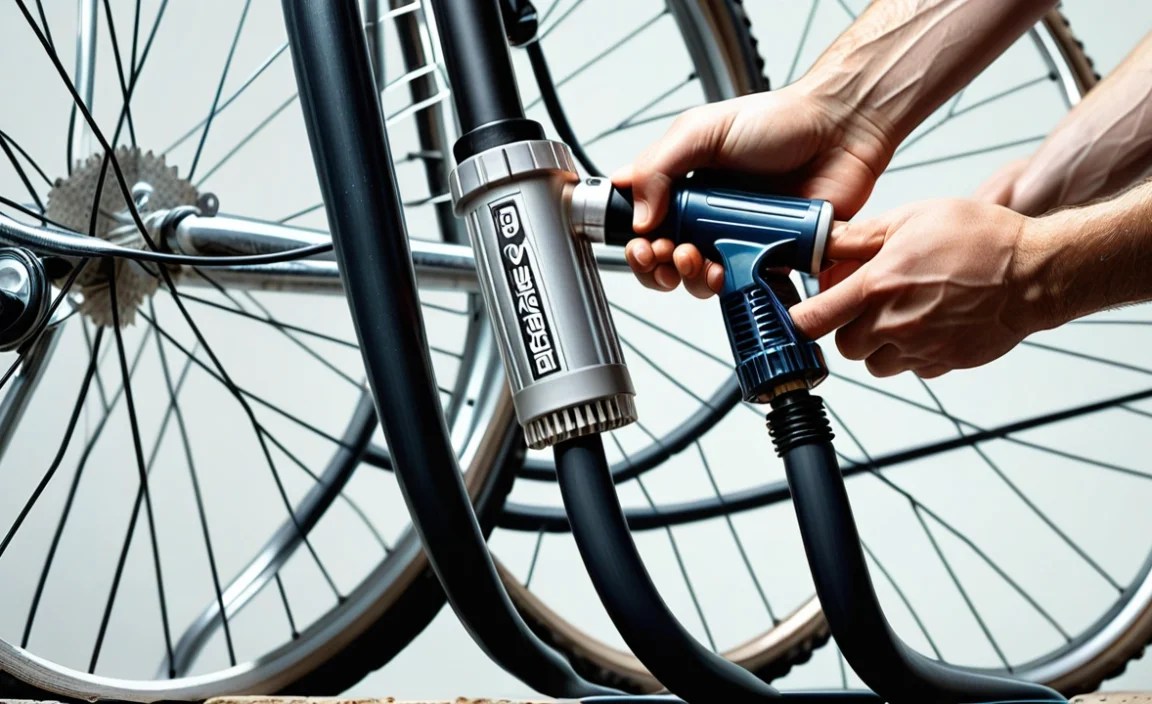
Even with the best equipment, you might run into issues with your bike pump hose. Here are some common problems and how to fix them:
Air Leaking at the Valve
This is a common issue. Here’s what to check:
- Pump head not fully seated: Make sure the pump head is pushed all the way onto the valve.
- Locking lever not engaged: Flip the locking lever to create a tighter seal.
- Worn-out rubber seal: Inside the pump head, there’s a small rubber seal that creates the airtight connection. If it’s worn or cracked, it needs to be replaced.
- Valve stem damage: Inspect the valve stem for any damage or bends. A damaged valve may not seal properly.
Hose Won’t Connect
If you can’t get the hose to connect at all, consider these possibilities:
- Incorrect opening: Double-check that you’re using the correct opening on the pump head for your valve type.
- Debris in the pump head: Dirt or debris can block the opening. Clean the pump head with a small brush or cloth.
- Damaged pump head: If the pump head is cracked or broken, it may need to be replaced.
Difficulty Pumping
If pumping feels unusually difficult, here’s what to investigate:
- Clogged hose: A blockage in the hose can restrict airflow. Try disconnecting the hose and blowing through it to clear any obstructions.
- Pump malfunction: The problem might not be the hose, but the pump itself. Check the pump’s internal mechanisms for any issues.
- Tire already at high pressure: If the tire is already close to its maximum pressure, it will be harder to pump. Check the recommended pressure on the tire sidewall.
Maintaining Your Bike Pump Hose

Regular maintenance will keep your bike pump hose in good working condition and prevent problems down the road. Here are some tips:
- Inspect regularly: Check the hose for cracks, kinks, or wear. Replace it if you notice any damage.
- Clean the pump head: Use a small brush or cloth to clean the pump head regularly, removing any dirt or debris.
- Store properly: Store your pump in a dry place, away from direct sunlight and extreme temperatures.
- Replace worn parts: Rubber seals and other small parts can wear out over time. Replace them as needed to maintain a good seal.
Choosing the Right Bike Pump
Not all bike pumps are created equal. Here’s what to consider when choosing a pump:
- Type of pump: Floor pumps are great for home use, while mini-pumps are more portable for on-the-go inflation.
- Valve compatibility: Make sure the pump is compatible with both Schrader and Presta valves, or choose one that matches your specific needs.
- Pressure gauge: A built-in pressure gauge helps you inflate your tires to the correct pressure.
- Build quality: Look for a pump with a sturdy construction and durable materials.
Floor Pumps vs. Mini-Pumps
Here’s a quick comparison of floor pumps and mini-pumps:
| Feature | Floor Pump | Mini-Pump |
|---|---|---|
| Size | Large and stationary | Small and portable |
| Pumping Power | More powerful, easier to reach high pressures | Less powerful, requires more effort |
| Ease of Use | Very easy, with a stable base and comfortable handle | Can be awkward to use, especially at high pressures |
| Portability | Not portable | Highly portable, can be mounted on your bike |
| Best For | Home use, inflating tires quickly and easily | On-the-go repairs, emergency inflation |
FAQ About Bike Pump Hoses
What’s the difference between Schrader and Presta valves?
Why is air leaking when I try to pump my tire?
How do I know which opening on the pump head to use?
What if my pump hose won’t connect to the valve?
Why is it so hard to pump my tires?
How often should I replace my bike pump hose?
Can I use a car tire pump on my bike?
Conclusion
Understanding how bike pump hoses work doesn’t have to be a mystery. By knowing the different valve types, how to connect the hose properly, and how to troubleshoot common problems, you can keep your tires inflated and enjoy a smooth, safe ride. Remember to maintain your pump and hose regularly, and choose the right pump for your needs. With a little practice, you’ll be a tire-inflation pro in no time! Now get out there and enjoy the ride!


