
What is Pump Duty Cycle? A Beginner’s Guide

Quick Summary: Pump duty cycle refers to the amount of time a pump operates versus the amount of time it rests, usually expressed as a percentage. A 50% duty cycle means the pump runs half the time and rests half the time. Knowing your pump’s duty cycle helps prevent overheating and extends its lifespan, ensuring reliable performance for tasks like inflating tires or maintaining water pressure.
Ever wondered why your bike pump gets hot after a long inflation session? Or why some pumps seem to last forever while others give out quickly? The answer often lies in something called the “duty cycle.” Understanding duty cycle is crucial for anyone relying on pumps, whether it’s for your bicycle tires, a home water system, or even industrial applications. It’s a simple concept that can save you money and frustration by preventing premature pump failure. This guide will break down what pump duty cycle means, how it affects performance, and how to choose the right pump for your needs. Get ready to learn how to make your pumps last longer and work better!
Understanding Pump Duty Cycle
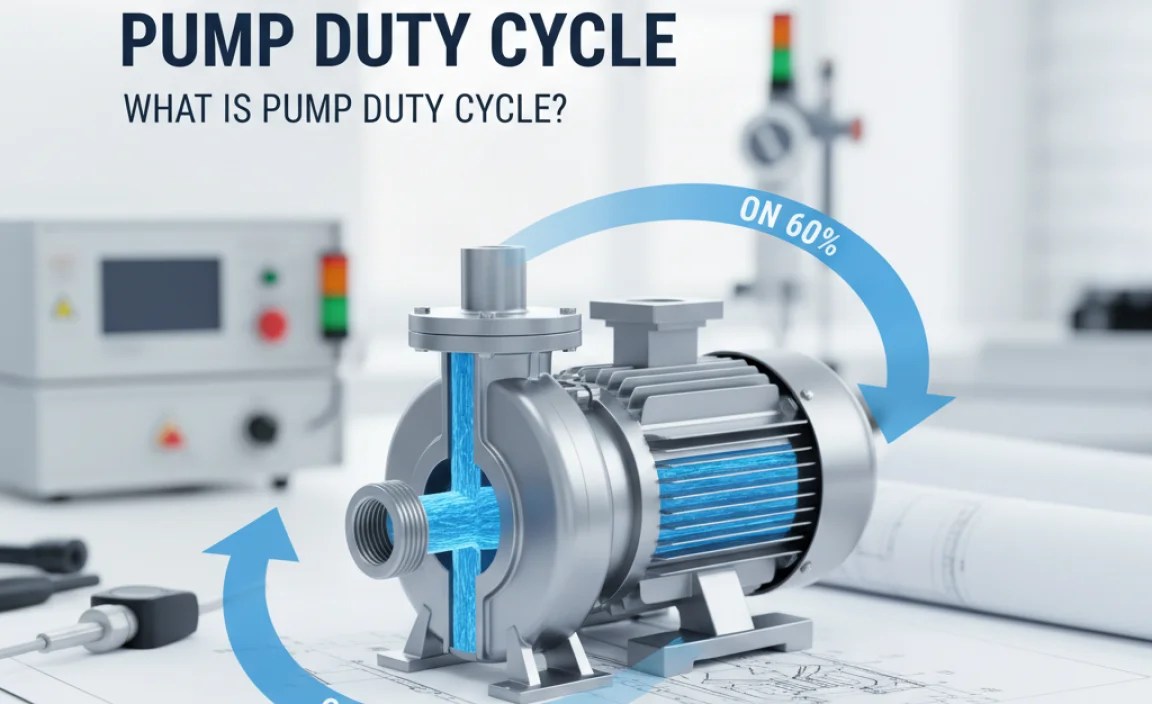
The duty cycle of a pump is a critical factor in determining its longevity and reliability. It essentially defines how much a pump can work before it needs to rest. Let’s dive deeper into the specifics.
What Exactly is Duty Cycle?
Duty cycle is the ratio of on-time to total time (on-time plus off-time) that a pump can operate safely. It’s usually expressed as a percentage. For example:
- 100% Duty Cycle: The pump can run continuously without overheating or damage.
- 50% Duty Cycle: The pump can run for half the time and must rest for the other half.
- 25% Duty Cycle: The pump can run for a quarter of the time and must rest for the remaining three-quarters.
Think of it like this: if a pump has a 50% duty cycle and you want to run it for an hour, it should only operate for 30 minutes and then be allowed to cool down for the other 30 minutes.
Why is Duty Cycle Important?
Duty cycle is important because it directly impacts the pump’s operating temperature. When a pump operates, its motor generates heat. If the pump runs for too long without adequate cooling, it can overheat, leading to:
- Reduced performance
- Premature wear and tear on components
- Complete pump failure
By adhering to the manufacturer’s recommended duty cycle, you ensure that the pump operates within safe temperature limits, maximizing its lifespan and maintaining optimal performance.
Factors Affecting Duty Cycle
Several factors can influence a pump’s duty cycle, including:
- Ambient Temperature: Higher ambient temperatures reduce the pump’s ability to dissipate heat, effectively lowering the duty cycle.
- Pump Design: Pumps with better cooling systems (e.g., integrated fans, heat sinks) can often handle higher duty cycles.
- Load: The amount of work the pump is doing (e.g., pressure, flow rate) affects heat generation. Higher loads generally decrease the duty cycle.
- Voltage: Over or undervoltage can cause the pump to work harder and generate more heat, affecting the duty cycle.
Types of Pumps and Their Duty Cycles

Different types of pumps are designed for different applications, and their duty cycles reflect these intended uses. Here’s a look at some common types of pumps and their typical duty cycle considerations:
Bicycle Pumps
Bicycle pumps, especially hand pumps and mini-pumps, typically have a low duty cycle. They’re designed for intermittent use to inflate tires. Overuse can lead to overheating and damage, especially with cheaper models.
- Hand Pumps: Best for short bursts of inflation. Allow cooling time between tires.
- Floor Pumps: More robust but still not designed for continuous use.
- Electric Bike Pumps: Some models have higher duty cycles but still require monitoring.
Air Compressors
Air compressors used for inflating tires, powering tools, or other applications can have varying duty cycles depending on their design and intended use.
- Small Air Compressors (DIY): Often have low duty cycles (e.g., 20-50%).
- Industrial Air Compressors: Designed for continuous use (100% duty cycle) in demanding environments.
Water Pumps
Water pumps, used in various applications like wells, irrigation, and pressure boosting, also have specific duty cycle ratings.
- Submersible Well Pumps: Often designed for high or continuous duty cycles, especially in residential water systems.
- Sump Pumps: Typically have lower duty cycles as they’re used intermittently to remove water.
- Booster Pumps: Duty cycle depends on the application and design; some are designed for continuous operation.
Vacuum Pumps
Vacuum pumps are used in various industrial and scientific applications. Their duty cycle depends on the specific design and application.
- Laboratory Vacuum Pumps: May have varying duty cycles depending on the application.
- Industrial Vacuum Pumps: Some are designed for continuous operation, while others have specific duty cycle limitations.
Here’s a table summarizing typical duty cycle considerations for different pump types:
| Pump Type | Typical Duty Cycle | Considerations |
|---|---|---|
| Bicycle Hand Pump | Low (e.g., 10-20%) | Allow cooling time between tires. |
| Bicycle Floor Pump | Moderate (e.g., 30-40%) | Avoid continuous inflation of multiple tires without breaks. |
| Small Air Compressor | Low to Moderate (e.g., 20-50%) | Check manufacturer’s specifications for on/off times. |
| Industrial Air Compressor | High to Continuous (e.g., 80-100%) | Designed for demanding, continuous operation. |
| Submersible Well Pump | High to Continuous (e.g., 70-100%) | Designed for consistent water supply. |
| Sump Pump | Low (e.g., 10-30%) | Intermittent use for water removal. |
How to Calculate Pump Duty Cycle

While manufacturers usually provide duty cycle information, it can be helpful to understand how it’s calculated. The formula is straightforward:
Duty Cycle (%) = (On-Time / (On-Time + Off-Time)) * 100
Where:
- On-Time: The duration the pump is actively running.
- Off-Time: The duration the pump is at rest, allowing it to cool down.
Let’s look at a few examples:
- Example 1: A pump runs for 15 minutes and then rests for 45 minutes.
- On-Time = 15 minutes
- Off-Time = 45 minutes
- Duty Cycle = (15 / (15 + 45)) * 100 = (15 / 60) * 100 = 25%
- Example 2: A pump runs continuously without needing to rest.
- On-Time = 60 minutes (1 hour)
- Off-Time = 0 minutes
- Duty Cycle = (60 / (60 + 0)) * 100 = 100%
- Example 3: A pump runs for 2 minutes and rests for 2 minutes.
- On-Time = 2 minutes
- Off-Time = 2 minutes
- Duty Cycle = (2 / (2 + 2)) * 100 = (2 / 4) * 100 = 50%
Tips for Maximizing Pump Lifespan
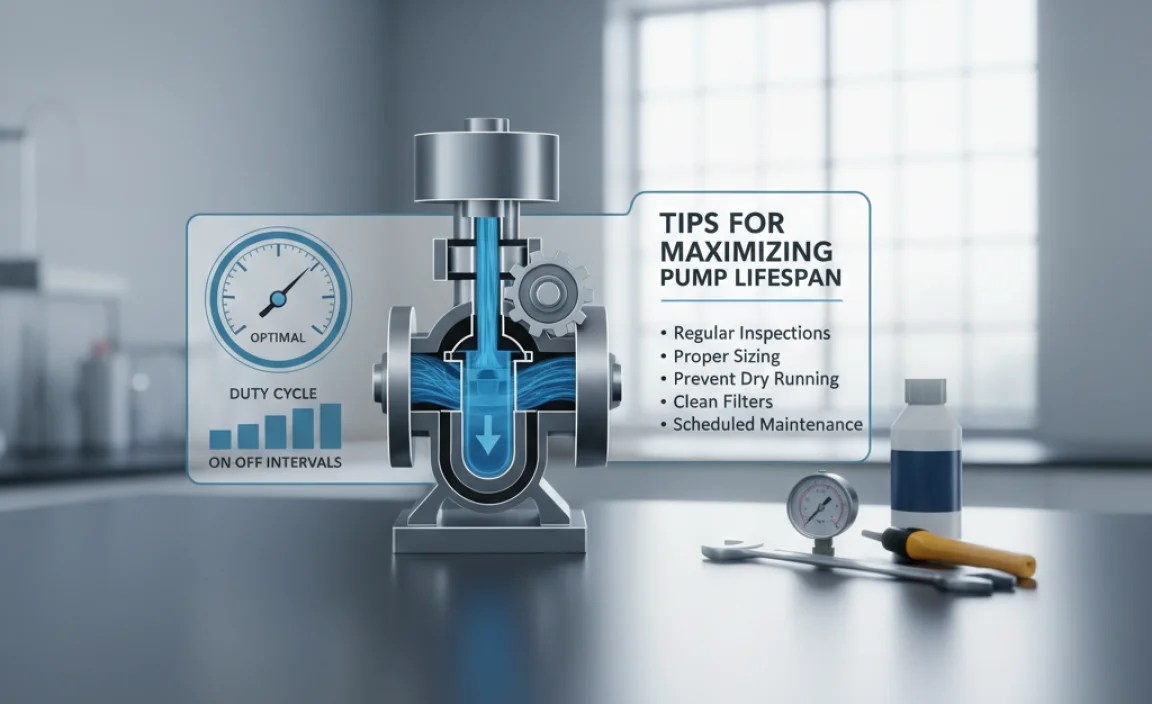
Understanding duty cycle is only half the battle. Here are some practical tips to help you maximize the lifespan of your pumps:
- Follow Manufacturer’s Recommendations: Always adhere to the manufacturer’s specified duty cycle and operating guidelines.
- Monitor Operating Temperature: Keep an eye on the pump’s temperature. If it feels excessively hot, give it a break.
- Ensure Proper Ventilation: Make sure the pump has adequate ventilation to dissipate heat effectively. Avoid placing it in enclosed spaces.
- Reduce Load: If possible, reduce the load on the pump by optimizing the system it’s connected to. For example, using wider tires on your bicycle can reduce the pressure needed to inflate them.
- Regular Maintenance: Perform regular maintenance, such as cleaning filters, lubricating moving parts, and checking for leaks.
- Use the Right Voltage: Ensure the pump is receiving the correct voltage. Over or undervoltage can cause the pump to work harder and generate more heat.
- Invest in Quality: Choosing a higher-quality pump with a robust design and efficient cooling system can often result in a longer lifespan and better performance.
Choosing the Right Pump for Your Needs

Selecting the right pump for your specific needs involves considering several factors, including the required flow rate, pressure, and, of course, the duty cycle.
Assess Your Needs
Start by assessing your specific requirements:
- Frequency of Use: How often will you be using the pump?
- Duration of Use: How long will the pump need to run each time?
- Load Requirements: What pressure or flow rate is required for your application?
- Environment: What is the ambient temperature and ventilation like in the operating environment?
Match Duty Cycle to Application
Once you understand your needs, match the pump’s duty cycle to your application:
- Occasional Use: If you only need the pump for occasional use (e.g., inflating a bicycle tire once a week), a pump with a lower duty cycle may suffice.
- Frequent Use: If you need the pump for frequent or continuous use (e.g., a water pump in a residential water system), choose a pump with a high or continuous duty cycle.
- Heavy-Duty Applications: For demanding applications, such as industrial processes, select a pump specifically designed for heavy-duty use with a 100% duty cycle.
Consider Cooling Mechanisms
Pumps with better cooling mechanisms can handle higher duty cycles. Look for features like:
- Integrated Fans: These help dissipate heat more efficiently.
- Heat Sinks: These draw heat away from the motor.
- Liquid Cooling: Some high-end pumps use liquid cooling for maximum heat dissipation.
Read Reviews and Specifications
Before making a purchase, read reviews and carefully review the manufacturer’s specifications. Pay attention to the duty cycle rating, operating guidelines, and any warnings about overheating.
Troubleshooting Pump Issues Related to Duty Cycle
Even with careful planning, you might encounter issues related to pump duty cycle. Here’s how to troubleshoot some common problems:
Overheating
Symptom: The pump gets excessively hot and may shut off automatically.
Possible Causes:
- Exceeding the duty cycle
- Poor ventilation
- High ambient temperature
- Overload
Solutions:
- Reduce the operating time and increase the rest time.
- Ensure proper ventilation.
- Operate the pump in a cooler environment.
- Reduce the load on the pump.
Reduced Performance
Symptom: The pump’s performance decreases over time, such as reduced pressure or flow rate.
Possible Causes:
- Overheating
- Wear and tear on components
- Clogged filters
- Leaks
Solutions:
- Check and address any overheating issues.
- Inspect and replace worn components.
- Clean or replace filters.
- Repair any leaks.
Premature Failure
Symptom: The pump fails unexpectedly after a relatively short period of use.
Possible Causes:
- Repeatedly exceeding the duty cycle
- Lack of maintenance
- Using the wrong type of pump for the application
Solutions:
- Ensure you are adhering to the recommended duty cycle.
- Implement a regular maintenance schedule.
- Replace the pump with a model that is better suited for the application.
FAQ: Understanding Pump Duty Cycle
Here are some frequently asked questions about pump duty cycle to help clarify any remaining points:
- What happens if I exceed the duty cycle of a pump?
- Exceeding the duty cycle can cause the pump to overheat, leading to reduced performance, premature wear, and eventual failure.
- How can I tell if my pump is overheating?
- Signs of overheating include the pump feeling excessively hot to the touch, a burning smell, or the pump shutting off automatically.
- Is a higher duty cycle always better?
- Not necessarily. A higher duty cycle is only better if it matches your application’s needs. If you only need a pump for occasional use, a lower duty cycle model may be sufficient and more cost-effective.
- Can I modify a pump to increase its duty cycle?
- Modifying a pump to increase its duty cycle is generally not recommended. It can void the warranty and may not be effective without significant engineering changes.
- What is the difference between intermittent duty and continuous duty?
- Intermittent duty means the pump requires regular rest periods, while continuous duty means the pump can run without stopping for extended periods.
- Does ambient temperature affect the duty cycle?
- Yes, higher ambient temperatures reduce the pump’s ability to dissipate heat, effectively lowering the duty cycle. In hotter environments, you may need to reduce the pump’s on-time or increase its off-time.
- Where can I find the duty cycle information for my pump?
- The duty cycle information is typically found in the pump’s user manual or on the manufacturer’s website. Always refer to the manufacturer’s specifications for accurate information.
Conclusion
Understanding pump duty cycle is essential for ensuring the longevity and reliability of your pumps. By grasping the concept, calculating duty cycles, and following best practices for pump maintenance, you can significantly extend the lifespan of your pumps and avoid costly repairs or replacements. Whether you’re inflating your bicycle tires, managing a home water system, or working with industrial equipment, paying attention to duty cycle will help you get the most out of your pumps. So, next time you’re using a pump, remember to give it a break – it’ll thank you for it!
“`


