
How to 3D Print Gauge Mount for Bike Pump: Easy Guide

Do you love riding your bike? Do you want to make it even better? Imagine being able to check your tire pressure easily. You can do this with a special mount for your bike pump. Let’s learn how to 3D print gauge mount for bike pump. It is easier than you might think!
Have you ever had a flat tire far from home? It can be a big problem. A gauge mount helps you keep your tires properly inflated. This makes riding safer and more fun. Keep reading to find out how to make one yourself.
Key Takeaways
- 3D printing lets you make custom parts for your bike, like gauge mounts.
- A gauge mount keeps your bike pump gauge visible while you pump air.
- You need a 3D printer, filament, and a design to get started.
- Learning how to 3D print gauge mount for bike pump saves money.
- Proper tire pressure improves your bike’s performance and safety.
Why 3D Print a Gauge Mount for Bike Pump?

Have you ever struggled to read your bike pump’s gauge while pumping? It can be hard to see. A 3D printed gauge mount solves this problem. It holds the gauge in a good spot. This makes it easy to read the pressure. How to 3D print gauge mount for bike pump is a great question. Many people are finding out it’s a fun project. It also saves you money. Buying a custom mount can be expensive. Printing one yourself is cheaper. Plus, you get to customize it. You can choose the color and design. This makes your bike unique. You can also make mounts for your friends. It is a useful and thoughtful gift. Learning about 3D printing opens up many possibilities. You can make all sorts of things for your bike and more.
- It makes reading the gauge easier while pumping.
- You can customize the design and color.
- It is cheaper than buying a custom mount.
- You can make mounts for friends and family.
- It is a fun and useful 3D printing project.
Think about all the things you could make with a 3D printer. Bike parts are just the beginning. You could make toys, tools, and even art. 3D printing is a skill that will be useful in the future. As you learn more, you can design more complex things. Start with a simple project like a gauge mount. Then, move on to more challenging projects. The possibilities are endless. 3D printing is a great way to express your creativity. It also helps you solve problems in a practical way. Plus, it’s a lot of fun!
What are the benefits of using a 3D printer?
3D printers let you create real objects from digital designs. This means you can design a gauge mount on a computer. Then, you can print it out. You don’t need to be an engineer. There are many easy-to-use design programs. These programs make it simple to create 3D models. 3D printing is also very flexible. You can change the design easily. If you don’t like something, you can fix it. Then, you can print it again. This is much harder to do with traditional manufacturing. 3D printers are becoming more affordable. This means more people can use them. They are used in schools, libraries, and homes. 3D printing is changing the way we make things. It is making manufacturing more accessible. It is also helping people be more creative.
What are the best materials to use?
The best material for a gauge mount is often ABS or PLA plastic. ABS is strong and durable. It can handle the stress of being on a bike. PLA is easier to print and is biodegradable. This makes it a good choice for beginners. Both materials come in many colors. This lets you customize your mount. You should choose a material that is compatible with your 3D printer. Read the printer’s manual to find out which materials it supports. Some materials are more flexible than others. A flexible material might be good for a mount that needs to bend a little. Consider the weather conditions where you live. Some materials can warp in hot weather. Choose a material that will hold up to the elements.
How do I find a good design?
You can find 3D designs online. Websites like Thingiverse have many free designs. You can search for “bike pump gauge mount.” Look for designs that have good reviews. Make sure the design is compatible with your pump and gauge. You can also design your own mount. This requires some knowledge of 3D modeling software. However, it gives you complete control over the design. There are many tutorials online that can teach you how to use 3D modeling software. Start with a simple design and gradually increase the complexity. Don’t be afraid to experiment. The best way to learn is by doing. If you make a mistake, you can always try again.
Fun Fact or Stat: The first 3D printer was invented in 1984 by Chuck Hull. It used a process called stereolithography.
Choosing the Right 3D Printer for Bike Parts

Not all 3D printers are the same. Some are better for making bike parts than others. When choosing a printer, think about its size. You need a printer that is big enough to print your gauge mount. Also, think about the quality of the prints. A good printer will make smooth, strong parts. How to 3D print gauge mount for bike pump depends on the printer you use. Some printers are easier to use than others. If you are a beginner, choose a user-friendly printer. Read reviews and compare different models. Consider the cost of the printer and the filament. Filament is the material the printer uses to make things. Some filaments are more expensive than others. Look for a printer that is reliable and has good customer support. This will help you if you have any problems.
- Consider the printer’s build volume (size).
- Check the print quality and resolution.
- Choose a user-friendly printer if you are a beginner.
- Read reviews and compare different models.
- Think about the cost of the printer and filament.
- Look for a printer with good customer support.
Imagine you buy a cheap 3D printer. It might not work very well. The prints might be rough and weak. This means your gauge mount could break easily. It’s better to spend a little more on a good printer. This will give you better results. A good printer will also last longer. It will be able to print more complex parts. This means you can use it for other projects too. Investing in a good 3D printer is a smart choice. It will save you money in the long run. It will also help you learn more about 3D printing.
What is the difference between FDM and SLA printers?
FDM and SLA are two common types of 3D printers. FDM printers use plastic filament. They melt the filament and build the part layer by layer. SLA printers use liquid resin. They use a laser to harden the resin. FDM printers are generally cheaper. They are also easier to use. SLA printers produce smoother and more detailed parts. They are often used for making small, intricate objects. For a gauge mount, an FDM printer is usually good enough. It is more affordable and easier to maintain. However, if you want a very smooth finish, consider an SLA printer.
How important is print resolution?
Print resolution is how detailed the print will be. A higher resolution means a smoother and more accurate print. Resolution is measured in microns. A micron is a very small unit of measurement. For a gauge mount, a resolution of 100-200 microns is usually good enough. This will give you a smooth and strong part. If you want a very detailed part, you can use a higher resolution. However, this will take longer to print. It will also use more filament. Consider the trade-off between print quality and print time. Choose a resolution that meets your needs.
What other factors should I consider?
Besides print quality and resolution, think about the printer’s reliability. Read reviews to see if other users have had problems. Consider the printer’s build volume. This is the maximum size of the parts you can print. Make sure the build volume is big enough for your gauge mount. Also, think about the printer’s software. Is it easy to use? Does it support the file formats you need? Finally, consider the cost of the printer and the filament. Choose a printer that fits your budget and meets your needs. Don’t forget to factor in the cost of maintenance and repairs.
Fun Fact or Stat: Some 3D printers can even print with metal! This is used to make parts for cars and airplanes.
Finding or Creating a Gauge Mount Design

The design is the most important part. You need a good design to print a good gauge mount. You can find designs online. There are many free and paid designs available. You can also create your own design. This requires some knowledge of 3D modeling software. How to 3D print gauge mount for bike pump starts with a great design. When choosing a design, think about your bike. What size is the frame? Where will the mount attach? Consider the size of your pump and gauge. The design should fit your equipment. Read the reviews of online designs. See what other users have to say. If you create your own design, start simple. Don’t try to make something too complicated. Test your design before printing it. This can save you time and filament.
- Find designs on websites like Thingiverse.
- Consider your bike frame and pump size.
- Read reviews of online designs.
- Start with a simple design if creating your own.
- Test your design before printing.
Imagine you download a design without reading the reviews. You print it out, but it doesn’t fit your bike. You have wasted time and filament. It’s always a good idea to do your research. Read the reviews and check the dimensions. Make sure the design is compatible with your equipment. If you are creating your own design, start with a sketch. Draw the mount and label the dimensions. This will help you create an accurate 3D model. Don’t be afraid to ask for help. There are many online communities where you can get advice. Learning from others is a great way to improve your skills.
What software can I use to design my own mount?
There are many 3D modeling programs. Some are free, and some cost money. Tinkercad is a free, easy-to-use program. It is great for beginners. Fusion 360 is a more advanced program. It is used by professionals. SketchUp is another popular program. It has a free version and a paid version. Choose a program that fits your skill level and budget. There are many tutorials online that can teach you how to use these programs. Start with the basics and gradually learn more advanced techniques. Don’t be afraid to experiment. The best way to learn is by trying things out.
What are the key dimensions to consider?
When designing a gauge mount, consider the diameter of your bike frame. Measure the frame where you want to attach the mount. Also, measure the diameter of your pump and gauge. The mount should fit snugly around these components. Think about the angle of the gauge. You want it to be easy to read while you are pumping. Consider the thickness of the mount. It should be strong enough to hold the gauge securely. Finally, think about the overall size of the mount. You don’t want it to be too bulky or get in the way.
How can I test my design before printing?
Before printing your design, you can test it using software. Most 3D modeling programs have a simulation feature. This allows you to see how the mount will look and fit. You can also use a slicer program to preview the print. A slicer program converts the 3D model into instructions for the printer. This allows you to see how the printer will build the part layer by layer. Check for any errors or problems. Make sure the mount is strong enough to withstand the stress of being on a bike. If you find any problems, fix them before printing.
Fun Fact or Stat: 3D printing is used to make custom-fit prosthetics for people who have lost limbs. This helps them live more comfortable lives.
Preparing Your 3D Printer for the Mount
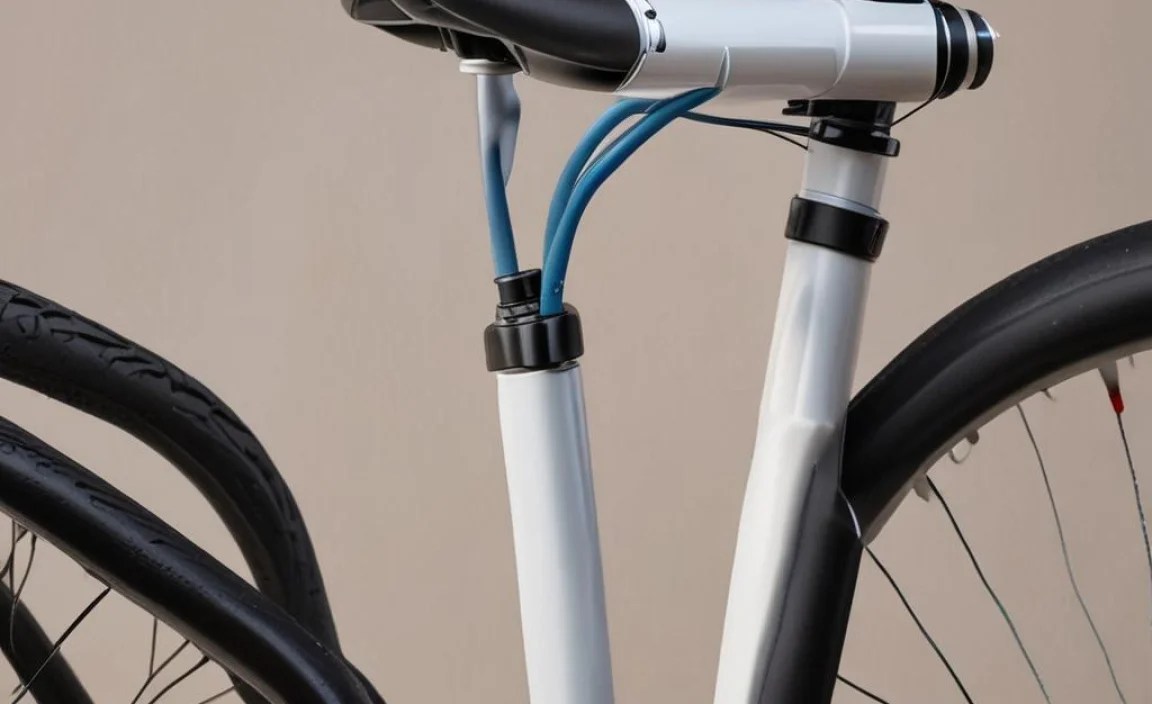
Getting your 3D printer ready is important. This will make sure your print comes out well. First, level the print bed. This means making sure it is perfectly flat. If the bed isn’t level, the print might not stick. How to 3D print gauge mount for bike pump also depends on bed adhesion. Clean the print bed. Use alcohol to remove any dirt or grease. This will help the print stick better. Choose the right filament. PLA is a good choice for beginners. It is easy to print and doesn’t require a heated bed. Set the correct temperature. The filament manufacturer will recommend a temperature. Adjust the print speed. A slower speed will give you a better quality print. Finally, add supports if needed. Supports help the print stay stable during printing.
- Level the print bed carefully.
- Clean the print bed with alcohol.
- Choose the right filament for your printer.
- Set the correct temperature for the filament.
- Adjust the print speed for better quality.
- Add supports if needed for stability.
Imagine you start a print without leveling the bed. The print might come loose and get messed up. This is a waste of time and filament. Taking the time to prepare your printer is worth it. It will increase your chances of a successful print. Leveling the bed is a simple process. Most printers have a leveling feature. Follow the instructions in your printer’s manual. Cleaning the bed is also easy. Just wipe it down with alcohol. Choosing the right filament is important too. Different filaments have different properties. Some are stronger, some are more flexible, and some are easier to print. Do your research and choose the filament that is best for your project.
How do I level the print bed?
Leveling the print bed is crucial for successful 3D printing. Most printers have a manual leveling system. This involves adjusting screws under the bed. You use a piece of paper to check the gap between the nozzle and the bed. The paper should slide with slight resistance. Some printers have an automatic leveling system. This uses sensors to detect the bed’s position. Follow the instructions in your printer’s manual to level the bed correctly. Leveling the bed ensures that the first layer of the print sticks properly.
What temperature should I use for PLA?
PLA is a popular filament for 3D printing. It is easy to print and doesn’t require a heated bed. The recommended printing temperature for PLA is usually between 190°C and 220°C. The exact temperature will depend on the brand of filament. Check the manufacturer’s recommendations. If the temperature is too low, the filament might not stick to the bed. If the temperature is too high, the filament might warp or melt. Experiment with different temperatures to find the best setting for your printer and filament.
What are supports and why are they needed?
Supports are structures that help the print stay stable during printing. They are needed for parts that have overhangs or bridges. Overhangs are parts that extend out from the main body of the print. Bridges are parts that span a gap between two points. Without supports, these parts might collapse or warp. Supports are usually printed with the same material as the main part. They can be removed after the print is finished. Slicer programs can automatically generate supports. You can also manually add supports in your 3D modeling program.
Fun Fact or Stat: 3D printing is being used to create houses in some parts of the world. This can provide affordable housing for people in need.
Printing Your Gauge Mount

Now it’s time to print your gauge mount! Load the filament into your printer. Make sure it is feeding properly. Import the design file into your slicer program. Set the print settings. Choose the layer height, infill density, and print speed. Generate the G-code file. This file contains the instructions for the printer. How to 3D print gauge mount for bike pump requires patience. Transfer the G-code file to your printer. Start the print. Watch the print closely. Make sure everything is going smoothly. If you see any problems, stop the print immediately. Once the print is finished, let it cool down. Then, remove it from the print bed. Remove any supports or brims. Clean up the print. Sand it down if needed.
- Load the filament into your printer properly.
- Import the design file into your slicer.
- Set the print settings carefully.
- Generate the G-code file.
- Transfer the G-code to your printer.
- Watch the print closely for problems.
- Let the print cool before removing it.
- Remove supports and clean up the print.
Imagine you start a print and walk away. You come back later and find that the print has failed. This is frustrating. It’s important to watch the print during the first few layers. This is when most problems occur. If you see any issues, you can stop the print and fix them. For example, the print might not be sticking to the bed. Or the filament might be getting tangled. By watching the print, you can catch these problems early. This will save you time and filament. Printing can take several hours. Be patient and let the printer do its job. The end result will be worth it.
What is layer height and why does it matter?
Layer height is the thickness of each layer of the print. A lower layer height results in a smoother print. It also takes longer to print. A higher layer height results in a faster print. It might be rougher. For a gauge mount, a layer height of 0.2mm is a good compromise. This will give you a decent quality print in a reasonable amount of time. If you want a very smooth print, you can use a layer height of 0.1mm. However, this will take much longer to print. Experiment with different layer heights to find the best setting for your printer and filament.
What is infill and how does it affect strength?
Infill is the internal structure of the print. It provides strength and support. The infill density is the percentage of the print that is filled with material. A higher infill density results in a stronger print. It also takes longer to print and uses more filament. A lower infill density results in a weaker print. It prints faster and uses less filament. For a gauge mount, an infill density of 20-30% is usually sufficient. This will give you a strong enough print for most applications. If you need a very strong print, you can use a higher infill density.
How do I remove supports without damaging the print?
Removing supports can be tricky. You want to avoid damaging the print. Use a pair of pliers or cutters to carefully remove the supports. Start by removing the larger supports. Then, remove the smaller supports. Be gentle and avoid pulling too hard. If the supports are difficult to remove, you can try heating them with a heat gun. This will soften the plastic and make them easier to remove. You can also use a solvent like acetone to dissolve the supports. However, be careful not to damage the print. After removing the supports, clean up the print. Sand it down if needed.
Fun Fact or Stat: 3D printing is being used to create personalized medicine. Doctors can print custom-made implants and prosthetics for patients.
Finishing and Installing Your Gauge Mount
After printing, you need to finish and install your gauge mount. First, remove any supports or brims. Clean up the print. Sand it down if needed. This will smooth out the surface. Test the fit of the gauge and pump. Make sure everything fits snugly. How to 3D print gauge mount for bike pump isn’t complete until it’s installed. If the fit is too tight, you can sand down the inside of the mount. If the fit is too loose, you can add some shims. Now, attach the mount to your bike frame. Use screws or zip ties. Make sure the mount is secure. Finally, install the gauge and pump. Test the setup. Make sure the gauge is easy to read. Make sure the pump works properly.
- Remove supports and clean the print.
- Sand down the surface for smoothness.
- Test the fit of the gauge and pump.
- Adjust the fit if needed.
- Attach the mount securely to your bike.
- Install the gauge and pump and test.
Imagine you install the mount without testing the fit. You go for a ride and the gauge falls off. This is annoying and could be dangerous. It’s always a good idea to test the fit before installing the mount. Make sure everything is secure. If you are using screws, use the correct size. If you are using zip ties, make sure they are tight. You want the mount to be able to withstand the vibrations of riding. Once you have installed the mount, test it out on a short ride. Make sure everything is working properly. If you have any problems, fix them before going on a longer ride.
How do I smooth the surface of the print?
There are several ways to smooth the surface of a 3D print. Sanding is a common method. Use sandpaper with different grits. Start with a coarse grit and gradually move to a finer grit. This will remove the layer lines and smooth out the surface. You can also use a chemical smoothing method. This involves exposing the print to a solvent like acetone. The solvent will melt the surface of the plastic and create a smooth finish. However, be careful not to overdo it. Too much solvent can damage the print. Another option is to use a coating. There are many different coatings available. They can be applied with a brush or spray can. Choose a coating that is compatible with the plastic you used for printing.
What type of fasteners should I use?
The type of fasteners you use will depend on how you are attaching the mount to your bike frame. Screws are a good option if your frame has threaded holes. Use screws that are the correct size and length. Zip ties are a good option if your frame does not have threaded holes. Use zip ties that are strong and durable. You can also use adhesive. However, be sure to use an adhesive that is designed for plastics. Clean the surface of the frame before applying the adhesive. Make sure the mount is securely attached to the frame. You don’t want it to come loose while you are riding.
How do I ensure the gauge is accurate?
To ensure the gauge is accurate, check it against another gauge. Compare the readings of the two gauges. If they are different, the gauge may be inaccurate. You can also calibrate the gauge. Some gauges have a calibration screw. Adjust the screw until the gauge reads correctly. If you are not sure how to calibrate the gauge, consult the manufacturer’s instructions. It’s important to have an accurate gauge. This will help you maintain the correct tire pressure. Correct tire pressure improves your bike’s performance and safety.
Fun Fact or Stat: 3D printing is being used to create food! Chefs are experimenting with printing different shapes and textures of food.
| Feature | PLA | ABS | PETG |
|---|---|---|---|
| Strength | Medium | High | High |
| Ease of Printing | Easy | Difficult | Medium |
| Temperature Resistance | Low | High | High |
| Flexibility | Low | Medium | High |
Summary
Learning how to 3D print gauge mount for bike pump is a fun project. It also makes your bike rides better. You can easily check your tire pressure. This helps you ride safely and efficiently. First, you need a 3D printer and filament. Then, find or create a design for the mount. Prepare your printer by leveling the bed and setting the temperature. Print the mount and let it cool. Finally, finish the mount by sanding it and attaching it to your bike. With a little practice, you can create your own custom gauge mount.
3D printing opens up many possibilities for customizing your bike. You can make all sorts of parts and accessories. It’s a great way to express your creativity and improve your bike’s performance. So, why not give it a try? You might be surprised at what you can create. Remember to always follow safety precautions when using a 3D printer. With a little patience and practice, you can become a 3D printing expert.
Conclusion
You now know how to 3D print gauge mount for bike pump. It’s a simple project with big benefits. You can customize your bike and improve your ride. 3D printing is a skill that will be useful for many years. You can make all sorts of things with a 3D printer. Start with a simple project like a gauge mount. Then, move on to more complex projects. The possibilities are endless. Have fun and happy printing!
Frequently Asked Questions
Question No 1: What is a gauge mount for a bike pump?
Answer: A gauge mount is a small part. It holds your bike pump’s gauge. It makes it easier to see the pressure. It attaches to your bike frame. This keeps the gauge in a good spot. You don’t have to hold it. This makes pumping your tires easier. It also makes it safer. You can see the pressure while you pump. This helps you avoid over-inflating your tires. This simple part can make a big difference in your biking experience. Knowing how to 3D print gauge mount for bike pump gives you a custom solution.
Question No 2: What do I need to 3D print a gauge mount?
Answer: To 3D print a gauge mount, you need a few things. First, you need a 3D printer. Second, you need filament. This is the material the printer uses. PLA plastic is a good choice for beginners. Third, you need a design for the mount. You can find designs online. Or you can create your own. You also need a slicer program. This program converts the design into instructions for the printer. Finally, you need some basic tools. These include pliers, cutters, and sandpaper. These tools will help you clean up the print. With these things, you can start how to 3D print gauge mount for bike pump.
Question No 3: How long does it take to 3D print a gauge mount?
Answer: The printing time depends on several things. These include the size of the mount and the print settings. A small mount with low infill will print faster. A large mount with high infill will take longer. On average, it takes between 1 and 3 hours to print a gauge mount. You can speed up the printing process. Use a higher layer height and a lower infill density. However, this might reduce the quality of the print. It’s important to find a balance between speed and quality. It is a good idea to start with a simple design. This can help you learn how to 3D print gauge mount for bike pump faster.
Question No 4: Can I customize the design of my gauge mount?
Answer: Yes, you can definitely customize the design! This is one of the best things about 3D printing. You can change the size, shape, and color of the mount. You can also add your own personal touches. For example, you could add your name or a logo. To customize the design, you need to use a 3D modeling program. There are many free and paid programs available. Tinkercad is a good choice for beginners. With a little practice, you can create a unique gauge mount that reflects your personality. Learning how to 3D print gauge mount for bike pump lets you be creative.
Question No 5: Is 3D printing difficult to learn?
Answer: 3D printing can seem difficult at first. But it’s actually quite easy to learn. There are many resources available online. These include tutorials, videos, and forums. Start with a simple project. This will help you get familiar with the process. Don’t be afraid to experiment. The best way to learn is by doing. If you make a mistake, don’t worry. Just try again. With a little patience and practice, you can become a 3D printing expert. Understanding how to 3D print gauge mount for bike pump is a great start.
Question No 6: What are the benefits of using a gauge mount?
Answer: A gauge mount offers several benefits. It makes it easier to read your bike pump’s gauge. This helps you inflate your tires to the correct pressure. Correct tire pressure improves your bike’s performance. It also makes riding safer. A gauge mount keeps the gauge in a good spot. You don’t have to hold it. This frees up your hands. It also reduces the risk of dropping the gauge. A 3D printed gauge mount is a custom solution. It fits your bike and pump perfectly. Knowing how to 3D print gauge mount for bike pump gives you these advantages.


