
When Is a Cycle of a Sodium-Potassium Pump Completed? A Simple Guide

Quick Summary: A full cycle of the sodium-potassium pump is completed when it moves three sodium ions (Na+) out of the cell and two potassium ions (K+) into the cell, using one molecule of ATP for energy. This process restores the cell’s resting membrane potential, essential for nerve and muscle function.
Ever wondered how your muscles contract or your nerves send signals? The sodium-potassium pump is a tiny but mighty player in these processes. It works tirelessly in your cells, but understanding when it finishes a cycle can seem tricky. Many people find the science confusing, but don’t worry! I’m here to break it down in simple terms. This guide will walk you through each step of the sodium-potassium pump cycle, making it easy to understand. By the end, you’ll know exactly when the pump completes its crucial job. Let’s dive in and make cell biology clear and straightforward!
What Is the Sodium-Potassium Pump?

The sodium-potassium pump is a protein found in the cell membranes of neurons and other animal cells. It actively transports sodium ions (Na+) and potassium ions (K+) across the cell membrane, working against their concentration gradients. This means it moves these ions from areas where they are less concentrated to areas where they are more concentrated, which requires energy in the form of ATP (adenosine triphosphate). Think of it like a tiny, tireless worker maintaining the right balance inside and outside your cells.
Why is this pump so important? It’s crucial for maintaining the cell’s resting membrane potential. This potential is essential for nerve impulse transmission, muscle contraction, and maintaining cell volume. Without the sodium-potassium pump, your nerves wouldn’t fire correctly, your muscles wouldn’t contract, and your cells could even burst! It’s a fundamental process for life as we know it.
The Step-by-Step Cycle of the Sodium-Potassium Pump

The sodium-potassium pump cycle can be broken down into several key steps. Each step involves changes in the pump’s shape and binding affinities, allowing it to selectively transport sodium and potassium ions. Let’s walk through each phase to understand when a cycle is fully completed.
Step 1: Binding of Sodium Ions
The cycle begins with the pump open to the inside of the cell (cytoplasm). In this state, the pump has a high affinity for sodium ions (Na+). Specifically, three sodium ions from inside the cell bind to the pump.
Think of it like a special door that only opens from the inside and is designed to grab three specific “packages” (sodium ions) before it can move on.
Step 2: ATP Hydrolysis
Once the three sodium ions are bound, the pump undergoes a change triggered by the hydrolysis of ATP. ATP (adenosine triphosphate) is the cell’s primary energy currency. The pump uses one molecule of ATP, splitting it into ADP (adenosine diphosphate) and an inorganic phosphate group (Pi). This process releases energy.
This energy is used to phosphorylate the pump, meaning the phosphate group (Pi) binds to the pump. This phosphorylation is crucial because it changes the shape of the pump.
Step 3: Shape Change and Sodium Release
The phosphorylation causes the pump to change its shape. This shape change closes the pump to the inside of the cell and opens it to the outside of the cell (extracellular space). As the shape changes, the pump’s affinity for sodium ions decreases, causing the three sodium ions to be released outside the cell.
Imagine the door now swings open to the outside, releasing the three “packages” (sodium ions) into the outside environment.
Step 4: Binding of Potassium Ions
Now that the pump is open to the outside and the sodium ions have been released, the pump has a high affinity for potassium ions (K+). Two potassium ions from outside the cell bind to the pump.
The pump is now ready to grab two different “packages” (potassium ions) from the outside.
Step 5: Dephosphorylation
Once the two potassium ions are bound, the phosphate group (Pi) that was attached to the pump is released. This dephosphorylation causes the pump to revert to its original shape.
The release of the phosphate group acts like a trigger, causing the pump to snap back to its original form.
Step 6: Shape Change and Potassium Release
As the pump returns to its original shape, it closes to the outside of the cell and opens to the inside of the cell. This shape change decreases the pump’s affinity for potassium ions, causing the two potassium ions to be released inside the cell.
The door now swings back to the inside, releasing the two “packages” (potassium ions) into the cell’s interior.
Completion of the Cycle
With the release of potassium ions inside the cell, the pump is now back in its original conformation, ready to bind three sodium ions and start the cycle all over again. A full cycle is therefore completed when:
- Three sodium ions have been transported out of the cell.
- Two potassium ions have been transported into the cell.
- One molecule of ATP has been hydrolyzed to ADP and inorganic phosphate.
Here’s a table summarizing the steps:
| Step | Event | Ions Involved | Location |
|---|---|---|---|
| 1 | Sodium Binding | 3 Na+ bind to the pump | Inside cell (cytoplasm) |
| 2 | ATP Hydrolysis | ATP -> ADP + Pi | Pump |
| 3 | Sodium Release | 3 Na+ released | Outside cell (extracellular space) |
| 4 | Potassium Binding | 2 K+ bind to the pump | Outside cell (extracellular space) |
| 5 | Dephosphorylation | Pi released | Pump |
| 6 | Potassium Release | 2 K+ released | Inside cell (cytoplasm) |
Why Is This Cycle So Important?

The sodium-potassium pump cycle is essential for several critical functions in the body. Understanding its importance helps to appreciate the significance of this tiny molecular machine.
Maintaining Resting Membrane Potential
The primary function of the sodium-potassium pump is to maintain the resting membrane potential in cells. This is crucial for the excitability of nerve and muscle cells. The pump creates an electrochemical gradient by pumping more positive charges out of the cell (3 Na+) than it pumps in (2 K+). This results in a negative charge inside the cell relative to the outside. This difference in charge is the resting membrane potential, typically around -70 mV in neurons.
Nerve Impulse Transmission
Nerve cells (neurons) use the resting membrane potential to generate and transmit electrical signals. When a neuron is stimulated, ion channels open, allowing ions to flow across the membrane and changing the membrane potential. If the change is large enough, it can trigger an action potential, which is an electrical signal that travels down the neuron. The sodium-potassium pump is vital for quickly restoring the resting membrane potential after an action potential, allowing the neuron to fire again.
Muscle Contraction
Muscle cells also rely on the resting membrane potential for contraction. When a muscle cell is stimulated, it triggers a series of events that lead to the release of calcium ions inside the cell. These calcium ions bind to proteins in the muscle fibers, causing them to slide past each other and contract the muscle. The sodium-potassium pump helps maintain the ion gradients necessary for these processes to occur efficiently.
Maintaining Cell Volume
The sodium-potassium pump also helps to maintain cell volume. By controlling the concentration of ions inside and outside the cell, it prevents the buildup of osmotic pressure that could cause the cell to swell or shrink. This is particularly important in cells that are exposed to fluctuating osmotic conditions, such as kidney cells.
Factors Affecting the Sodium-Potassium Pump

Several factors can affect the activity of the sodium-potassium pump. Understanding these factors can provide insights into conditions that may impair its function.
ATP Availability
Since the sodium-potassium pump requires ATP to function, its activity is directly affected by the availability of ATP in the cell. Conditions that reduce ATP production, such as hypoxia (lack of oxygen) or metabolic disorders, can impair the pump’s function.
Ion Concentrations
The concentrations of sodium and potassium ions inside and outside the cell can also affect the pump’s activity. If there is an imbalance in these ion concentrations, the pump may have to work harder to maintain the resting membrane potential, which can lead to fatigue or dysfunction.
Temperature
Temperature affects the rate of enzymatic reactions, including the activity of the sodium-potassium pump. The pump functions optimally within a certain temperature range. Extreme temperatures can denature the protein and impair its function.
Inhibitors
Certain substances can inhibit the sodium-potassium pump. For example, cardiac glycosides like digoxin, which are used to treat heart failure, inhibit the pump. This inhibition increases the concentration of sodium inside heart muscle cells, which in turn increases the force of heart contractions.
Common Issues and Troubleshooting
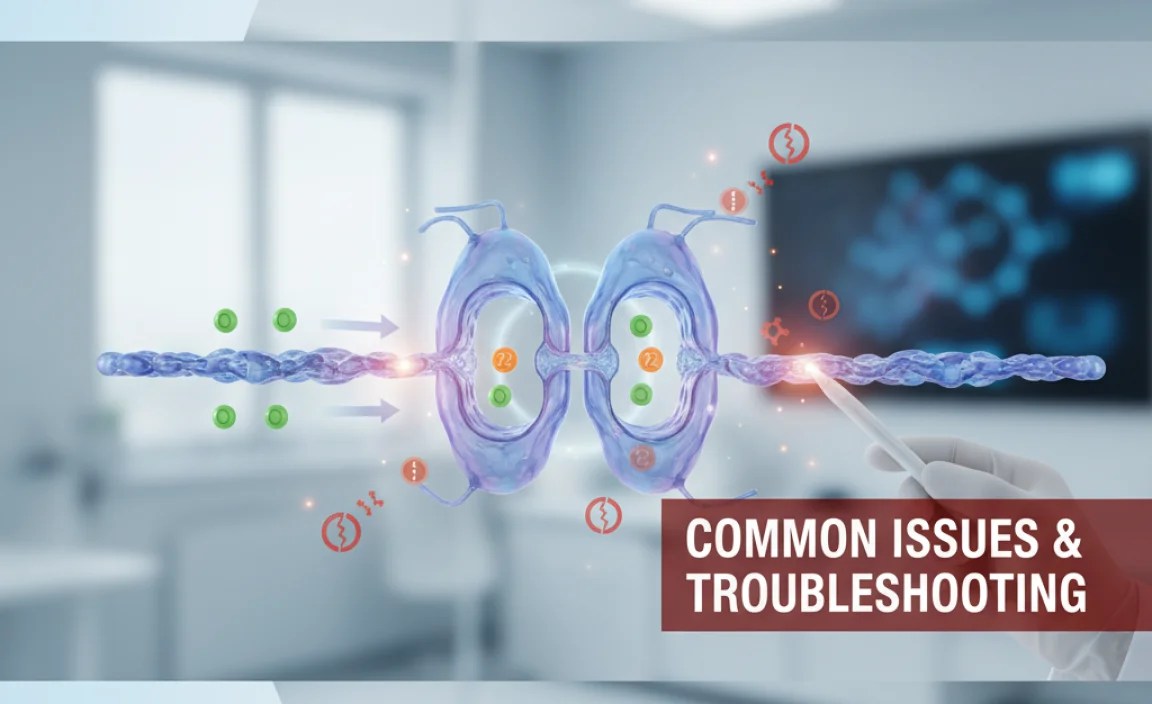
While the sodium-potassium pump is a robust system, certain issues can arise that affect its function. Recognizing these issues and understanding how to troubleshoot them can be crucial for maintaining cellular health.
Electrolyte Imbalance
Issue: An imbalance in sodium and potassium levels can disrupt the pump’s function. This can occur due to dehydration, kidney problems, or certain medications.
Troubleshooting:
- Hydration: Ensure adequate fluid intake, especially during and after exercise.
- Diet: Consume a balanced diet with sufficient sodium and potassium.
- Medical Evaluation: Consult a healthcare professional to identify and address underlying medical conditions.
Hypoxia
Issue: Lack of oxygen can reduce ATP production, impairing the pump’s function.
Troubleshooting:
- Ventilation: Ensure adequate ventilation in enclosed spaces.
- Medical Attention: Seek immediate medical attention for conditions causing hypoxia, such as respiratory distress.
Medication Side Effects
Issue: Certain medications, such as diuretics and cardiac glycosides, can affect the pump’s function.
Troubleshooting:
- Consultation: Discuss potential side effects with your healthcare provider.
- Monitoring: Regularly monitor electrolyte levels if you are taking medications that affect the pump.
Cellular Damage
Issue: Damage to cell membranes can disrupt the pump’s integrity and function.
Troubleshooting:
- Antioxidants: Consume a diet rich in antioxidants to protect cells from damage.
- Avoid Toxins: Minimize exposure to environmental toxins that can damage cell membranes.
Advanced Insights into the Sodium-Potassium Pump
For those looking to delve deeper, here are some advanced insights into the sodium-potassium pump.
Isoforms of the Sodium-Potassium Pump
There are different isoforms (variants) of the sodium-potassium pump, each with slightly different properties and tissue-specific expression. For example, the α1 isoform is found in most tissues, while the α2 isoform is more abundant in the brain and muscle. These isoforms may have different affinities for sodium and potassium ions, and their expression can be regulated differently in response to various stimuli.
Regulation of the Sodium-Potassium Pump
The activity of the sodium-potassium pump is regulated by a variety of factors, including hormones, neurotransmitters, and intracellular signaling pathways. For example, insulin can increase the activity of the pump in muscle cells, while dopamine can inhibit the pump in certain brain regions. Understanding these regulatory mechanisms is important for understanding how the pump contributes to various physiological processes.
Role in Disease
Dysfunction of the sodium-potassium pump has been implicated in a variety of diseases, including hypertension, heart failure, and neurological disorders. For example, mutations in genes encoding the pump subunits have been linked to certain forms of familial hypertension. Additionally, the pump is a target for various drugs used to treat these conditions.
The Future of Sodium-Potassium Pump Research
Research on the sodium-potassium pump continues to advance, with new insights into its structure, function, and regulation. Some areas of current research include:
- Structural Biology: High-resolution structures of the pump are providing new insights into its mechanism of action.
- Drug Development: Researchers are exploring new drugs that target the pump for the treatment of various diseases.
- Gene Therapy: Gene therapy approaches are being developed to correct mutations in genes encoding the pump subunits.
These advances promise to further our understanding of the sodium-potassium pump and its role in health and disease.
FAQ: Understanding the Sodium-Potassium Pump
Here are some frequently asked questions about the sodium-potassium pump to help clarify any remaining points.
Q1: What exactly is the sodium-potassium pump?
A: It’s a protein in your cell membranes that uses energy (ATP) to pump sodium ions out of the cell and potassium ions into the cell. This helps maintain the cell’s electrical balance.
Q2: Why is the sodium-potassium pump important?
A: It’s vital for nerve and muscle function. It helps nerves send signals and muscles contract properly.
Q3: How does ATP help the sodium-potassium pump work?
A: ATP provides the energy needed for the pump to change shape and move the sodium and potassium ions against their concentration gradients.
Q4: What happens if the sodium-potassium pump stops working?
A: If it stops, the cell’s electrical balance is disrupted, which can lead to nerve and muscle problems. In severe cases, it can even cause cell death.
Q5: Can I do anything to help my sodium-potassium pump work better?
A: Staying hydrated and maintaining a balanced diet with enough sodium and potassium can help. If you have concerns, consult a healthcare professional.
Q6: Is the sodium-potassium pump only in humans?
A: No, it’s found in the cell membranes of neurons and other animal cells. It’s a fundamental component of animal cell biology.
Q7: How does temperature affect the sodium-potassium pump?
A: Extreme temperatures can affect the pump’s function. It works best within a certain temperature range, and very high or low temperatures can disrupt its activity.
Conclusion
Understanding when a cycle of the sodium-potassium pump is completed—after moving three sodium ions out and two potassium ions in, using one ATP molecule—is key to grasping its vital role in cell function. This process maintains the resting membrane potential, essential for nerve impulse transmission and muscle contraction. By maintaining proper electrolyte balance, staying hydrated, and addressing potential issues promptly, you can help ensure this tiny pump keeps working efficiently. It’s a small component with a huge impact on your overall health and well-being!
“`


