
How Many Cycles Per Hour for a Heat Pump? A Simple Guide

Quick Summary: A heat pump should ideally cycle 3-8 times per hour, each cycle lasting at least 10 minutes. More cycles can indicate issues like poor insulation, incorrect sizing, or a failing component. Regular cycling helps maintain consistent temperatures and efficient operation.
Is your heat pump turning on and off too often? It’s a common concern! Frequent cycling can lead to higher energy bills and put unnecessary wear and tear on your system. But don’t worry, figuring out if your heat pump is cycling correctly is easier than you think. We’ll walk you through what’s normal, what’s not, and how to troubleshoot potential problems. Let’s get started!
Understanding Heat Pump Cycles

Before diving into the ideal number of cycles, let’s clarify what a “cycle” means for a heat pump. A cycle is one complete on-and-off sequence. The heat pump turns on to heat or cool your home, runs for a period, and then turns off when the thermostat reaches the set temperature. Understanding these cycles is key to ensuring your system runs efficiently.
What Factors Influence Cycling Frequency?
Several factors can affect how often your heat pump cycles. These include:
- Outdoor Temperature: Colder temperatures in winter and hotter temperatures in summer mean the heat pump has to work harder and may cycle more frequently.
- Indoor Temperature Setting: A large difference between your desired indoor temperature and the outdoor temperature will cause longer and potentially more frequent cycles.
- Insulation: Poor insulation allows heat to escape in winter and enter in summer, forcing the heat pump to cycle more often to maintain the set temperature.
- Size of the Heat Pump: An oversized heat pump may cool or heat your home too quickly and then shut off, leading to short cycling. An undersized unit will run constantly.
- Air Leaks: Drafts from windows, doors, and other openings can cause temperature fluctuations, leading to more frequent cycling.
Ideal Number of Cycles Per Hour

So, how many cycles per hour is considered normal? Generally, a heat pump should cycle between 3 to 8 times per hour. Each cycle should run for at least 10 minutes to ensure efficient operation and prevent short cycling.
What is Short Cycling?
Short cycling occurs when a heat pump turns on and off too quickly, often in just a few minutes. This is inefficient and can damage the compressor over time. Here’s why it’s a problem:
- Reduced Efficiency: The heat pump doesn’t run long enough to reach its optimal operating temperature, wasting energy.
- Increased Wear and Tear: Frequent starts and stops put stress on the compressor and other components, shortening their lifespan.
- Uneven Heating/Cooling: Short cycles result in inconsistent temperatures throughout your home.
What is Long Cycling?
On the other end, long cycling refers to when your heat pump runs almost continuously. While it sounds like it’s working hard, it can also indicate issues.
- Undersized Unit: The heat pump might not be powerful enough to meet the heating or cooling demands of your home.
- Restricted Airflow: Dirty filters or blocked vents can restrict airflow, causing the unit to run longer.
- Refrigerant Leaks: Low refrigerant levels reduce the heat pump’s ability to transfer heat effectively.
How to Check Your Heat Pump’s Cycle Rate

Checking your heat pump’s cycle rate is straightforward. Here’s how you can do it:
- Set a Timer: Choose a period when your heat pump is actively heating or cooling (e.g., during the hottest part of the day or the coldest part of the night).
- Observe: Watch your thermostat or listen to the unit. Note the time when the heat pump turns on.
- Record: Record the time when the heat pump turns off.
- Repeat: Repeat steps 2 and 3 for at least one hour.
- Calculate: Count the number of cycles (on-off sequences) within that hour.
Example Calculation
Let’s say you observe the following:
- Start: 7:00 PM
- Stop: 7:15 PM
- Start: 7:25 PM
- Stop: 7:40 PM
- Start: 7:50 PM
- Stop: 8:05 PM
In this case, the heat pump cycled 3 times in one hour. Each cycle lasted 15 minutes, which is within the normal range.
Troubleshooting Cycling Issues
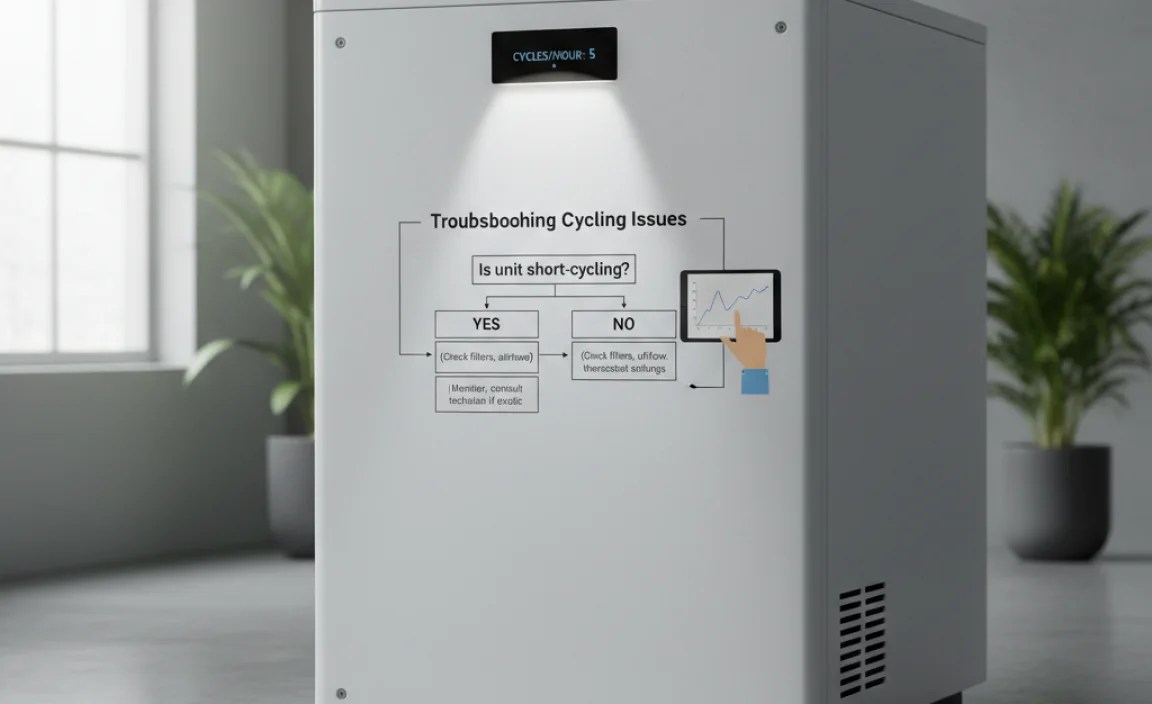
If your heat pump is cycling too frequently or not enough, here are some troubleshooting steps you can take.
Common Causes of Short Cycling
- Dirty Air Filter: A clogged air filter restricts airflow, causing the heat pump to overheat and shut down prematurely. Replace the filter regularly (every 1-3 months).
- Oversized Heat Pump: An oversized unit cools or heats the space too quickly, leading to short cycles. This is a more complex issue that may require professional evaluation.
- Refrigerant Leaks: Low refrigerant levels can cause the unit to cycle on and off rapidly. Contact a qualified HVAC technician to check for leaks and recharge the system.
- Faulty Thermostat: A malfunctioning thermostat can send incorrect signals to the heat pump, causing it to cycle improperly. Test the thermostat or replace it if necessary.
Common Causes of Long Cycling
- Undersized Heat Pump: An undersized unit struggles to maintain the set temperature and runs continuously. This often requires replacing the unit with a larger one.
- Restricted Airflow: Blocked vents or closed registers can restrict airflow, causing the heat pump to work harder. Ensure all vents are open and unobstructed.
- Dirty Coils: Dirty evaporator or condenser coils reduce the heat pump’s ability to transfer heat effectively. Clean the coils regularly.
- Insulation Issues: Poor insulation allows heat to escape in winter and enter in summer, forcing the heat pump to run longer. Improve insulation in your attic, walls, and floors.
DIY Solutions and When to Call a Professional

Many cycling issues can be resolved with simple DIY solutions. However, some problems require professional attention. Here’s a breakdown:
DIY Solutions
- Replace Air Filter: This is the easiest and most common fix for cycling issues.
- Check Vents and Registers: Ensure all vents are open and unobstructed.
- Clean Outdoor Unit: Remove debris from around the outdoor unit to improve airflow.
- Adjust Thermostat Settings: Make sure your thermostat is set correctly and not causing unnecessary cycling.
- Improve Insulation: Seal air leaks around windows and doors with weather stripping or caulk.
When to Call a Professional
- Refrigerant Leaks: Only a licensed HVAC technician can handle refrigerant.
- Electrical Issues: If you suspect an electrical problem, call a professional immediately.
- Compressor Problems: Compressor repairs are complex and require specialized tools and knowledge.
- Oversized/Undersized Unit: Determining the correct size for a heat pump and installing a new unit requires professional expertise.
Maintaining Optimal Heat Pump Performance
Regular maintenance is crucial for ensuring your heat pump operates efficiently and reliably. Here are some tips:
- Regular Filter Changes: Change the air filter every 1-3 months, depending on usage and air quality.
- Professional Tune-Ups: Schedule annual maintenance with a qualified HVAC technician.
- Clean Coils: Keep the evaporator and condenser coils clean to improve heat transfer.
- Inspect Ductwork: Check for leaks in your ductwork and seal them to prevent energy loss.
- Monitor Performance: Pay attention to any unusual noises or performance issues and address them promptly.
Heat Pump Efficiency and Energy Savings
Proper cycling is directly linked to energy efficiency. When a heat pump cycles correctly, it operates at its optimal performance level, saving you money on your energy bills. Here’s how:
- Consistent Temperatures: Proper cycling maintains consistent temperatures, reducing the need for the heat pump to work harder.
- Reduced Wear and Tear: Fewer starts and stops extend the lifespan of the heat pump and reduce the risk of costly repairs.
- Optimal Performance: A well-maintained heat pump operates at its peak efficiency, maximizing energy savings.
Let’s illustrate the importance of proper heat pump cycling and its impact on energy efficiency with a table:
| Scenario | Cycles Per Hour | Energy Efficiency | Potential Issues |
|---|---|---|---|
| Ideal | 3-8 | High | Minimal to None |
| Short Cycling | 9+ | Low | Dirty filter, oversized unit, refrigerant leaks |
| Long Cycling | 1-2 (or constant) | Moderate to Low | Undersized unit, restricted airflow, insulation issues |
Upgrading Your Heat Pump for Better Efficiency
If your heat pump is old or inefficient, consider upgrading to a newer, more energy-efficient model. Modern heat pumps offer significant improvements in performance and energy savings. Look for models with high SEER (Seasonal Energy Efficiency Ratio) and HSPF (Heating Seasonal Performance Factor) ratings.
Benefits of Upgrading
- Higher Efficiency: Newer models use less energy to provide the same level of heating and cooling.
- Improved Comfort: Advanced features like variable-speed compressors provide more consistent temperatures.
- Quieter Operation: Modern heat pumps are designed to operate more quietly than older models.
- Smart Technology: Many new heat pumps can be controlled remotely via smartphone apps.
Heat Pump Technologies and Cycling
Different heat pump technologies can influence cycling behavior. For example, variable-speed heat pumps are designed to run at different speeds depending on the heating or cooling demand. This can result in longer, more consistent cycles and better energy efficiency.
Variable-Speed Heat Pumps
Variable-speed heat pumps offer several advantages over traditional single-speed models:
- Consistent Comfort: They maintain more consistent temperatures by adjusting their speed to match the heating or cooling demand.
- Improved Efficiency: They use less energy by running at lower speeds when full power isn’t needed.
- Quieter Operation: They operate more quietly at lower speeds.
- Better Humidity Control: They can remove more humidity from the air, improving indoor air quality.
Heat Pump Cycling in Different Climates
The ideal cycling frequency can also vary depending on your climate. In colder climates, heat pumps may cycle more frequently to maintain the set temperature. In milder climates, they may cycle less often.
Considerations for Cold Climates
- Auxiliary Heat: In extremely cold weather, the heat pump may rely on auxiliary heat (electric resistance heaters) to supplement its heating capacity. This can affect cycling behavior.
- Defrost Cycles: Heat pumps need to defrost periodically to remove ice buildup on the outdoor coil. Defrost cycles can cause the unit to cycle differently.
Considerations for Hot Climates
- Cooling Load: In hot climates, the heat pump may cycle more frequently to meet the cooling demand.
- Humidity: High humidity can increase the cooling load and affect cycling behavior.
Heat Pump Cycling and Thermostat Settings
Your thermostat settings can significantly impact how your heat pump cycles. Avoid making large temperature adjustments, as this can cause the heat pump to work harder and cycle more frequently. A programmable thermostat can help you maintain consistent temperatures and optimize energy savings.
Tips for Thermostat Settings
- Avoid Large Temperature Swings: Set your thermostat to a comfortable temperature and avoid making drastic changes.
- Use a Programmable Thermostat: Program your thermostat to adjust the temperature automatically based on your schedule.
- Consider a Smart Thermostat: Smart thermostats learn your preferences and optimize energy savings automatically.
FAQ: Understanding Heat Pump Cycling
Here are some frequently asked questions about heat pump cycling:
Q: Is it normal for my heat pump to cycle on and off frequently?
A: Yes, heat pumps are designed to cycle on and off. However, excessive cycling (more than 8 times per hour) could indicate a problem.
Q: How long should a heat pump cycle last?
A: Ideally, each cycle should last at least 10 minutes to ensure efficient operation.
Q: What causes a heat pump to short cycle?
A: Common causes include a dirty air filter, an oversized unit, refrigerant leaks, and a faulty thermostat.
Q: Can I fix short cycling myself?
A: You can try replacing the air filter and checking vents. If the problem persists, call a professional.
Q: What are the benefits of a variable-speed heat pump?
A: Variable-speed heat pumps offer more consistent comfort, improved efficiency, and quieter operation.
Q: How often should I have my heat pump serviced?
A: Schedule annual maintenance with a qualified HVAC technician to ensure optimal performance.
Q: Does outdoor temperature affect heat pump cycling?
A: Yes, colder temperatures in winter and hotter temperatures in summer can cause the heat pump to cycle more frequently.
Conclusion
Understanding how your heat pump cycles is essential for maintaining its efficiency and longevity. By monitoring the cycle rate and addressing any issues promptly, you can ensure your heat pump operates optimally and saves you money on your energy bills. Remember to perform regular maintenance, and don’t hesitate to call a professional when needed. With the right care, your heat pump will keep your home comfortable for years to come.
“`


