
What Pump and Tank Companies Don’t Want You to Know: The Cycle Stop Valve

Quick Summary: A cycle stop valve (CSV) helps maintain constant water pressure in your home by allowing the well pump to run continuously at a lower flow rate. This eliminates rapid cycling, reduces wear and tear on your pump, and extends its lifespan. It’s a simple, effective solution that many pump companies don’t highlight because it reduces the need for frequent pump replacements.
Do you ever notice your well pump turning on and off frequently? This is called short cycling, and it’s a common problem that can damage your pump and lead to inconsistent water pressure in your home. Pump and tank companies often recommend replacing your pressure tank or even the entire pump system to solve this issue. However, there’s a simpler, more affordable solution that they often overlook: the cycle stop valve (CSV). This little device can dramatically improve your well system’s performance and lifespan. Let’s dive into how it works and why it might be the right solution for you.
What is a Cycle Stop Valve (CSV)?

A cycle stop valve is a pressure regulating valve designed to maintain constant water pressure in a water well system. Unlike traditional systems that rely on a pressure tank to manage pump cycling, a CSV allows the pump to run continuously at a lower, more efficient flow rate. This eliminates short cycling, reduces energy consumption, and significantly extends the lifespan of your well pump.
Think of it like cruise control for your water pump. Instead of constantly accelerating and decelerating (turning on and off), the pump runs smoothly and steadily, providing consistent water pressure throughout your home.
Why Don’t Pump Companies Always Recommend CSVs?

This is a critical question. Here’s why you might not hear about CSVs from your local pump installer:
- Reduced Pump Replacements: CSVs extend the life of your pump. Fewer pump failures mean less business for companies that rely on replacement sales.
- Simpler Installations Mean Lower Labor Costs (For Them): Installing a CSV is relatively straightforward, reducing the complexity and cost of new installations. While this is a benefit for you, it can mean less billable hours for the installer.
- Lack of Familiarity: Some installers are simply not familiar with CSV technology or haven’t had experience installing them. They may stick to traditional methods they know well.
- Higher Initial Cost (Potentially): While CSVs save money in the long run, the initial cost of the valve itself can be higher than a standard pressure switch. Some companies may focus on the lowest upfront cost.
How Does a Cycle Stop Valve Work?
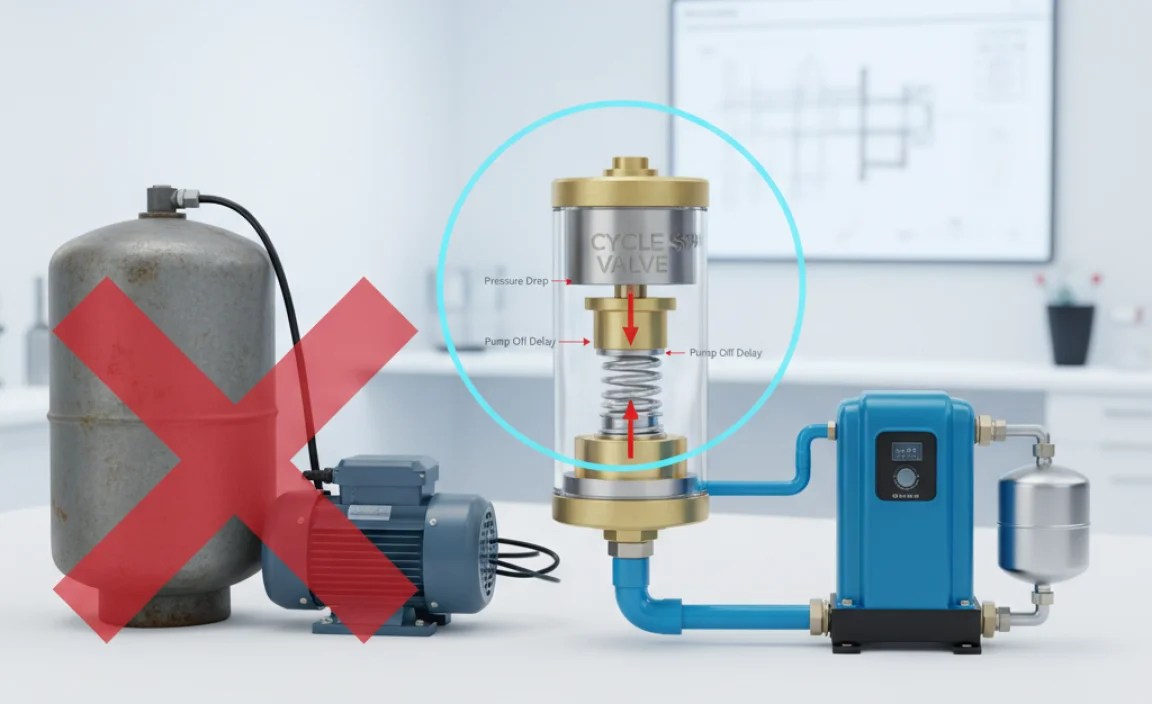
The CSV works by automatically adjusting the flow of water from the pump based on demand. Here’s a simplified explanation:
- Pump Starts: When you open a faucet or use water, the pump starts.
- Valve Opens: The CSV initially opens fully, allowing the pump to deliver its maximum flow rate.
- Pressure Builds: As the pressure in the system reaches a pre-set level (e.g., 50 PSI), the CSV begins to close.
- Flow Reduction: The valve restricts the flow of water to match the demand. If you’re only using a small amount of water, the CSV will significantly reduce the flow rate.
- Constant Pressure: The CSV maintains a constant pressure, regardless of the flow rate. The pump continues to run at a lower speed, supplying only the amount of water needed.
- Pump Stops (Eventually): When water demand ceases the pump shuts off when the pressure tank is full.
Essentially, the CSV creates artificial backpressure, allowing the pump to operate within its optimal performance range even when demand is low. This prevents the pump from cycling on and off rapidly, which is the primary cause of wear and tear.
Benefits of Using a Cycle Stop Valve

Here’s a breakdown of the key advantages of installing a CSV:
- Extended Pump Life: By eliminating short cycling, CSVs can significantly extend the life of your well pump, potentially doubling or tripling it.
- Consistent Water Pressure: CSVs maintain constant water pressure, even when multiple fixtures are in use simultaneously. No more fluctuating showers!
- Reduced Energy Consumption: Running the pump at a lower, more efficient flow rate reduces energy consumption and lowers your electricity bill.
- Smaller Pressure Tank: CSVs allow you to use a smaller pressure tank, saving space and reducing the initial cost of the system. In some cases, you may even be able to eliminate the pressure tank altogether.
- Quieter Operation: A pump running continuously at a lower speed is generally quieter than one that is constantly starting and stopping.
Potential Drawbacks of Using a Cycle Stop Valve

While CSVs offer many benefits, there are also a few potential drawbacks to consider:
- Initial Cost: The initial cost of a CSV can be higher than a standard pressure switch.
- Installation Complexity: While relatively straightforward, installing a CSV requires some plumbing knowledge and may be more complex than simply replacing a pressure switch.
- Specific Pump Requirements: CSVs are not compatible with all types of pumps. It’s important to choose a CSV that is properly sized for your pump’s flow rate and pressure.
- Potential for Clogging: In systems with high levels of sediment or debris, the CSV can become clogged, requiring periodic cleaning or replacement.
Is a Cycle Stop Valve Right for You?
A CSV is a good option if you experience any of the following:
- Short cycling of your well pump
- Inconsistent water pressure
- Frequent pump failures
- High energy bills
- Limited space for a large pressure tank
However, it’s important to assess your specific needs and consult with a qualified well pump technician to determine if a CSV is the right solution for your system.
How to Install a Cycle Stop Valve: A Step-by-Step Guide
Disclaimer: Installing a CSV involves working with electricity and water. If you are not comfortable with these tasks, it’s best to hire a qualified professional.
Here’s a general guide to installing a CSV. Always refer to the manufacturer’s instructions for your specific valve model.
Tools You’ll Need:
- Cycle Stop Valve kit
- Pipe wrench
- Adjustable wrench
- Pipe cutter or hacksaw
- Teflon tape or pipe sealant
- Electrical wiring tools (wire strippers, connectors, etc.)
- Multimeter (for testing electrical connections)
- Safety glasses
- Gloves
Step-by-Step Instructions:
- Turn Off Power and Water: Disconnect the power to your well pump at the breaker box. Shut off the main water supply to your home.
- Drain the System: Open a faucet at the lowest point in your system to drain any remaining water.
- Locate the Existing Pressure Switch: The pressure switch is typically located near the pressure tank.
- Disconnect the Pressure Switch: Carefully disconnect the electrical wiring from the pressure switch. Label the wires to ensure proper reconnection later.
- Remove the Pressure Switch: Unscrew the pressure switch from the pipe fitting.
- Install the CSV: Connect the CSV to the pipe fitting where the pressure switch was located. Use Teflon tape or pipe sealant to ensure a watertight seal.
- Install the Pressure Switch (If Required): Some CSV installations require a separate pressure switch to be installed downstream of the valve. Follow the manufacturer’s instructions for wiring the pressure switch.
- Connect the Electrical Wiring: Reconnect the electrical wiring to the pressure switch (if applicable) and the pump motor. Ensure all connections are secure and properly insulated.
- Turn On Power and Water: Turn on the main water supply to your home. Turn on the power to your well pump at the breaker box.
- Test the System: Open a faucet and observe the water pressure. The pressure should remain constant, even when multiple fixtures are in use.
- Adjust the CSV (If Necessary): Some CSVs have an adjustment screw that allows you to fine-tune the pressure setting. Refer to the manufacturer’s instructions for details.
- Monitor the System: Keep an eye on the system for any leaks or unusual noises. If you notice any problems, shut off the power and water and consult with a qualified professional.
Sizing a Cycle Stop Valve
Choosing the right size CSV is crucial for optimal performance. Here’s how to determine the correct size:
- Determine Your Pump’s Flow Rate: Find the flow rate (gallons per minute or GPM) of your well pump. This information is usually listed on the pump’s nameplate or in the manufacturer’s specifications.
- Determine Your System’s Minimum Flow Requirement: This is the lowest flow rate that you typically use in your home (e.g., a single shower or faucet).
- Select a CSV with a Flow Range That Matches Your System: Choose a CSV that has a flow range that encompasses both your pump’s flow rate and your system’s minimum flow requirement.
Here’s a table to illustrate how to select the right CSV size:
| Pump Flow Rate (GPM) | Minimum Flow Requirement (GPM) | Recommended CSV Size |
|---|---|---|
| 10 | 1 | CSV1A |
| 15 | 2 | CSV1A |
| 20 | 3 | CSV1A or CSV125 |
| 25 | 4 | CSV125 |
| 30 | 5 | CSV125 |
Note: This table is a general guideline. Always refer to the manufacturer’s specifications for the specific CSV model you are considering.
Troubleshooting Common CSV Problems
Here are some common problems that you might encounter with a CSV and how to troubleshoot them:
| Problem | Possible Cause | Solution |
|---|---|---|
| Low Water Pressure | CSV is not properly adjusted. | Adjust the CSV’s pressure setting according to the manufacturer’s instructions. |
| Pump is Still Cycling | CSV is not properly sized. | Ensure the CSV is the correct size for your pump’s flow rate. |
| CSV is Clogged | Sediment or debris in the water. | Clean or replace the CSV. Install a filter upstream of the valve. |
| Leaking CSV | Damaged seals or fittings. | Replace the seals or fittings. Ensure all connections are tight. |
| No Water | Pump failure or electrical problem. | Check the pump and electrical connections. Consult with a qualified professional. |
Cycle Stop Valve Alternatives
While CSVs are effective, there are alternative solutions for managing water pressure and pump cycling:
- Variable Frequency Drives (VFDs): VFDs control the speed of the pump motor, providing constant pressure and reducing energy consumption. They are more expensive than CSVs but offer more advanced features.
- Larger Pressure Tank: Increasing the size of your pressure tank can reduce pump cycling, but it requires more space and may not be as effective as a CSV.
- Two-Pump System: A two-pump system uses two pumps, one small and one large, to meet varying water demands. This can be more efficient than a single pump system but is more complex and expensive.
Frequently Asked Questions (FAQs)
Q: What is short cycling and why is it bad for my well pump?
A: Short cycling is when your well pump turns on and off rapidly. This strains the motor and other components, leading to premature failure.
Q: Can I install a CSV myself, or do I need a professional?
A: If you’re comfortable with plumbing and electrical work, you can install a CSV yourself. Otherwise, it’s best to hire a qualified professional.
Q: How long does a CSV typically last?
A: A well-maintained CSV can last for many years, potentially as long as the well pump itself.
Q: Will a CSV increase my water pressure?
A: A CSV doesn’t increase water pressure, but it maintains constant pressure, preventing fluctuations and ensuring a steady flow.
Q: Where can I buy a cycle stop valve?
A: You can purchase CSVs from online retailers, plumbing supply stores, and well pump dealers. Amazon and major hardware stores also stock them.
Q: How much does a cycle stop valve cost?
A: Cycle stop valves typically range in price from $150 to $400, depending on the size and features.
Q: Do I need a pressure tank with a cycle stop valve?
A: While some systems can operate without a pressure tank when using a CSV, it’s generally recommended to have a small tank (e.g., 2-5 gallons) to prevent water hammer and protect the pump.
Conclusion
The cycle stop valve is a valuable tool for improving the performance and lifespan of your well pump system. While pump and tank companies may not always highlight this solution, understanding its benefits can empower you to make informed decisions about your water system. By eliminating short cycling and maintaining constant water pressure, a CSV can save you money on energy bills, reduce the need for frequent pump replacements, and provide a more reliable water supply for your home. Consider exploring this option if you’re facing well pump issues – it might just be the simple solution you’ve been looking for.
“`


