
Why Does My Heat Pump Cycle On and Off? Troubleshooting Guide

Quick Summary: Heat pumps cycling on and off frequently, also known as short cycling, is often caused by a dirty air filter restricting airflow. Other common causes include refrigerant leaks, oversized units, electrical problems, or a malfunctioning thermostat. Addressing these issues promptly can prevent damage and keep your home comfortable.
Is your heat pump turning on and off more often than it should? This issue, known as short cycling, is a common headache for homeowners. Not only does it prevent your home from staying at a consistent temperature, but it can also lead to higher energy bills and premature wear and tear on your system. But don’t worry! Identifying the cause is the first step to fixing the problem. This guide will walk you through the most common reasons why your heat pump is short cycling and provide simple steps to diagnose and resolve them.
Common Causes of Heat Pump Short Cycling

Several factors can cause your heat pump to cycle on and off rapidly. Here’s a breakdown of the most common culprits:
- Dirty Air Filter: A clogged filter restricts airflow, causing the heat pump to overheat and shut down.
- Refrigerant Leaks: Low refrigerant levels reduce the heat pump’s ability to transfer heat efficiently.
- Oversized Unit: An improperly sized unit cools or heats the space too quickly and then shuts off, leading to short cycles.
- Electrical Problems: Faulty wiring or a failing capacitor can interrupt the heat pump’s operation.
- Thermostat Issues: A miscalibrated or malfunctioning thermostat can send incorrect signals to the heat pump.
- Frozen Coils: Ice buildup on the coils prevents proper heat exchange, causing the system to shut down.
- Blocked Vents: Closed or obstructed vents can restrict airflow and lead to overheating.
Step-by-Step Troubleshooting Guide
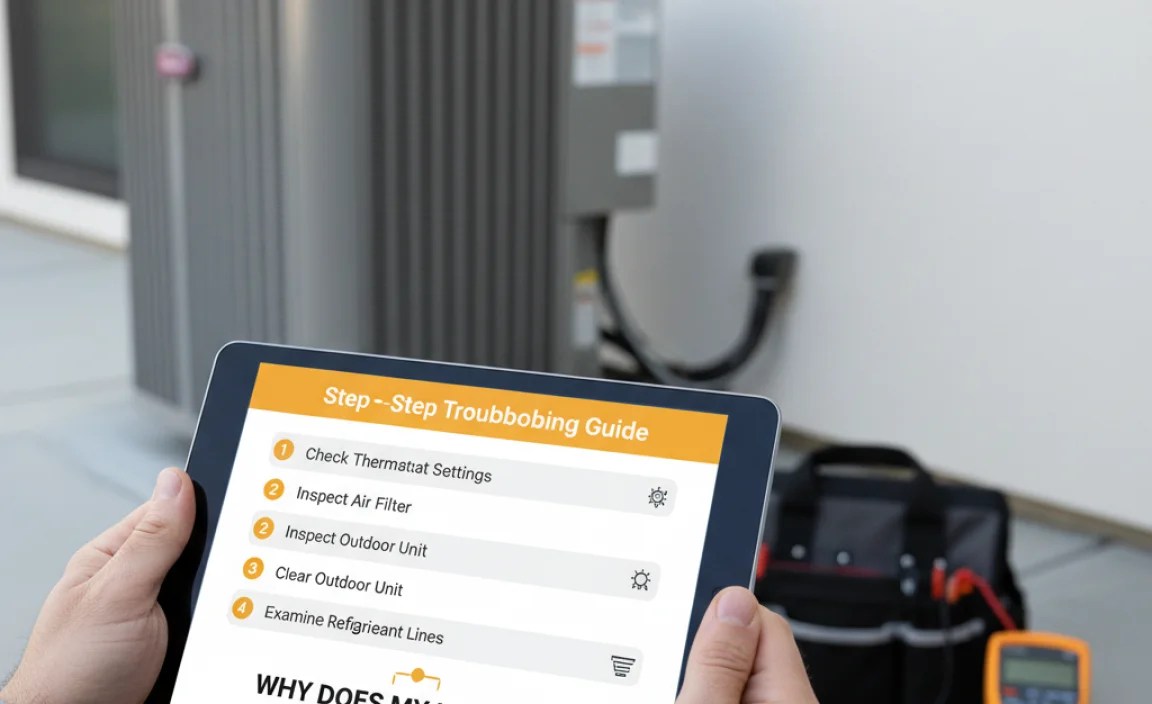
Follow these steps to identify and address the cause of your heat pump’s short cycling:
Step 1: Check the Air Filter
A dirty air filter is the most common cause of short cycling. A clogged filter restricts airflow, making the heat pump work harder and overheat. This triggers a safety mechanism that shuts the system down.
- Locate the Air Filter: Air filters are usually located in the indoor unit, often behind a removable panel.
- Inspect the Filter: Remove the filter and hold it up to the light. If you can’t see through it easily, it’s dirty.
- Clean or Replace the Filter:
- Disposable Filters: Replace these with a new filter of the same size and type.
- Washable Filters: Clean these with water and mild detergent. Allow the filter to dry completely before reinstalling.
- Reinstall the Filter: Make sure the filter is correctly oriented, following the arrows on the filter frame.
Step 2: Inspect the Outdoor Unit
The outdoor unit can also be a source of problems. Check for debris, ice buildup, and proper ventilation.
- Clear Debris: Remove any leaves, branches, or other debris from around the unit. Ensure there is at least 2 feet of clearance around the unit for proper airflow.
- Check for Ice Buildup: If the coils are covered in ice, the defrost cycle may not be working correctly.
- Turn off the Heat Pump: Switch the system to “emergency heat” to allow the ice to melt.
- Check for Defrost Issues: If ice buildup is a recurring problem, consult a professional to inspect the defrost system.
- Ensure Proper Ventilation: Make sure nothing is blocking the airflow to the unit.
Step 3: Check for Refrigerant Leaks
Low refrigerant levels can cause the heat pump to work harder and cycle on and off frequently. Refrigerant leaks require professional attention.
- Look for Signs of Leaks: Check the refrigerant lines for signs of oil or bubbling, which can indicate a leak.
- Listen for Hissing Sounds: A hissing sound near the unit could indicate escaping refrigerant.
- Contact a Professional: If you suspect a refrigerant leak, contact a qualified HVAC technician to locate and repair the leak, and recharge the system.
Step 4: Examine the Thermostat
A malfunctioning or miscalibrated thermostat can send incorrect signals to the heat pump, causing it to short cycle.
- Check the Thermostat Settings: Make sure the thermostat is set to the correct mode (heat or cool) and temperature.
- Verify Thermostat Calibration: Use a separate thermometer to check the accuracy of the thermostat. If it’s off by more than a few degrees, it may need to be recalibrated or replaced.
- Check the Batteries: If your thermostat is battery-powered, make sure the batteries are fresh.
- Inspect Wiring: Ensure the thermostat wires are securely connected.
Step 5: Inspect the Ductwork
Leaky or poorly insulated ductwork can cause the heat pump to work harder and cycle on and off more frequently. Ductwork issues often require professional assessment and repair.
- Inspect for Leaks: Look for visible gaps or tears in the ductwork, especially at joints and seams.
- Check Insulation: Ensure the ductwork is properly insulated, especially in unconditioned spaces like attics and crawl spaces.
- Seal Leaks: Use duct tape or mastic sealant to seal any leaks you find. For extensive ductwork repairs, consult a professional.
Step 6: Check Electrical Components
Electrical issues, such as a failing capacitor or faulty wiring, can cause the heat pump to short cycle. These issues are best addressed by a qualified electrician or HVAC technician.
- Inspect the Capacitor: A bulging or leaking capacitor can indicate a problem. Capacitors store energy and help start the motors.
- Check Wiring: Look for loose or damaged wires near the unit.
- Test Voltage: Use a multimeter to check the voltage at the unit. Ensure it matches the manufacturer’s specifications.
- Contact a Professional: Electrical repairs can be dangerous. Contact a qualified electrician or HVAC technician to diagnose and repair any electrical issues.
Step 7: Evaluate Unit Size
An oversized heat pump can cool or heat a space too quickly, leading to short cycling. This is because the unit reaches the thermostat setting before it has a chance to dehumidify the air properly, leading to discomfort and wasted energy.
- Assess Your Home’s Size: Determine the square footage of the area the heat pump serves.
- Consider Insulation and Climate: Factor in the insulation levels in your home and the climate in your region.
- Consult a Professional: If you suspect your unit is oversized, consult an HVAC professional to perform a load calculation and determine the appropriate size for your home.
DIY vs. Professional Help
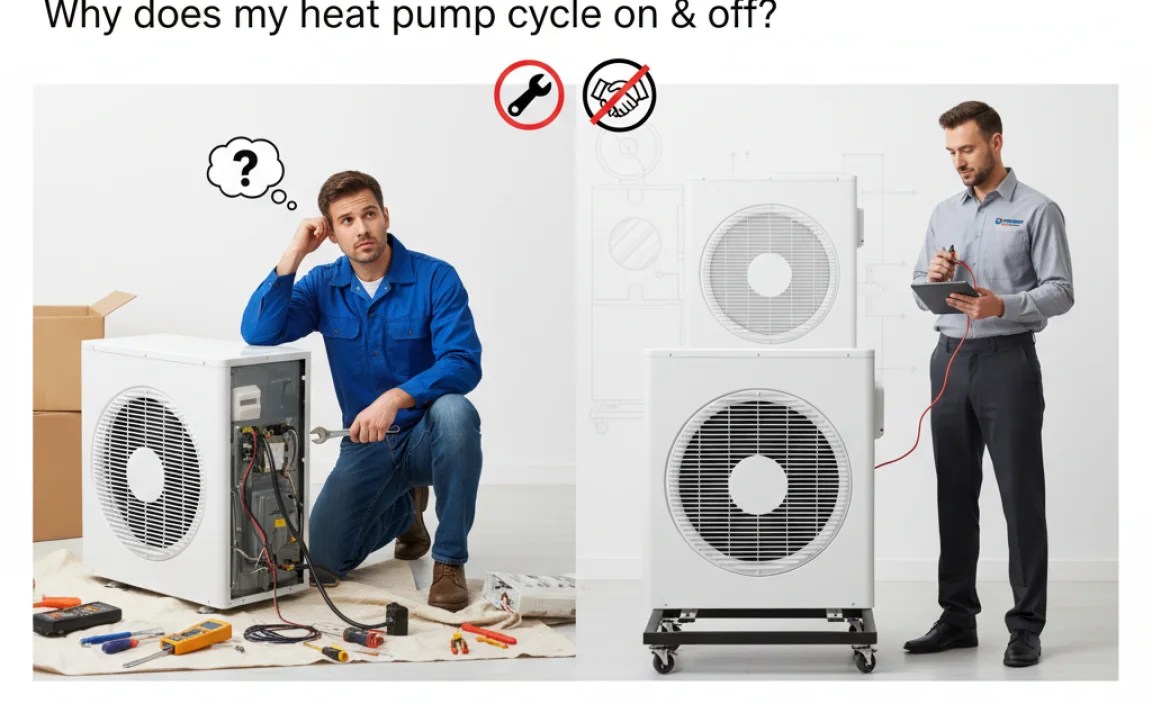
Some issues, like replacing a dirty air filter or clearing debris from the outdoor unit, are easy to handle yourself. However, other problems, such as refrigerant leaks or electrical issues, require professional expertise. Here’s a quick guide:
| Issue | DIY | Professional |
|---|---|---|
| Dirty Air Filter | Yes | No |
| Debris Around Outdoor Unit | Yes | No |
| Refrigerant Leak | No | Yes |
| Thermostat Problems | Maybe (battery replacement, settings) | Yes (calibration, wiring) |
| Ductwork Leaks | Maybe (minor sealing) | Yes (major repairs, insulation) |
| Electrical Issues | No | Yes |
| Oversized Unit | No (assessment) | Yes (replacement) |
Preventative Maintenance Tips
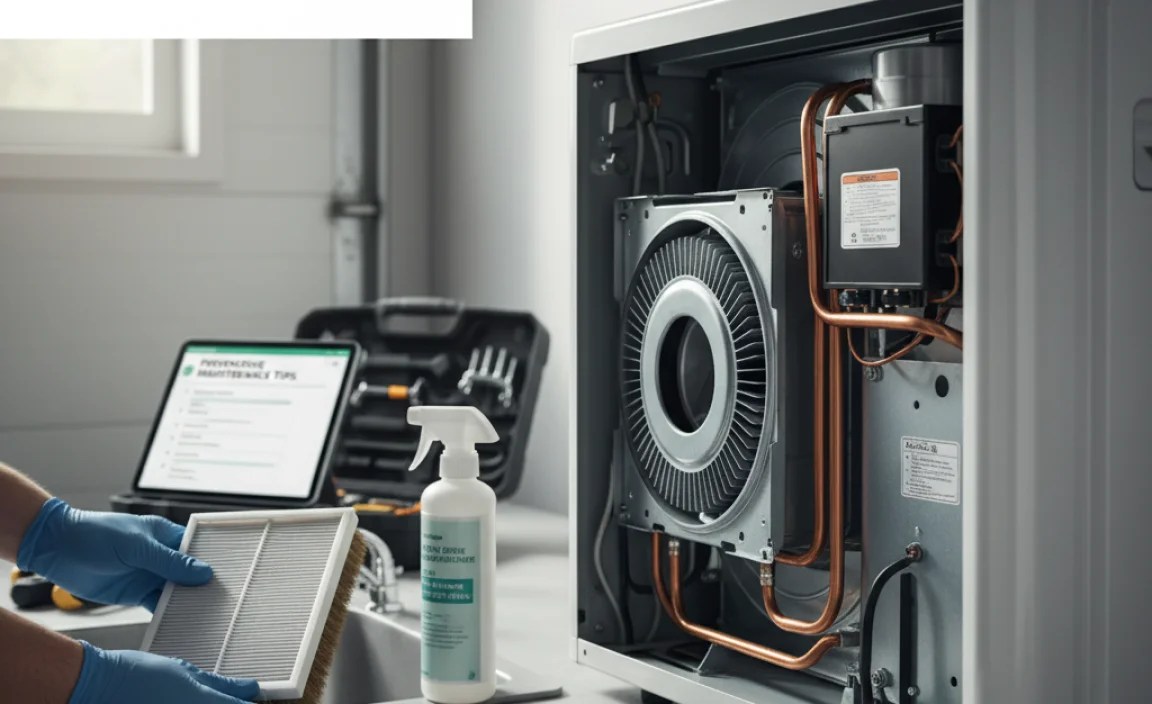
Preventing short cycling is easier than fixing it. Here are some tips to keep your heat pump running smoothly:
- Regularly Replace Air Filters: Change the air filter every 1-3 months, depending on usage and air quality.
- Schedule Annual Maintenance: Have a qualified HVAC technician inspect and service your heat pump annually.
- Keep the Outdoor Unit Clean: Clear debris from around the outdoor unit regularly.
- Monitor Thermostat Settings: Ensure the thermostat is properly calibrated and set to the correct temperature.
- Inspect Ductwork: Check for leaks and damage to the ductwork regularly.
Understanding Heat Pump Efficiency
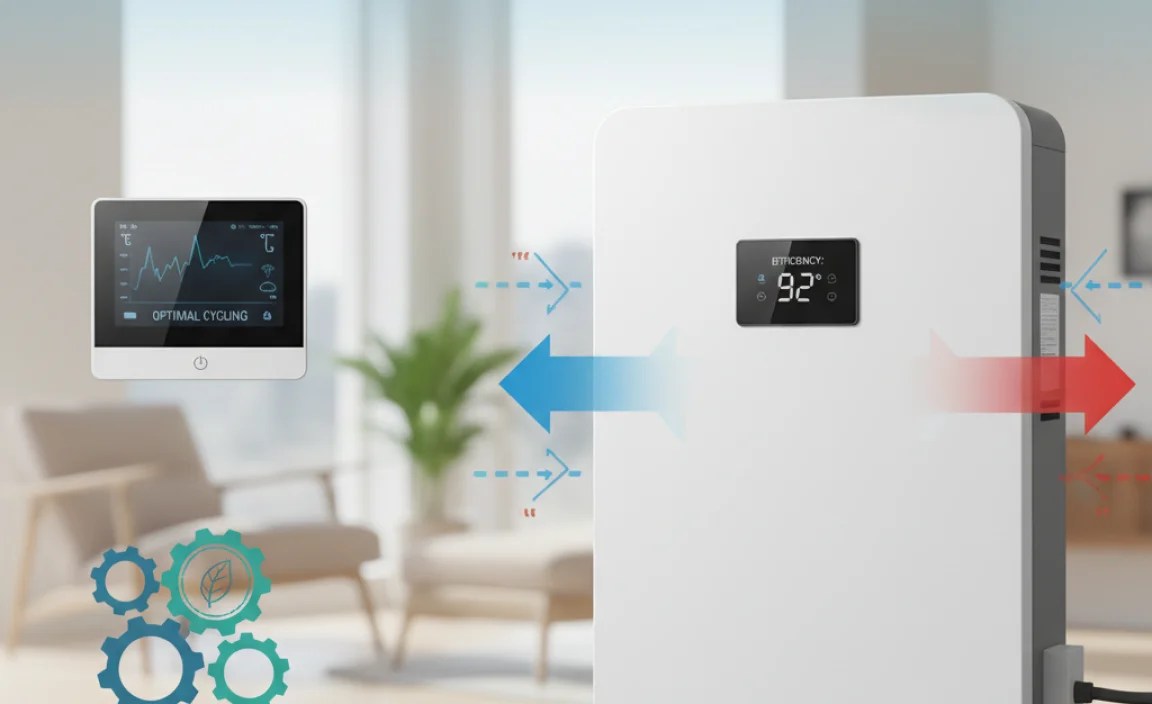
A heat pump’s efficiency is measured by two main ratings: the Heating Seasonal Performance Factor (HSPF) and the Seasonal Energy Efficiency Ratio (SEER). These ratings indicate how efficiently the heat pump can heat and cool your home, respectively.
- HSPF (Heating Seasonal Performance Factor): Measures the heating efficiency of a heat pump. A higher HSPF rating indicates better energy efficiency during the heating season. Modern heat pumps typically have HSPF ratings ranging from 8 to 13.
- SEER (Seasonal Energy Efficiency Ratio): Measures the cooling efficiency of a heat pump. A higher SEER rating indicates better energy efficiency during the cooling season. Modern heat pumps typically have SEER ratings ranging from 13 to 25 or higher.
When choosing a heat pump, look for models with high HSPF and SEER ratings to maximize energy savings and reduce your carbon footprint. Energy Star certified heat pumps meet strict energy efficiency guidelines set by the U.S. Environmental Protection Agency.
The Impact of Short Cycling on Energy Bills
Short cycling can significantly increase your energy bills. When a heat pump cycles on and off frequently, it uses more energy to start up each time. This is because the start-up process requires a surge of power to get the compressor and fan motors running. Over time, these frequent start-ups can add up, leading to higher energy consumption and increased costs.
Additionally, short cycling can reduce the lifespan of your heat pump. The constant starting and stopping put extra stress on the components, causing them to wear out more quickly. This can lead to premature failure of the unit and the need for costly repairs or replacements.
By addressing the causes of short cycling and implementing preventative maintenance measures, you can improve the efficiency of your heat pump, lower your energy bills, and extend the life of your system.
Troubleshooting Common Heat Pump Problems
Here’s a quick reference table to help you troubleshoot common heat pump problems:
| Problem | Possible Causes | Troubleshooting Steps |
|---|---|---|
| Heat pump cycles on and off frequently (short cycling) | Dirty air filter, refrigerant leak, oversized unit, electrical problems, thermostat issues | Check air filter, inspect outdoor unit, check thermostat settings, contact a professional for refrigerant and electrical issues |
| Heat pump not heating or cooling properly | Refrigerant leak, compressor failure, ductwork leaks, thermostat issues | Check thermostat settings, inspect ductwork, contact a professional for refrigerant and compressor issues |
| Heat pump making unusual noises | Loose components, fan blade issues, compressor problems | Inspect for loose components, check fan blades, contact a professional for compressor issues |
| Ice buildup on outdoor unit | Defrost cycle malfunction, restricted airflow | Turn off heat pump to melt ice, check for airflow obstructions, contact a professional for defrost cycle issues |
| High energy bills | Short cycling, refrigerant leak, dirty air filter, ductwork leaks | Address short cycling issues, check air filter, inspect ductwork, contact a professional for refrigerant issues |
FAQ About Heat Pump Short Cycling
Here are some frequently asked questions about heat pump short cycling:
- Why is my heat pump turning on and off so often?
- Frequent cycling, or short cycling, is often caused by a dirty air filter, refrigerant leaks, or an oversized unit. Electrical or thermostat problems can also be the cause.
- Is short cycling bad for my heat pump?
- Yes, short cycling puts extra wear and tear on the heat pump components, potentially shortening its lifespan and increasing energy consumption.
- Can I fix short cycling myself?
- You can address some causes yourself, such as replacing a dirty air filter or clearing debris around the outdoor unit. More complex issues like refrigerant leaks require a professional.
- How often should I change my air filter?
- Change your air filter every 1-3 months, depending on usage and air quality. A dirty filter restricts airflow and can cause short cycling.
- What is the defrost cycle, and how does it work?
- The defrost cycle melts ice that forms on the outdoor coils during heating. If the defrost cycle isn’t working correctly, ice buildup can cause the heat pump to shut down.
- How do I know if my heat pump is the right size for my home?
- An oversized heat pump cools or heats the space too quickly, leading to short cycling. Consult an HVAC professional to perform a load calculation and determine the appropriate size for your home.
- When should I call a professional for heat pump issues?
- Call a professional for refrigerant leaks, electrical issues, compressor problems, or if you’re not comfortable diagnosing the problem yourself. These issues require specialized knowledge and tools.
Conclusion
Dealing with a heat pump that cycles on and off too frequently can be frustrating, but with a systematic approach, you can often identify and resolve the issue. Start by checking the simple things like the air filter and outdoor unit. If the problem persists, don’t hesitate to call a qualified HVAC professional. Regular maintenance and prompt attention to problems will keep your heat pump running efficiently and reliably for years to come, ensuring your home stays comfortable and your energy bills stay low.
“`


