
Mountain Bike Drivetrain Comparison: Find YOUR Winner

Mountain Bike Drivetrain Comparison: Choosing the Right Gears for You
Quick Summary: Choosing the right mountain bike drivetrain means picking the best gear setup for your riding style and terrain. Drivetrains vary by the number of gears (speeds) and the quality of components. More gears don’t always mean better; consider range, weight, simplicity, and cost. Modern 1x (one chainring) drivetrains are popular for their simplicity and wide gear range, while 2x or 3x setups offer smaller steps between gears.
Choosing the right drivetrain for your mountain bike can feel overwhelming. With so many options, understanding the differences and benefits of each setup is key to enjoying your rides. A drivetrain is the heart of your bike’s ability to tackle hills, fly on flat trails, and handle technical descents. It includes the shifters, derailleurs, cassette (rear gears), chain, and crankset (front gears). Selecting the right one makes all the difference.
This guide breaks down the common mountain bike drivetrain options, explaining the pros and cons of each. We’ll cover everything from gear range and simplicity to weight and cost, helping you make an informed decision. Let’s dive in and get you geared up for your next adventure!
Understanding Mountain Bike Drivetrains
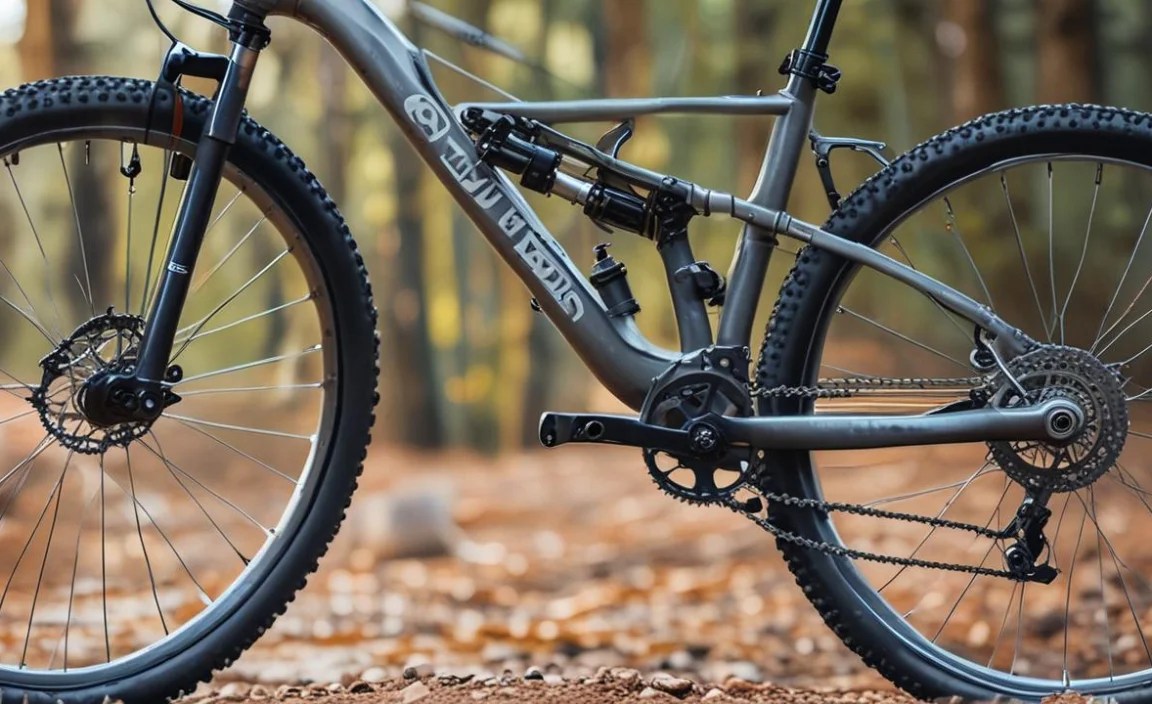
A mountain bike drivetrain is what transfers power from your legs to the wheels, enabling you to move forward. It’s made up of several key components working together smoothly.
- Shifters: These are the levers on your handlebars that you use to change gears. They control the derailleurs.
- Derailleurs: The front and rear derailleurs are mechanisms that move the chain up and down the gears on the cassette and chainrings.
- Cassette: This is the cluster of gears on the rear wheel. The number of gears on the cassette determines the “speed” of your drivetrain (e.g., 11-speed, 12-speed).
- Chain: The chain connects the front chainring(s) to the rear cassette, transferring power.
- Crankset: This includes the chainring(s) at the front of the bike, as well as the cranks that you attach your pedals to.
Different drivetrain configurations offer varying levels of gear range, simplicity, and weight. Let’s explore the most common types:
1x (One-by) Drivetrains
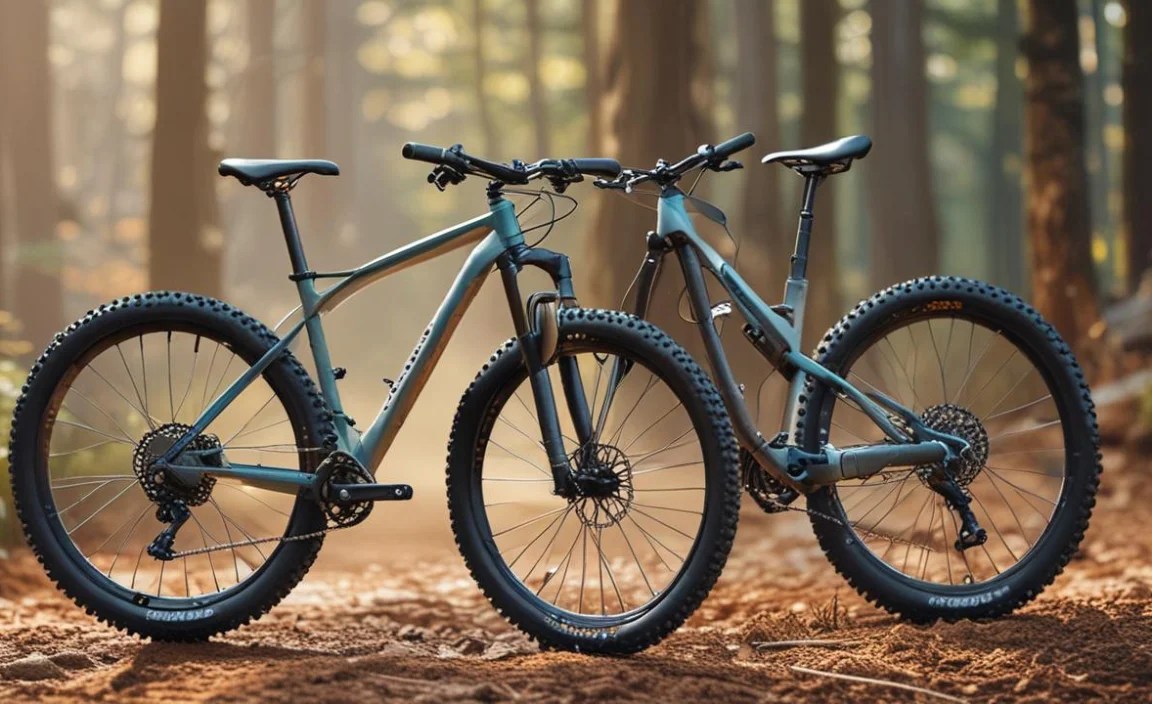
1x drivetrains have become increasingly popular in recent years. They use a single chainring in the front and a wide-range cassette in the rear. This setup simplifies shifting and reduces the risk of chain drops.
Benefits of 1x Drivetrains:
- Simplicity: With only one shifter and no front derailleur, shifting is easier and more intuitive.
- Weight Savings: Eliminating the front derailleur and one or two chainrings reduces overall weight.
- Reduced Maintenance: Fewer parts mean less maintenance and fewer things that can go wrong.
- Improved Clearance: Without a front derailleur, there’s more clearance for obstacles on the trail.
Drawbacks of 1x Drivetrains:
- Gear Range: While modern 1x drivetrains offer wide-range cassettes, the overall gear range might still be slightly less than a 2x or 3x system.
- Larger Jumps Between Gears: With fewer gears overall, the steps between each gear can be larger, which might not be ideal for riders who prefer finer control over their cadence.
Common 1x Drivetrain Options:
- SRAM Eagle (12-speed): Offers a wide gear range with options like 10-50t or 10-52t cassettes.
- Shimano Deore/SLX/XT/XTR (12-speed): Provides reliable performance and wide gear range with 10-51t or 10-50t cassettes.
- Box Components (9-speed, 11-speed): A more budget-friendly option that still offers decent performance.
2x (Two-by) Drivetrains
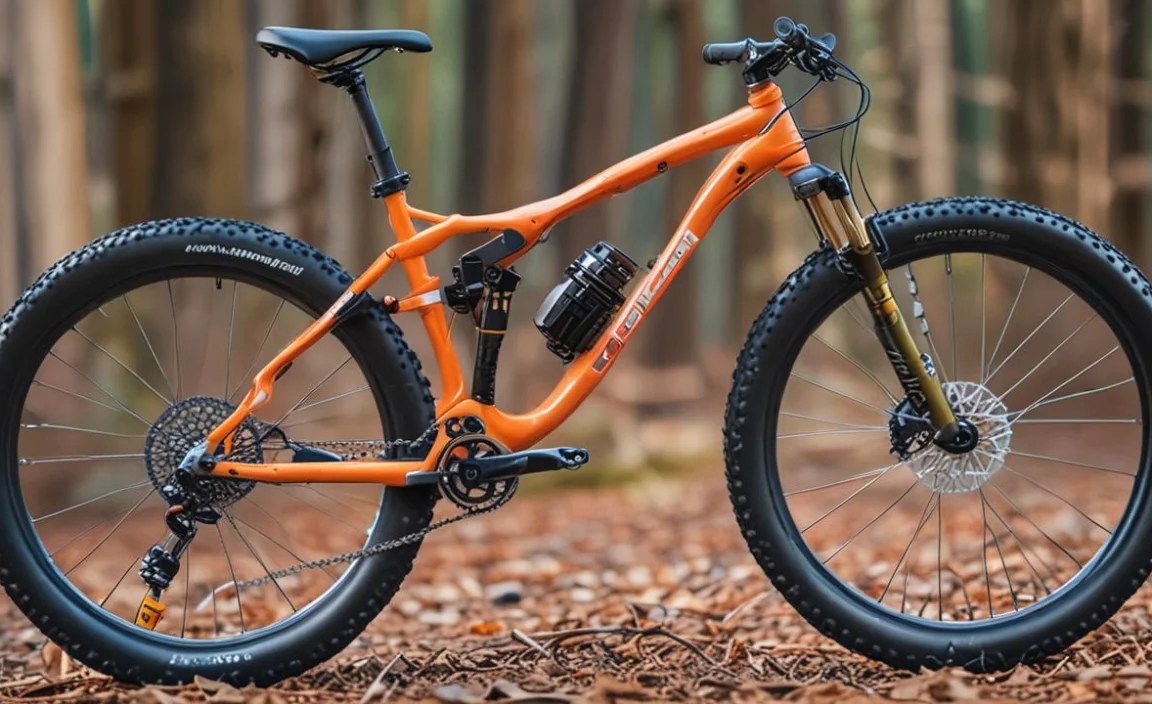
2x drivetrains use two chainrings in the front and a cassette in the rear. This setup offers a wider overall gear range and smaller steps between gears compared to 1x systems.
Benefits of 2x Drivetrains:
- Wider Gear Range: Two chainrings provide a broader range of gears, making it easier to tackle steep climbs and fast descents.
- Smaller Jumps Between Gears: The smaller steps between gears allow for more precise cadence control.
Drawbacks of 2x Drivetrains:
- Complexity: With a front derailleur and two shifters, shifting can be more complex and require more practice.
- Weight: The added components increase the overall weight of the drivetrain.
- Maintenance: More parts mean more maintenance and a higher chance of mechanical issues.
Common 2x Drivetrain Options:
- Shimano Deore/SLX/XT/XTR (10-speed, 11-speed, 12-speed): Shimano offers 2x options in various levels, providing reliable performance and a wide gear range.
3x (Three-by) Drivetrains
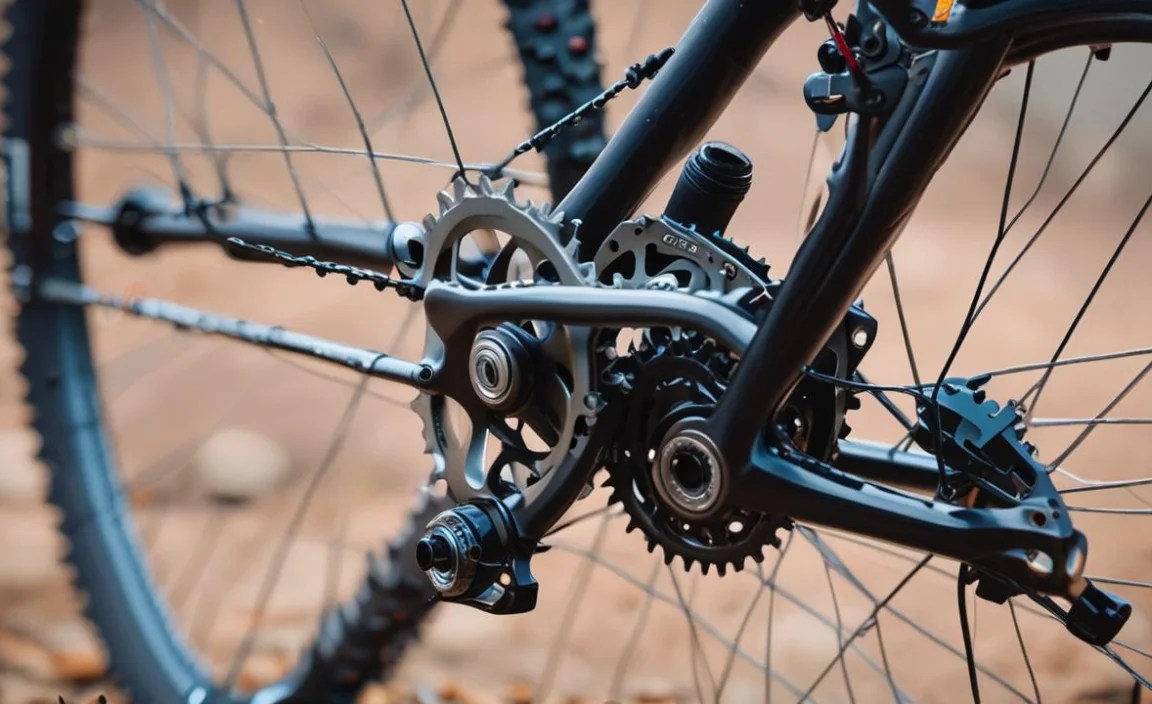
3x drivetrains use three chainrings in the front and a cassette in the rear. This was the standard for many years, offering the widest possible gear range. However, they are becoming less common due to their complexity and weight.
Benefits of 3x Drivetrains:
- Widest Gear Range: Three chainrings provide the broadest possible gear range, suitable for tackling any terrain.
Drawbacks of 3x Drivetrains:
- Complexity: Shifting can be very complex, requiring precise coordination between the front and rear derailleurs.
- Weight: The added components make 3x drivetrains the heaviest option.
- Maintenance: More parts mean more maintenance and a higher chance of mechanical issues.
- Chain Angle: Extreme chain angles (cross-chaining) are more common, leading to increased wear and potential for chain breakage.
Common 3x Drivetrain Options:
- Shimano Tourney/Altus/Acera (7-speed, 8-speed, 9-speed): These are typically found on entry-level mountain bikes.
Drivetrain Component Levels
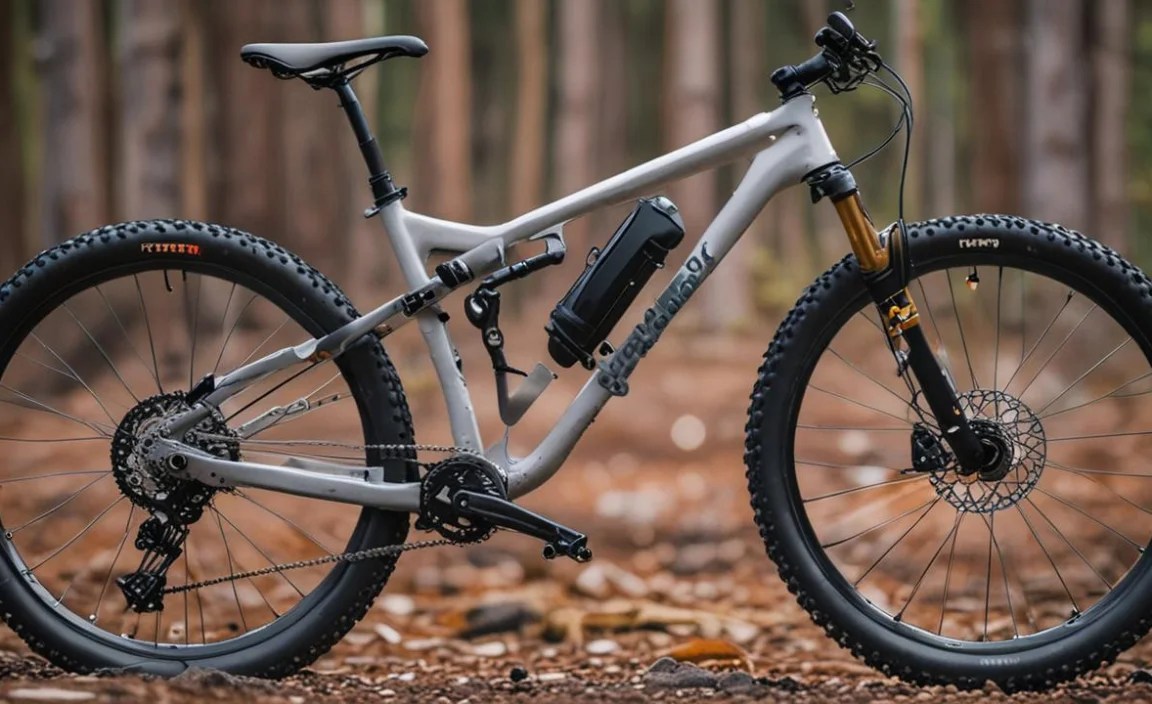
Within each drivetrain configuration (1x, 2x, 3x), there are different component levels that affect performance, weight, and durability. Here’s a general overview of Shimano and SRAM component levels, from lowest to highest:
Shimano:
- Tourney/Altus: Entry-level components, typically found on budget-friendly bikes.
- Acera/Alivio: Mid-range components, offering a good balance of performance and durability.
- Deore: A popular choice for recreational riders, providing reliable performance at a reasonable price.
- SLX: A step up from Deore, offering improved performance and lighter weight.
- XT: High-performance components, popular among serious riders and racers.
- XTR: Shimano’s top-of-the-line components, offering the best possible performance and lightest weight.
SRAM:
- X3/X4/X5: Entry-level components designed for recreational use.
- X7/X9: Mid-range components offering a balance of performance and durability.
- NX Eagle: An entry-level 1×12 speed groupset offering wide range at a lower price point.
- GX Eagle: A popular choice for its balance of cost, weight, and performance in a 1×12 speed setup.
- X01 Eagle: High-performance components, lighter and more precise than GX Eagle.
- XX1 Eagle: SRAM’s top-tier offering, focusing on the lightest weight and maximum performance.
Comparing Drivetrain Options: A Detailed Look
To help you visualize the differences between drivetrain options, let’s look at a detailed comparison in the table below:
| Feature | 1x Drivetrain | 2x Drivetrain | 3x Drivetrain |
|---|---|---|---|
| Simplicity | High | Medium | Low |
| Weight | Low | Medium | High |
| Gear Range | Medium to High (depending on cassette) | High | Very High |
| Maintenance | Low | Medium | High |
| Complexity | Low | Medium | High |
| Cadence Control | Good, but larger jumps between gears | Excellent, smaller jumps between gears | Excellent, smaller jumps between gears |
| Cost | Moderate to High (depending on component level) | Moderate | Low to Moderate |
| Best For | Trail riding, enduro, downhill | Cross-country, all-mountain | Entry-level bikes, recreational riding |
Choosing the Right Drivetrain for Your Riding Style
The best drivetrain for you depends on your riding style, terrain, and budget. Here are some general recommendations:
- Trail Riding/Enduro/Downhill: 1x drivetrains are a great choice for their simplicity, lighter weight, and improved clearance. The wide-range cassettes offer enough gears for most trails.
- Cross-Country/All-Mountain: 2x drivetrains provide a wider gear range and smaller steps between gears, which can be beneficial for long climbs and varied terrain.
- Recreational Riding/Entry-Level Bikes: 3x drivetrains are often found on entry-level bikes due to their lower cost. However, consider upgrading to a 1x or 2x system for improved performance and simplicity as your skills progress.
Factors to Consider When Choosing a Drivetrain
Beyond your riding style, here are some additional factors to consider when selecting a mountain bike drivetrain:
- Gear Range: Consider the terrain you’ll be riding on. If you frequently encounter steep climbs, you’ll want a wider gear range.
- Budget: Drivetrain components can vary widely in price. Set a budget and choose the best components you can afford within that range.
- Compatibility: Ensure that the drivetrain components you choose are compatible with your bike frame and other components.
- Maintenance: Consider the maintenance requirements of different drivetrains. Simpler systems like 1x drivetrains generally require less maintenance.
- Future Upgrades: Think about whether you plan to upgrade your drivetrain in the future. Some systems are easier to upgrade than others.
For example, if you are upgrading a 3×9 drivetrain to a 1×12, you’ll need new shifters, rear derailleur, cassette, chain, and potentially a new crankset and bottom bracket. Ensure your freehub body on the rear wheel is compatible with the new cassette. If you’re unsure, consulting a local bike shop is always a good idea.
Maintaining Your Mountain Bike Drivetrain
Proper maintenance is crucial for keeping your drivetrain running smoothly and extending its lifespan. Here are some essential maintenance tips:
- Clean Your Chain Regularly: Use a chain cleaner and degreaser to remove dirt and grime. A clean chain shifts better and lasts longer.
- Lubricate Your Chain: Apply chain lube after cleaning to reduce friction and prevent rust. Choose a lube that’s appropriate for your riding conditions (wet or dry).
- Check Chain Wear: Use a chain checker tool to measure chain wear. Replace your chain when it reaches the recommended wear limit to prevent damage to your cassette and chainrings.
- Inspect Your Cassette and Chainrings: Check for worn or damaged teeth. Replace them as needed.
- Adjust Your Derailleurs: Make sure your derailleurs are properly adjusted for smooth and accurate shifting. If you’re not comfortable doing this yourself, take your bike to a professional mechanic. You can learn more about derailleur adjustment from resources like Park Tool’s website.
- Replace Cables and Housing: Over time, cables and housing can become corroded or damaged, leading to poor shifting performance. Replace them as needed.
FAQ: Mountain Bike Drivetrains
Here are some frequently asked questions about mountain bike drivetrains:
What is a mountain bike drivetrain?
A mountain bike drivetrain is the system that transfers power from your pedals to the wheels, allowing you to move. It includes the shifters, derailleurs, cassette, chain, and crankset.
What’s the difference between 1x, 2x, and 3x drivetrains?
1x drivetrains have one chainring in the front, 2x have two, and 3x have three. 1x systems are simpler and lighter, while 2x and 3x offer a wider gear range but are more complex.
Is a 1x drivetrain better than a 2x or 3x?
It depends on your riding style and terrain. 1x drivetrains are great for simplicity and trail riding, while 2x and 3x are better for riders who need a wider gear range for varied terrain.
How do I choose the right gear ratio for my mountain bike?
Consider the terrain you’ll be riding on. For steep climbs, you’ll want lower gears (larger cassette cogs and smaller chainrings). For fast descents, you’ll want higher gears (smaller cassette cogs and larger chainrings).
How often should I replace my mountain bike chain?
It depends on your riding conditions and how well you maintain your chain. As a general rule, replace your chain every 1,500 to 3,000 miles, or when it reaches the recommended wear limit.
Can I convert my 2x or 3x drivetrain to a 1x?
Yes, it’s possible to convert to a 1x drivetrain. You’ll need a new chainring, rear derailleur, cassette, and possibly a new crankset. Consult a bike shop to ensure compatibility.
What does “gear range” mean?
Gear range is the difference between your easiest and hardest gears. A wider gear range means you can tackle both steep climbs and fast descents more easily.
Conclusion
Choosing the right mountain bike drivetrain is a crucial step in optimizing your riding experience. Whether you prioritize simplicity, gear range, weight, or budget, understanding the differences between 1x, 2x, and 3x systems will help you make an informed decision. Remember to consider your riding style, terrain, and maintenance preferences when selecting your drivetrain components. With the right setup and proper maintenance, you’ll be able to conquer any trail with confidence and enjoy every minute of your ride. Now get out there and explore!


