
Can a Bad Capacitor Cause Short Cycling in Your Heat Pump?

Quick Summary: Yes, a bad capacitor can definitely cause short cycling in a heat pump. Capacitors help start and run the motors in your heat pump. When they fail, the motors can’t run properly, leading to the heat pump turning on and off too frequently, which is known as short cycling. Replacing the capacitor is often a simple and relatively inexpensive fix.
Is your heat pump turning on and off way too often? It’s a common problem, and it can be super frustrating! Short cycling not only makes your home uncomfortable, but it also wastes energy and can seriously shorten the lifespan of your heat pump. One of the most frequent culprits behind this issue is a bad capacitor. Don’t worry; we’ll walk you through everything you need to know about capacitors, how they affect your heat pump, and what you can do about it.
In this article, we’ll cover how to identify a bad capacitor, the steps to safely replace it, and other potential causes of short cycling. By the end, you’ll have a solid understanding of how to keep your heat pump running smoothly and efficiently.
What is a Capacitor and Why is it Important?

Think of a capacitor as a battery’s little helper in your heat pump. It’s an electrical component that stores energy and provides a boost to start and run motors. Heat pumps use capacitors to power the fan motor and the compressor motor. Without a properly functioning capacitor, these motors can struggle to start or run efficiently.
Types of Capacitors in a Heat Pump
There are two main types of capacitors you’ll find in a heat pump:
- Start Capacitor: This type provides a high-energy jolt to start the motor. It’s only used for a brief period during startup.
- Run Capacitor: This type provides a continuous boost to keep the motor running smoothly and efficiently.
Most heat pumps use a dual capacitor, which combines both start and run functions into a single unit for the compressor. Understanding the difference is key to diagnosing issues.
How Capacitors Affect Heat Pump Operation
Capacitors ensure the motors in your heat pump get the power they need to operate correctly. When a capacitor weakens or fails, the motor might struggle to start or run efficiently, leading to:
- Hard Starting: The motor takes longer to start, or it might not start at all.
- Reduced Efficiency: The motor draws more power to run, increasing energy consumption.
- Overheating: The motor works harder and generates more heat, potentially leading to damage.
- Short Cycling: The heat pump turns on and off frequently because it can’t maintain a consistent temperature.
Identifying a Bad Capacitor
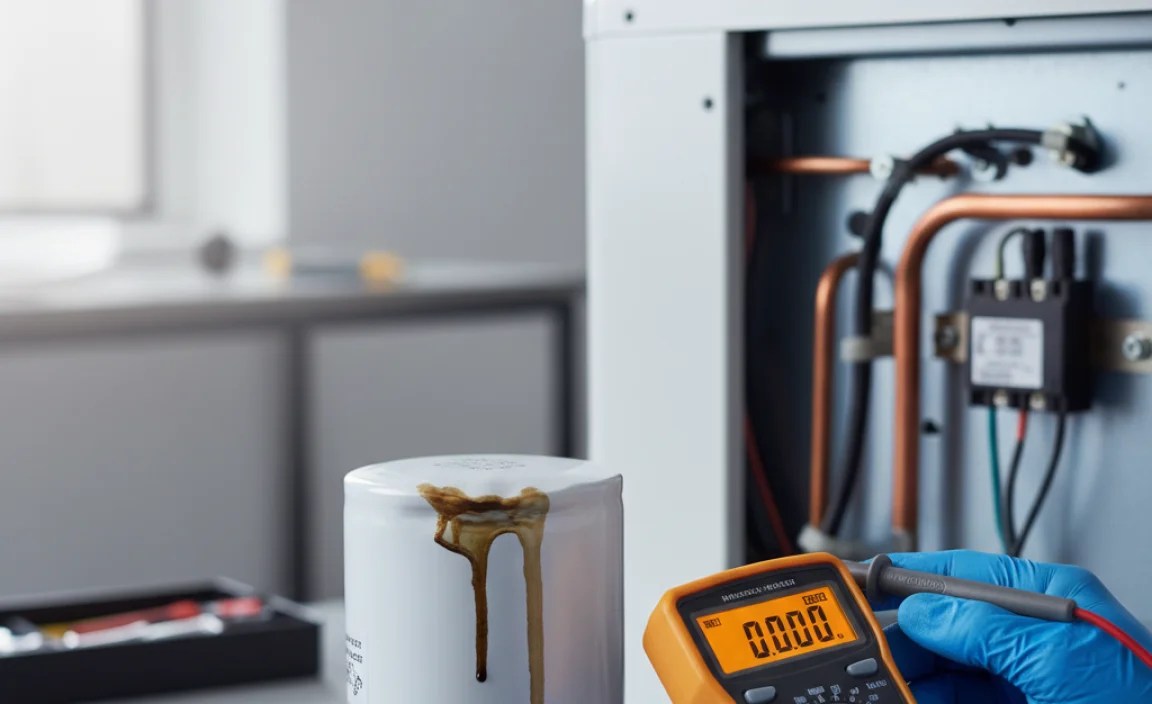
Recognizing the signs of a failing capacitor can save you from bigger, more expensive repairs down the road. Here’s what to look for:
Common Symptoms of a Failing Capacitor
- Heat Pump Short Cycling: The most common symptom. The unit turns on and off frequently, failing to maintain a consistent temperature.
- Humming Noises: A failing capacitor can cause the motor to hum loudly, especially when starting.
- Delayed Start: The heat pump takes longer than usual to start.
- Increased Energy Bills: The heat pump works harder, consuming more electricity.
- Overheating: The unit feels unusually hot to the touch.
- Complete Failure: The heat pump stops working altogether.
Visual Inspection of the Capacitor
A visual inspection can often reveal a bad capacitor. Here’s what to look for:
- Bulging or Swelling: The top or sides of the capacitor may appear rounded or swollen.
- Leaking: Look for any signs of oil or fluid leaking from the capacitor.
- Rust or Corrosion: Check for rust or corrosion on the capacitor terminals or body.
Safety First: Before inspecting the capacitor, always turn off the power to the heat pump at the breaker box. Capacitors store electricity and can deliver a dangerous shock even when the unit is off.
Testing a Capacitor with a Multimeter
For a more accurate diagnosis, use a multimeter to test the capacitor’s capacitance. Here’s how:
- Turn off the power: Always disconnect power to the heat pump at the breaker.
- Discharge the capacitor: Use a screwdriver with an insulated handle to short the terminals of the capacitor. This discharges any stored electricity.
- Disconnect the wires: Remove the wires connected to the capacitor, noting their positions for reconnection.
- Set the multimeter: Set your multimeter to capacitance mode (usually marked with “uF” or “µF”).
- Connect the multimeter: Connect the multimeter probes to the capacitor terminals.
- Read the value: Compare the reading on the multimeter to the rated capacitance printed on the capacitor label. A reading that is significantly lower (e.g., more than 10% below the rated value) indicates a failing capacitor.
Here’s a table to help you interpret the multimeter readings:
| Reading on Multimeter | Interpretation |
|---|---|
| Close to the rated capacitance (±10%) | Capacitor is likely good |
| Significantly lower than rated capacitance | Capacitor is likely bad |
| Zero or very low reading | Capacitor has failed |
Step-by-Step Guide to Replacing a Heat Pump Capacitor

Replacing a capacitor is a straightforward repair that many homeowners can tackle themselves. However, if you’re not comfortable working with electricity, it’s always best to call a qualified HVAC technician.
Tools and Materials You’ll Need
- New capacitor (matching the specifications of the old one)
- Screwdriver (insulated handle)
- Multimeter
- Pliers (insulated handle)
- Wire strippers
- Camera or phone (for taking pictures)
- Safety glasses
- Work gloves
Safety Precautions
Safety is paramount when working with electrical components. Always follow these precautions:
- Turn off the power: Disconnect power to the heat pump at the breaker box.
- Discharge the capacitor: Use a screwdriver with an insulated handle to short the terminals of the capacitor.
- Wear safety gear: Always wear safety glasses and work gloves.
- Work in a dry environment: Avoid working in damp or wet conditions.
Step-by-Step Replacement Process
- Turn off the power: Go to your breaker box and turn off the circuit that supplies power to your heat pump. Double-check that the power is off by testing the circuit with a non-contact voltage tester.
- Locate the capacitor: Open the access panel to the heat pump’s control box. The capacitor is usually a cylindrical component.
- Discharge the capacitor: Using a screwdriver with an insulated handle, carefully short the terminals of the capacitor to discharge any stored electricity. Touch the screwdriver blade to both terminals simultaneously.
- Take a picture: Before disconnecting any wires, take a picture of the capacitor and the wiring configuration. This will help you reconnect the wires correctly later.
- Disconnect the wires: Use pliers with insulated handles to carefully disconnect the wires from the capacitor terminals. Make sure the wires are labeled or marked so you know which wire goes to which terminal.
- Remove the old capacitor: Loosen the bracket or clamp holding the capacitor in place and remove it from the unit.
- Install the new capacitor: Place the new capacitor in the same location as the old one and secure it with the bracket or clamp.
- Reconnect the wires: Using the picture you took earlier as a guide, reconnect the wires to the correct terminals on the new capacitor. Ensure the connections are secure.
- Replace the access panel: Put the access panel back on the heat pump and secure it with screws.
- Turn on the power: Go back to the breaker box and turn the circuit back on.
- Test the heat pump: Turn on the heat pump and observe its operation. It should start smoothly and run without short cycling.
Other Potential Causes of Heat Pump Short Cycling

While a bad capacitor is a common cause of short cycling, it’s not the only possibility. Here are some other potential issues to consider:
- Dirty Air Filter: A clogged air filter restricts airflow, causing the heat pump to overheat and shut down prematurely. Replace the air filter regularly.
- Refrigerant Leaks: Low refrigerant levels can cause the heat pump to short cycle. Contact a qualified HVAC technician to find and repair any leaks and recharge the system.
- Frozen Evaporator Coil: Ice buildup on the evaporator coil restricts airflow and can cause the heat pump to shut down. This can be due to a dirty air filter, low refrigerant, or a malfunctioning defrost system.
- Faulty Thermostat: A malfunctioning thermostat can send incorrect signals to the heat pump, causing it to turn on and off erratically.
- Oversized Heat Pump: If the heat pump is too large for your home, it may cool or heat the space too quickly and then shut off, leading to short cycling.
Here is a table summarizing these potential causes:
| Cause | Description | Solution |
|---|---|---|
| Dirty Air Filter | Restricted airflow causes overheating. | Replace air filter regularly. |
| Refrigerant Leaks | Low refrigerant levels cause short cycling. | Contact HVAC technician to repair leaks and recharge. |
| Frozen Evaporator Coil | Ice buildup restricts airflow. | Check air filter, refrigerant levels, and defrost system. |
| Faulty Thermostat | Incorrect signals to the heat pump. | Replace thermostat. |
| Oversized Heat Pump | Cools/heats too quickly. | Consider a smaller unit (requires professional assessment). |
Preventative Maintenance Tips for Your Heat Pump

Regular maintenance can help prevent many of the issues that cause short cycling and extend the life of your heat pump. Here are some essential maintenance tasks:
- Replace Air Filters Regularly: Check and replace your air filters every 1-3 months, depending on usage and air quality.
- Clean the Outdoor Unit: Remove leaves, dirt, and debris from around the outdoor unit. Use a garden hose to gently clean the fins.
- Schedule Professional Inspections: Have a qualified HVAC technician inspect your heat pump annually. They can check refrigerant levels, clean the coils, and identify potential problems before they become major issues.
- Keep Vents Clear: Make sure that indoor vents are not blocked by furniture or other obstructions.
- Monitor Performance: Pay attention to how your heat pump is operating. If you notice any unusual noises, smells, or performance issues, address them promptly.
FAQ About Heat Pump Capacitors and Short Cycling
Here are some frequently asked questions to help you better understand heat pump capacitors and short cycling:
- What does short cycling mean for my heat pump?
- Short cycling means your heat pump is turning on and off too frequently, which can reduce its lifespan, increase energy bills, and make your home uncomfortable.
- How often should I replace my heat pump capacitor?
- Capacitors typically last between 5 to 15 years, but it depends on usage and environmental conditions. Regular inspections can help identify when a replacement is needed.
- Can a bad capacitor damage my heat pump?
- Yes, a bad capacitor can cause the motor to work harder, leading to overheating and potential damage to other components in the heat pump.
- Is it safe to replace a capacitor myself?
- If you’re comfortable working with electricity and follow all safety precautions, you can replace a capacitor yourself. However, if you’re unsure, it’s best to hire a qualified HVAC technician.
- How much does it cost to replace a heat pump capacitor?
- The cost to replace a capacitor can range from $50 to $200 for the part, plus labor if you hire a professional. The total cost can vary depending on the type of capacitor and your location.
- Will a new capacitor improve my heat pump’s efficiency?
- Yes, replacing a bad capacitor with a new one can improve your heat pump’s efficiency by ensuring the motor runs smoothly and draws the correct amount of power.
- What should I look for when buying a replacement capacitor?
- When buying a replacement capacitor, make sure it matches the specifications (capacitance and voltage) of the old one. Check the ratings on the old capacitor’s label and purchase a new one with the same values.
Conclusion
Dealing with a short cycling heat pump can be a real headache, but understanding the role of the capacitor is a great first step toward fixing the problem. By recognizing the symptoms of a failing capacitor and following our step-by-step guide, you can often resolve the issue yourself and save money on costly repairs. Remember to prioritize safety when working with electrical components, and don’t hesitate to call a professional if you’re not comfortable doing the work yourself. Regular maintenance, like changing air filters and scheduling annual inspections, will keep your heat pump running efficiently for years to come, ensuring a comfortable and energy-efficient home.
“`


