
How to Fill Air in Cycle Tyre with a Foot Pump: A Simple Guide

Quick Summary: Filling your cycle tyre with air using a foot pump is easy! First, make sure your pump head matches your tyre’s valve type (Presta or Schrader). Attach the pump head securely to the valve. Then, steadily pump until you reach the recommended pressure (PSI), which is usually printed on the tyre sidewall. Remove the pump head carefully, and you’re ready to ride!
Ever felt your bike tyre a little soft before a ride? It’s a common problem! Underinflated tyres make cycling harder and increase your risk of punctures. But don’t worry, using a foot pump to inflate your tyres is a simple skill anyone can learn. This guide will walk you through each step, so you can keep your tyres properly inflated and enjoy a smoother, safer ride. Let’s get pumping!
What You’ll Need

Before you start, gather these essential items:
- Foot Pump: A reliable foot pump with a pressure gauge.
- Your Bike: Make sure your bike is stable, either on a stand or leaning against a wall.
- Tyre Pressure Information: Find the recommended PSI (pounds per square inch) printed on the sidewall of your tyre.
Understanding Tyre Valves
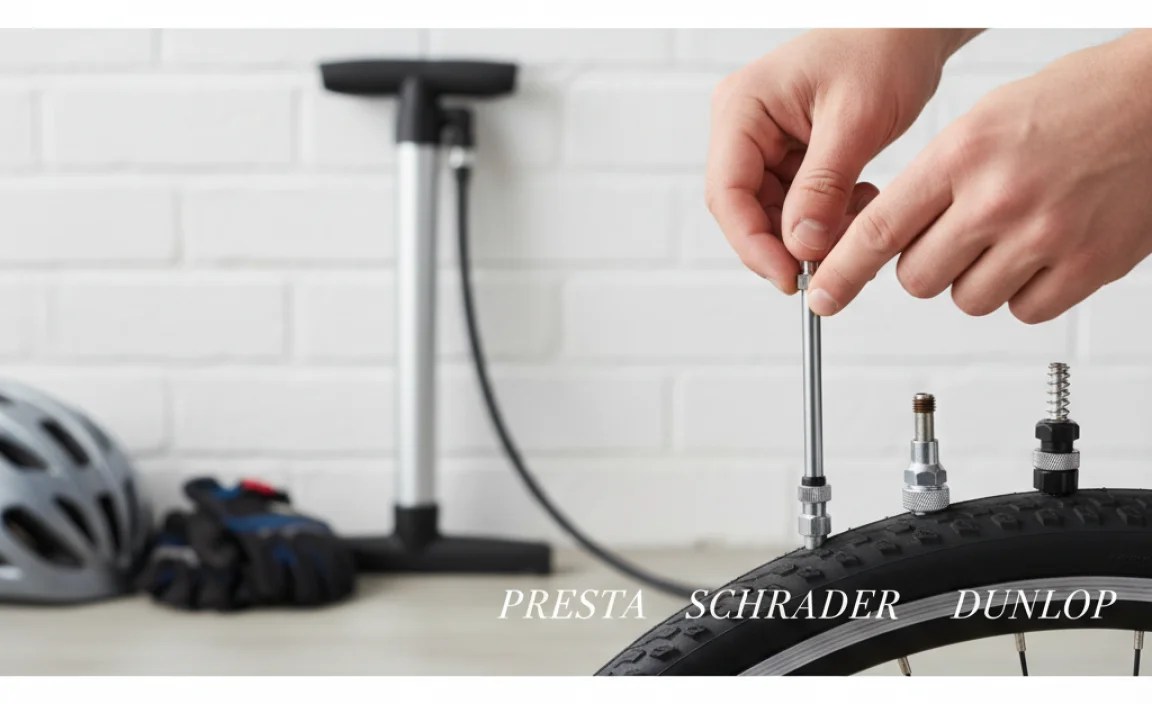
There are two main types of tyre valves you’ll encounter:
- Schrader Valve: Similar to the valves on car tyres, Schrader valves are wider and have a spring-loaded pin in the center. They are common on mountain bikes, hybrid bikes, and some road bikes.
- Presta Valve: Presta valves are narrower and have a locking nut at the tip. You’ll find them mostly on road bikes and high-performance bicycles.
Your foot pump needs to be compatible with the valve type on your tyre. Most foot pumps have a dual head that can accommodate both Schrader and Presta valves. Some may require you to unscrew and flip an internal part of the pump head to switch between valve types.
Step-by-Step Guide: Inflating Your Tyres

Follow these steps to inflate your cycle tyre with a foot pump:
Step 1: Prepare the Valve
For Schrader valves: Simply remove the plastic cap from the valve.
For Presta valves: Remove the plastic cap and unscrew the locking nut at the tip of the valve. Gently press the valve tip to release any remaining air.
Step 2: Attach the Pump Head
Schrader Valve: Firmly press the pump head onto the valve, ensuring a tight seal. Some pump heads have a lever that you need to flip to lock the head in place.
Presta Valve: Carefully press the pump head onto the valve. Make sure the pump head is fully seated. Flip the lever to lock the pump head onto the valve. It should be snug but not overly tight.
Step 3: Start Pumping
Place one foot firmly on the base of the pump. Use the other foot to pump the lever up and down in a smooth, steady motion. Keep an eye on the pressure gauge as you pump.
Step 4: Inflate to the Correct Pressure
Refer to the PSI (pounds per square inch) printed on the sidewall of your tyre. This is the recommended pressure for your tyre. Inflate the tyre until the gauge reaches the recommended PSI. Don’t exceed the maximum PSI listed on the tyre.
Step 5: Remove the Pump Head
Schrader Valve: If your pump head has a locking lever, flip it to release the head. Then, carefully pull the pump head straight off the valve.
Presta Valve: Flip the locking lever on the pump head to release it. Carefully remove the pump head from the valve.
Step 6: Secure the Valve
Presta Valve: Screw the locking nut back down on the Presta valve until it is snug. Don’t overtighten.
Both Valve Types: Replace the plastic cap on the valve to protect it from dirt and debris.
Step 7: Repeat for the Other Tyre
Follow the same steps to inflate the other tyre on your bike.
Troubleshooting
Here are some common issues you might encounter and how to fix them:
- Pump not inflating tyre: Make sure the pump head is securely attached to the valve and that the locking lever (if applicable) is engaged. Check that the pump head is set to the correct valve type (Schrader or Presta).
- Air leaking around the valve: This usually means the pump head isn’t properly sealed. Try repositioning the pump head or replacing the rubber seal inside the pump head.
- Tyre losing air quickly: This could indicate a puncture. Inspect the tyre for any visible damage and consider replacing the inner tube.
- Pump gauge not working: The gauge may be faulty. Try a different pump or take your bike to a local bike shop.
Choosing the Right Foot Pump

Investing in a good quality foot pump can make tyre inflation much easier. Here are some features to look for:
- Dual Head: A pump head that is compatible with both Schrader and Presta valves.
- Accurate Gauge: A clear and accurate pressure gauge to ensure you inflate your tyres to the correct PSI.
- Stable Base: A wide, stable base for easy pumping.
- Durable Construction: A pump made from durable materials that will last for years.
Here’s a comparison of a few popular foot pumps:
| Pump Model | Valve Compatibility | Gauge Accuracy | Durability | Price Range |
|---|---|---|---|---|
| Serfas TCPG | Schrader & Presta | +/- 2 PSI | High | $40-$50 |
| Topeak JoeBlow Sport III | Schrader & Presta | +/- 3 PSI | Medium | $50-$60 |
| Lezyne Classic Floor Drive | Schrader & Presta | +/- 1.5 PSI | Very High | $80-$100 |
Maintaining Your Foot Pump
To keep your foot pump in good working order, follow these tips:
- Store it properly: Store the pump in a dry place to prevent rust and corrosion.
- Check the hose: Inspect the hose regularly for cracks or leaks. Replace the hose if necessary.
- Lubricate moving parts: Occasionally lubricate the moving parts of the pump with a light oil.
- Replace worn parts: Replace any worn or damaged parts, such as the pump head seal, as needed.
Why Correct Tyre Pressure Matters
Maintaining the correct tyre pressure is crucial for a comfortable and efficient ride. Here’s why:
- Reduced Rolling Resistance: Properly inflated tyres roll more easily, requiring less effort to pedal.
- Improved Handling: Correct tyre pressure provides better grip and control, especially when cornering.
- Reduced Risk of Punctures: Underinflated tyres are more susceptible to pinch flats (snakebite punctures).
- Increased Tyre Lifespan: Maintaining the correct pressure helps prevent premature tyre wear.
- More Comfortable Ride: Correctly inflated tyres absorb bumps and vibrations better, providing a smoother ride.
Tyre Pressure Guidelines
The ideal tyre pressure depends on several factors, including:
- Tyre Width: Wider tyres generally require lower pressure.
- Rider Weight: Heavier riders need higher pressure.
- Terrain: Riding on rough terrain may require slightly lower pressure for better comfort and grip.
- Tyre Type: Different tyre types (e.g., road, mountain, hybrid) have different pressure requirements.
Here’s a general guideline for tyre pressure based on tyre width:
| Tyre Width (mm) | Recommended Pressure (PSI) |
|---|---|
| 23-25 | 100-120 |
| 28-32 | 80-100 |
| 35-40 | 60-80 |
| 45-50 | 40-60 |
Always refer to the recommended PSI printed on the sidewall of your tyre for the most accurate information. You can also use online tyre pressure calculators, like the one from Silca, to fine-tune your tyre pressure based on your specific needs.
Safety Tips
Follow these safety tips when inflating your tyres:
- Don’t exceed the maximum PSI: Overinflating your tyres can cause them to explode.
- Use a pump with a gauge: An accurate gauge is essential for achieving the correct pressure.
- Inspect your tyres regularly: Check for any signs of wear or damage before each ride.
- Listen for leaks: If you hear air leaking from the valve or tyre, stop pumping and address the issue.
FAQ
Q: How often should I inflate my bike tyres?
A: Check your tyre pressure before each ride, especially if you haven’t ridden in a few days. Tyres naturally lose air over time.
Q: Can I use a car tyre pump to inflate my bike tyres?
A: Yes, if the car pump has a Schrader valve attachment and you are inflating a Schrader valve tyre. Be very careful not to overinflate, as car pumps can inflate quickly.
Q: What is the difference between PSI and BAR?
A: PSI (pounds per square inch) and BAR are both units of pressure. 1 BAR is approximately equal to 14.5 PSI. Most bike pumps display pressure in both units.
Q: What happens if I overinflate my tyres?
A: Overinflating your tyres can make the ride harsh and uncomfortable, reduce grip, and increase the risk of tyre explosion.
Q: What happens if I underinflate my tyres?
A: Underinflating your tyres can make pedaling harder, reduce handling, increase the risk of punctures, and damage the rims.
Q: My pump head won’t fit onto my Presta valve. What should I do?
A: Make sure you’ve unscrewed the locking nut on the Presta valve and that the pump head is designed for Presta valves. Some pump heads have a reversible internal part for switching between valve types.
Q: How do I know if my tyre has a slow leak?
A: If you notice your tyre losing pressure significantly over a short period (e.g., overnight), it likely has a slow leak. Inspect the tyre for punctures or damage to the valve.
Conclusion
Inflating your cycle tyres with a foot pump is a simple yet essential skill for every cyclist. By following these steps and tips, you can ensure your tyres are always properly inflated, providing a safer, more comfortable, and more efficient ride. Remember to check your tyre pressure regularly, invest in a good quality foot pump, and maintain your equipment properly. Happy cycling!
“`


