
How to Use Shock Pump to Fine Tune for Bike Park: Easy!

Have you ever ridden your bike and felt like something was off? Maybe it was too bumpy or too soft. Bikes have special parts called shocks. These shocks help you ride smoothly. But how do you make them just right? That’s where a shock pump comes in. Learning how to use a shock pump to fine tune for bike park riding can make a big difference. It can make your ride safer and more fun.
Key Takeaways
- Using a shock pump lets you adjust your bike’s suspension for better control.
- Fine-tuning your suspension helps you handle jumps and bumps at the bike park.
- Always check your bike’s manual for the right pressure settings.
- Adding or removing air with a shock pump changes how your suspension feels.
- Knowing how to use a shock pump to fine tune for bike park riding improves safety.
Understanding Bike Suspension for Bike Park

Bike suspension is like the springs in your car. It helps absorb bumps. This keeps you comfortable and in control. When you go to a bike park, you need your suspension to be just right. Too soft, and you might bottom out on jumps. Too hard, and you’ll feel every little bump. A shock pump is a special tool. It lets you add or remove air from your suspension. This changes how it feels. Understanding your bike’s suspension is the first step. It helps you know what adjustments to make. Different bikes need different settings. Check your bike’s manual. It will tell you the right pressure for your weight and riding style. Experimenting with small changes can make a big difference. You will learn what feels best for you. Remember, safety is always the most important thing.
- Suspension absorbs bumps on the trail.
- The right suspension makes riding more comfortable.
- A shock pump adjusts the air pressure in your suspension.
- Different bikes need different suspension settings.
- Your weight affects the best suspension pressure.
- Bike park riding needs specific suspension tuning.
Think of your bike’s suspension as a superhero’s suit. If it’s too loose, the superhero can’t move well. If it’s too tight, they can’t breathe. You need to find the perfect fit. The same goes for your bike. When you understand how your suspension works, you can make it work for you. This means more control on the trails. It also means more confidence on jumps. Don’t be afraid to ask for help. Bike shops have experts who can guide you. They can help you understand your bike’s suspension. They can also show you how to use a shock pump to fine tune for bike park adventures. With a little practice, you’ll be riding like a pro!
Why Is Bike Suspension Important?
Have you ever tried riding over a bumpy road on a bike with no suspension? It’s not very fun, is it? Bike suspension makes a huge difference. It absorbs all those bumps and vibrations. This keeps your ride smooth and comfortable. Without suspension, your hands and arms would get tired quickly. You might even lose control of your bike. Suspension also helps your tires stay on the ground. This gives you better traction. Traction is what helps you grip the trail. Better grip means more control. More control means you can ride faster and safer. So, suspension is not just about comfort. It’s about performance and safety too!
What Are the Different Types of Suspension?
There are different types of suspension. The most common ones are coil and air suspension. Coil suspension uses a metal spring. It’s simple and reliable. Air suspension uses air pressure. It’s lighter and more adjustable. Air suspension is common on mountain bikes. It allows you to change the pressure easily. This lets you fine-tune the ride. Some bikes have suspension only in the front. These are called hardtails. Other bikes have suspension in both the front and rear. These are called full-suspension bikes. Full-suspension bikes are great for bike parks. They can handle big jumps and rough terrain. Knowing the type of suspension you have is important. It helps you understand how to use a shock pump to fine tune for bike park riding.
How Does Suspension Affect Control?
Imagine you’re riding down a steep hill. There are rocks and roots everywhere. Your suspension is working hard to keep your tires on the ground. It’s absorbing all the bumps and vibrations. This lets you stay in control. Without suspension, your bike would bounce around. It would be hard to steer. You might even crash. Good suspension keeps your bike stable. It lets you focus on the trail. It also allows you to make quick adjustments. This is important for navigating tricky sections. When your suspension is properly tuned, you’ll feel more confident. You’ll be able to tackle more challenging trails. Learning how to use a shock pump to fine tune for bike park riding will give you that confidence. It will improve your control on any terrain.
Fun Fact or Stat: Did you know that professional mountain bikers spend hours fine-tuning their suspension before a race? They want to make sure their bike is perfectly dialed in for the course!
Getting the Right Shock Pump for Your Needs
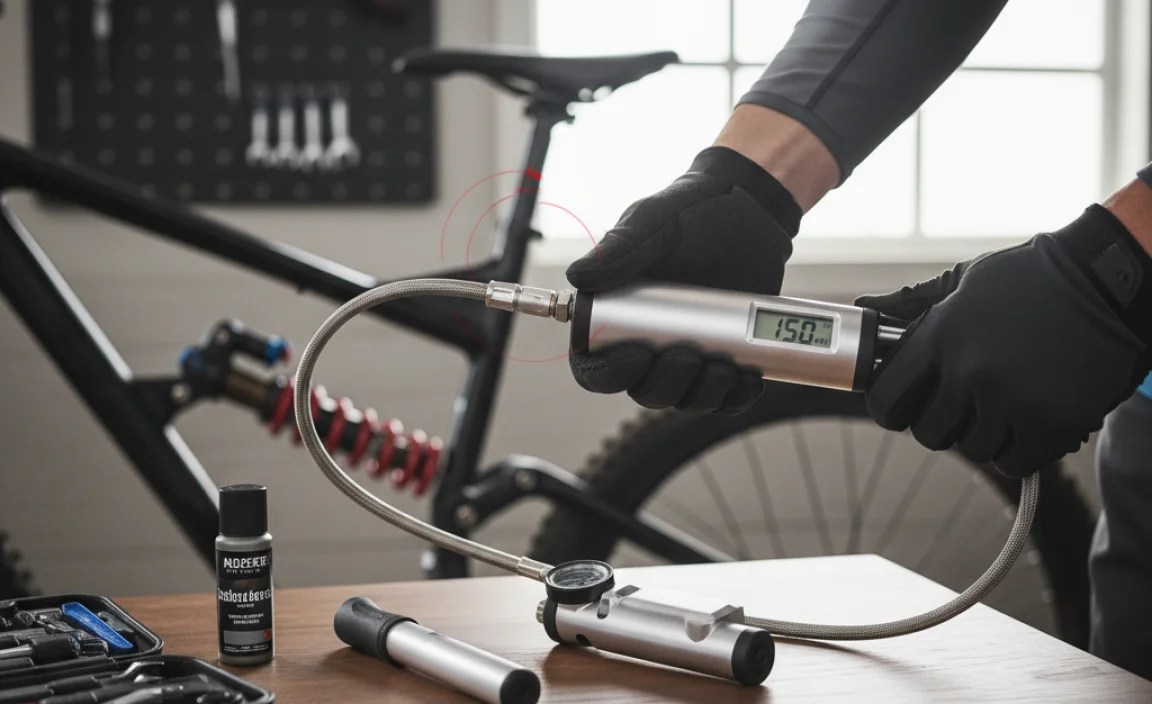
Not all shock pumps are the same. Some are small and easy to carry. Others are bigger and more powerful. The right shock pump for you depends on your needs. If you ride often, a good quality pump is worth the investment. Look for a pump with a clear gauge. This will help you see the pressure accurately. A pump with a swivel head can be useful too. It makes it easier to reach the valve. Some pumps have a bleed valve. This lets you release small amounts of air. This is helpful for fine-tuning. Read reviews and compare different models. Ask your local bike shop for advice. They can help you choose the right pump for your bike. They can also show you how to use a shock pump to fine tune for bike park riding.
- Choose a shock pump with a clear gauge.
- A swivel head makes it easier to use the pump.
- A bleed valve helps with fine-tuning.
- Read reviews before buying a shock pump.
- Ask your local bike shop for advice.
Imagine you’re a chef. You need the right tools to make a delicious meal. A shock pump is like a chef’s knife for your bike. It’s an essential tool for keeping your suspension in top condition. Don’t skimp on quality. A cheap pump might break easily. It might also give you inaccurate readings. This could damage your suspension. Invest in a good quality pump. It will last longer and give you more accurate results. With the right pump, you’ll be able to adjust your suspension with confidence. You’ll be able to dial in the perfect ride for any trail. You will also learn how to use a shock pump to fine tune for bike park performance.
What Features Should You Look For?
When you’re shopping for a shock pump, there are a few key features to consider. First, look for a pump with a clear and easy-to-read gauge. This will help you get accurate pressure readings. Second, check for a swivel head. This will make it easier to access the valve on your suspension. Third, consider a pump with a bleed valve. This allows you to release small amounts of air for fine-tuning. Fourth, look for a pump that is durable and well-built. It should be able to withstand regular use. Finally, read reviews from other riders. This will give you an idea of the pump’s performance and reliability. By considering these features, you can choose the right shock pump for your needs.
How Accurate Are Shock Pump Gauges?
The accuracy of a shock pump gauge is very important. If the gauge is not accurate, you could over-inflate or under-inflate your suspension. This could affect your ride quality and safety. Some pumps have more accurate gauges than others. Look for pumps that are known for their accuracy. You can also calibrate your pump. This means checking it against a known pressure source. If your pump is not accurate, you may need to replace it. It’s better to have an accurate pump than to risk damaging your suspension. Always double-check your pressure readings. This will help you ensure that your suspension is properly inflated.
How Does Pump Size Affect Performance?
The size of a shock pump can affect its performance. Smaller pumps are more portable. They are easier to carry with you on rides. However, they may take longer to inflate your suspension. Larger pumps are more powerful. They can inflate your suspension more quickly. However, they are less portable. Choose a pump size that fits your needs. If you ride often and need to make adjustments on the trail, a smaller pump might be best. If you only need to adjust your suspension at home, a larger pump might be better. Consider how often you will use the pump. Think about where you will be using it. This will help you choose the right size.
Fun Fact or Stat: A high-quality shock pump can last for many years with proper care. Some pumps even come with lifetime warranties!
Step-by-Step Guide: Using a Shock Pump Correctly
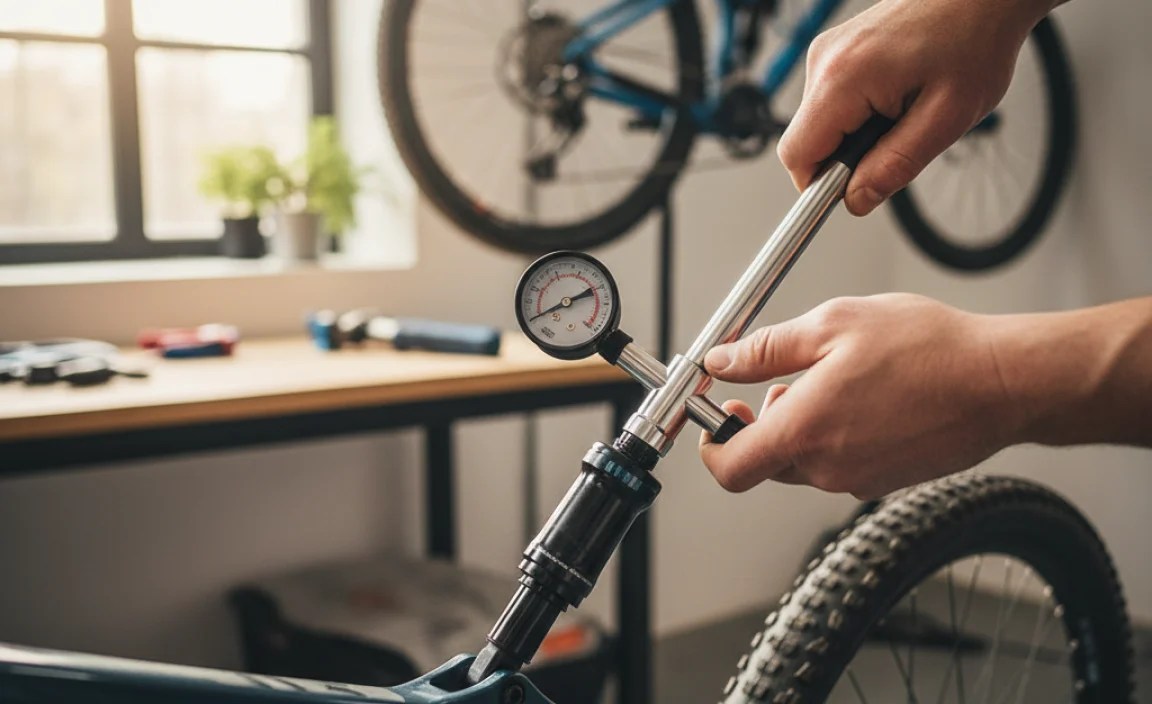
Using a shock pump might seem tricky, but it’s easy. First, find the valve on your suspension. It’s usually covered by a cap. Remove the cap. Then, attach the shock pump to the valve. Make sure it’s on tight. Otherwise, air will leak out. Next, start pumping. Watch the gauge. Stop when you reach the desired pressure. Check your bike’s manual for the right pressure. It will tell you how much air to add. Once you’re done, remove the pump. Put the cap back on the valve. That’s it! You’ve just adjusted your suspension. Remember, small adjustments can make a big difference. Experiment until you find what feels best. Learning how to use a shock pump to fine tune for bike park riding is worth the effort.
- Remove the valve cap on your suspension.
- Attach the shock pump securely to the valve.
- Pump until you reach the desired pressure.
- Check your bike’s manual for the right pressure.
- Remove the pump and replace the valve cap.
Imagine you’re tuning a guitar. Each string needs to be just right. If it’s too loose, it sounds bad. If it’s too tight, it might break. Your bike’s suspension is similar. You need to find the right pressure. This will give you the best performance. Using a shock pump is like tuning your guitar. It lets you fine-tune your ride. Don’t be afraid to experiment. Try different pressures and see what feels best. Remember to make small adjustments. This will prevent you from over-inflating or under-inflating your suspension. With a little practice, you’ll be able to dial in the perfect ride for any trail. You will master how to use a shock pump to fine tune for bike park adventures.
How Do You Attach the Pump to the Valve?
Attaching the shock pump to the valve is a simple but important step. First, make sure the valve is clean. Remove any dirt or debris. Then, line up the pump head with the valve. Push the pump head onto the valve. You should feel it click into place. If it doesn’t click, try wiggling it slightly. Make sure it’s on tight. Otherwise, air will leak out when you start pumping. Some pumps have a lever that you need to flip to secure the connection. Check your pump’s instructions for details. Once the pump is securely attached, you’re ready to start pumping. Double-check the connection before you start. This will prevent air leaks and ensure accurate pressure readings.
How Do You Read the Pressure Gauge?
Reading the pressure gauge on your shock pump is essential for accurate adjustments. The gauge shows the air pressure in your suspension. It’s usually measured in PSI (pounds per square inch). Look for the needle or digital display on the gauge. The needle will point to a number. This number is the current pressure in your suspension. Some gauges have different scales. Make sure you’re reading the correct scale. If the gauge has a digital display, it will show the pressure directly. Pay attention to the units. Make sure you’re reading PSI and not another unit. If you’re not sure how to read the gauge, check your pump’s instructions. Accurate pressure readings are crucial for proper suspension tuning.
What Do You Do If Air Leaks Out?
Sometimes, air can leak out when you attach or remove the shock pump. This is normal. A small amount of air loss is usually not a problem. However, if a lot of air leaks out, there might be a problem. Make sure the pump is securely attached to the valve. Check for any damage to the valve or pump head. If the valve is damaged, you may need to replace it. If the pump head is damaged, you may need to replace the pump. If air continues to leak out, try tightening the connection. You can also try using a different pump. If you’re still having trouble, take your bike to a bike shop. They can help you diagnose and fix the problem.
Fun Fact or Stat: Some shock pumps have a “no-loss” chuck. This design minimizes air loss when you disconnect the pump.
Fine-Tuning Suspension for Different Bike Park Features

Bike parks have different features. Jumps, drops, and berms all need different suspension setups. For jumps, you want a stiffer suspension. This will help you pop off the lip. It will also prevent you from bottoming out on landing. For drops, you want a softer suspension. This will absorb the impact. It will also keep you from getting bucked off your bike. For berms, you want a balanced suspension. This will give you grip and control. Experiment with different settings. See what feels best for each feature. Remember, there’s no one-size-fits-all solution. What works for one rider might not work for another. The key is to find what works for you. Learn how to use a shock pump to fine tune for bike park conditions.
- Stiffer suspension is good for jumps.
- Softer suspension is good for drops.
- Balanced suspension is good for berms.
- Experiment with different settings.
- What works for one rider may not work for another.
- Adjust your suspension based on the terrain.
Imagine you’re a race car driver. You wouldn’t use the same tires for a wet track as a dry track. You need to adjust your setup for the conditions. Your bike’s suspension is the same. You need to adjust it for the terrain. A shock pump is your tool for making these adjustments. It lets you fine-tune your suspension for any feature. Don’t be afraid to try new things. Start with small changes. See how they affect your ride. Keep track of your settings. This will help you remember what works best. With practice, you’ll be able to dial in your suspension for any bike park. You will also become an expert on how to use a shock pump to fine tune for bike park trails.
How Do You Set Up for Jumps?
Setting up your suspension for jumps is important. You want a setup that will help you pop off the lip. You also want to avoid bottoming out on landing. Start by increasing the air pressure in your suspension. This will make it stiffer. A stiffer suspension will give you more support. It will also help you maintain your balance. You can also adjust the rebound damping. Rebound damping controls how quickly your suspension returns to its original position. Increase the rebound damping to prevent your bike from bouncing too much. Experiment with different settings. Find what feels best for you. Remember to start with small adjustments. This will prevent you from making drastic changes that could affect your control.
How Do You Set Up for Drops?
Setting up your suspension for drops is different than setting up for jumps. You want a setup that will absorb the impact. You also want to avoid getting bucked off your bike. Start by decreasing the air pressure in your suspension. This will make it softer. A softer suspension will absorb more of the impact. You can also adjust the rebound damping. Decrease the rebound damping to allow your suspension to return to its original position more slowly. This will help prevent you from getting bucked off your bike. Experiment with different settings. Find what feels best for you. Remember to start with small adjustments. This will prevent you from making drastic changes that could affect your control.
How Do You Set Up for Berms?
Setting up your suspension for berms requires a balanced approach. You want a setup that will provide grip and control. You also want to avoid losing traction. Start by setting your air pressure to a neutral setting. This means not too stiff and not too soft. You can also adjust the rebound damping. Set the rebound damping to a moderate setting. This will allow your suspension to track the terrain. It will also prevent it from bouncing too much. Experiment with different settings. Find what feels best for you. Remember to start with small adjustments. This will prevent you from making drastic changes that could affect your control. A well-tuned suspension will help you rail those berms with confidence.
Fun Fact or Stat: Some bike parks have suspension tuning clinics. These clinics teach you how to dial in your suspension for the specific trails at the park.
Safety Tips for Using a Shock Pump
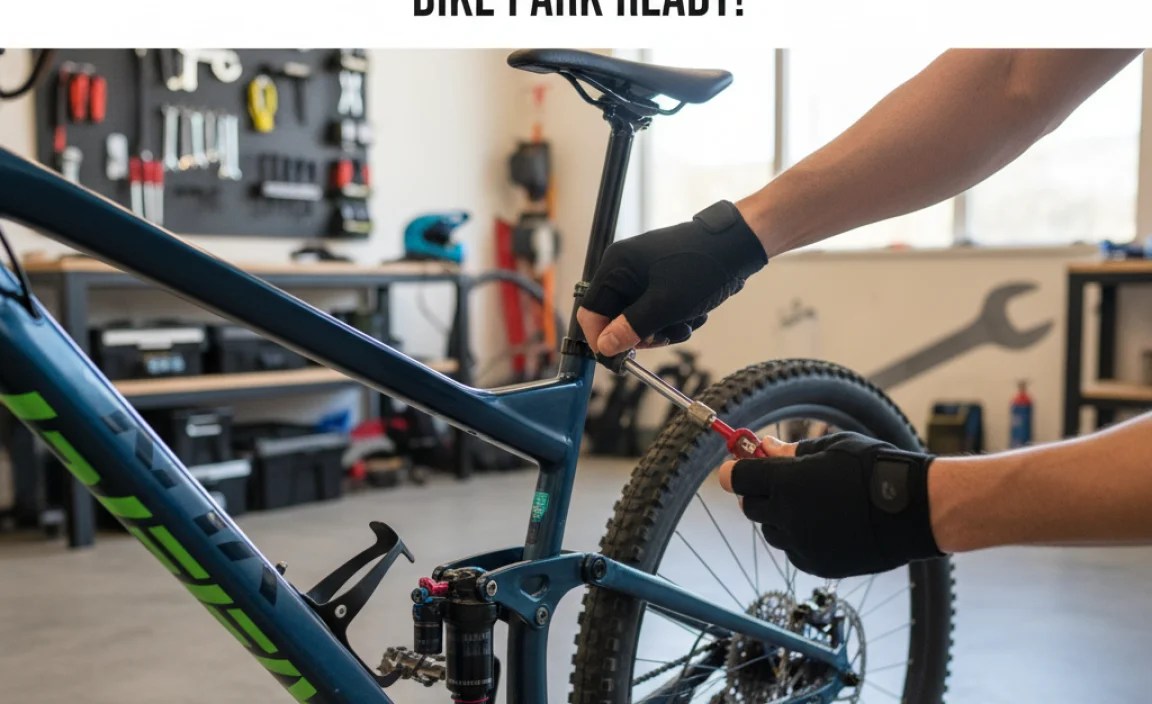
Safety is always important when working on your bike. When using a shock pump, be careful. Always wear eye protection. This will protect your eyes from flying debris. Make sure the pump is securely attached to the valve. This will prevent air leaks. Don’t over-inflate your suspension. Check your bike’s manual for the right pressure. Exceeding the maximum pressure can damage your suspension. If you’re not sure how to use the pump, ask for help. Your local bike shop can show you the proper technique. They can also teach you how to use a shock pump to fine tune for bike park safety. Always check your suspension before each ride. This will ensure it’s working properly.
- Wear eye protection when using a shock pump.
- Make sure the pump is securely attached.
- Don’t over-inflate your suspension.
- Check your bike’s manual for the right pressure.
- Ask for help if you’re not sure how to use the pump.
Imagine you’re building a treehouse. You wouldn’t use rotten wood, would you? You’d use strong, safe materials. The same goes for your bike. You need to make sure everything is safe and working properly. A shock pump is a tool for keeping your suspension safe. By using it correctly, you can prevent accidents. You can also improve your performance. Always take your time. Don’t rush the process. Double-check your work. This will help you avoid mistakes. Remember, safety is always the most important thing. Learn how to use a shock pump to fine tune for bike park safety.
What Happens If You Over-Inflate Your Suspension?
Over-inflating your suspension can be dangerous. It can damage your suspension components. It can also affect your ride quality. When you over-inflate your suspension, it becomes too stiff. This means it won’t absorb bumps as well. You’ll feel every little bump on the trail. This can be uncomfortable and tiring. Over-inflation can also cause your suspension to fail. This could lead to a crash. Always check your bike’s manual for the maximum pressure. Never exceed this pressure. If you accidentally over-inflate your suspension, release some air. Use the bleed valve on your shock pump. This will bring the pressure back down to the correct level.
How Often Should You Check Your Suspension Pressure?
You should check your suspension pressure regularly. How often depends on how often you ride. If you ride every day, check it every day. If you ride once a week, check it once a week. Air pressure can change over time. Temperature changes can affect air pressure. Leaks can also cause air pressure to drop. By checking your suspension pressure regularly, you can ensure it’s always at the correct level. This will help you maintain good ride quality and safety. Before each ride, give your suspension a quick check. Make sure it feels right. If it feels too soft or too stiff, adjust the pressure.
What Should You Do If You’re Not Sure About Something?
If you’re not sure about something, don’t guess. Ask for help. Your local bike shop is a great resource. They can answer your questions. They can also show you how to use a shock pump correctly. They can teach you how to use a shock pump to fine tune for bike park riding. There are also many online resources. You can find videos and articles about suspension tuning. Be sure to use reliable sources. Don’t trust everything you read online. If you’re still not sure, it’s best to err on the side of caution. Take your bike to a professional. They can help you get your suspension dialed in.
Fun Fact or Stat: Many professional mountain bikers have their own suspension technicians. These technicians help them fine-tune their suspension for each race course.
Maintaining Your Shock Pump for Longevity
A shock pump is a tool. Like any tool, it needs care. This will help it last longer. Keep your pump clean. Wipe it down after each use. This will remove dirt and grime. Store your pump in a safe place. This will prevent damage. Check the pump head regularly. Make sure it’s not worn or damaged. Replace it if necessary. Lubricate the pump’s moving parts. This will keep it working smoothly. Follow the manufacturer’s instructions. This will help you maintain your pump properly. With proper care, your shock pump will last for years. It will always be ready when you need it. Learn how to use a shock pump to fine tune for bike park riding.
| Maintenance Task | Frequency | Why |
|---|---|---|
| Wipe Down | After Each Use | Removes dirt and grime |
| Check Pump Head | Monthly | Ensures proper seal |
| Lubricate Moving Parts | Every 3 Months | Keeps pump working smoothly |
| Store in Safe Place | Always | Prevents damage |
- Wipe down your pump after each use.
- Store your pump in a safe place.
- Check the pump head regularly.
- Lubricate the pump’s moving parts.
- Follow the manufacturer’s instructions.
Imagine you have a favorite toy. You want to keep it in good condition, right? You wouldn’t leave it outside in the rain. You’d take care of it. Your shock pump is the same. It’s a tool that helps you enjoy your bike. Taking care of it will ensure it’s always ready to use. A little maintenance goes a long way. It can prevent problems down the road. It can also save you money. By keeping your pump in good condition, you’ll avoid having to replace it. You will be able to keep how to use a shock pump to fine tune for bike park experiences at their best.
How Do You Clean a Shock Pump?
Cleaning a shock pump is easy. First, wipe down the outside of the pump with a clean cloth. This will remove any dirt or grime. You can use a mild soap and water solution if necessary. Be sure to dry the pump thoroughly after cleaning it. Next, check the pump head. Make sure it’s clean and free of debris. You can use a small brush or cotton swab to clean the inside of the pump head. Finally, lubricate the pump’s moving parts. Use a light oil or grease. This will keep the pump working smoothly. Avoid using harsh chemicals or solvents. These can damage the pump.
What Type of Lubricant Should You Use?
Choosing the right lubricant for your shock pump is important. You want to use a lubricant that will keep the pump working smoothly. You also want to avoid using a lubricant that could damage the pump. A light oil or grease is usually the best choice. Silicone-based lubricants are also a good option. Avoid using lubricants that contain petroleum. These can damage the pump’s seals. You can find lubricants specifically designed for shock pumps at your local bike shop. Follow the manufacturer’s instructions for applying the lubricant. Use only a small amount of lubricant. Too much lubricant can attract dirt and grime.
How Do You Store a Shock Pump?
Storing your shock pump properly is important. It will protect it from damage. It will also keep it clean and ready to use. Store your pump in a dry place. Avoid storing it in direct sunlight. This can damage the pump’s components. A toolbox or storage container is a good option. This will protect the pump from dust and dirt. You can also hang the pump on a hook. This will keep it off the ground. Before storing the pump, make sure it’s clean and dry. This will prevent corrosion. With proper storage, your shock pump will last for years.
Fun Fact or Stat: Some shock pumps come with a storage case. This case protects the pump and keeps it organized.
Summary
Learning how to use a shock pump to fine tune for bike park adventures is a great skill. It allows you to adjust your bike’s suspension. This improves comfort, control, and safety. A shock pump lets you add or remove air from your suspension. This changes how it feels. Different bike park features need different settings. Jumps, drops, and berms all require adjustments. Always check your bike’s manual for the right pressure. Be careful not to over-inflate your suspension. With practice, you’ll be able to dial in the perfect ride. It will also allow you to adapt to any terrain. Remember to maintain your shock pump. Clean it, lubricate it, and store it properly. This will help it last longer.
Conclusion
Using a shock pump can seem tricky at first. But with practice, it becomes easy. Understanding your bike’s suspension is key. It helps you make the right adjustments. Don’t be afraid to experiment. Try different settings and see what feels best. Always prioritize safety. Wear eye protection and check your pressure. Knowing how to use a shock pump to fine tune for bike park riding will improve your skills. It will also make your rides more enjoyable. So grab your shock pump and hit the trails!
Frequently Asked Questions
Question No 1: What is a shock pump, and why do I need one?
Answer: A shock pump is a special pump made for adjusting the air pressure in your bike’s suspension. Regular tire pumps won’t work. You need a shock pump because it has a special valve that lets you add small amounts of air. This allows for precise adjustments. It also has a gauge that shows the pressure accurately. Adjusting your suspension is important for comfort and control. It helps you handle bumps and jumps better. Knowing how to use a shock pump to fine tune for bike park riding is a key skill for any serious rider.
Question No 2: How do I know what pressure to put in my suspension?
Answer: The best place to start is your bike’s manual. It will have a chart that shows the recommended pressure for your weight. You can also find this information online. Many suspension manufacturers have websites with setup guides. These guides will help you find the right pressure for your bike and riding style. Remember, the recommended pressure is just a starting point. You may need to adjust it based on your preferences. Experiment with small changes until you find what feels best. Learning how to use a shock pump to fine tune for bike park trails is about finding the right balance.
Question No 3: Can I use a regular tire pump to inflate my suspension?
Answer: No, you should not use a regular tire pump to inflate your suspension. Tire pumps deliver a large volume of air. This makes it difficult to make small adjustments. They also don’t have a gauge that shows the pressure accurately. Using a tire pump could over-inflate your suspension. This could damage it. A shock pump is designed specifically for suspension. It delivers small amounts of air. It also has an accurate gauge. This allows you to make precise adjustments. Always use a shock pump when adjusting your suspension.
Question No 4: What does PSI mean, and why is it important?
Answer: PSI stands for pounds per square inch. It’s a unit of measurement for air pressure. It tells you how much force the air is pushing with. PSI is important because it tells you how much air is in your suspension. The right PSI will give you the best performance. Too little PSI, and your suspension will be too soft. Too much PSI, and it will be too stiff. Always check the PSI when adjusting your suspension. Use a shock pump with an accurate gauge. This will help you get the right pressure. Learning how to use a shock pump to fine tune for bike park riding involves understanding PSI.
Question No 5: How often should I service my bike’s suspension?
Answer: How often you should service your suspension depends on how often you ride. If you ride a lot, you should service it more often. A good rule of thumb is to service your suspension every 50 hours of riding. Servicing your suspension involves cleaning it, lubricating it, and replacing worn parts. This will keep it working properly. It will also extend its lifespan. You can service your suspension yourself. Or you can take it to a bike shop. Regular maintenance is important for keeping your suspension in top condition.
Question No 6: Can I adjust my suspension on the trail?
Answer: Yes, you can adjust your suspension on the trail. This is one of the benefits of having a shock pump. If you’re riding different types of terrain, you may want to adjust your suspension. For example, you might want to increase the pressure for jumps. You might want to decrease it for rough trails. To adjust your suspension on the trail, find a safe place to stop. Remove the pump from your backpack. Then, follow the steps for adjusting your suspension. Remember to make small adjustments. This will prevent you from over-inflating or under-inflating it. Learning how to use a shock pump to fine tune for bike park conditions means being ready to adjust on the go.


