
Pump Gauge Mechanism: The Powerful Secret

A pump gauge mechanism tells you the air pressure in your bike tires. If your gauge isn’t working, you might get incorrect readings, leading to under- or over-inflated tires. You can troubleshoot by checking for leaks, cleaning the gauge, or replacing parts. Regular maintenance ensures accurate pressure readings for safer and more efficient rides.
Ever tried pumping up your bike tires only to wonder if you’ve put in enough air? A faulty pump gauge can make inflating your tires a guessing game. This can be frustrating and even dangerous, as under- or over-inflated tires affect your ride quality and safety. But don’t worry, fixing or maintaining your pump gauge is easier than you think!
In this guide, we’ll walk you through the common issues with pump gauges, how to diagnose them, and simple steps to get them working accurately again. Let’s get started and keep you rolling smoothly!
Understanding the Pump Gauge Mechanism

Before we dive into fixing things, let’s understand how a pump gauge works. This will make troubleshooting much easier.
Types of Pump Gauges
There are mainly two types of pump gauges you’ll find on bike pumps:
- Analog Gauges: These use a needle that moves along a scale to show the pressure. They are simple and reliable but can be less precise.
- Digital Gauges: These use electronic sensors to display the pressure on a screen. They are more precise but require batteries and can be more sensitive to damage.
Components of a Pump Gauge
Both types of gauges have similar basic components:
- Pressure Sensor: This part detects the air pressure.
- Display: This shows the pressure reading (needle and scale for analog, screen for digital).
- Connecting Hose: This connects the pump to the tire valve.
- Internal Mechanism: This translates the pressure into a readable format.
Understanding these components helps when you’re trying to figure out what might be going wrong.
Common Problems with Pump Gauges
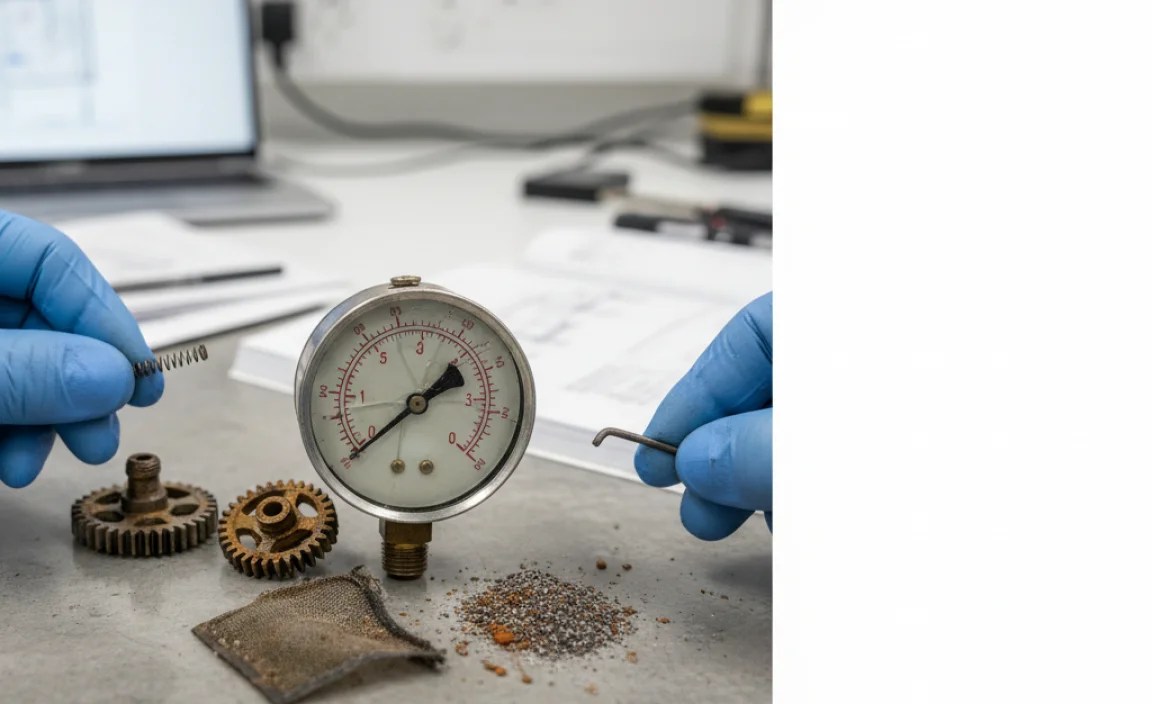
Pump gauges can run into a few common issues that affect their accuracy. Let’s look at these.
Inaccurate Readings
This is when the gauge shows a pressure that doesn’t match the actual tire pressure. Causes include:
- Leaks: Air leaking from the hose or connections.
- Calibration Issues: The gauge is not properly set to zero.
- Damage: Physical damage to the gauge mechanism.
Sticking Needle (Analog Gauges)
The needle might get stuck at a certain point, giving a false reading. This can happen due to:
- Dirt or Debris: Obstructions in the gauge mechanism.
- Bent Needle: Physical damage to the needle.
Blank or Incorrect Display (Digital Gauges)
Digital gauges might show nothing or display incorrect numbers because of:
- Dead Batteries: The most common cause.
- Loose Connections: Internal wiring issues.
- Sensor Failure: Damage to the pressure sensor.
Hose and Connection Problems
Issues here can also affect the gauge reading:
- Leaks: Air escaping from the hose or valve connection.
- Blockages: Obstructions in the hose.
Troubleshooting Your Pump Gauge

Now, let’s get our hands dirty and troubleshoot the pump gauge. Follow these steps to diagnose the problem.
Step 1: Visual Inspection
Start with a close look at the pump and gauge:
- Check the Hose: Look for cracks, kinks, or loose connections.
- Inspect the Gauge: Look for physical damage like cracks or a bent needle.
- Check Connections: Make sure all connections are tight.
Step 2: Test for Leaks
Leaks can cause inaccurate readings. Here’s how to check:
- Inflate the Tire: Pump up the tire to a known pressure.
- Listen for Hissing: Pay attention to any hissing sounds near the hose and connections.
- Use Soapy Water: Apply soapy water to the connections. Bubbles indicate a leak.
Step 3: Check the Needle (Analog Gauges)
If you have an analog gauge, check the needle:
- Zero Position: Make sure the needle is at zero when no pressure is applied.
- Movement: Gently tap the gauge. The needle should move freely.
Step 4: Check the Batteries (Digital Gauges)
For digital gauges, this is the first thing to check:
- Replace Batteries: Install new batteries and see if the display lights up.
- Check Connections: Ensure the battery contacts are clean and tight.
Step 5: Compare with Another Gauge
Use a second gauge to verify the reading:
- Use a Second Pump: Compare the reading with another pump’s gauge.
- Use a Tire Pressure Gauge: A standalone tire pressure gauge can confirm the pressure.
If the readings differ significantly, your pump gauge is likely the problem.
How to Fix Common Pump Gauge Problems
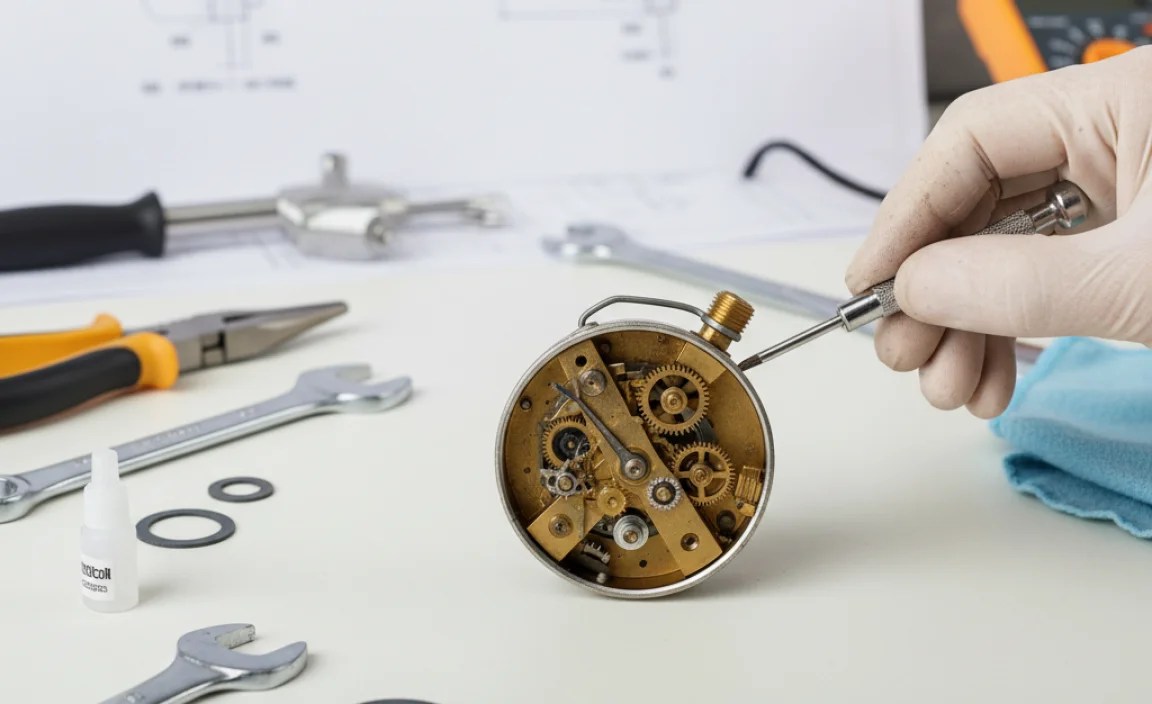
Once you’ve identified the issue, here’s how to fix it.
Fixing Leaks
Leaks are a common problem, but often easy to fix.
- Tighten Connections: Use a wrench to tighten any loose connections.
- Replace the Hose: If the hose is cracked or damaged, replace it. You can find replacement hoses at most bike shops or online.
- Replace Valve Cores: Sometimes the valve core itself is leaking. Use a valve core tool to replace it.
Cleaning an Analog Gauge
Dirt and debris can cause the needle to stick. Here’s how to clean it:
- Remove the Gauge Cover: Carefully remove the cover of the gauge.
- Use Compressed Air: Blow out any dirt or debris with compressed air.
- Clean with a Soft Brush: Use a soft brush to gently clean the internal parts.
- Reassemble: Put the gauge back together.
Calibrating an Analog Gauge
If the needle isn’t at zero, you might need to calibrate the gauge:
- Locate the Adjustment Screw: Find the small screw on the back or side of the gauge.
- Adjust the Screw: Use a small screwdriver to adjust the screw until the needle points to zero.
- Test: Inflate a tire to a known pressure and check the reading. Adjust again if necessary.
Replacing Parts
Sometimes, you need to replace parts to fix the gauge.
- Replacement Gauges: You can buy replacement gauges online or at bike shops.
- Replacement Hoses: These are also readily available.
Dealing with Digital Gauge Issues
Digital gauges can be trickier to fix, but here are a few steps:
- Check Battery Contacts: Clean the contacts with a cotton swab and rubbing alcohol.
- Reset the Gauge: Some gauges have a reset button. Press it to reset the gauge.
- Replace the Sensor: If the sensor is faulty, you might need to replace the entire gauge, as sensors are often not sold separately.
Preventative Maintenance for Your Pump Gauge

Regular maintenance can prevent many common issues and keep your pump gauge working accurately.
Keep It Clean
Dirt and debris are the enemy of accurate readings. Here’s how to keep your gauge clean:
- Wipe It Down: Regularly wipe down the gauge and hose with a clean cloth.
- Store It Properly: Store your pump in a clean, dry place to prevent dirt buildup.
Check for Leaks Regularly
Regularly checking for leaks can help you catch problems early.
- Listen for Hissing: Pay attention to any hissing sounds when inflating tires.
- Use Soapy Water: Periodically check connections with soapy water.
Replace Parts as Needed
Don’t wait until something breaks completely. Replace worn parts proactively.
- Replace the Hose: Replace the hose if you see any cracks or wear.
- Replace Valve Cores: Replace valve cores if they start leaking.
Calibrate Regularly
Keep your analog gauge accurate by calibrating it regularly.
- Check Zero Position: Make sure the needle is at zero before each use.
- Adjust as Needed: Calibrate the gauge if the needle is off.
Tools You’ll Need
Having the right tools makes pump gauge maintenance much easier.
- Wrenches: For tightening connections.
- Screwdrivers: For calibrating analog gauges and accessing battery compartments.
- Compressed Air: For cleaning the gauge mechanism.
- Soapy Water: For checking for leaks.
- Valve Core Tool: For replacing valve cores.
- Replacement Parts: Hoses, gauges, and valve cores.
When to Replace vs. Repair
Sometimes, it’s better to replace a pump gauge than to try to repair it. Here’s a guide:
| Problem | Repair | Replace |
|---|---|---|
| Minor Leaks | Tighten connections, replace hose | |
| Sticking Needle | Clean and calibrate | |
| Dead Batteries | Replace batteries | |
| Major Damage | Replace gauge or pump | |
| Faulty Sensor | Replace gauge or pump |
If the repair costs more than a new pump or gauge, it’s usually better to replace it. Also, if you’re not comfortable doing the repairs yourself, consider getting a new pump or gauge.
Choosing a New Pump Gauge
If you decide to replace your pump gauge, here are some factors to consider:
Type of Gauge
- Analog: Simple, reliable, and affordable.
- Digital: More precise, but requires batteries and can be more expensive.
Pressure Range
Make sure the gauge has a pressure range that matches your needs. Road bikes often require higher pressures than mountain bikes.
Accuracy
Look for gauges with a reputation for accuracy. Read reviews and compare specifications.
Durability
Choose a gauge that’s built to last. Look for quality materials and construction.
Ease of Use
The gauge should be easy to read and use. Consider the size of the display and the clarity of the markings.
Recommended Bike Pumps
If you’re considering a new pump, here are a few well-regarded options:
- Lezyne Floor Drive: Known for its durability and accuracy.
- Topeak Joe Blow Sport III: A reliable and affordable option.
- Park Tool PFP-5: A high-quality pump for serious cyclists.
Consider reading reviews and comparing features to find the best pump for your needs.
FAQ About Pump Gauge Mechanisms
Why is my pump gauge not reading correctly?
Your pump gauge might not be reading correctly due to leaks, dirt, a need for calibration (analog gauges), or dead batteries (digital gauges). Check for these common issues to troubleshoot.
How do I know if my pump gauge is accurate?
Compare your pump gauge’s reading with another gauge, such as a standalone tire pressure gauge or another pump. If the readings differ significantly, your pump gauge may be inaccurate.
Can I calibrate an analog pump gauge?
Yes, most analog pump gauges can be calibrated. Look for a small adjustment screw on the back or side of the gauge and use a screwdriver to adjust the needle to zero when no pressure is applied.
How often should I replace my pump gauge?
Replace your pump gauge if it’s significantly damaged, consistently inaccurate, or if repairs cost more than a new gauge. Regular maintenance can extend its lifespan.
What tools do I need to maintain my pump gauge?
You’ll need wrenches for tightening connections, screwdrivers for calibration, compressed air for cleaning, soapy water for leak detection, and a valve core tool for replacing valve cores.
How do I prevent my pump gauge from becoming inaccurate?
Keep your pump gauge clean, check for leaks regularly, replace worn parts as needed, and calibrate analog gauges frequently to prevent inaccuracies.
Are digital pump gauges more accurate than analog ones?
Digital pump gauges are generally more precise than analog ones. However, they require batteries and can be more sensitive to damage. Both types can provide accurate readings if properly maintained.
Conclusion
Keeping your pump gauge in good working order is essential for safe and enjoyable rides. By understanding the pump gauge mechanism, troubleshooting common issues, and performing regular maintenance, you can ensure accurate tire pressure every time. Whether you choose to repair or replace your gauge, taking these steps will help you maintain your bike and enjoy your cycling adventures with confidence. So, grab your tools, follow these tips, and keep those tires properly inflated!


