
Foot Pump for Bicycle Types: Ultimate Guide!

Choosing the right foot pump for your bicycle depends on your bike type and how often you ride. For road bikes with high-pressure tires, get a pump with a pressure gauge that reaches at least 120 PSI. Mountain bikes and everyday bikes work well with pumps around 80-100 PSI. Consider dual-head pumps for compatibility with different valve types like Presta and Schrader. A stable base and comfortable handle are essential for easy use!
Picking the right foot pump for your bicycle can feel overwhelming. So many choices, and each bike seems to need something a little different! Are you tired of struggling with the wrong pump or not getting enough pressure in your tires? Don’t worry, you’re not alone. Many cyclists face this issue. This guide breaks down the different types of foot pumps for various bikes. We’ll cover pressure needs, valve compatibility, and key features to look for. By the end, you’ll know exactly what pump to choose. Get ready to make every ride smoother and easier!
Understanding Bicycle Foot Pumps

A bicycle foot pump, also known as a floor pump, is a common tool for inflating bike tires. It’s designed for ease of use and efficiency. Unlike smaller hand pumps, a foot pump allows you to use your body weight and leg muscles to generate more pressure. This makes inflating tires faster and less tiring. Foot pumps usually have a gauge to show the pressure, helping you inflate your tires to the correct PSI (pounds per square inch).
Key Features of a Foot Pump
When choosing a foot pump, there are several features to consider:
- Pressure Gauge: Essential for accurate inflation. Look for a clear, easy-to-read gauge.
- Valve Compatibility: Most pumps work with both Presta and Schrader valves. Some have dual heads or adapters.
- Maximum Pressure: Different bikes need different pressures. Road bikes need higher pressure than mountain bikes.
- Stability: A wide base keeps the pump steady while you use it.
- Handle Comfort: An ergonomic handle reduces hand fatigue.
- Durability: Look for pumps made from sturdy materials like steel or aluminum.
Foot Pump Types and Bicycle Compatibility

Different types of bikes have different tire pressure needs and valve types. Here’s a breakdown of foot pumps best suited for each.
Road Bikes
Road bikes typically use high-pressure tires for speed and efficiency. They often have Presta valves.
- Pressure Requirement: 100-130 PSI
- Valve Type: Presta
- Recommended Pump Features:
- High-pressure gauge
- Presta-specific head or dual head
- Narrow barrel for efficient high-pressure inflation
Example: A road bike foot pump should have a gauge that goes up to at least 130 PSI. Look for models with a secure Presta valve connection to avoid leaks.
Mountain Bikes
Mountain bikes use lower pressure tires for better grip and comfort on rough terrain. They can have either Schrader or Presta valves.
- Pressure Requirement: 25-40 PSI
- Valve Type: Schrader or Presta
- Recommended Pump Features:
- Lower pressure gauge
- Dual head for both valve types
- Wider barrel for faster inflation
Example: A mountain bike pump doesn’t need to reach super high pressures. A gauge that tops out at 60 PSI is usually fine. A dual-head pump is handy if you have bikes with both valve types.
Hybrid and Commuter Bikes
Hybrid and commuter bikes are versatile and typically use moderate tire pressures. They often have Schrader valves.
- Pressure Requirement: 50-70 PSI
- Valve Type: Schrader
- Recommended Pump Features:
- Mid-range pressure gauge
- Schrader-specific head or dual head
- Durable construction for daily use
Example: A pump for a hybrid bike should be reliable and easy to use. Look for a sturdy base and a comfortable handle for frequent inflation.
BMX Bikes
BMX bikes use higher pressure tires for street and park riding and lower pressure tires for dirt and vert riding. They almost always have Schrader valves.
- Pressure Requirement: 40-110 PSI
- Valve Type: Schrader
- Recommended Pump Features:
- Mid to High range pressure gauge
- Schrader-specific head
- Durable construction for frequent use
Example: A pump for a BMX bike should be reliable and easy to use. Look for a sturdy base and a comfortable handle for frequent inflation.
E-Bikes
E-bikes often have similar tire requirements to hybrid or mountain bikes, depending on the type of e-bike. Check your tire sidewall for the recommended pressure.
- Pressure Requirement: 40-70 PSI (check tire sidewall)
- Valve Type: Schrader or Presta
- Recommended Pump Features:
- Mid-range pressure gauge
- Dual head for both valve types
- Robust construction for frequent use
Example: Since e-bikes can be heavier, make sure your pump is durable and can handle frequent use. A dual-head pump is useful if you have other bikes with different valve types.
Valve Types: Presta vs. Schrader

Understanding the difference between Presta and Schrader valves is crucial for choosing the right pump.
Presta Valves
Presta valves are commonly found on road bikes and some high-end mountain bikes. They are narrower and have a small locking nut at the tip.
- Pros:
- Better for high-pressure tires
- Valve core can be replaced
- Cons:
- More fragile than Schrader valves
- Require a specific pump head or adapter
Schrader Valves
Schrader valves are similar to those found on car tires. They are wider and more robust.
- Pros:
- More durable
- Easy to inflate at gas stations
- Cons:
- Not ideal for very high-pressure tires
Step-by-Step Guide: Using a Foot Pump
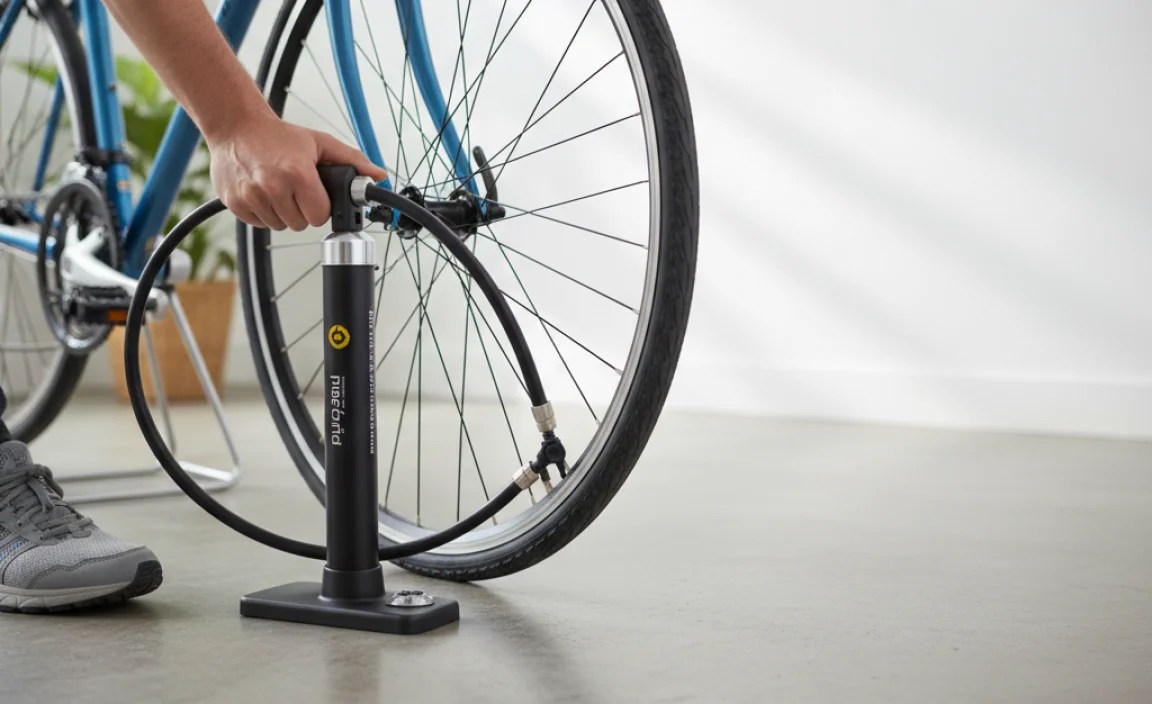
Here’s how to use a foot pump correctly.
Step 1: Prepare the Valve
For Presta valves, unscrew the locking nut at the tip. Press the valve briefly to loosen it.
Step 2: Attach the Pump Head
Connect the pump head to the valve. Make sure it’s a secure fit to prevent air leaks. Some pumps have a lever to lock the head in place.
Step 3: Inflate the Tire
Place your feet on the pump’s base for stability. Use your arms to hold the handle and pump up and down smoothly. Watch the pressure gauge to avoid over-inflation.
Step 4: Remove the Pump Head
Once you reach the desired pressure, unlock the pump head (if applicable) and remove it carefully. For Presta valves, tighten the locking nut.
Step 5: Check the Pressure
Use a separate pressure gauge to double-check the tire pressure. This ensures accuracy and safety.
Top Foot Pump Recommendations
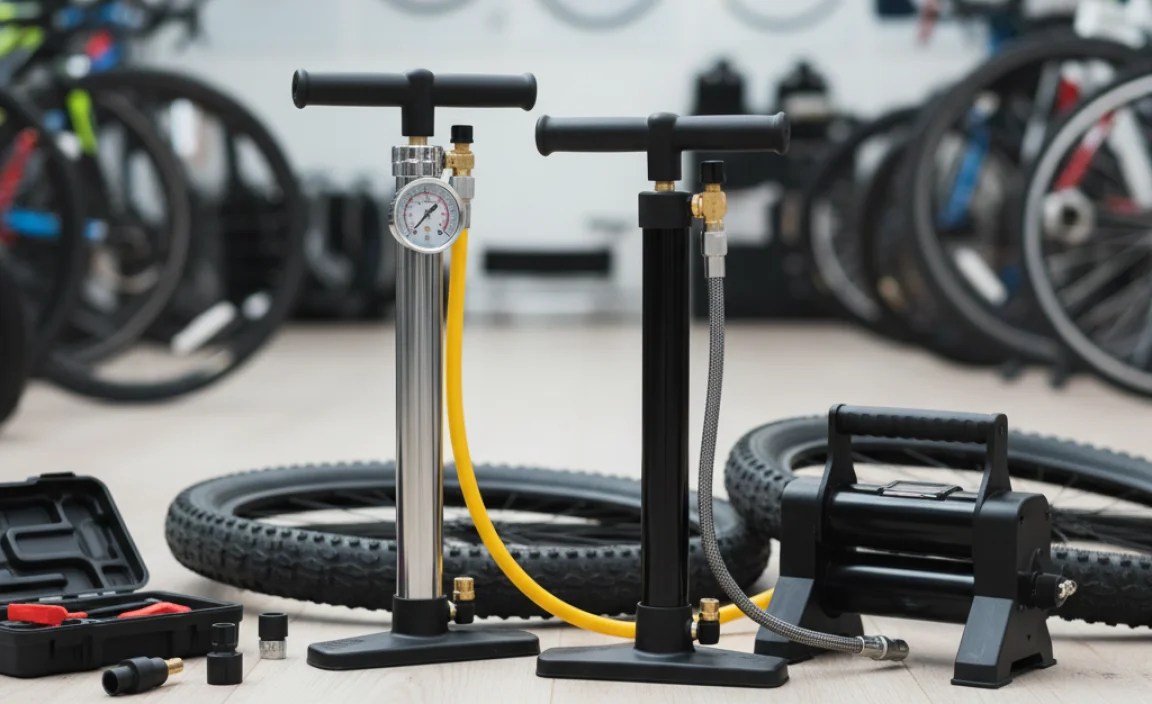
Here are some highly-rated foot pumps for different types of bicycles.
| Pump Model | Bike Type | Key Features | Approximate Price |
|---|---|---|---|
| Topeak JoeBlow Sport III | Road, Mountain, Hybrid | Dual head, large gauge, durable | $50 |
| Lezyne Classic Floor Drive | Road | High pressure, accurate gauge, stylish | $80 |
| Park Tool PFP-5 Home Mechanic Floor Pump | Mountain, Hybrid | Durable, stable, easy to use | $65 |
| Serfas TCPG | Road, Mountain, Hybrid | Easy to read gauge, comfortable handle | $40 |
Maintaining Your Foot Pump
Proper maintenance extends the life of your foot pump and ensures it works efficiently.
- Check for Air Leaks: Regularly inspect the hose and pump head for leaks.
- Lubricate Moving Parts: Apply a small amount of lubricant to the piston and joints.
- Replace Worn Parts: Replace the pump head or hose if they become damaged.
- Store Properly: Store your pump in a dry place to prevent rust and corrosion.
Troubleshooting Common Issues
Here are some common problems and how to fix them.
- Pump Not Inflating:
- Check the valve connection.
- Make sure the pump head is properly attached.
- Inspect the hose for leaks.
- Pressure Gauge Not Working:
- Ensure the gauge is properly connected.
- Replace the gauge if it’s faulty.
- Air Leaking from Valve:
- Tighten the valve connection.
- Replace the valve core if necessary.
Alternative Inflation Methods
While foot pumps are the most common, here are other options for inflating your tires.
- Hand Pumps: Compact and portable, but require more effort.
- CO2 Inflators: Quick and easy for emergencies, but require CO2 cartridges.
- Air Compressors: Fast and efficient, but require a power source.
If you’re curious about the physics behind bike pumps, you can check out resources like those available from HyperPhysics (hyperphysics.phy-astr.gsu.edu) for more in-depth explanations.
Tips for Efficient Pumping
Follow these tips for easier and more effective tire inflation.
- Use Your Body Weight: Lean into the pump to maximize pressure.
- Pump Smoothly: Avoid jerky motions.
- Check Pressure Regularly: Maintain proper tire pressure for optimal performance.
- Keep the Pump Clean: Wipe down the pump after use to remove dirt and grime.
FAQ
What PSI should my bike tires be?
The correct PSI (pounds per square inch) varies by bike type. Road bikes typically need 100-130 PSI, mountain bikes 25-40 PSI, and hybrid bikes 50-70 PSI. Check the sidewall of your tire for the recommended pressure range.
How do I know if my pump is compatible with my valve?
Most foot pumps come with a dual head that works with both Presta and Schrader valves. Some have adapters. Check the pump description or packaging to confirm compatibility.
Can I use a car tire pump for my bike?
Yes, if your bike has Schrader valves. However, car tire pumps can be powerful, so be careful not to over-inflate your tires. Use a pressure gauge to monitor the PSI.
How often should I inflate my bike tires?
Check and inflate your tires before each ride, or at least once a week. Tires lose pressure over time, and proper inflation improves performance and prevents flats.
What is the difference between a floor pump and a hand pump?
A floor pump (foot pump) is larger, more stable, and easier to use for inflating tires to higher pressures. A hand pump is smaller and portable, making it ideal for on-the-go inflation, but requires more effort.
My pump isn’t working. What should I do?
First, check the valve connection and make sure the pump head is securely attached. Inspect the hose for leaks and ensure the pump head is compatible with your valve type. If the gauge isn’t working, it may need to be replaced.
How do I maintain my foot pump?
Regularly check for air leaks, lubricate moving parts, and replace worn parts like the pump head or hose. Store your pump in a dry place to prevent rust and corrosion. A little maintenance can significantly extend the life of your pump.
Conclusion
Choosing the right foot pump for your bicycle doesn’t have to be complicated. By understanding the different types of pumps, valve compatibility, and pressure requirements, you can find the perfect pump for your needs. Regular maintenance and proper usage will keep your tires inflated and your rides smooth. So, get out there, pump up those tires, and enjoy the ride!


