
Pump Casing Types: Find the Perfect Powerful Choice!

Quick Summary: Pump casings come in a few main types: volute, diffuser, and in-line. Volute casings are shaped like a spiral to efficiently convert velocity into pressure. Diffuser casings use stationary vanes for the same purpose. In-line casings are simple and compact, often used for smaller pumps. Knowing these differences helps you choose the right pump for your needs and maintain it properly.
Hey there, fellow cyclists! Raymond Ammons from BicyclePumper.com here. Ever wondered what makes your trusty bike pump tick? Or why some pumps seem to work better than others? It often comes down to the pump casing – the outer shell that directs the flow and builds pressure. It might sound complicated, but understanding the different types is easier than you think.
In this guide, we’ll break down the most common pump casing types, explain how they work, and highlight their pros and cons. By the end, you’ll be able to choose the right pump for your needs and keep it running smoothly for years to come. Let’s get pumping!
Understanding Pump Casing Types
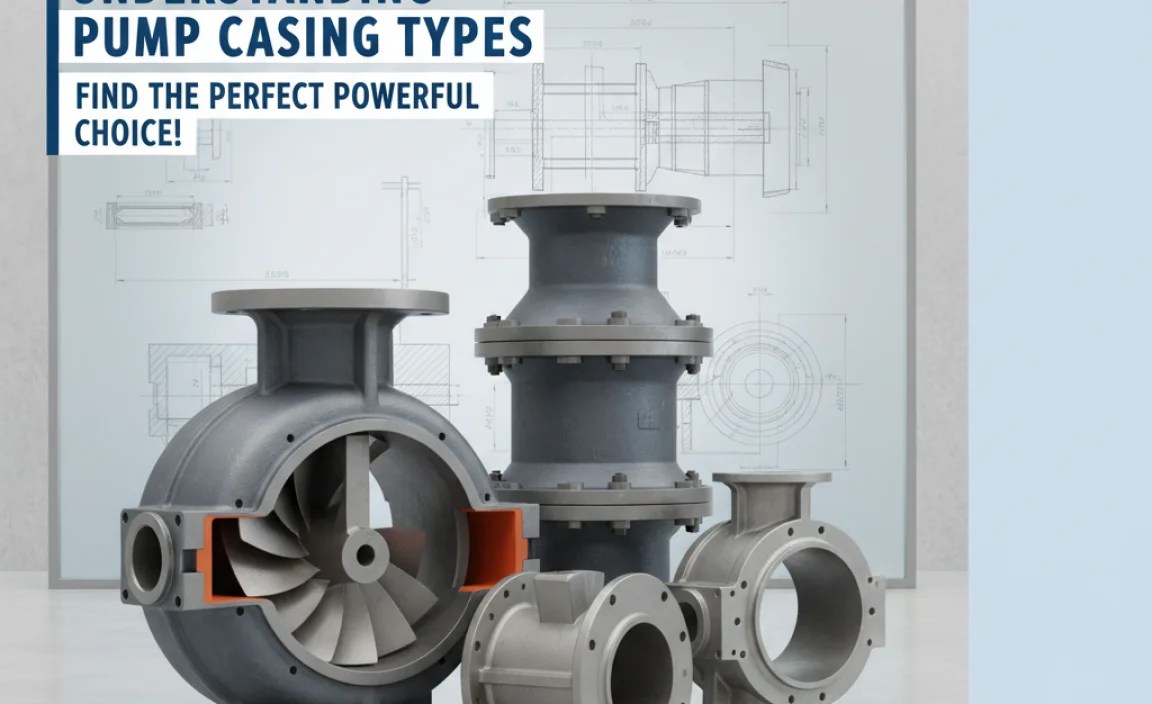
The pump casing is the outer housing of a pump that encloses the impeller or rotor and directs the flow of fluid. Its primary function is to convert the kinetic energy of the fluid into pressure energy. Different casing designs achieve this in various ways, each with its own advantages and disadvantages.
Volute Casings
Volute casings are one of the most common types found in centrifugal pumps. They are characterized by their spiral shape, which gradually increases in area as it extends from the pump inlet to the outlet. This design helps to efficiently convert the high-velocity fluid exiting the impeller into pressure.
How Volute Casings Work
As the impeller rotates, it throws fluid outward. The volute casing captures this fluid and guides it along the spiral path. The increasing cross-sectional area of the volute reduces the fluid’s velocity while simultaneously increasing its pressure. This conversion is crucial for effective pumping.
Pros of Volute Casings
- Efficient Energy Conversion: The spiral design effectively converts kinetic energy into pressure, leading to higher overall pump efficiency.
- Versatile Application: Volute casings can be used in a wide range of pump sizes and applications, from small water pumps to large industrial pumps.
- Relatively Simple Design: The manufacturing process for volute casings is relatively straightforward, making them cost-effective.
Cons of Volute Casings
- Imbalance Issues: At off-design flow rates, the pressure distribution around the impeller can become uneven, leading to radial thrust and potential damage.
- Efficiency Drop at Low Flow: The efficiency of volute casings tends to decrease significantly at very low flow rates.
Diffuser Casings
Diffuser casings use a set of stationary vanes, known as a diffuser, to slow down the fluid exiting the impeller and convert its kinetic energy into pressure. These vanes are arranged around the impeller, creating a series of expanding channels.
How Diffuser Casings Work
As the fluid leaves the impeller, it enters the diffuser vanes. The diverging shape of these vanes gradually reduces the fluid’s velocity, increasing its pressure. This controlled deceleration minimizes energy losses and improves pump efficiency.
Pros of Diffuser Casings
- High Efficiency: Diffuser casings generally offer higher efficiency than volute casings, especially at higher flow rates.
- Reduced Radial Thrust: The symmetrical arrangement of the diffuser vanes helps to balance the pressure distribution around the impeller, reducing radial thrust.
- Stable Performance: Diffuser casings maintain their efficiency over a wider range of flow rates compared to volute casings.
Cons of Diffuser Casings
- Complex Design: The manufacturing of diffuser casings is more complex and expensive than volute casings due to the intricate vane geometry.
- Susceptible to Clogging: The narrow channels in the diffuser can be prone to clogging if the fluid contains solid particles.
In-Line Casings
In-line casings, also known as straight-through casings, are the simplest type of pump casing. They are designed to allow fluid to flow straight through the pump, with the impeller located within the flow path.
How In-Line Casings Work
In-line casings don’t have a specific mechanism for converting kinetic energy into pressure beyond the action of the impeller itself. The fluid enters the pump, passes through the impeller, and exits in a relatively straight line. This simplicity makes them compact and easy to install.
Pros of In-Line Casings
- Compact Design: In-line casings are very compact, making them suitable for applications where space is limited.
- Simple Installation: Their straight-through design simplifies installation and maintenance.
- Low Cost: In-line casings are generally less expensive than volute or diffuser casings.
Cons of In-Line Casings
- Lower Efficiency: In-line casings typically have lower efficiency compared to volute or diffuser casings, as they lack a dedicated mechanism for energy conversion.
- Limited Application: They are best suited for low-head, high-flow applications where efficiency is not a primary concern.
Comparing Casing Types: A Detailed Table

To help you better understand the differences between the various pump casing types, here’s a detailed comparison table:
| Casing Type | Design | Efficiency | Cost | Application | Pros | Cons |
|---|---|---|---|---|---|---|
| Volute | Spiral-shaped, expanding area | Medium to High | Medium | Wide range of applications | Efficient energy conversion, versatile | Imbalance issues, efficiency drop at low flow |
| Diffuser | Stationary vanes around the impeller | High | High | High-flow, high-head applications | High efficiency, reduced radial thrust | Complex design, susceptible to clogging |
| In-Line | Straight-through flow path | Low | Low | Low-head, high-flow applications | Compact design, simple installation | Lower efficiency, limited application |
Factors to Consider When Choosing a Pump Casing

Selecting the right pump casing depends on several factors related to your specific application. Here’s what to keep in mind:
- Flow Rate and Head: Determine the required flow rate (volume of fluid per unit time) and head (pressure required to lift the fluid). High-head applications may benefit from diffuser casings, while low-head applications can use in-line casings.
- Fluid Type: Consider the properties of the fluid being pumped, such as viscosity, density, and presence of solids. Fluids with solids may clog diffuser casings.
- Efficiency Requirements: Evaluate the importance of pump efficiency. If energy costs are a significant concern, opt for diffuser or volute casings.
- Space Constraints: If space is limited, in-line casings offer a compact solution.
- Budget: Balance the cost of the casing with its performance benefits. Volute casings provide a good balance of cost and efficiency.
- Maintenance: Consider the ease of maintenance and repair. Simpler designs like volute and in-line casings are generally easier to maintain.
Pump Casing Materials
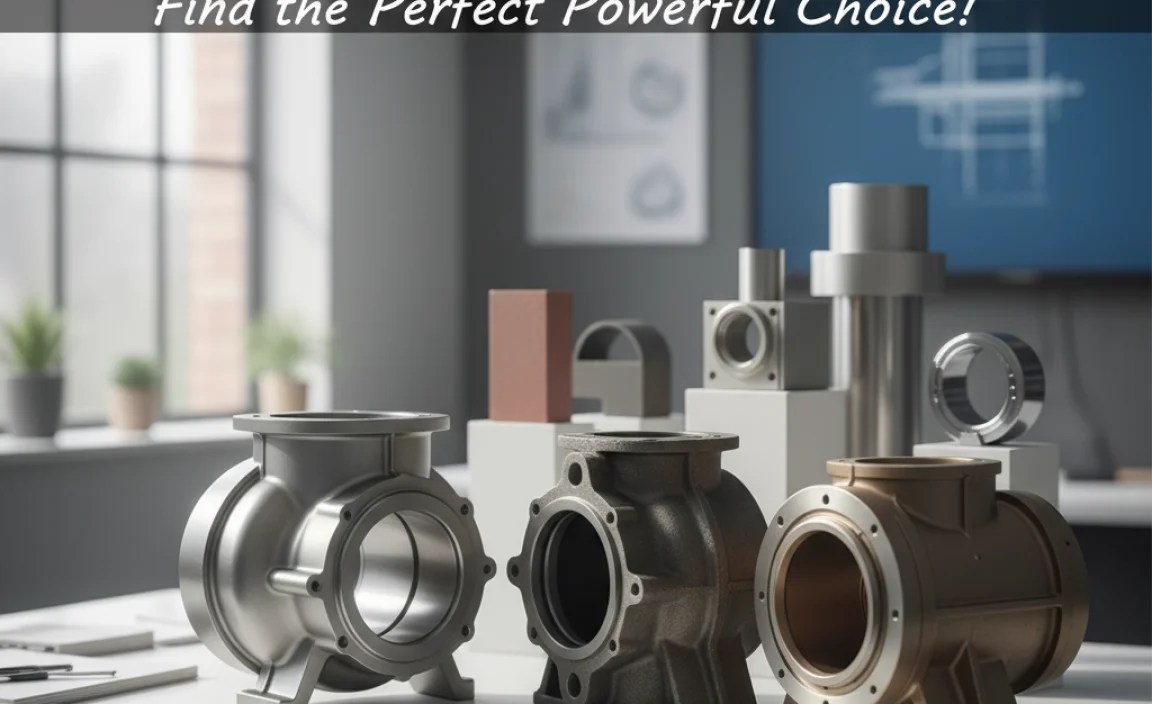
The material used for the pump casing is crucial for its durability and resistance to corrosion or erosion. Common materials include:
- Cast Iron: A common and cost-effective material for general-purpose applications. It offers good strength and wear resistance but is susceptible to corrosion.
- Stainless Steel: Provides excellent corrosion resistance and is suitable for pumping corrosive fluids. Different grades of stainless steel offer varying levels of resistance.
- Bronze: Used in applications where corrosion resistance and non-sparking properties are required, such as pumping flammable liquids.
- Plastics: Lightweight and corrosion-resistant, plastics like PVC, CPVC, and polypropylene are suitable for handling corrosive chemicals and water.
- Duplex Stainless Steel: Offers higher strength and corrosion resistance than standard stainless steel, making it suitable for demanding applications.
Choosing the right material ensures the longevity and reliability of the pump.
Maintaining Your Pump Casing
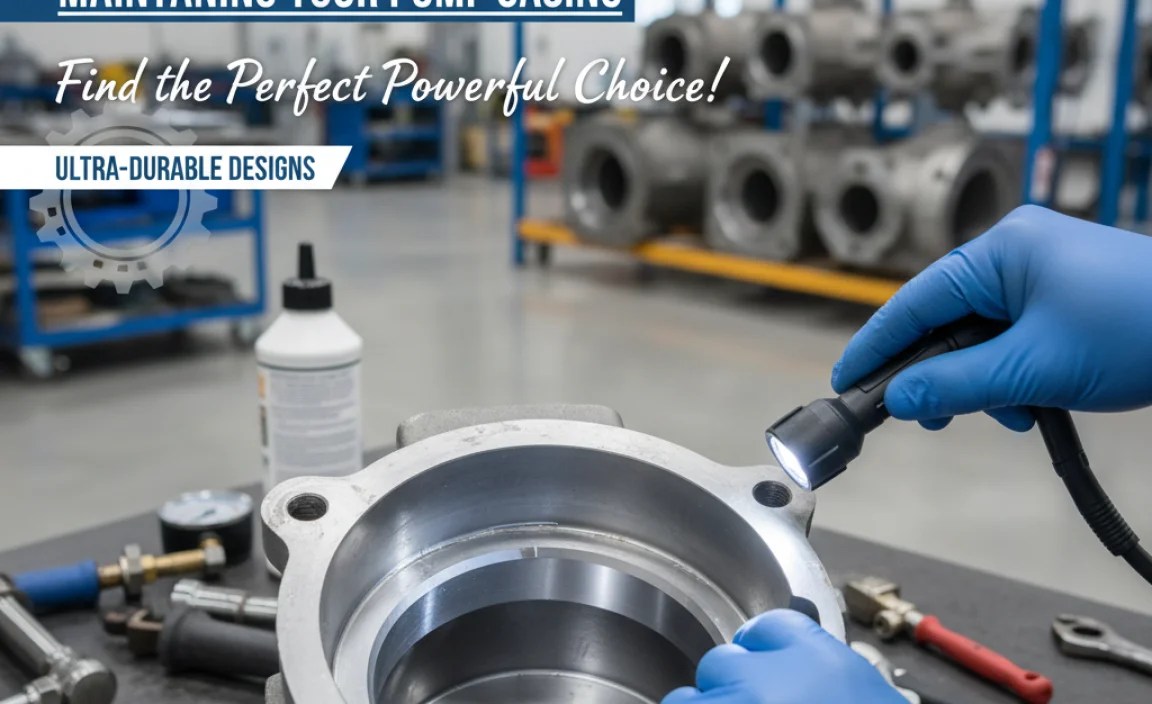
Proper maintenance is essential for extending the life of your pump casing and ensuring optimal performance. Here are some key maintenance tips:
- Regular Inspections: Periodically inspect the casing for signs of wear, corrosion, or damage. Look for cracks, leaks, and excessive vibration.
- Cleaning: Keep the casing clean and free from debris. Remove any buildup of dirt, scale, or corrosion products.
- Lubrication: Ensure that all moving parts, such as bearings and seals, are properly lubricated.
- Alignment: Check the alignment of the pump and motor. Misalignment can cause excessive vibration and wear on the casing.
- Seal Replacement: Replace worn or damaged seals to prevent leaks and maintain pump efficiency.
- Vibration Analysis: Use vibration analysis to detect potential problems early on. Changes in vibration patterns can indicate issues with the impeller, bearings, or casing.
Following these maintenance practices will help you keep your pump running smoothly and efficiently.
Troubleshooting Common Pump Casing Issues
Even with regular maintenance, pump casings can sometimes experience problems. Here are some common issues and how to troubleshoot them:
- Leaks: Leaks can occur due to worn seals, cracked casings, or loose connections. Replace the seals, repair the casing, or tighten the connections as needed.
- Vibration: Excessive vibration can be caused by misalignment, impeller imbalance, or cavitation. Realign the pump, balance the impeller, or adjust the operating conditions to eliminate cavitation.
- Noise: Unusual noises, such as grinding or squealing, can indicate bearing problems, impeller rubbing, or cavitation. Replace the bearings, adjust the impeller clearance, or adjust the operating conditions to eliminate cavitation.
- Reduced Performance: Reduced flow rate or pressure can be caused by clogged impellers, worn impellers, or air leaks. Clean the impeller, replace the impeller, or seal the air leaks.
- Corrosion: Corrosion can weaken the casing and lead to leaks or failures. Apply a protective coating or replace the casing with a more corrosion-resistant material.
Advanced Techniques for Pump Casing Optimization
For those looking to optimize their pump systems further, here are some advanced techniques:
- Computational Fluid Dynamics (CFD): Use CFD simulations to analyze the flow patterns within the casing and identify areas for improvement.
- Finite Element Analysis (FEA): Use FEA to analyze the stress distribution in the casing and optimize its design for strength and durability.
- Additive Manufacturing (3D Printing): Use additive manufacturing to create custom casing designs with complex geometries that improve performance.
- Surface Coatings: Apply specialized coatings to the casing to reduce friction, improve corrosion resistance, and extend its lifespan.
External Resources for Further Learning
Want to dive deeper into the world of pumps and casings? Here are some valuable external resources:
- Hydraulic Institute: The Hydraulic Institute is a global authority on pumps and pumping systems, offering standards, training, and educational resources.
- Engineering ToolBox – Pumps: A comprehensive resource for engineering information, including detailed articles on pump types and applications.
- U.S. Department of Energy: The Department of Energy provides information on energy-efficient pumping systems and best practices for pump operation and maintenance.
FAQ About Pump Casing Types
Here are some frequently asked questions about pump casing types to help clarify any remaining points:
What is the main purpose of a pump casing?
The main purpose of a pump casing is to enclose the pump’s internal components, direct the flow of fluid, and convert the kinetic energy of the fluid into pressure energy.
Which type of pump casing is the most efficient?
Diffuser casings generally offer the highest efficiency, especially at higher flow rates, due to their controlled deceleration of fluid.
When should I use an in-line pump casing?
In-line pump casings are best suited for low-head, high-flow applications where space is limited and efficiency is not a primary concern.
What materials are commonly used for pump casings?
Common materials include cast iron, stainless steel, bronze, and various plastics, each offering different levels of corrosion resistance and strength.
How often should I inspect my pump casing?
You should inspect your pump casing periodically, ideally every few months, for signs of wear, corrosion, or damage.
What are the signs of a damaged pump casing?
Signs of a damaged pump casing include leaks, cracks, excessive vibration, unusual noises, and reduced performance.
Can I replace a pump casing myself?
Replacing a pump casing can be complex and may require specialized tools and knowledge. If you’re not comfortable with the process, it’s best to consult a qualified technician.
Conclusion
Understanding the different types of pump casings is essential for selecting the right pump for your needs and ensuring its long-term performance. Whether you opt for a volute, diffuser, or in-line casing, consider the specific requirements of your application, the properties of the fluid being pumped, and the importance of efficiency and maintenance. By following the tips and guidelines outlined in this article, you can make an informed decision and keep your pump running smoothly for years to come. Now get out there and keep those wheels turning!


