
How to Use Hand Pump for Football: Easy Guide

Quick Summary: Using a hand pump for your football is easy! First, find the valve on the ball and moisten the needle. Then, carefully insert the needle into the valve. Hold the pump firmly and start pumping air into the ball using smooth, steady strokes. Keep an eye on the pressure, and stop when the ball feels firm and bounces well, usually around 8-12 PSI. Remove the needle gently, and you’re ready to play!
Is your football looking a little deflated? Don’t let a flat ball ruin your game! Many people find inflating a football a bit tricky at first. You might worry about damaging the ball or not getting the pressure just right. But don’t worry, it’s a simple process once you know the steps. This guide will walk you through exactly how to use a hand pump to inflate your football, so you can get back to the game quickly and confidently. We’ll cover everything from preparing the needle to achieving the perfect bounce. Let’s get started!
Understanding Your Football and Hand Pump

Before you start pumping, it’s helpful to understand the basics of your football and hand pump. This knowledge will make the process smoother and prevent any accidental damage.
Anatomy of a Football
A football has a few key parts you should know:
- Bladder: This is the inflatable bag inside the football that holds the air.
- Valve: The small opening where you insert the needle to inflate the ball. It’s usually a tiny hole made of rubber.
- Panel: The outer covering of the football, typically made of leather or synthetic material.
Types of Hand Pumps
There are different types of hand pumps, but they all work on the same basic principle. Here are a few common types:
- Standard Hand Pump: This is the most common type. It’s small, portable, and easy to use.
- Dual-Action Pump: This type pumps air on both the push and pull strokes, making inflation faster.
- Pump with Pressure Gauge: This type has a built-in gauge that shows the current pressure in the ball, helping you avoid over-inflation.
Essential Tools and Materials
Here’s what you’ll need to inflate your football:
- Hand Pump: Choose a pump that’s designed for inflating sports balls.
- Inflation Needle: This is a small, hollow needle that attaches to the pump and is inserted into the ball’s valve.
- Glycerin or Water: A small amount to lubricate the needle.
Step-by-Step Guide: Inflating Your Football

Now, let’s get to the main event: inflating your football. Follow these steps carefully to ensure a smooth and successful inflation.
Step 1: Prepare the Needle
Before inserting the needle, it’s crucial to lubricate it. This helps the needle slide in smoothly and prevents damage to the valve. You can use a drop of glycerin or even water.
- Moisten the Needle: Dip the tip of the inflation needle into a small amount of glycerin or water. Just a tiny bit is enough.
- Why Lubricate?: Lubrication reduces friction and prevents the needle from tearing or damaging the valve.
Step 2: Locate the Valve
Find the valve on your football. It’s usually a small, circular opening. Make sure it’s clean and free of any debris.
- Clean the Valve: Wipe the area around the valve with a clean cloth to remove any dirt or grit.
- Check for Damage: Inspect the valve for any signs of wear or damage. If it looks cracked or broken, you might need to replace the ball.
Step 3: Insert the Needle
Carefully insert the lubricated needle into the valve. Be gentle and avoid forcing it.
- Align the Needle: Hold the needle straight and align it with the valve opening.
- Gentle Insertion: Gently push the needle into the valve. You should feel a slight resistance, but it shouldn’t be difficult.
- Avoid Force: If you encounter strong resistance, don’t force the needle. Remove it and try again, making sure it’s properly aligned and lubricated.
Step 4: Start Pumping
With the needle securely in the valve, it’s time to start pumping air into the football.
- Secure the Pump: Hold the pump firmly with one hand, and the football with the other.
- Steady Strokes: Begin pumping using smooth, steady strokes. Avoid jerky or forceful movements.
- Listen for Air: You should hear air entering the ball. If you don’t, double-check that the needle is properly inserted.
Step 5: Monitor the Pressure
As you pump, periodically check the pressure of the football. If your pump has a pressure gauge, use it to monitor the PSI (pounds per square inch). If not, you can gauge the pressure by feel.
- Use a Gauge: If your pump has a gauge, watch the needle as you pump. The recommended pressure for a football is usually between 8 and 12 PSI, but check the ball’s specific instructions.
- Check by Feel: If you don’t have a gauge, gently squeeze the ball. It should feel firm but not rock-hard. A good bounce is a sign of proper inflation.
- Avoid Over-Inflation: Over-inflating the ball can damage it, so it’s better to under-inflate slightly than to overdo it.
Step 6: Remove the Needle
Once the football is properly inflated, carefully remove the needle.
- Slow and Steady: Gently pull the needle straight out of the valve. Avoid bending or twisting it.
- Check for Leaks: After removing the needle, listen for any hissing sounds, which could indicate a leak. If you hear a leak, try re-inserting the needle and pumping a little more air, then remove it again.
Troubleshooting Common Issues
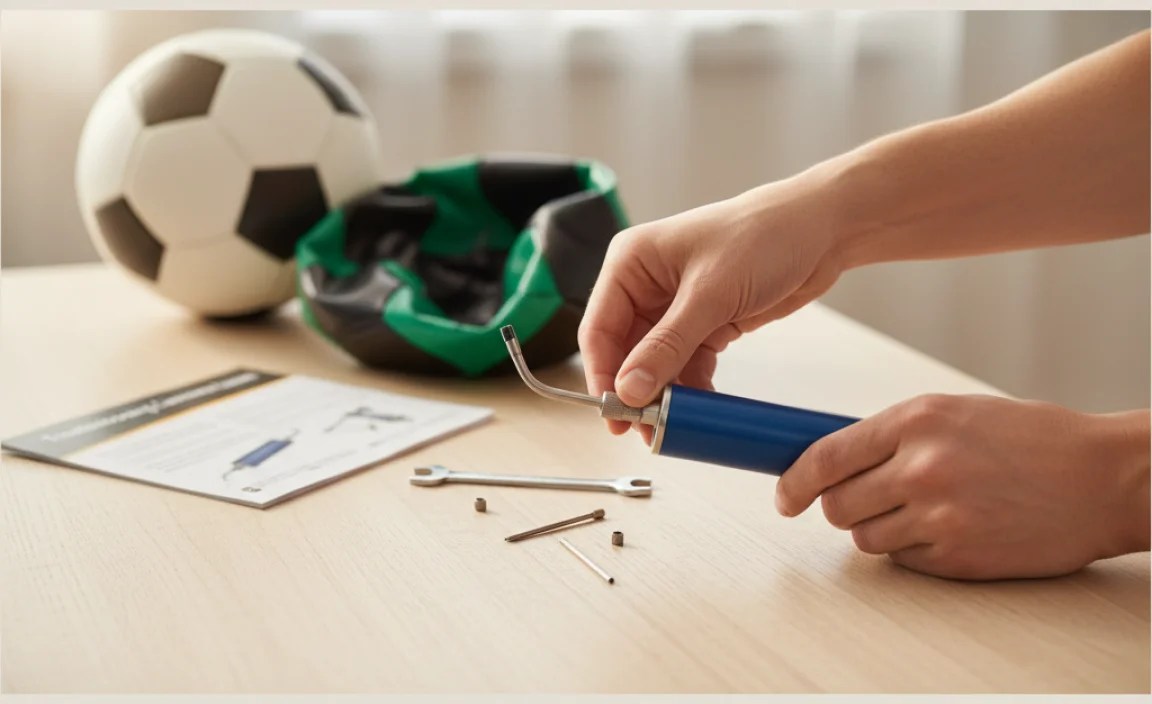
Sometimes, things don’t go as planned. Here are some common issues you might encounter and how to fix them.
Problem: Needle Won’t Insert
- Cause: The needle may be bent, the valve may be blocked, or there may not be enough lubrication.
- Solution: Check the needle for bends and straighten it if necessary. Clean the valve with a small, soft brush or cloth. Make sure the needle is properly lubricated.
Problem: Air Leaking After Inflation
- Cause: The valve may be damaged, or the needle may have created a small tear.
- Solution: Try re-inserting the needle and pumping a small amount of air. Remove the needle carefully and see if the leak stops. If the leak persists, the valve may need to be replaced, or the ball may be beyond repair.
Problem: Pump Not Pumping Air
- Cause: The pump may be faulty, or the connection between the pump and the needle may be loose.
- Solution: Check the pump for any visible damage. Make sure the needle is securely attached to the pump. Try a different pump if possible.
Tips for Maintaining Your Football

Proper maintenance can extend the life of your football and keep it in good playing condition.
- Store Properly: When not in use, store your football in a cool, dry place away from direct sunlight and extreme temperatures.
- Check Pressure Regularly: Periodically check the pressure of your football and add air as needed.
- Clean Regularly: Wipe down your football with a damp cloth after each use to remove dirt and grime.
- Avoid Sharp Objects: Keep your football away from sharp objects that could puncture or damage it.
Choosing the Right Hand Pump

Selecting the right hand pump can make a big difference in how easy and efficient it is to inflate your football. Here’s what to look for:
Key Features to Consider
- Durability: Look for a pump made from high-quality materials that can withstand frequent use.
- Comfort: Choose a pump with a comfortable handle that’s easy to grip.
- Pressure Gauge: A built-in pressure gauge is a valuable feature that helps you avoid over-inflation.
- Needle Storage: Some pumps have a built-in compartment for storing the inflation needle, which helps prevent loss or damage.
- Portability: If you plan to carry the pump with you, choose a compact and lightweight model.
Recommended Hand Pumps
Here are a few highly-rated hand pumps for inflating footballs:
| Pump Name | Key Features | Pros | Cons |
|---|---|---|---|
| Sportbit Ball Pump | Compact, lightweight, includes 5 needles | Very portable, easy to use, affordable | No pressure gauge |
| Franklin Sports Ball Pump | Dual-action, includes pressure gauge | Inflates quickly, accurate pressure readings | Slightly larger than other models |
| Nike Essential Ball Pump | Durable construction, ergonomic handle | Comfortable to use, long-lasting | Needle storage could be better |
Understanding PSI (Pounds per Square Inch)
PSI, or pounds per square inch, is a unit of pressure. It measures the amount of force exerted on one square inch of area. In the context of footballs, PSI refers to the amount of air pressure inside the ball.
Why is PSI Important?
Maintaining the correct PSI is crucial for optimal performance and safety. A football that is properly inflated will have the right amount of bounce and responsiveness. Over-inflating or under-inflating can negatively affect the ball’s performance and even lead to injury.
Recommended PSI for Footballs
The recommended PSI for a football typically ranges from 8 to 12 PSI. However, it’s always best to check the manufacturer’s instructions for the specific ball you are using. The recommended PSI is usually printed on the ball near the valve.
How to Measure PSI
The easiest way to measure PSI is with a hand pump that has a built-in pressure gauge. As you pump air into the ball, the gauge will display the current PSI. If your pump doesn’t have a gauge, you can use a separate pressure gauge to check the pressure.
The Science Behind Football Inflation
Understanding the science behind football inflation can give you a deeper appreciation for the process and help you troubleshoot any issues that may arise.
Air Pressure and Volume
When you pump air into a football, you are increasing the amount of air inside the ball. This increases the air pressure, which is the force exerted by the air molecules on the inside walls of the ball. As the pressure increases, the volume of the ball also increases until it reaches its optimal size and firmness.
Ideal Gas Law
The relationship between pressure, volume, and temperature of a gas is described by the Ideal Gas Law, which is expressed as PV = nRT, where:
- P = Pressure
- V = Volume
- n = Number of moles of gas
- R = Ideal gas constant
- T = Temperature
This law helps explain why a football may lose pressure in cold weather. As the temperature decreases, the pressure inside the ball also decreases.
Factors Affecting Inflation
Several factors can affect the inflation of a football, including:
- Temperature: As mentioned above, temperature can affect air pressure.
- Altitude: At higher altitudes, the air pressure is lower, which can affect the inflation of the ball.
- Leaks: Any leaks in the valve or bladder can cause the ball to lose pressure.
Hand Pump Alternatives
While hand pumps are a common and convenient way to inflate footballs, there are other options available.
Electric Pumps
Electric pumps are a faster and more efficient way to inflate footballs. They plug into an electrical outlet and can inflate a ball in a matter of seconds. Electric pumps are a good option if you need to inflate multiple balls or if you have difficulty using a hand pump.
Pros:
- Faster inflation
- Less effort required
- Some models have automatic shut-off
Cons:
- Requires an electrical outlet
- More expensive than hand pumps
- Less portable
CO2 Inflators
CO2 inflators use small cartridges of compressed carbon dioxide to inflate balls. They are very compact and portable, making them a good option for on-the-go inflation. However, CO2 cartridges can be expensive, and they only provide a limited amount of inflation.
Pros:
- Very portable
- Easy to use
- Good for quick inflation
Cons:
- CO2 cartridges can be expensive
- Limited inflation per cartridge
- Not as environmentally friendly
FAQ: Inflating Your Football
Here are some frequently asked questions about inflating footballs with a hand pump:
What PSI should my football be?
The recommended PSI for a standard football is typically between 8 and 12 PSI. Check the ball itself for the manufacturer’s recommendation, usually printed near the valve.
Why is my hand pump so hard to use?
If your hand pump is hard to use, make sure the needle is properly lubricated. Also, check the pump for any blockages or damage. Using a dual-action pump can also make the process easier.
Can I use a bike pump to inflate a football?
While possible, it’s generally not recommended. Bike pumps are designed for higher pressures and different valve types. You’ll need an adapter, and it might still be difficult to get the pressure just right.
What happens if I over-inflate my football?
Over-inflating a football can damage the bladder and make the ball too hard, affecting its performance and potentially causing injury. If you over-inflate, release some air until it reaches the recommended pressure.
How do I know if my football is properly inflated without a gauge?
If you don’t have a gauge, check the ball by feel. It should feel firm but not rock-hard. A good bounce is a sign of proper inflation. Compare it to a properly inflated ball if possible.
How often should I inflate my football?
Check the pressure of your football regularly, especially before each use. Inflate it as needed to maintain the recommended PSI. Temperature changes can affect the pressure, so check more frequently in varying weather conditions.
Why is my football leaking air?
A leaking football may have a damaged valve or a small puncture in the bladder. Check the valve for damage and try re-inserting the needle to ensure a good seal. If the leak persists, the ball may need to be replaced.
Conclusion
Inflating a football with a hand pump is a simple skill that every player should know. By following these steps and tips, you can keep your football properly inflated and in good condition, ensuring optimal performance and enjoyment. Remember to lubricate the needle, monitor the pressure, and store your football properly. With a little practice, you’ll be able to inflate your football like a pro in no time. Now, grab your pump and get back in the game!


