
Easy: How to Use Hand Pump for Car Tyre

Using a hand pump for your car tire is straightforward: Attach the pump head securely to the tire valve, ensure it’s locked in place, and pump steadily until you reach the recommended tire pressure (check your car’s door jamb or owner’s manual). Regularly check the pressure with a gauge to avoid over or under-inflation.
Ever found yourself with a slightly deflated car tire and no access to an electric pump? It’s a common problem that can leave you feeling stranded. But don’t worry! A simple hand pump can be a lifesaver in these situations. It might seem daunting at first, but using a hand pump to inflate your car tire is easier than you think.
In this guide, I’ll walk you through each step, from connecting the pump to achieving the right tire pressure. Get ready to empower yourself with this essential skill and keep your tires in top shape!
Understanding Your Car Tire and Hand Pump

Before you start pumping, it’s important to understand the basics of your car tire and the hand pump you’ll be using. This knowledge will make the process smoother and safer.
Types of Car Tire Valves
Most cars use Schrader valves. These are sturdy and reliable. Here’s how to identify them:
- Schrader Valve: This valve is wider and has a pin in the center that you press to release air. It’s the same type you’ll find on most car and bike tires.
Anatomy of a Hand Pump
A typical hand pump consists of a few key parts:
- Handle: The part you grip and push to pump air.
- Cylinder: The main body of the pump where air is compressed.
- Hose: Connects the pump to the tire valve.
- Pump Head: Attaches to the tire valve and allows air to flow in.
- Pressure Gauge (Optional): Indicates the current tire pressure.
Important Safety Tips
- Read the Manual: Always refer to your hand pump’s manual for specific instructions and safety guidelines.
- Check Tire Pressure: Never exceed the maximum pressure indicated on your tire’s sidewall.
- Secure Environment: Park your car on a level surface away from traffic.
Step-by-Step Guide to Using a Hand Pump
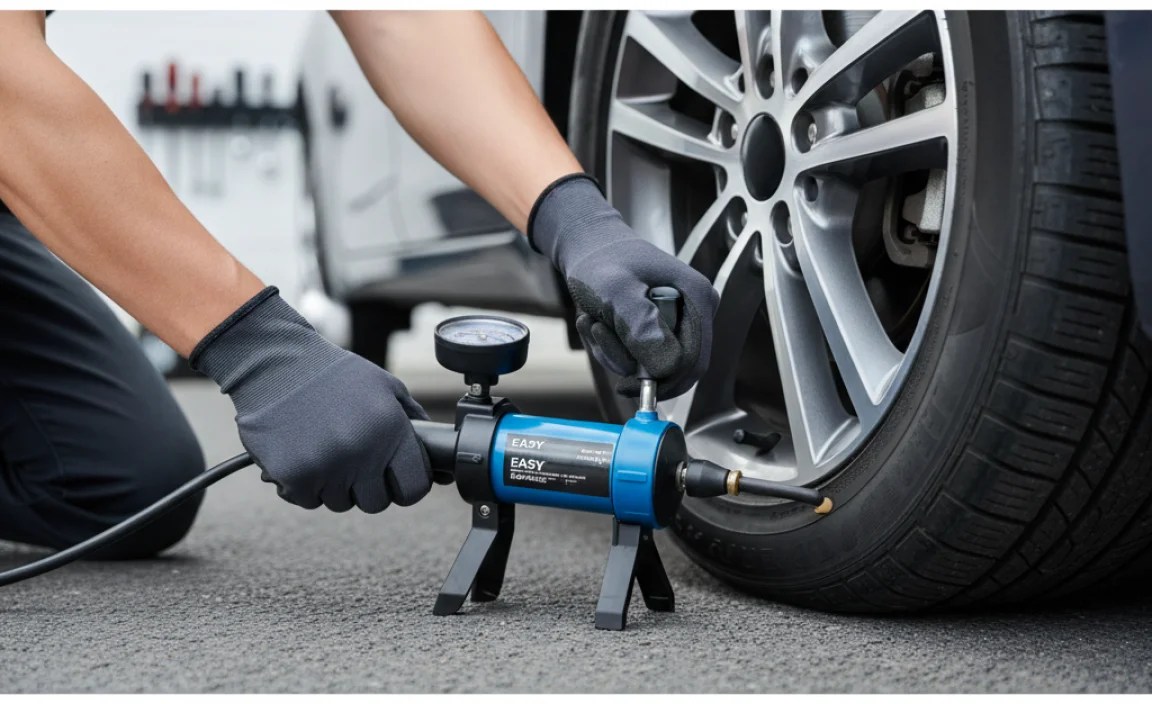
Now, let’s get into the actual process of inflating your car tire with a hand pump. Follow these steps carefully for the best results.
Step 1: Prepare Your Car and Hand Pump
Start by ensuring your car is parked on a stable, level surface. Engage the parking brake to prevent any movement. Gather your hand pump and a tire pressure gauge.
Step 2: Locate the Tire Valve
Find the valve stem on your tire. It’s usually protected by a valve cap, which you should unscrew and set aside in a safe place.
Step 3: Attach the Pump Head
Connect the pump head to the tire valve. Make sure it’s a secure fit to prevent air leakage. Most pump heads have a lever or screw mechanism to lock onto the valve. Engage this lock to ensure a tight seal.
Step 4: Begin Pumping
Grip the handle firmly and start pumping in a steady, consistent motion. Push down and pull up to draw air into the cylinder and then force it into the tire. It may take some effort, especially if the tire is significantly deflated.
Step 5: Monitor the Tire Pressure
If your hand pump has a built-in pressure gauge, keep an eye on it as you pump. If not, pause periodically to check the pressure with your separate tire pressure gauge. Refer to your car’s door jamb or owner’s manual for the recommended tire pressure (usually measured in PSI – pounds per square inch).
Step 6: Reach the Correct Pressure
Continue pumping until you reach the recommended tire pressure. Avoid over-inflating, as this can be dangerous and affect your car’s handling.
Step 7: Detach the Pump Head
Once the tire is properly inflated, disengage the locking mechanism on the pump head and carefully remove it from the tire valve. Be prepared for a slight hiss of air as you detach it.
Step 8: Replace the Valve Cap
Screw the valve cap back onto the valve stem. This protects the valve from dirt and debris, preventing leaks.
Step 9: Double-Check the Pressure
Use your tire pressure gauge one last time to ensure the pressure is accurate. Make any necessary adjustments if needed.
Choosing the Right Hand Pump

Selecting the right hand pump can make a big difference in how easy and efficient the inflation process is. Here are some factors to consider:
Pump Type
- Single-Cylinder Pumps: These are more affordable and suitable for occasional use.
- Dual-Cylinder Pumps: These pump air on both the up and down strokes, making inflation faster and easier.
Pressure Gauge
A built-in pressure gauge is a convenient feature that allows you to monitor the tire pressure as you pump. Look for a gauge that is easy to read and accurate.
Build Quality
Choose a hand pump made from durable materials like steel or aluminum. A sturdy pump will last longer and provide more reliable performance.
Hose Length and Material
A longer hose can make it easier to reach the tire valve, especially on larger vehicles. Ensure the hose is made from a flexible, durable material that won’t crack or leak.
Troubleshooting Common Issues
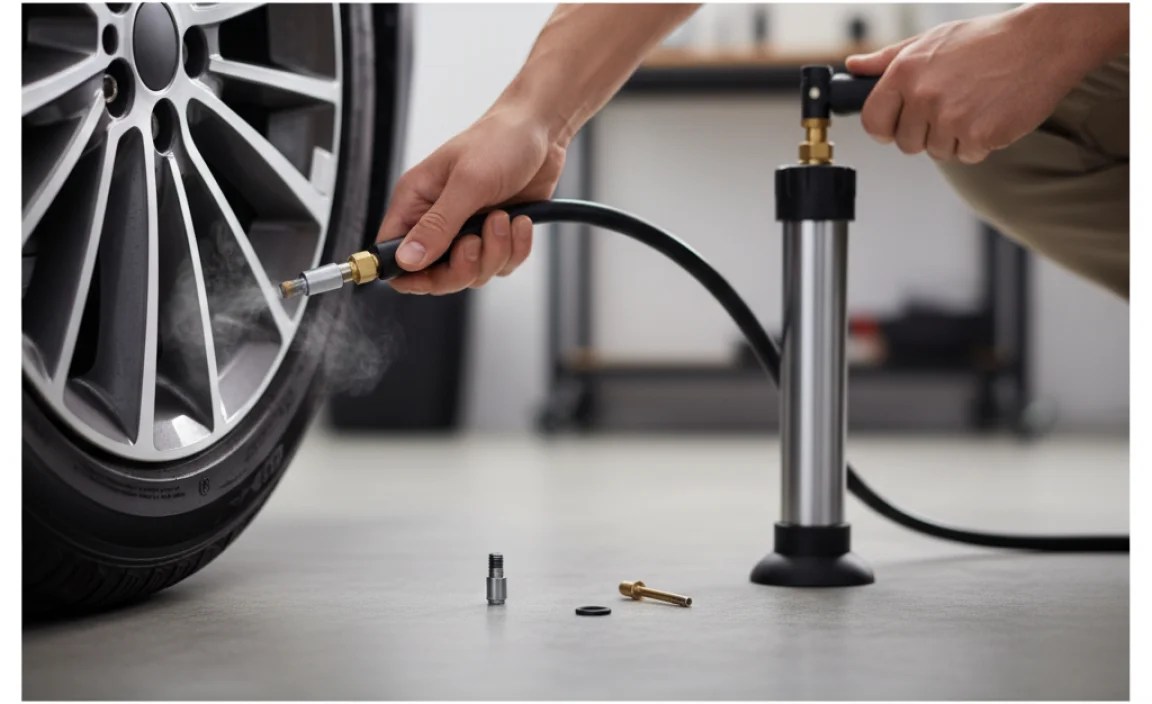
Sometimes, you might encounter problems while using a hand pump. Here are some common issues and how to address them:
Air Leaks
If you hear air leaking while pumping, check the connection between the pump head and the tire valve. Make sure it’s securely attached and locked in place. If the pump head is damaged, you may need to replace it.
Difficulty Pumping
If you find it hard to pump, it could be due to a clogged pump head or a faulty valve in the pump. Try cleaning the pump head or lubricating the pump’s moving parts. If the problem persists, consider replacing the pump.
Inaccurate Pressure Readings
If the pressure gauge on your pump is giving inaccurate readings, compare it to a separate, reliable tire pressure gauge. If the pump’s gauge is consistently off, it may need to be recalibrated or replaced.
Maintaining Your Hand Pump
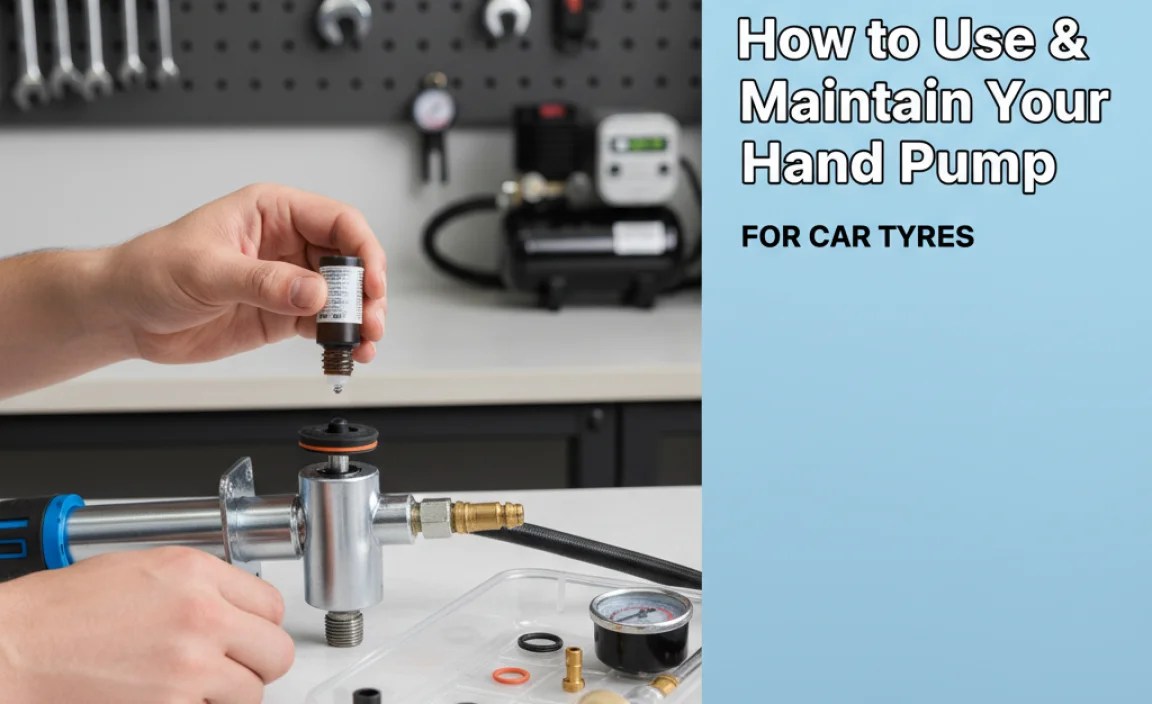
Proper maintenance will keep your hand pump in good working condition and extend its lifespan. Here are some tips:
- Clean Regularly: Wipe down the pump with a clean cloth to remove dirt and grime.
- Lubricate Moving Parts: Apply a small amount of lubricant to the pump’s moving parts to keep them operating smoothly.
- Store Properly: Store the pump in a dry, protected place to prevent rust and corrosion.
When to Seek Professional Help
While a hand pump is great for minor inflation needs, there are times when you should seek professional help:
- Significant Tire Damage: If your tire has a large puncture or sidewall damage, it’s best to have it inspected and repaired by a professional.
- Persistent Leaks: If your tire is losing air rapidly despite your efforts to inflate it, there may be an underlying issue that requires professional attention.
- Unsure About Tire Pressure: If you’re unsure about the correct tire pressure for your vehicle, consult a mechanic or tire specialist.
Benefits of Using a Hand Pump
Using a hand pump offers several advantages:
- Portability: Hand pumps are compact and easy to store in your car, making them ideal for emergencies.
- Cost-Effective: They are relatively inexpensive compared to electric pumps.
- No Electricity Required: You can use them anywhere, without needing a power source.
- Environmentally Friendly: Hand pumps don’t consume electricity, making them a greener option.
Hand Pump vs. Electric Pump
Both hand pumps and electric pumps have their pros and cons. Here’s a comparison:
| Feature | Hand Pump | Electric Pump |
|---|---|---|
| Portability | Excellent | Good (requires power source) |
| Cost | Lower | Higher |
| Ease of Use | Requires manual effort | Effortless |
| Speed | Slower | Faster |
| Power Source | None | Electricity (car adapter or wall outlet) |
Recommended Tire Pressure for Different Vehicles
Maintaining the correct tire pressure is crucial for safety and performance. Here’s a general guide, but always check your vehicle’s specific recommendations:
| Vehicle Type | Recommended Tire Pressure (PSI) |
|---|---|
| Compact Car | 30-35 |
| Sedan | 32-38 |
| SUV | 35-42 |
| Truck | 35-45 (may vary based on load) |
Advanced Tips for Tire Maintenance
Here are some advanced tips to keep your tires in top condition:
- Regularly Check Tire Tread: Use the penny test to check tread depth. If you can see the top of Lincoln’s head when you insert a penny upside down into the tread, it’s time to replace your tires.
- Rotate Your Tires: Rotate your tires every 5,000 to 7,000 miles to ensure even wear.
- Inspect for Damage: Regularly inspect your tires for cuts, bulges, and other signs of damage.
- Maintain Proper Alignment: Misalignment can cause uneven tire wear and affect your car’s handling.
Understanding Tire Pressure Monitoring Systems (TPMS)
Many modern cars are equipped with Tire Pressure Monitoring Systems (TPMS). These systems alert you when your tire pressure is too low. If your TPMS light comes on, check your tire pressure and inflate your tires to the recommended level. If the light persists, there may be a problem with the TPMS sensor.
The Environmental Impact of Tire Inflation
Maintaining proper tire inflation isn’t just good for your car; it’s also good for the environment. Under-inflated tires increase rolling resistance, which reduces fuel efficiency and increases emissions. By keeping your tires properly inflated, you can save money on gas and reduce your carbon footprint.
Essential Tools for Tire Maintenance
In addition to a hand pump and tire pressure gauge, here are some other essential tools for tire maintenance:
- Tire Repair Kit: For patching small punctures.
- Wheel Chocks: To secure your car when changing a tire.
- Lug Wrench: For loosening and tightening lug nuts.
- Jack: For lifting your car to change a tire.
- Gloves: To protect your hands.
National Highway Traffic Safety Administration (NHTSA) Guidelines
The NHTSA provides valuable information and guidelines on tire safety. Regularly check their website for updates and recommendations on tire maintenance and safety practices.
FAQ: Using a Hand Pump for Car Tires
Here are some frequently asked questions about using a hand pump for car tires:
Can I use a bicycle pump for my car tire?
Yes, you can use a bicycle pump for your car tire in a pinch. However, it will take significantly longer and more effort because bicycle pumps are designed for higher pressure but lower volume, while car tires need more volume. It’s best to use a hand pump specifically designed for car tires for efficiency.
How long does it take to inflate a car tire with a hand pump?
The time it takes to inflate a car tire with a hand pump depends on how deflated the tire is and the pump’s efficiency. It can take anywhere from 5 to 15 minutes. Dual-cylinder pumps will be faster than single-cylinder pumps.
How do I know the correct tire pressure for my car?
The recommended tire pressure for your car is usually found on a sticker inside the driver’s side doorjamb or in your owner’s manual. It’s typically measured in PSI (pounds per square inch). Always follow the manufacturer’s recommendations.
What should I do if I over-inflate my car tire?
If you over-inflate your car tire, use the tire pressure gauge to gently press the valve stem and release small bursts of air until you reach the recommended pressure. Be careful not to release too much air at once.
Is it safe to drive with a slightly under-inflated tire?
Driving with a slightly under-inflated tire can reduce fuel efficiency and cause uneven wear. It’s generally safe for short distances, but you should inflate the tire to the correct pressure as soon as possible. Avoid driving long distances with under-inflated tires.
Can I use a hand pump to fully inflate a completely flat tire?
Yes, you can use a hand pump to fully inflate a completely flat tire, but it will require a significant amount of time and effort. It’s more practical for topping off slightly deflated tires. If you have a completely flat tire, consider using a spare tire or calling for roadside assistance.
What are the signs that my tire needs air?
Signs that your tire needs air include a visible sag in the tire, a TPMS warning light on your dashboard, decreased fuel efficiency, and a noticeable change in handling. Check your tire pressure regularly, especially during temperature changes, as this can affect the pressure.
Conclusion
Using a hand pump for your car tire is a valuable skill that can save you time and money. By following these steps and tips, you can confidently inflate your tires and keep them in optimal condition. Remember to prioritize safety, maintain your equipment, and seek professional help when needed. With a little practice, you’ll be able to handle minor tire inflation needs with ease, ensuring a smoother, safer ride. Happy pumping!


