
Why Doesn’t My Washing Machine Drain on Permanent Press Cycle? A Simple Guide

Quick Summary: If your washing machine isn’t draining during the permanent press cycle, the most likely culprits are a clogged drain pump filter, a kinked or blocked drain hose, or a faulty lid switch. Less common causes include a defective drain pump, a blocked air vent, or issues with the machine’s control board. We’ll walk you through simple troubleshooting steps to get your washer draining properly again.
Is your washing machine leaving your clothes sopping wet after a permanent press cycle? It’s a common frustration! You expect your washer to drain completely, but sometimes it just…doesn’t. Don’t worry, you’re not alone. This issue can stem from a few simple problems that you can often fix yourself. We’ll guide you through the most common causes and provide easy-to-follow steps to diagnose and resolve the issue. Let’s get your washer back in working order!
Understanding the Permanent Press Cycle and Draining

Before diving into troubleshooting, let’s quickly recap what the permanent press cycle does and how it relates to draining. This cycle is designed for wrinkle-free and synthetic fabrics. It typically uses a combination of warm water washing and cool water rinsing, along with slower spin speeds, to minimize wrinkles. The draining process is a crucial part of the cycle, removing the water before the final spin.
Why the Permanent Press Cycle Might Be Different
The permanent press cycle often has a gentler approach to washing and draining compared to a regular or heavy-duty cycle. Here’s why this matters:
- Slower Spin Speeds: To reduce wrinkles, the spin speed might be lower, potentially leaving more water in the drum if the drain isn’t working efficiently.
- Specific Water Temperatures: The combination of warm wash and cool rinse can sometimes affect how detergents dissolve and drain, especially if you’re using too much detergent.
- Shorter Drain Times: Some machines may have a shorter drain time in the permanent press cycle, which can be problematic if there’s a partial blockage.
Common Reasons for Drain Problems During Permanent Press

Now, let’s explore the most frequent reasons your washing machine might fail to drain during the permanent press cycle:
1. Clogged Drain Pump Filter
The drain pump filter is designed to catch lint, small objects (like coins or buttons), and other debris that could clog the drain pump. A clogged filter restricts water flow and prevents proper draining.
How to Check and Clean the Drain Pump Filter:
- Safety First: Disconnect the washing machine from the power outlet.
- Locate the Filter: The drain pump filter is usually located at the front of the machine, behind a small access panel at the bottom. Consult your owner’s manual if you’re unsure.
- Prepare for Water: Place a shallow pan or towels under the access panel to catch any water that spills out.
- Open the Access Panel: Carefully open the panel. There might be a small drain hose that you need to pull out and drain first.
- Remove the Filter: Turn the filter counterclockwise to remove it.
- Clean the Filter: Rinse the filter under running water, removing any lint, debris, or obstructions. Use a small brush if necessary.
- Reinstall the Filter: Place the clean filter back into its housing and turn it clockwise to secure it.
- Close the Access Panel: Close the access panel and ensure it’s properly secured.
- Test the Washer: Plug the washing machine back in and run a test cycle to see if it drains properly.
2. Kinked or Blocked Drain Hose
The drain hose carries the water away from the washing machine to the drainpipe. If the hose is kinked, bent, or blocked, it can restrict water flow.
How to Check and Clear the Drain Hose:
- Inspect the Hose: Check the entire length of the drain hose for any kinks, bends, or visible obstructions.
- Straighten Kinks: If you find any kinks, gently straighten them out.
- Detach the Hose: Disconnect the drain hose from both the washing machine and the drainpipe.
- Flush the Hose: Use a garden hose or faucet to flush water through the drain hose, dislodging any blockages. You might also use a long, flexible brush or a plumber’s snake to clear stubborn blockages.
- Check the Drainpipe: Make sure the drainpipe where the hose connects is also clear of obstructions.
- Reattach the Hose: Reconnect the drain hose to both the washing machine and the drainpipe, ensuring it’s securely attached.
- Test the Washer: Run a test cycle to see if the washer drains correctly.
3. Faulty Lid Switch
The lid switch is a safety mechanism that prevents the washing machine from spinning or draining when the lid is open. If the lid switch is faulty, it might not be signaling the machine to drain, even when the lid is closed.
How to Check the Lid Switch:
- Safety First: Disconnect the washing machine from the power outlet.
- Locate the Lid Switch: The lid switch is usually located near the lid hinge or on the machine’s frame where the lid makes contact when closed.
- Inspect the Switch: Visually inspect the switch for any damage or loose connections.
- Test the Switch (Advanced): Use a multimeter to test the continuity of the switch. When the lid is closed (or the switch is engaged), the multimeter should show continuity. If there’s no continuity, the switch is likely faulty and needs to be replaced. Note: If you’re not comfortable using a multimeter, it’s best to consult a qualified technician.
- Replace the Switch: If the switch is faulty, replace it with a new one. You can usually find replacement switches online or at appliance parts stores.
- Test the Washer: Plug the washing machine back in and run a test cycle to see if it drains properly.
4. Defective Drain Pump
The drain pump is responsible for actively pumping the water out of the washing machine. If the pump is defective, it won’t be able to drain the water effectively.
How to Check the Drain Pump:
- Safety First: Disconnect the washing machine from the power outlet.
- Access the Pump: The drain pump is usually located at the bottom of the machine, behind an access panel. You might need to remove the front or back panel of the washer to access it. Consult your owner’s manual for specific instructions.
- Inspect the Pump: Visually inspect the pump for any damage or obstructions.
- Test the Pump (Advanced): Use a multimeter to check the pump’s motor for continuity. If there’s no continuity, the motor is likely burned out and the pump needs to be replaced. You can also try applying direct voltage to the pump to see if it runs. Note: This step requires electrical knowledge and should only be performed by someone qualified.
- Replace the Pump: If the pump is defective, replace it with a new one.
- Test the Washer: Plug the washing machine back in and run a test cycle to see if it drains properly.
5. Blocked Air Vent
Some washing machines have an air vent that allows air to enter the drum as water is being pumped out. If this vent is blocked, it can create a vacuum that prevents the water from draining properly.
How to Check the Air Vent:
- Locate the Air Vent: The air vent is usually a small opening or tube located near the top of the washing machine drum or on the back panel. Consult your owner’s manual for its exact location.
- Inspect the Vent: Check the vent for any obstructions, such as lint, debris, or tangled clothing.
- Clear the Vent: Use a small brush or a piece of wire to clear any blockages in the vent.
- Test the Washer: Run a test cycle to see if the washer drains correctly.
6. Issues with the Control Board
In some cases, the problem might lie with the washing machine’s control board. The control board is the “brain” of the machine and controls all its functions, including draining. If the control board is malfunctioning, it might not be sending the correct signals to the drain pump.
How to Check the Control Board:
Note: Checking the control board is an advanced troubleshooting step that often requires specialized knowledge and equipment. If you suspect a problem with the control board, it’s best to consult a qualified appliance repair technician.
Troubleshooting Table
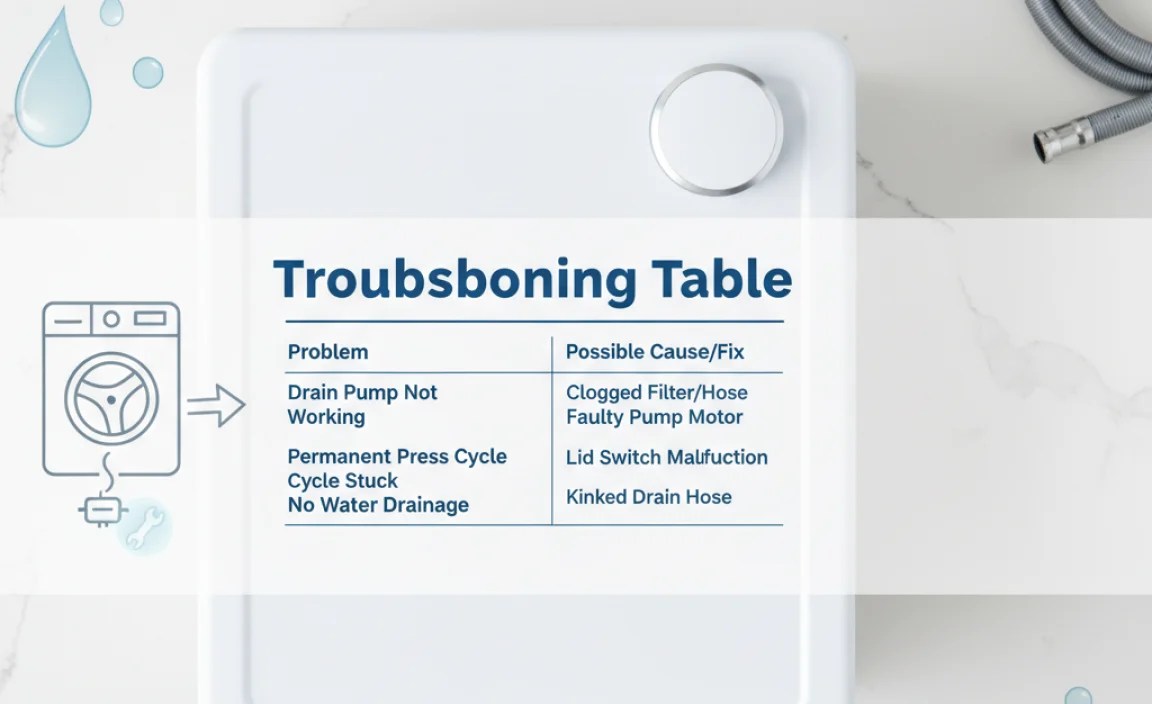
Here’s a quick reference table to help you troubleshoot the problem:
| Problem | Possible Cause | Troubleshooting Steps |
|---|---|---|
| No draining during permanent press cycle | Clogged drain pump filter | Clean the filter |
| No draining during permanent press cycle | Kinked or blocked drain hose | Check and clear the hose |
| No draining during permanent press cycle | Faulty lid switch | Inspect and test the switch |
| No draining during permanent press cycle | Defective drain pump | Inspect and test the pump |
| No draining during permanent press cycle | Blocked air vent | Check and clear the vent |
| No draining during permanent press cycle | Control board issues | Consult a technician |
Preventative Maintenance Tips
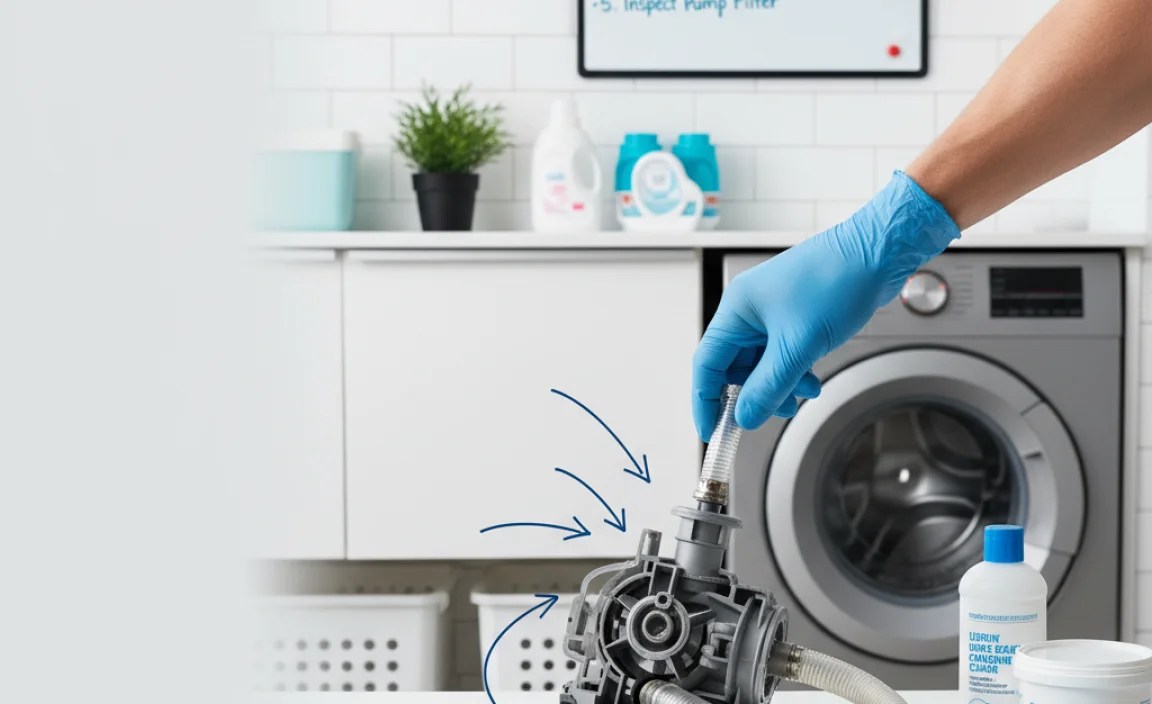
To keep your washing machine running smoothly and prevent future drain problems, follow these tips:
- Clean the Drain Pump Filter Regularly: Aim to clean the filter every 1-3 months, depending on how frequently you use your washing machine.
- Inspect the Drain Hose: Check the drain hose periodically for kinks or damage.
- Avoid Overloading the Washer: Overloading can put extra strain on the drain pump and other components.
- Use the Right Amount of Detergent: Too much detergent can lead to excessive suds, which can clog the drain pump and hoses.
- Check Pockets Before Washing: Make sure to remove any small objects (coins, buttons, etc.) from pockets before washing clothes.
- Use a Lingerie Bag: Use a mesh laundry bag for delicate items like lingerie or small socks to prevent them from getting caught in the drain pump.
FAQ About Washing Machine Drain Problems
Here are some frequently asked questions about washing machine drain problems:
- Why is my washing machine not draining at all?
- The most common reasons are a clogged drain pump filter, a kinked drain hose, or a faulty lid switch. Check these first.
- How often should I clean my washing machine’s drain pump filter?
- Ideally, clean it every 1-3 months, depending on your usage. If you wash a lot of lint-producing items, clean it more often.
- Can I use vinegar to clean my washing machine?
- Yes, vinegar can help remove mineral buildup and odors. Run an empty cycle with a cup of vinegar in the detergent dispenser.
- Is it normal for my washing machine to make noise when draining?
- Some noise is normal, but loud or unusual noises could indicate a problem with the drain pump.
- What tools do I need to troubleshoot washing machine drain problems?
- You’ll typically need a screwdriver, pliers, a shallow pan, towels, and possibly a multimeter for advanced testing.
- When should I call a professional repair technician?
- If you’ve tried the basic troubleshooting steps and the problem persists, or if you’re uncomfortable working with electricity, it’s best to call a professional.
- Can using too much detergent cause drain problems?
- Yes, using too much detergent, especially non-HE detergent in an HE machine, can create excessive suds that clog the drain and hoses.
Conclusion
A washing machine that won’t drain during the permanent press cycle can be a real headache, but with a systematic approach, you can often identify and fix the problem yourself. Start by checking the simplest things first: the drain pump filter and the drain hose. If those are clear, move on to the lid switch and drain pump. And remember, if you’re ever unsure or uncomfortable with any of the steps, don’t hesitate to call a qualified appliance repair technician. With a little effort, you can get your washing machine back in top shape and enjoy clean, wrinkle-free clothes once again!
“`


