
What is the Cycle Time for an HPLC Pump?

Quick Summary: The cycle time for an HPLC (High-Performance Liquid Chromatography) pump refers to the time it takes for the pump to complete one full operational sequence, from drawing in solvent to delivering it to the column. Cycle times typically range from milliseconds to seconds, depending on the pump type, flow rate, and system settings. Understanding this cycle is crucial for optimizing HPLC performance and ensuring accurate, reproducible results.
Ever wondered how those precise chemical analyses happen in the lab? A key player is the HPLC pump, which pushes liquids through the system. But how fast does it actually work? Knowing the cycle time of your HPLC pump is essential for getting the best performance and reliable results. It’s a common question that can be a bit confusing at first, but don’t worry! This guide breaks it down into simple steps. We’ll explore what cycle time means, how it’s measured, and why it matters for your experiments. Let’s dive in!
Understanding HPLC Pump Cycle Time
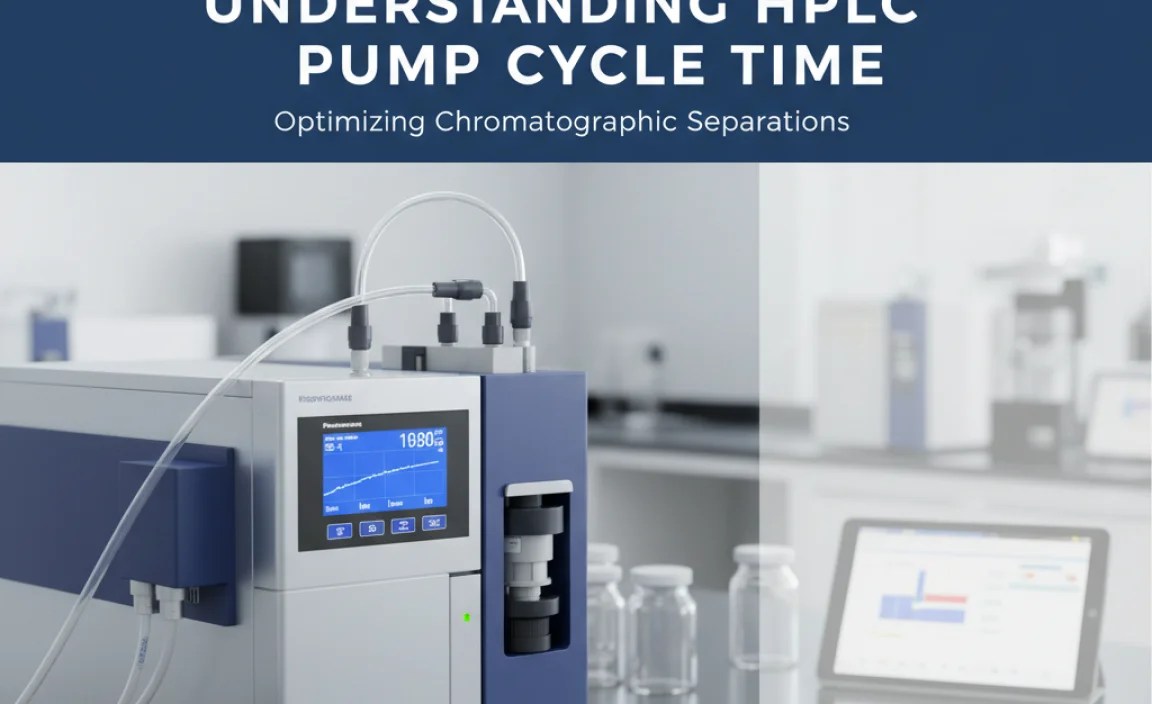
The cycle time of an HPLC pump is essentially how long it takes the pump to complete one full stroke or sequence of its operation. This includes the intake of the mobile phase (solvent) and its delivery to the HPLC column. Several factors can influence this cycle time, including the type of pump, the set flow rate, and the specific system configuration.
Key Components Affecting Cycle Time
To better grasp cycle time, let’s break down the main components of an HPLC pump and how they contribute:
- Pump Type: Reciprocating pumps, which are common in HPLC systems, use pistons to deliver solvent. The design and mechanics of these pumps directly affect the cycle time.
- Flow Rate: The set flow rate determines how quickly the solvent is pushed through the system. Higher flow rates generally mean shorter cycle times.
- System Pressure: The pressure within the HPLC system can impact the pump’s operation. High backpressure can slow down the cycle time.
- Solvent Viscosity: More viscous solvents require more force to pump, which can affect the cycle time.
Why Cycle Time Matters
Understanding the cycle time is crucial for several reasons:
- Reproducibility: Consistent cycle times ensure consistent delivery of the mobile phase, leading to reproducible results.
- Accuracy: Variations in cycle time can affect the accuracy of your analysis.
- Optimization: Knowing the cycle time helps in optimizing the HPLC method for better performance.
- Troubleshooting: Changes in cycle time can indicate potential issues with the pump or the HPLC system.
Types of HPLC Pumps and Their Cycle Times

Different types of HPLC pumps have varying cycle times due to their design and operational mechanisms. Here’s a comparison of the most common types:
Reciprocating Pumps
Reciprocating pumps are widely used in HPLC systems. They operate using one or more pistons that move back and forth to draw in and deliver the mobile phase. The cycle time for these pumps typically ranges from milliseconds to a few seconds.
- Single-Piston Pumps: These are the simplest type, but they can produce pulsed flow, which may affect baseline stability.
- Dual-Piston Pumps: These pumps use two pistons to minimize pulsation and provide a more continuous flow.
- Multi-Piston Pumps: These offer the most consistent flow and are often used in high-precision applications.
Peristaltic Pumps
Peristaltic pumps use rollers to compress a flexible tube, pushing the fluid through. They are less common in HPLC due to their lower pressure capabilities and potential for pulsation.
Syringe Pumps
Syringe pumps use a motor-driven syringe to deliver the mobile phase. They provide very precise flow but have limited solvent capacity and are typically used for specialized applications.
Comparison Table of HPLC Pump Types
Here’s a table summarizing the characteristics of different HPLC pump types:
| Pump Type | Mechanism | Typical Cycle Time | Pros | Cons |
|---|---|---|---|---|
| Reciprocating | Piston(s) moving back and forth | Milliseconds to seconds | High pressure, versatile | Potential for pulsation |
| Peristaltic | Rollers compressing a tube | Variable | Simple design | Lower pressure, pulsation |
| Syringe | Motor-driven syringe | Variable | Precise flow | Limited capacity |
Factors Influencing HPLC Pump Cycle Time

Several factors can affect the cycle time of an HPLC pump. Understanding these factors can help you optimize your HPLC method and troubleshoot potential issues.
Flow Rate
The flow rate is the most direct factor influencing cycle time. Higher flow rates generally result in shorter cycle times because the pump needs to complete its cycle more quickly to deliver the required volume of solvent per unit time.
System Pressure
System pressure, which includes backpressure from the column and other components, can affect the pump’s operation. High backpressure can slow down the cycle time because the pump needs to work harder to push the solvent through the system.
Solvent Viscosity
The viscosity of the mobile phase also plays a role. More viscous solvents require more force to pump, which can increase the cycle time. Using solvents with lower viscosity can help reduce the cycle time and improve pump performance.
Pump Maintenance
Proper maintenance is crucial for maintaining consistent cycle times. Worn or damaged pump components can affect the pump’s efficiency and increase the cycle time. Regular maintenance, including replacing seals and checking valves, can help ensure optimal performance.
Temperature
Temperature can affect solvent viscosity and system pressure, indirectly influencing cycle time. Maintaining a stable temperature can help ensure consistent cycle times.
Measuring HPLC Pump Cycle Time
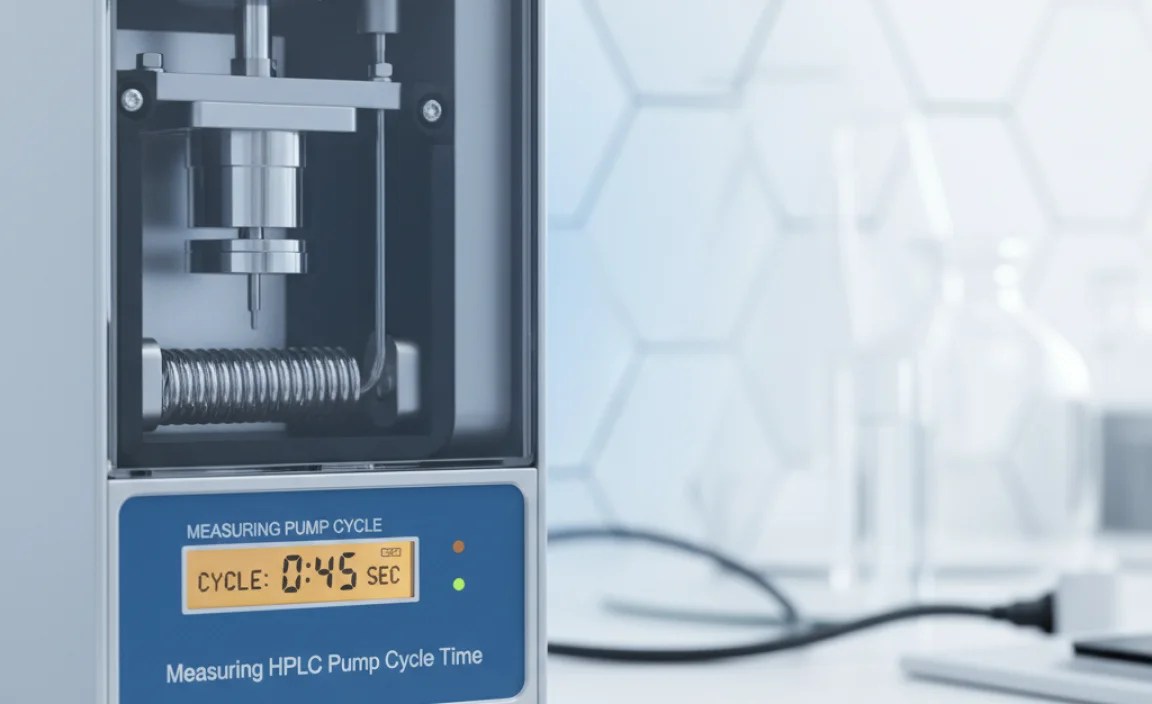
Measuring the cycle time of an HPLC pump can provide valuable insights into its performance. Here are several methods you can use:
Direct Observation
In some cases, you can directly observe the pump’s operation to estimate the cycle time. This is more feasible with pumps that have a visible piston or mechanism. However, this method is not very precise.
Pressure Monitoring
Monitoring the system pressure can provide indirect information about the cycle time. Fluctuations in pressure can indicate variations in the pump’s cycle. Data acquisition systems often provide real-time pressure readings.
Flow Rate Measurement
Measuring the actual flow rate and comparing it to the set flow rate can help assess the pump’s performance. Significant deviations may indicate issues with the cycle time.
Using a Data Acquisition System
Many HPLC systems are equipped with data acquisition systems that record various parameters, including pressure, flow rate, and pump status. These systems can provide detailed information about the pump’s operation and help you calculate the cycle time.
Calculation Example
To calculate the cycle time, you can use the following formula:
Cycle Time = 60 / (Strokes Per Minute)
For example, if your pump completes 120 strokes per minute, the cycle time would be:
Cycle Time = 60 / 120 = 0.5 seconds
Optimizing HPLC Pump Cycle Time
Optimizing the cycle time can improve the performance and efficiency of your HPLC system. Here are some strategies to consider:
Adjusting Flow Rate
Adjusting the flow rate is the most straightforward way to influence cycle time. Increasing the flow rate will decrease the cycle time, but it’s essential to consider the impact on separation and resolution.
Reducing System Pressure
Reducing system pressure can help improve pump performance and cycle time. This can be achieved by:
- Using columns with lower backpressure.
- Optimizing the mobile phase composition.
- Ensuring that there are no blockages in the system.
Selecting Appropriate Solvents
Choosing solvents with lower viscosity can reduce the load on the pump and improve cycle time. Consider using solvent mixtures that optimize viscosity and separation.
Regular Maintenance
Regular maintenance is crucial for maintaining optimal pump performance. This includes:
- Replacing pump seals and check valves regularly.
- Cleaning the pump head and solvent lines.
- Calibrating the pump to ensure accurate flow rates.
Temperature Control
Maintaining a stable temperature can help ensure consistent solvent viscosity and system pressure, leading to more stable cycle times.
Troubleshooting Cycle Time Issues
If you encounter issues with your HPLC pump’s cycle time, troubleshooting can help identify and resolve the problem. Here are some common issues and potential solutions:
Inconsistent Cycle Times
Problem: The pump’s cycle time varies significantly, leading to inconsistent results.
Possible Causes:
- Air bubbles in the solvent lines.
- Worn or damaged pump seals.
- Clogged or malfunctioning check valves.
- Fluctuations in system pressure.
Solutions:
- Degas the mobile phase to remove air bubbles.
- Replace the pump seals and check valves.
- Clean or replace the check valves.
- Identify and address the cause of pressure fluctuations.
Prolonged Cycle Times
Problem: The pump’s cycle time is longer than expected.
Possible Causes:
- High system pressure.
- Viscous solvents.
- Partially blocked solvent lines or column.
Solutions:
- Reduce system pressure by optimizing the method or replacing the column.
- Use solvents with lower viscosity.
- Check and clear any blockages in the system.
Shortened Cycle Times
Problem: The pump’s cycle time is shorter than expected.
Possible Causes:
- Leaking pump seals.
- Incorrect flow rate settings.
- System leaks.
Solutions:
- Replace the pump seals.
- Verify and correct the flow rate settings.
- Check and repair any leaks in the system.
Practical Examples and Case Studies
To further illustrate the importance of understanding and managing HPLC pump cycle time, let’s consider a couple of practical examples and case studies.
Case Study 1: Pharmaceutical Analysis
In a pharmaceutical lab, an HPLC system is used to quantify the active ingredient in a drug product. Inconsistent cycle times were causing variations in the peak area, leading to inaccurate quantification. Upon investigation, it was found that the pump seals were worn, causing fluctuations in the flow rate. Replacing the seals resolved the issue, resulting in consistent cycle times and accurate quantification.
Case Study 2: Environmental Monitoring
An environmental agency uses HPLC to monitor pollutants in water samples. High backpressure due to particulate matter in the samples was causing prolonged cycle times. Implementing a sample filtration step reduced the backpressure, improving the pump’s cycle time and the overall efficiency of the analysis.
Practical Example: Optimizing a Gradient Method
Consider a gradient method where the mobile phase composition changes over time. Understanding the pump’s cycle time is crucial for accurately delivering the gradient. If the cycle time is too long, the gradient may not be delivered as intended, leading to poor separation. Optimizing the flow rate and solvent composition can help reduce the cycle time and improve the gradient performance.
HPLC Pump Cycle Time: Advanced Techniques and Considerations
As you become more experienced with HPLC, you may want to explore advanced techniques and considerations related to pump cycle time.
Dwell Volume
Dwell volume, also known as system delay volume, is the volume between the pump and the head of the column. This volume can affect the delivery of the mobile phase and the overall cycle time. Minimizing dwell volume can improve the performance of gradient methods.
Gradient Delay
Gradient delay is the time it takes for the mobile phase composition to reach the column after the gradient program starts. This delay is influenced by the pump’s cycle time and the system’s dwell volume. Understanding and compensating for gradient delay is crucial for accurate gradient separations.
Pump Calibration
Regular pump calibration is essential for ensuring accurate flow rates and consistent cycle times. Calibration involves verifying the pump’s flow rate using a calibrated flow meter and adjusting the pump settings as needed.
Advanced Pump Technologies
Some advanced HPLC systems incorporate technologies such as electronic flow control and real-time pressure monitoring to optimize pump performance and cycle time. These technologies can provide more precise control over the pump’s operation and improve the reproducibility of results.
FAQ: Understanding HPLC Pump Cycle Time
Here are some frequently asked questions about HPLC pump cycle time:
What exactly is HPLC pump cycle time?
The cycle time is how long it takes an HPLC pump to complete one full pumping action – drawing in solvent and pushing it out.
Why is knowing the cycle time important?
It helps ensure consistent and accurate results in your chemical analyses by maintaining a stable flow of liquids.
What affects the cycle time of an HPLC pump?
Factors include the type of pump, the speed (flow rate) it’s set to, the pressure in the system, and how thick (viscous) the solvent is.
How do I measure the cycle time of my HPLC pump?
You can use pressure monitoring, flow rate measurements, or data acquisition systems to get detailed information about the pump’s operation.
Can I adjust the cycle time of my HPLC pump?
Yes, adjusting the flow rate is the easiest way, but you can also reduce system pressure or choose less viscous solvents.
What happens if the cycle time is inconsistent?
Inconsistent cycle times can lead to unreliable results, indicating issues like air bubbles, worn pump parts, or clogs.
How does maintenance affect cycle time?
Regular maintenance, like replacing seals and checking valves, keeps the pump running efficiently and maintains consistent cycle times.
Conclusion
Understanding the cycle time of an HPLC pump is essential for optimizing HPLC methods, ensuring accurate results, and troubleshooting potential issues. By considering factors such as pump type, flow rate, system pressure, and solvent viscosity, you can manage and optimize cycle time to improve the performance of your HPLC system. Regular maintenance, proper calibration, and the use of advanced techniques can further enhance the reliability and efficiency of your analyses. Whether you’re in pharmaceutical analysis, environmental monitoring, or any other field that relies on HPLC, mastering the concept of cycle time will undoubtedly contribute to more accurate and reproducible results. So go ahead, fine-tune your system, and achieve those perfect separations!
“`


