
What is Considered Short Cycling in a Heat Pump?

Quick Summary: Short cycling in a heat pump happens when it turns on and off too frequently. This means the heat pump isn’t running long enough to properly heat or cool your home. It wastes energy, increases wear and tear on the system, and can lead to higher utility bills. Identifying and fixing short cycling is crucial for efficient and reliable heat pump operation.
Is your heat pump acting up, turning on and off more than it should? You might be dealing with a problem called short cycling. It’s a common issue that can lead to discomfort and higher energy bills, and it can also damage your heat pump over time. Don’t worry, though – understanding what causes short cycling is the first step to fixing it. In this guide, we’ll break down the causes and how to troubleshoot them, so you can keep your heat pump running smoothly and efficiently.
Understanding Short Cycling

Short cycling is when your heat pump starts up, runs for only a short period, and then shuts off before completing a full heating or cooling cycle. This happens more often than it should, causing problems with both comfort and energy efficiency.
Why is Short Cycling Bad?
- Wasted Energy: The heat pump uses the most energy when it starts up. Frequent starts consume more power than running steadily.
- Increased Wear and Tear: Constant starting and stopping puts extra stress on the components, shortening the lifespan of your heat pump.
- Uneven Temperatures: Short cycles don’t allow the heat pump to maintain a consistent temperature, leading to hot and cold spots in your home.
- Higher Utility Bills: All that wasted energy adds up, resulting in higher monthly costs.
Common Causes of Short Cycling

Several factors can lead to short cycling in a heat pump. Here are some of the most common culprits:
1. Dirty Air Filter
A clogged air filter restricts airflow, causing the heat pump to overheat and shut down prematurely. It’s one of the most common causes and easiest to fix. Air filters should be checked monthly and replaced every 1-3 months, depending on usage and air quality. You can find replacement filters at most hardware stores or online retailers like Amazon.
2. Refrigerant Leaks
Low refrigerant levels can cause the heat pump to work harder and overheat, leading to short cycling. Refrigerant leaks require professional attention. A technician can locate and repair the leak, then recharge the system with the correct amount of refrigerant. The EPA has regulations on refrigerants, so it’s important to use a certified technician.
3. Oversized Heat Pump
If the heat pump is too large for your home, it will quickly heat or cool the space and then shut off, resulting in short cycles. An oversized unit doesn’t dehumidify as effectively either. Proper sizing is crucial for efficiency and comfort. A Manual J load calculation is the standard method for determining the correct size heat pump for a home, considering factors like insulation, window area, and climate. You can find certified HVAC contractors who perform these calculations through industry associations like ACCA (Air Conditioning Contractors of America).
4. Electrical Issues
Faulty wiring, a bad capacitor, or a failing control board can all cause a heat pump to short cycle. Electrical components control the operation of the heat pump, and any malfunction can disrupt the cycle. Diagnosing and repairing electrical issues should be done by a qualified HVAC technician or electrician to ensure safety and proper repair.
5. Thermostat Problems
A malfunctioning thermostat can send incorrect signals to the heat pump, causing it to turn on and off at the wrong times. Thermostat issues can range from simple problems like low batteries to more complex issues with the wiring or internal components. Upgrading to a smart thermostat can also improve efficiency and provide better control over your home’s temperature.
6. Frozen Evaporator Coil
If the evaporator coil freezes due to low airflow or low refrigerant, the heat pump will shut down to prevent damage. A frozen coil can be caused by a dirty air filter, blocked vents, or refrigerant issues. Addressing the underlying cause is essential to prevent the coil from freezing again.
How to Diagnose Short Cycling

Identifying the cause of short cycling involves some troubleshooting. Here’s a step-by-step approach:
- Observe the Cycles: Note how long the heat pump runs before shutting off. Short cycles are typically less than 10-15 minutes.
- Check the Air Filter: A dirty filter is the most common cause. Replace it if it’s clogged.
- Inspect Vents: Make sure all vents are open and not blocked by furniture.
- Listen for Noises: Unusual sounds like hissing or bubbling could indicate a refrigerant leak.
- Examine the Outdoor Unit: Check for ice buildup on the coils during the winter.
- Test the Thermostat: Ensure the thermostat is set correctly and functioning properly. Try replacing the batteries if it’s battery-powered.
Troubleshooting Steps
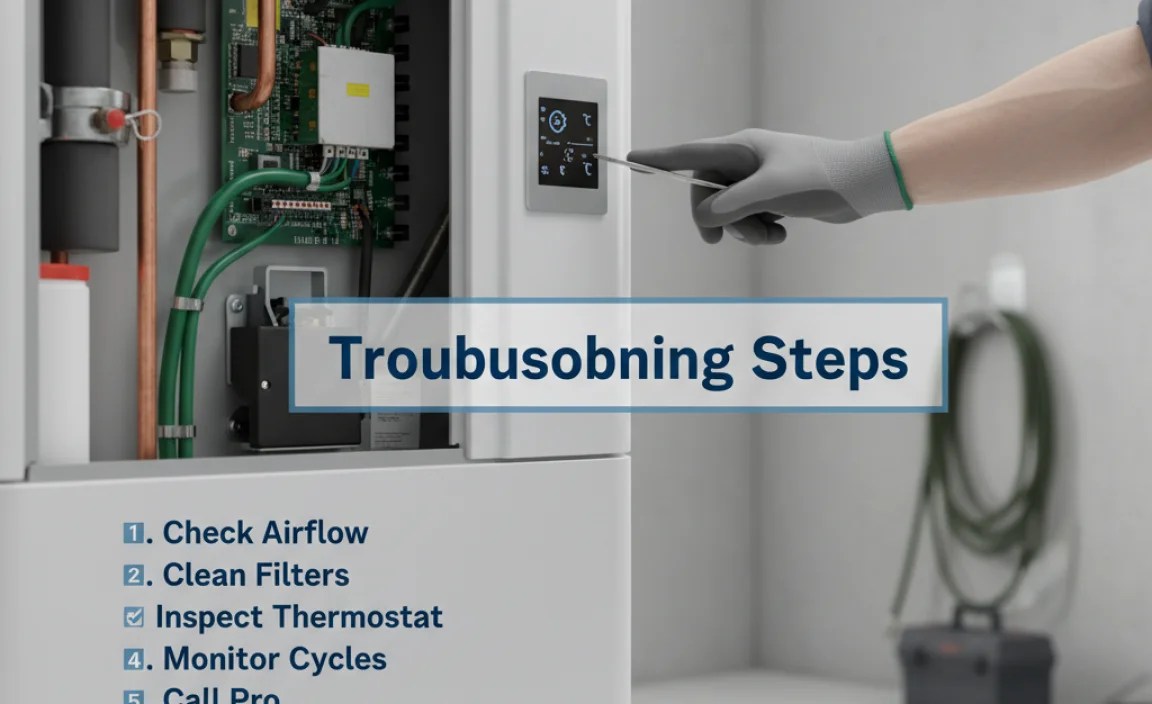
Once you’ve identified potential causes, here are some steps you can take to resolve the issue:
1. Replace the Air Filter
This is the simplest and often most effective solution. A clean filter ensures proper airflow and prevents overheating. High-efficiency particulate air (HEPA) filters can improve indoor air quality but may require more frequent changes.
2. Clear Blocked Vents
Ensure that supply and return vents are free from obstructions. Blocked vents restrict airflow and can cause the system to work harder. Regular dusting and vacuuming around vents can help maintain good airflow.
3. Adjust Thermostat Settings
Make sure the thermostat is set to the correct temperature and mode (heat or cool). A programmable thermostat can help maintain consistent temperatures and save energy.
4. Check for Refrigerant Leaks
If you suspect a refrigerant leak, call a professional HVAC technician. Do not attempt to handle refrigerants yourself, as they can be harmful. Leak detection methods include using electronic leak detectors, soap bubble tests, and UV dye injection.
5. Inspect Electrical Components
If you’re comfortable working with electricity, you can visually inspect the wiring and capacitors. However, it’s best to leave this to a qualified electrician or HVAC technician. Capacitors store electrical energy and can cause a shock even when the system is turned off.
6. Defrost Frozen Coils
If the evaporator coil is frozen, turn off the heat pump and allow it to thaw. You can use a hairdryer on a low setting to speed up the process. Once thawed, address the underlying cause of the freezing.
When to Call a Professional

While some issues can be resolved with simple DIY fixes, others require professional help. Call an HVAC technician if:
- You suspect a refrigerant leak
- You have electrical problems
- The heat pump is still short cycling after trying basic troubleshooting steps
- You are not comfortable working with electrical components or refrigerants
Preventing Short Cycling
Preventing short cycling is easier than fixing it. Here are some tips to keep your heat pump running smoothly:
1. Regular Maintenance
Schedule annual maintenance checks with an HVAC technician. They can identify and fix potential problems before they lead to short cycling. Maintenance typically includes cleaning the coils, checking refrigerant levels, and inspecting electrical components.
2. Change Air Filters Regularly
Replace the air filter every 1-3 months, or more often if you have pets or allergies. A clean filter ensures proper airflow and prevents the system from overheating.
3. Keep Vents Clear
Make sure vents are not blocked by furniture or other obstructions. Good airflow is essential for efficient operation.
4. Monitor Performance
Pay attention to how your heat pump is running. If you notice any unusual noises or frequent cycling, address the issue promptly.
5. Consider a Smart Thermostat
Smart thermostats can learn your heating and cooling patterns and adjust the temperature accordingly. This can help prevent short cycling and save energy.
Heat Pump Efficiency Tips
Besides preventing short cycling, there are other ways to improve the efficiency of your heat pump:
- Seal Air Leaks: Seal any air leaks around windows, doors, and pipes. This prevents drafts and helps maintain a consistent temperature.
- Insulate Your Home: Proper insulation reduces heat loss in the winter and heat gain in the summer, making your heat pump more efficient.
- Use Ceiling Fans: Ceiling fans can help circulate air and distribute heat or cool air more evenly.
- Close Curtains and Blinds: During the hottest part of the day, close curtains and blinds to block sunlight and reduce heat gain.
- Upgrade to a High-Efficiency Model: If your heat pump is old and inefficient, consider upgrading to a newer, high-efficiency model.
Understanding Heat Pump Ratings
When choosing a heat pump, it’s important to understand the different efficiency ratings:
- SEER (Seasonal Energy Efficiency Ratio): Measures the cooling efficiency of the heat pump. The higher the SEER rating, the more efficient the unit.
- HSPF (Heating Seasonal Performance Factor): Measures the heating efficiency of the heat pump. The higher the HSPF rating, the more efficient the unit.
Look for heat pumps with high SEER and HSPF ratings to maximize energy savings.
Cost Considerations
Fixing short cycling can involve various costs, depending on the cause:
| Issue | Estimated Cost |
|---|---|
| Replacing Air Filter | $5 – $20 |
| Refrigerant Recharge | $200 – $500 |
| Thermostat Replacement | $75 – $300 |
| Electrical Repair | $100 – $500 |
| HVAC Service Call | $75 – $200 |
Regular maintenance and prompt repairs can help prevent costly issues down the road.
Heat Pump Lifespan
A well-maintained heat pump can last 15-20 years. Short cycling can significantly reduce its lifespan. Proper care and timely repairs are essential to maximizing the investment in your heat pump.
DIY vs. Professional Repairs
Some heat pump issues can be resolved with simple DIY fixes, while others require professional expertise. Here’s a breakdown:
| DIY Repairs | Professional Repairs |
|---|---|
| Replacing Air Filter | Refrigerant Leaks |
| Clearing Blocked Vents | Electrical Issues |
| Adjusting Thermostat Settings | Compressor Problems |
| Cleaning Outdoor Unit | Complex System Diagnostics |
Always prioritize safety and consult a professional if you’re unsure about any repair.
FAQ: Short Cycling in Heat Pumps
Q: What exactly is short cycling in a heat pump?
A: Short cycling is when your heat pump turns on and off too frequently, without completing a full heating or cooling cycle. It’s like a car that keeps starting and stopping every few feet.
Q: Why is short cycling bad for my heat pump?
A: It wastes energy, increases wear and tear on the system, leads to uneven temperatures, and can cause higher utility bills. It’s like constantly slamming on the brakes in your car – it wears everything out faster.
Q: Can a dirty air filter cause short cycling?
A: Yes! A clogged air filter restricts airflow, causing the heat pump to overheat and shut down prematurely. Think of it like trying to breathe through a clogged mask.
Q: How often should I change my air filter?
A: Check it monthly and replace it every 1-3 months, depending on usage and air quality. If you have pets or allergies, you might need to change it more often.
Q: What if I suspect a refrigerant leak?
A: Call a professional HVAC technician immediately. Do not attempt to handle refrigerants yourself, as they can be harmful. Refrigerant leaks are like a slow leak in your car’s radiator – it needs professional attention.
Q: Can an oversized heat pump cause short cycling?
A: Yes, if the heat pump is too large for your home, it will quickly heat or cool the space and then shut off, resulting in short cycles. It’s like having a giant engine in a tiny car – it’s overkill and inefficient.
Q: What are some signs that my thermostat might be malfunctioning?
A: If your heat pump is turning on and off at the wrong times, or if the temperature in your home is not consistent with the thermostat setting, it could be a sign of a problem. Try replacing the batteries first, and if that doesn’t work, call an HVAC technician.
Conclusion
Dealing with a short cycling heat pump can be frustrating, but understanding the causes and knowing how to troubleshoot them can save you money and extend the life of your system. Start with the simple fixes like replacing the air filter and clearing vents. If the problem persists, don’t hesitate to call a professional HVAC technician. Regular maintenance and prompt repairs will keep your heat pump running efficiently and comfortably for years to come. By taking proactive steps, you can ensure your home stays comfortable and your energy bills stay manageable.
“`


