
Why Does My Well Pump Short Cycle? A Simple Guide

Quick Summary: A well pump short cycles when it turns on and off too frequently. Common causes include a waterlogged pressure tank, incorrect pressure switch settings, leaks in the system, or a faulty check valve. Addressing these issues promptly prevents pump damage and ensures a consistent water supply.
Having your well pump constantly cycling on and off is more than just annoying—it’s a sign of a problem that can damage your pump and leave you without water. This issue, known as short cycling, means your pump is working harder than it should, wearing it out faster. But don’t worry! Figuring out why your well pump is short cycling is often straightforward, and you can usually fix it yourself with a few simple steps.
In this guide, we’ll walk you through the common reasons for short cycling and provide easy-to-follow solutions. You’ll learn how to diagnose the problem, adjust settings, and perform basic repairs. By the end, you’ll have the knowledge to keep your well pump running smoothly. Let’s dive in!
Understanding Well Pump Short Cycling

Short cycling refers to a well pump turning on and off too rapidly. Instead of running for a longer period to fill the pressure tank and then shutting off, it starts and stops frequently within a short time frame. This puts unnecessary strain on the pump motor and can lead to premature failure.
Why is Short Cycling Bad?
- Pump Overload: Frequent starts generate heat and stress on the motor.
- Reduced Lifespan: Short cycling significantly shortens the life expectancy of the pump.
- Increased Energy Consumption: Inefficient operation leads to higher electricity bills.
- Water Pressure Fluctuations: Inconsistent water supply can damage appliances.
Common Causes of Well Pump Short Cycling

Several factors can cause a well pump to short cycle. Here are the most common culprits:
1. Waterlogged Pressure Tank
A pressure tank stores water under pressure, allowing the pump to run less frequently. Over time, the air cushion inside the tank can diminish, causing it to become waterlogged. When this happens, the pump has to work harder and cycles more often.
How to Check:
- Turn off the pump at the circuit breaker.
- Drain the tank completely by opening a faucet.
- Check the air pressure using a tire pressure gauge at the Schrader valve (usually located at the top of the tank). It should be 2 PSI below the pump’s cut-in pressure (e.g., 28 PSI if the cut-in is 30 PSI).
Solution:
- Recharge the Air Cushion: If the pressure is low, use an air compressor to add air until it reaches the correct level.
- Replace the Tank: If the tank is severely waterlogged or the bladder is damaged, replacement is necessary.
2. Incorrect Pressure Switch Settings
The pressure switch controls when the pump turns on and off based on the water pressure in the tank. If the settings are too close together or incorrectly calibrated, the pump might short cycle.
How to Check:
- Locate the pressure switch (usually near the pressure tank).
- Note the cut-in (turn-on) and cut-out (turn-off) pressure settings. Standard settings are often 30/50 PSI or 40/60 PSI.
Solution:
- Adjust the Settings: Increase the pressure differential (the difference between cut-in and cut-out). For example, if it’s set at 30/40 PSI, adjust it to 30/50 PSI.
- Clean the Switch: Debris or corrosion can interfere with the switch’s operation. Clean it gently with a brush.
- Replace the Switch: If adjustments don’t work, the switch may be faulty and require replacement.
3. Leaks in the System
Leaks anywhere in the plumbing system, from the well to the house, can cause a drop in pressure, triggering the pump to turn on more frequently.
How to Check:
- Inspect all visible pipes and fittings for leaks.
- Check faucets, toilets, and other fixtures for drips or signs of water damage.
- Examine the well casing for any signs of water seeping out.
Solution:
- Repair Leaks: Fix any leaks you find by tightening fittings, replacing damaged pipes, or repairing fixtures.
- Professional Inspection: If you suspect a leak underground, hire a professional to inspect the well and plumbing system.
4. Faulty Check Valve
The check valve prevents water from flowing back into the well when the pump shuts off. If the check valve is faulty, water drains back into the well, causing a rapid pressure drop and short cycling.
How to Check:
- Listen for a gurgling sound in the pipes after the pump shuts off.
- Observe if the pressure drops quickly after the pump stops running.
Solution:
- Replace the Check Valve: The check valve is usually located either inside the pump or in the pipe close to the pump. Replace it with a new one.
5. Low Well Water Level
If the water level in the well is too low, the pump may struggle to draw water, causing it to cycle on and off rapidly. This is more common during periods of drought or high water usage.
How to Check:
- Monitor your water usage and see if the problem occurs during peak demand times.
- Consult well records or hire a professional to check the static water level in your well.
Solution:
- Reduce Water Usage: Conserve water during peak demand periods.
- Deepen the Well: If the water level is consistently low, consider deepening the well or installing a storage tank.
- Lower the Pump: If possible, lower the pump within the well to a greater depth.
6. Clogged or Damaged Well Screen
The well screen prevents sediment from entering the pump. If it becomes clogged or damaged, it can restrict water flow, leading to short cycling.
How to Check:
- Observe if the water coming from your faucets is dirty or contains sediment.
- Check the well records for information on the screen’s condition.
Solution:
- Clean the Well Screen: Hire a professional to clean or backwash the well screen.
- Replace the Well Screen: If the screen is damaged, it may need to be replaced.
7. Submersible Pump Issues
Submersible pumps, located inside the well, can have specific issues that cause short cycling, such as:
- Overheating: If the pump isn’t fully submerged, it can overheat and cycle on and off.
- Electrical Problems: Faulty wiring or a failing motor can cause intermittent operation.
How to Check:
- Monitor the pump’s performance and listen for unusual noises.
- Check the electrical connections at the well head.
Solution:
- Ensure Full Submersion: Make sure the pump is fully submerged in water.
- Electrical Repairs: Hire an electrician to inspect and repair any electrical issues.
- Replace the Pump: If the motor is failing, the pump may need to be replaced.
Step-by-Step Troubleshooting Guide
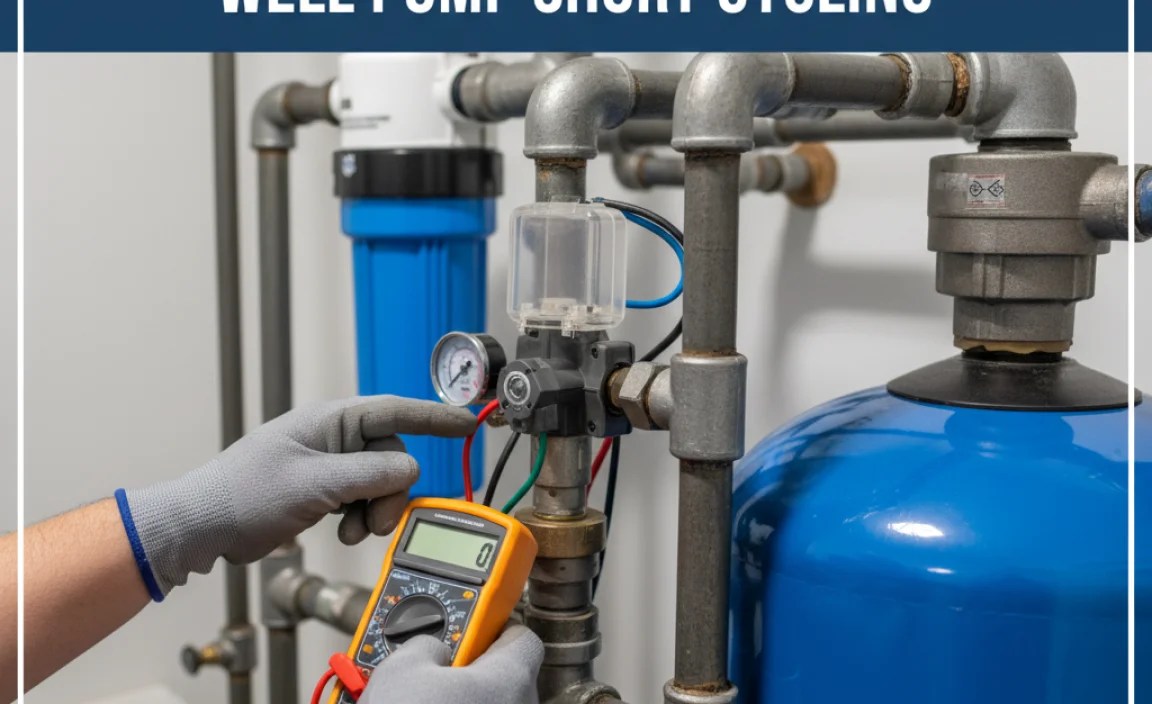
Here’s a systematic approach to diagnosing and fixing a short cycling well pump:
Step 1: Check the Pressure Tank
- Turn off the power to the pump.
- Drain the pressure tank completely.
- Check the air pressure at the Schrader valve.
- Adjust the air pressure to 2 PSI below the cut-in pressure.
- Turn the power back on and observe the pump’s behavior.
Step 2: Inspect the Pressure Switch
- Locate the pressure switch.
- Note the current cut-in and cut-out settings.
- Adjust the differential to increase the range (e.g., from 30/40 to 30/50).
- Clean the switch contacts.
- Monitor the pump’s cycling.
Step 3: Look for Leaks
- Inspect all visible pipes and fittings.
- Check faucets and toilets for leaks.
- Examine the well casing for signs of water seepage.
- Repair any identified leaks.
Step 4: Evaluate the Check Valve
- Listen for gurgling sounds in the pipes.
- Observe if the pressure drops quickly after the pump shuts off.
- Replace the check valve if necessary.
Step 5: Assess Well Water Level
- Monitor water usage during peak times.
- Check well records or hire a professional to measure the static water level.
- Conserve water or consider deepening the well if the water level is low.
Tools and Materials You Might Need

Having the right tools and materials on hand can make the troubleshooting and repair process much smoother. Here’s a list of items you might need:
- Tire Pressure Gauge: For checking air pressure in the pressure tank.
- Air Compressor: To add air to the pressure tank.
- Wrenches: For tightening fittings and replacing components.
- Screwdrivers: For adjusting the pressure switch and other electrical connections.
- Pipe Joint Compound or Teflon Tape: For sealing pipe threads.
- New Check Valve: If the existing one is faulty.
- Replacement Pressure Switch: If the existing switch is damaged.
- Multimeter: For testing electrical connections (use with caution and proper knowledge).
- Work Gloves and Safety Glasses: For personal protection.
Preventative Maintenance Tips
Regular maintenance can help prevent short cycling and extend the life of your well pump. Here are some tips:
- Check the Pressure Tank Regularly: Monitor the air pressure and recharge the air cushion as needed.
- Inspect for Leaks: Periodically check all pipes and fittings for leaks.
- Flush the Well: Occasionally flush the well to remove sediment and debris.
- Monitor Water Quality: Test your water regularly for contaminants.
- Service the Pump: Have a professional inspect and service the pump every few years.
When to Call a Professional
While many short cycling issues can be resolved with DIY methods, some situations require professional help. Consider calling a well pump technician if:
- You are uncomfortable working with electricity or plumbing.
- You suspect a major issue, such as a collapsed well casing or a failing submersible pump.
- You have tried troubleshooting and repairing the problem yourself without success.
- You notice signs of contamination in your water supply.
Cost Considerations
Addressing short cycling promptly can save you money in the long run by preventing pump damage and reducing energy consumption. Here’s a breakdown of potential costs:
| Repair/Replacement | Estimated Cost |
|---|---|
| Pressure Tank Recharge | $0 (DIY) |
| Pressure Switch Replacement | $20 – $50 |
| Check Valve Replacement | $15 – $40 |
| Pressure Tank Replacement | $150 – $500 |
| Well Pump Replacement | $500 – $2000+ |
| Professional Inspection & Repair | $100 – $500+ |
These are rough estimates, and actual costs can vary depending on your location and the specific components needed.
FAQ About Well Pump Short Cycling
Here are some frequently asked questions about well pump short cycling:
What is the ideal run time for a well pump?
The ideal run time depends on your water usage and pump size, but generally, a well pump should run for at least one to two minutes to fill the pressure tank adequately. Shorter cycles than that often indicate a problem.
Can short cycling damage my appliances?
Yes, inconsistent water pressure caused by short cycling can damage appliances like washing machines, dishwashers, and water heaters. Consistent pressure is essential for their proper operation.
How often should I check my pressure tank?
It’s a good practice to check your pressure tank every 3-6 months to ensure the air pressure is at the correct level and that there are no signs of waterlogging.
Is it safe to drink water if my well pump is short cycling?
Short cycling itself doesn’t directly contaminate your water, but it can indicate underlying issues that might affect water quality. It’s always a good idea to test your water regularly, especially if you notice changes in taste, odor, or appearance.
Can cold weather cause short cycling?
Yes, freezing temperatures can cause pipes to burst or develop leaks, which can lead to short cycling. Insulating your pipes can help prevent this issue.
What size pressure tank do I need?
The size of your pressure tank depends on your water usage and pump capacity. A general rule of thumb is to have at least 10 gallons of storage capacity per person in your household. Consult a professional for a more precise recommendation.
How do I know if my well pump is the right size for my home?
A properly sized well pump should be able to meet your household’s water demands without running constantly or struggling to maintain pressure. If you’re unsure, consult a well pump technician who can assess your needs and recommend the appropriate pump size.
Conclusion
Dealing with a short cycling well pump can be frustrating, but with a systematic approach, you can often diagnose and fix the problem yourself. Start by checking the pressure tank and pressure switch settings, then inspect for leaks and evaluate the check valve. Regular maintenance and prompt repairs will not only extend the life of your pump but also ensure a reliable and consistent water supply for your home. Remember, when in doubt, don’t hesitate to call a professional for assistance. Keeping your well pump in good working order is essential for a healthy and happy home!
“`


