
What Causes a Well Pump to Short Cycle? A Beginner’s Guide

Quick Summary: A well pump short cycles when it turns on and off too frequently. This is often due to a loss of pressure in the tank, a faulty pressure switch, a waterlogged tank, or a leak in the plumbing. Diagnosing and fixing the cause promptly can prevent pump burnout and ensure a consistent water supply.
Is your well pump driving you crazy by turning on and off every few seconds? This annoying problem, called “short cycling,” is more than just an inconvenience. It puts extra stress on your pump, can lead to premature failure, and can leave you with fluctuating water pressure. Don’t worry, you can troubleshoot the issue. Let’s walk through the common causes and how to fix them, so you can get back to reliable water pressure.
Understanding Well Pump Short Cycling

Short cycling happens when your well pump turns on and off rapidly, much more often than it should. A healthy well pump runs for a reasonable amount of time to fill the pressure tank and then shuts off until the pressure drops to a certain point. Short cycling means it’s not holding pressure correctly.
Here’s why it’s a problem:
- Pump Damage: Each start-up puts stress on the motor. Frequent starts generate excess heat and wear out components faster.
- Energy Waste: Short cycles waste electricity as the pump works harder.
- Water Pressure Fluctuations: You’ll notice inconsistent water pressure in your showers and faucets.
Common Causes of Well Pump Short Cycling

Several factors can cause your well pump to short cycle. Let’s break them down, starting with the most common culprits.
1. Low Air Pressure in the Pressure Tank
Your pressure tank is designed to store water under pressure, providing a buffer between the pump and your household water usage. It has an air bladder inside that compresses as water fills the tank. This compressed air maintains pressure in the system. If the air pressure is too low, the pump will cycle on and off rapidly.
How to Check and Fix:
- Turn off the pump: Locate the breaker switch for your well pump and turn it off.
- Drain the tank: Open a faucet somewhere in your house and let the water run until the tank is completely empty.
- Check the air pressure: Locate the Schrader valve (like a tire valve) on top of the tank. Use a tire pressure gauge to check the air pressure. It should be 2 PSI below the pump’s cut-in pressure (usually 28 PSI if the cut-in pressure is 30 PSI).
- Add air: If the pressure is low, use an air compressor to add air until it reaches the correct level.
- Turn the pump back on: Close the faucet and turn the breaker switch back on. Observe the pump’s behavior.
2. Waterlogged Pressure Tank
Over time, the air bladder inside the pressure tank can fail, allowing the tank to become waterlogged. This means there’s little to no air cushion left, and the pump has to work constantly to maintain pressure. It will cycle on and off quickly because there’s no air to compress and store energy.
How to Check and Fix:
- Tap on the tank: With the pump running, tap on the side of the tank. If it sounds full of water from top to bottom, it’s likely waterlogged.
- Check for water at the air valve: With the pump off and the tank drained, press the Schrader valve. If water comes out, the bladder is definitely damaged.
- Replace the tank: A waterlogged tank usually needs to be replaced. While some bladders can be replaced separately, it’s often more cost-effective to replace the entire tank.
3. Faulty Pressure Switch
The pressure switch is a small electrical component that senses the water pressure and tells the pump when to turn on and off. If the switch is faulty, it may not sense the pressure correctly, causing the pump to cycle erratically.
How to Check and Fix:
- Inspect the switch: Look for signs of corrosion, damage, or water leaks around the switch.
- Test the switch: Use a multimeter to test the continuity of the switch contacts. With the pump off and pressure below the cut-in point, the contacts should be closed (showing continuity). As the pump runs and pressure increases above the cut-out point, the contacts should open (no continuity).
- Adjust the settings: Some pressure switches have adjustable settings. Consult your owner’s manual to see if the cut-in and cut-out pressures are properly set.
- Replace the switch: If the switch is damaged or not functioning correctly, replace it with a new one. Be sure to match the voltage and pressure settings of your old switch.
4. Leaks in the Plumbing
Even a small leak in your plumbing system can cause a drop in water pressure, triggering the pump to turn on more frequently. Leaks can occur anywhere in the system, from the well casing to the pipes inside your house.
How to Check and Fix:
- Check for visible leaks: Inspect all accessible pipes, fittings, and faucets for signs of leaks. Pay close attention to areas around the well pump, pressure tank, and water heater.
- Check for hidden leaks: Look for signs of water damage, such as stains on ceilings or walls, damp spots on floors, or unexplained increases in your water bill.
- Pressure test the system: If you suspect a hidden leak, you can hire a plumber to perform a pressure test on your plumbing system.
- Repair the leaks: Repair any leaks you find as soon as possible. This may involve tightening fittings, replacing pipes, or repairing faucets.
5. Clogged Well Screen or Sediment
Over time, sediment, sand, and debris can accumulate in your well and clog the well screen. This restricts the flow of water into the pump, causing it to work harder and cycle more frequently.
How to Check and Fix:
- Check water quality: If your water is cloudy or contains sediment, it could indicate a problem with the well screen.
- Inspect the well: If possible, inspect the well casing for signs of damage or corrosion.
- Well cleaning: Consider having your well professionally cleaned to remove sediment and debris. This can improve water flow and reduce pump cycling.
- Well screen replacement: If the well screen is damaged or severely clogged, it may need to be replaced. This is a job best left to a professional well service company.
6. Incorrect Pump Size
If your well pump is too powerful for your well’s water production, it can pump the well dry quickly, causing it to cycle on and off rapidly. On the other hand, if the pump is too small, it may struggle to maintain pressure and run constantly.
How to Check and Fix:
- Check pump specifications: Determine the flow rate and pressure requirements of your household and compare them to the specifications of your well pump.
- Well flow test: Have a professional perform a well flow test to determine the well’s water production capacity.
- Pump replacement: If the pump is not properly sized, replace it with a pump that is appropriate for your well’s water production and your household’s water needs.
Troubleshooting Table
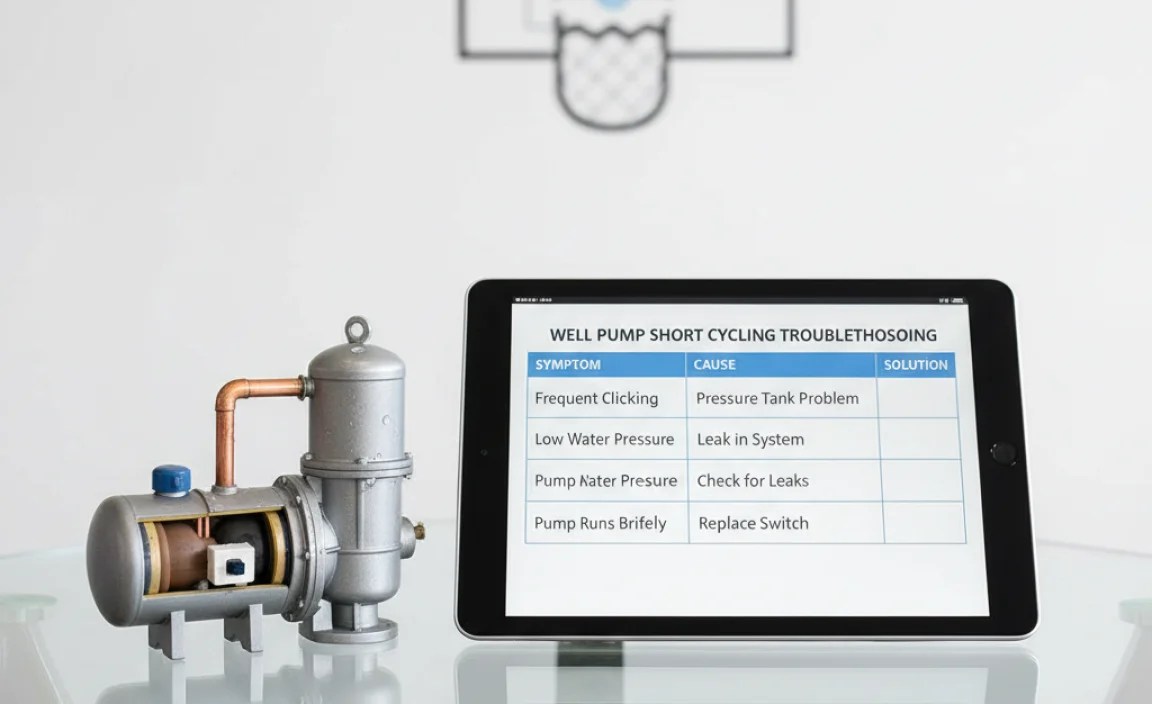
Here’s a quick table to help you diagnose the problem:
| Symptom | Possible Cause | Troubleshooting Steps |
|---|---|---|
| Pump cycles on and off every few seconds | Low air pressure in the pressure tank | Check and adjust air pressure in the tank. |
| Tank sounds full of water | Waterlogged pressure tank | Check for water at the air valve; replace the tank. |
| Pump runs erratically | Faulty pressure switch | Inspect, test, adjust, or replace the pressure switch. |
| Visible water leaks | Leaks in the plumbing | Check for and repair any visible leaks. |
| Cloudy water or sediment | Clogged well screen | Check water quality; consider well cleaning or screen replacement. |
| Pump cycles rapidly, well runs dry quickly | Incorrect pump size | Check pump specifications; perform a well flow test; replace the pump if necessary. |
Preventative Measures
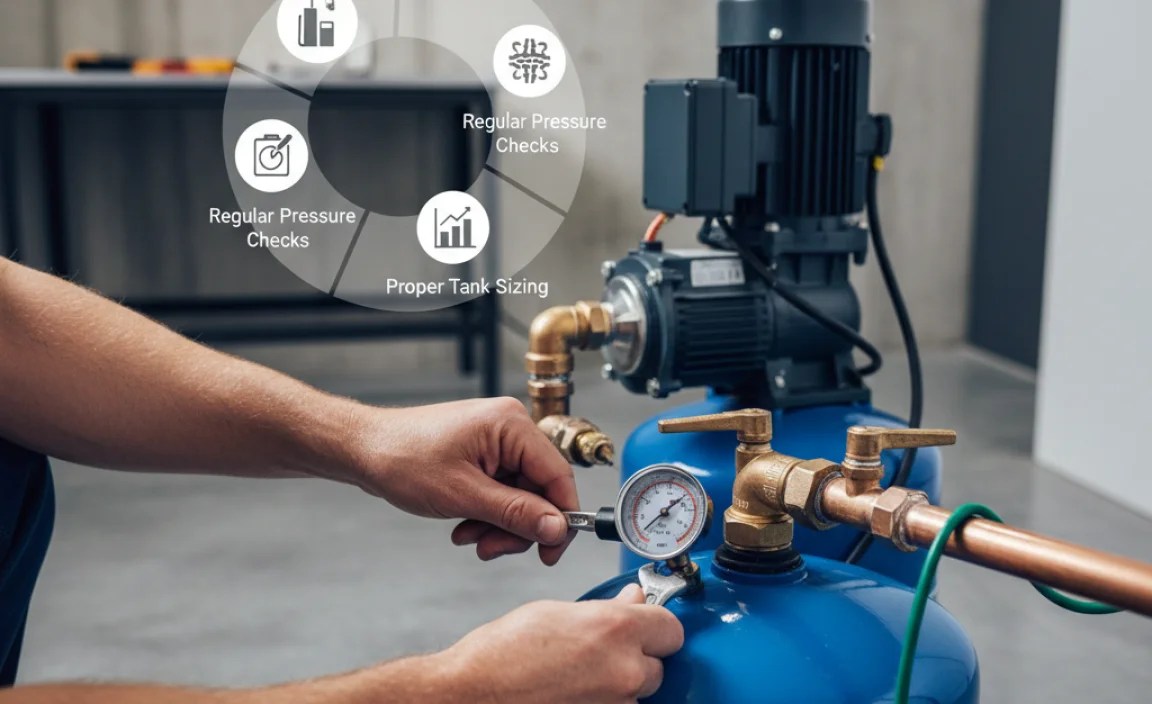
Preventing short cycling is better than having to fix it. Here are a few steps you can take:
- Regularly check the air pressure in your pressure tank: At least once a year, check the air pressure and adjust as needed.
- Inspect your plumbing for leaks: Periodically inspect your plumbing for leaks and repair them promptly.
- Consider a whole-house water filter: A water filter can help prevent sediment from clogging your well screen and damaging your pump.
- Have your well professionally inspected: Schedule regular well inspections with a qualified well service company.
Step-by-Step Repair Guide: Adjusting Pressure Tank Air

Let’s walk through adjusting the air pressure in your pressure tank, one of the most common fixes for short cycling. Remember to turn off the power to your pump before starting!
- Gather Your Tools: You’ll need a flathead screwdriver (to remove the cap on the air valve), a tire pressure gauge, and an air compressor.
- Locate the Pressure Tank: It’s usually near your well pump.
- Turn Off the Power: Switch off the breaker that controls your well pump. This is crucial for safety.
- Drain the Tank: Open a faucet (an outside spigot works well) until the water stops flowing. This depressurizes the tank.
- Find the Air Valve: Look for a valve similar to a tire valve on the top of the tank, usually covered by a cap.
- Check the Air Pressure: Remove the cap and use your tire pressure gauge to check the pressure. Compare it to the recommended pressure (usually 2 PSI below your pump’s cut-in pressure, often around 28 PSI).
- Add Air (If Needed): If the pressure is too low, use your air compressor to add air in short bursts, checking the pressure frequently until it reaches the correct level.
- Replace the Cap: Put the cap back on the air valve to protect it.
- Turn the Power Back On: Flip the breaker back on to restore power to your well pump.
- Monitor the Pump: Observe how the pump cycles. It should run for a longer period and then shut off, instead of short, frequent bursts.
When to Call a Professional
While many of these issues can be resolved with a little DIY know-how, some situations require a professional. Call a qualified well service company if:
- You are uncomfortable working with electricity or plumbing.
- You suspect a problem with the well itself, such as a collapsed casing or contaminated water.
- You are unable to diagnose the cause of the short cycling.
- You have attempted repairs but the problem persists.
FAQ About Well Pump Short Cycling
Here are some frequently asked questions to help you further understand and troubleshoot well pump short cycling.
What is the ideal pressure for my well pump system?
The ideal pressure typically ranges between 40-60 PSI. Your pressure switch is set to turn the pump on (cut-in pressure) at 40 PSI and off (cut-out pressure) at 60 PSI.
How often should my well pump cycle on and off?
A healthy well pump should cycle on a few times per hour, depending on water usage. Short cycling indicates a problem if it’s turning on and off every few minutes or even seconds.
Can cold weather affect my well pump?
Yes, freezing temperatures can cause pipes to burst or pressure tanks to crack, leading to leaks and short cycling. Insulate your pipes and tank to prevent freezing.
Is short cycling dangerous?
Yes, short cycling can damage your well pump motor, leading to premature failure. It also wastes energy and can cause inconsistent water pressure.
How long does a well pump last?
A well-maintained well pump can last 10-15 years or more. Regular maintenance and prompt repairs can extend its lifespan.
Can a leak in my toilet cause short cycling?
Yes, a running toilet can cause a slow but constant drop in water pressure, triggering the well pump to cycle on more frequently.
What is a cycle stop valve, and can it help with short cycling?
A cycle stop valve is a device that regulates the flow of water from the well pump, maintaining constant pressure and reducing pump cycling. It can be a good solution for wells with low water production.
Conclusion
Dealing with a short cycling well pump can be frustrating, but understanding the common causes is the first step toward fixing the problem. By systematically checking the air pressure in your tank, inspecting for leaks, and testing the pressure switch, you can often diagnose and resolve the issue yourself. Remember, safety first – always turn off the power to your pump before working on it. And when in doubt, don’t hesitate to call a qualified well service professional. With a little effort, you can restore reliable water pressure and extend the life of your well pump.
“`


