
Does the 1HP Blue Wave Tidal Wave Pump Cycle Off? A Simple Guide

Quick Summary: Yes, the 1HP Blue Wave Tidal Wave pump *should* cycle off automatically. It’s designed with a pressure switch that stops the pump when it reaches a certain pressure or when the water level drops too low (if equipped with a low-water cut-off). If your pump isn’t cycling off, there’s likely a problem with the pressure switch, plumbing, or a leak in your system. Let’s troubleshoot!
Dealing with a pump that won’t turn off can be super frustrating. You’re left wondering if it’s going to burn out, waste energy, or even flood your yard. The Blue Wave Tidal Wave 1HP pump is built for reliability, but like any mechanical device, it can run into issues. This guide will walk you through the common reasons why your pump might not be cycling off and provide simple steps to diagnose and fix the problem. We’ll cover everything from checking the pressure switch to identifying leaks, so you can get your pump back to working smoothly. Let’s dive in!
Understanding the Blue Wave Tidal Wave Pump Cycle

Before we start troubleshooting, let’s quickly recap how your Blue Wave Tidal Wave pump is supposed to work. These pumps are typically used for irrigation, boosting water pressure, or draining applications. They are designed to automatically start when pressure drops (like when you turn on a sprinkler) and stop when the desired pressure is reached or when water is no longer needed.
The key component controlling this on/off cycle is the pressure switch. It senses the water pressure in the system. When the pressure drops below a set point, the switch turns the pump on. Once the pressure reaches the upper limit, the switch turns the pump off. Some models also include a low-water cut-off, which prevents the pump from running dry and overheating.
Common Reasons Your Pump Won’t Cycle Off

Here are the most common reasons why your 1HP Blue Wave Tidal Wave pump might be running continuously:
- Faulty Pressure Switch: The pressure switch might be stuck in the “on” position or incorrectly calibrated.
- Leaks in the System: A leak will cause the pressure to constantly drop, forcing the pump to keep running.
- Clogged Suction Line: A blockage restricts water flow, preventing the pump from reaching the shut-off pressure.
- Incorrect Pressure Setting: The pressure switch might be set too high, causing the pump to run longer than necessary.
- Low Water Level: If the water source is low, the pump may struggle to build pressure and cycle off (especially if it *doesn’t* have a low-water cut-off).
- pump Damage: In rare cases, internal damage to the pump itself can prevent it from building pressure.
Step-by-Step Troubleshooting Guide
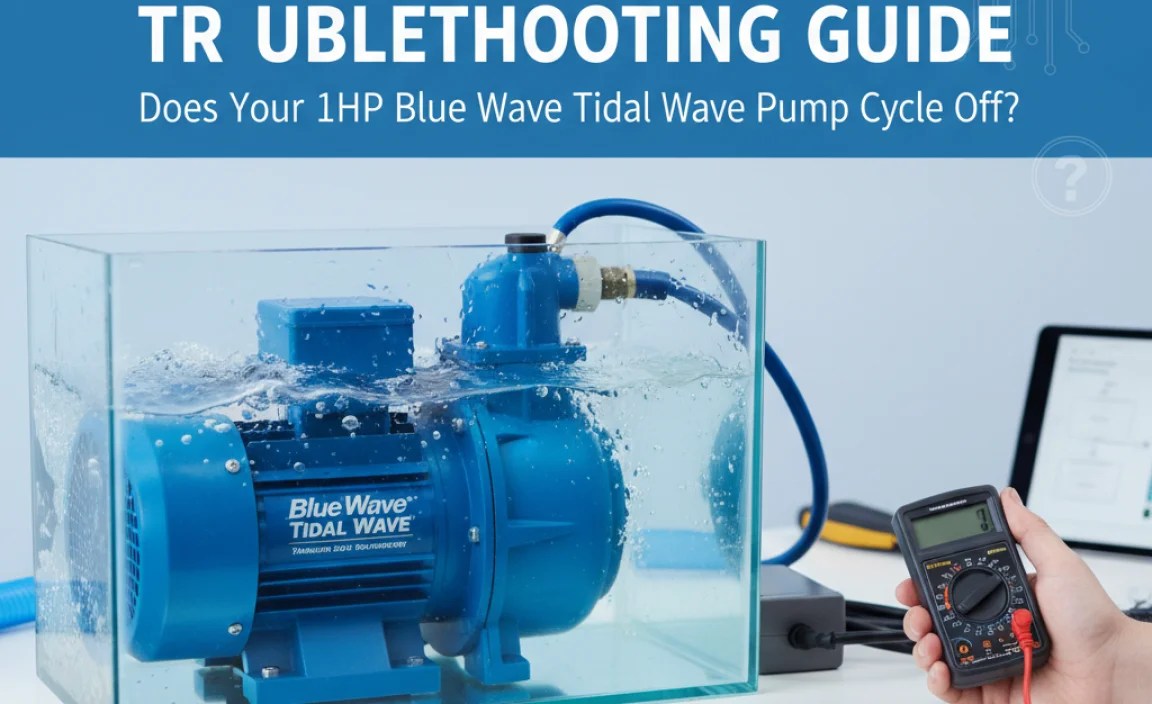
Let’s get our hands dirty and figure out why your pump is misbehaving. Follow these steps in order, checking after each step to see if the problem is resolved.
Step 1: Check for Obvious Leaks
Why? Leaks are the most common culprit. Even a small leak can prevent the system from reaching the required pressure to trigger the shut-off.
How:
- Inspect all pipes and fittings: Look for drips, wet spots, or signs of water damage. Pay close attention to joints, connections, and the pump housing.
- Check sprinkler heads and valves: If you’re using the pump for irrigation, examine each sprinkler head and valve for leaks.
- Listen for hissing sounds: A hissing sound can indicate a leak, even if you can’t see any water.
Fix: Repair any leaks you find. Tighten loose fittings, replace damaged pipes, or repair faulty sprinkler heads.
Step 2: Examine the Pressure Switch
Why? The pressure switch is the brain of the operation. If it’s malfunctioning, the pump won’t cycle correctly.
How:
- Locate the pressure switch: It’s usually a small, box-shaped device mounted near the pump, with wires and a small tube connected to the water line.
- Check for physical damage: Look for cracks, rust, or other signs of damage.
- Test the switch manually:
- WARNING: Turn off the power to the pump at the breaker before attempting this step to avoid electric shock.
- Carefully remove the cover of the pressure switch.
- Use a screwdriver to gently lift the contact arm inside the switch. This should simulate low pressure and start the pump (if it’s not already running).
- Release the contact arm. The pump should stop. If it doesn’t, the switch is likely faulty and needs replacement.
Fix: If the pressure switch is damaged or fails the manual test, replace it. You can find replacement switches at most hardware stores or online retailers. Make sure to get the correct voltage and pressure range for your pump.
Step 3: Clear a Clogged Suction Line
Why? A blocked suction line restricts water flow, making it difficult for the pump to build pressure.
How:
- Disconnect the suction line: Carefully disconnect the pipe or hose that draws water into the pump.
- Inspect for blockages: Look for debris, sediment, or other obstructions in the line.
- Flush the line: Use a garden hose to flush out any blockages.
- Check the foot valve (if applicable): The foot valve is a one-way valve at the end of the suction line that prevents water from flowing back into the source. Make sure it’s not stuck or clogged.
Fix: Remove any blockages from the suction line and clean or replace the foot valve if necessary.
Step 4: Adjust the Pressure Switch Settings
Why? If the pressure switch is set too high, the pump will run longer than necessary to reach the shut-off pressure.
How:
- Locate the adjustment screws: Inside the pressure switch, you’ll find one or two adjustment screws or nuts. These are usually labeled with markings indicating the pressure range.
- Adjust the settings:
- WARNING: Turn off power to the pump.
- Consult your pump’s manual or the pressure switch’s instructions for the recommended pressure settings.
- Use a screwdriver or wrench to adjust the screws or nuts. Turning the screw clockwise typically increases the pressure, while turning it counterclockwise decreases the pressure.
- Make small adjustments and test the pump after each adjustment to avoid over-pressurizing the system.
Fix: Adjust the pressure switch settings according to the manufacturer’s recommendations.
Step 5: Check the Water Source Level
Why? If the water level in your well, tank, or pond is too low, the pump may struggle to draw water and build pressure.
How:
- Visually inspect the water source: Check the water level in your well, tank, or pond.
- Listen for air being sucked into the pump: If the water level is low, the pump may suck in air, causing it to run erratically and fail to build pressure.
Fix: If the water level is low, wait for it to replenish or consider lowering the pump intake. If the pump is sucking air, prime the pump according to the manufacturer’s instructions.
Step 6: Inspect the Pump for Damage
Why? Internal damage to the pump, such as a worn impeller or a cracked housing, can prevent it from building pressure.
How:
- Listen for unusual noises: Grinding, squealing, or rattling sounds can indicate internal damage.
- Check for leaks around the pump housing: Cracks or leaks can reduce the pump’s efficiency.
- Disassemble the pump (if you’re comfortable): Carefully disassemble the pump and inspect the impeller, seals, and other components for wear or damage. Note: This is best left to someone mechanically inclined.
Fix: If you find any damage to the pump, repair or replace the damaged parts. If the damage is extensive, it may be more cost-effective to replace the entire pump.
Troubleshooting Table
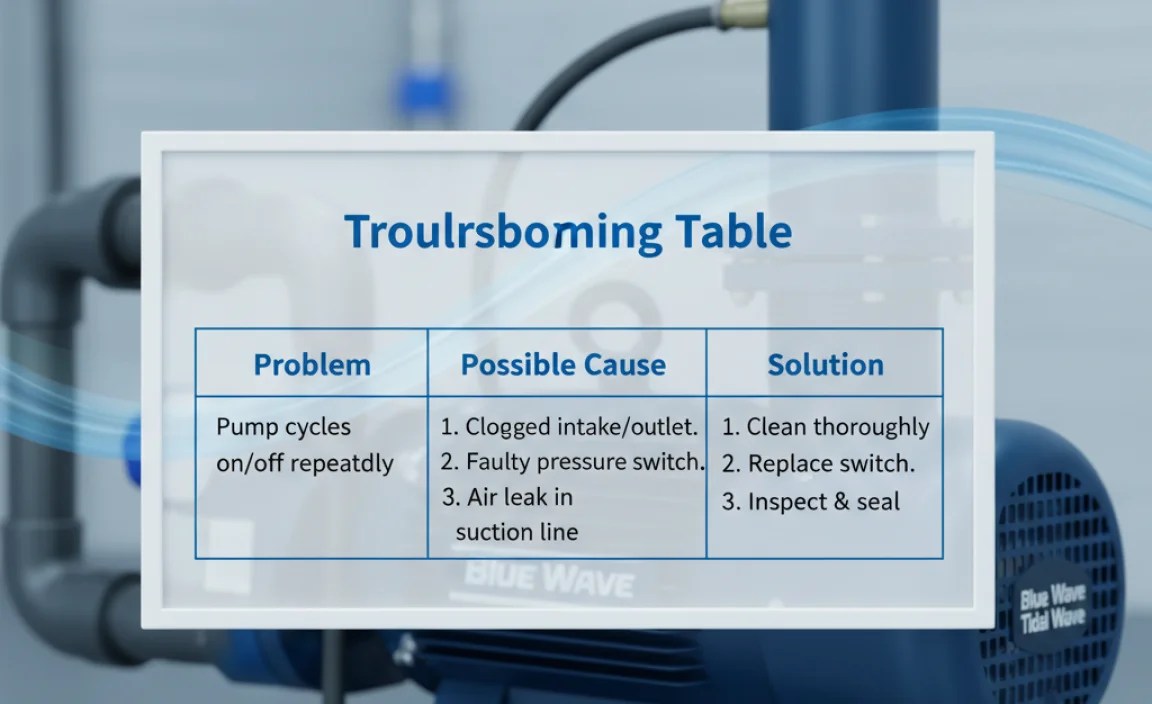
Here’s a quick reference table to help you diagnose the problem:
| Symptom | Possible Cause | Solution |
|---|---|---|
| Pump runs continuously, no leaks | Faulty pressure switch | Replace pressure switch |
| Pump runs continuously, leaks present | Leaks in the system | Repair leaks |
| Pump runs but pressure is low | Clogged suction line | Clear suction line |
| Pump cycles on and off rapidly | Incorrect pressure setting | Adjust pressure switch |
| Pump runs erratically, sucking air | Low water level | Replenish water source, prime pump |
| Pump makes unusual noises | Pump damage | Repair or replace pump |
Tools You Might Need

Here’s a list of tools that might come in handy during the troubleshooting process:
- Screwdrivers (Phillips and flathead)
- Wrench set
- Pliers
- Multimeter (for testing electrical components)
- Pipe wrench
- Teflon tape or pipe sealant
- Garden hose
- Bucket
Preventative Maintenance Tips
To keep your Blue Wave Tidal Wave pump running smoothly and prevent future problems, follow these preventative maintenance tips:
- Regularly inspect for leaks: Check all pipes, fittings, and connections for leaks at least once a month.
- Clean the suction line: Periodically flush the suction line to remove any debris or sediment.
- Monitor the water level: Keep an eye on the water level in your well, tank, or pond to ensure the pump is not running dry.
- Protect the pump from the elements: If possible, install the pump in a sheltered location to protect it from rain, sun, and freezing temperatures.
- Winterize the pump: If you live in an area with freezing temperatures, drain the pump and pipes before winter to prevent damage.
Understanding Pump Curves
Pump curves are graphical representations that show the relationship between a pump’s flow rate, head (pressure), and efficiency. Understanding these curves can help you diagnose pump problems and optimize performance.
Key Components of a Pump Curve:
- Flow Rate (GPM or LPM): The amount of water the pump delivers per unit of time.
- Head (Feet or Meters): The maximum height the pump can lift water. This is related to pressure.
- Efficiency (%): The percentage of energy input that is converted into useful work (pumping water).
How to Use Pump Curves for Troubleshooting:
- Compare actual performance to the curve: Measure the pump’s flow rate and pressure and compare them to the values on the pump curve.
- Identify deviations: If the pump’s performance deviates significantly from the curve, it could indicate a problem, such as a clogged impeller, worn seals, or internal damage.
- Optimize performance: Use the pump curve to select the right pump for your application and to adjust the pump’s settings for optimal efficiency.
Example: Let’s say your 1HP Blue Wave Tidal Wave pump’s curve shows it should deliver 40 GPM at 50 feet of head. If you measure the flow rate and find it’s only 20 GPM at 50 feet, this indicates a problem that needs investigation.
Electrical Considerations and Safety
Working with electrical equipment can be dangerous. Always follow these safety precautions:
- Turn off the power: Always turn off the power to the pump at the breaker before working on any electrical components.
- Use a multimeter: Use a multimeter to verify that the power is off before touching any wires.
- Wear appropriate safety gear: Wear safety glasses and insulated gloves when working with electrical components.
- Follow local electrical codes: Make sure all electrical work complies with local codes and regulations.
- When in doubt, call a professional: If you’re not comfortable working with electrical equipment, call a qualified electrician.
Table: Common Electrical Problems and Solutions
| Problem | Possible Cause | Solution |
|---|---|---|
| Pump won’t start | Blown fuse or tripped breaker | Replace fuse or reset breaker |
| Pump hums but doesn’t run | Faulty capacitor | Replace capacitor |
| Pump runs but trips breaker | Overload or short circuit | Check wiring, reduce load |
| Pump motor overheats | Poor ventilation or overload | Improve ventilation, reduce load |
FAQ: Troubleshooting Your Blue Wave Tidal Wave Pump
Q1: Why does my pump keep running even when I’m not using any water?
A: This is often due to a leak in your plumbing system or a faulty pressure switch. Check all your pipes and connections for any signs of leaks. If there are no leaks, inspect the pressure switch to make sure it’s working correctly.
Q2: How do I know if my pressure switch is bad?
A: A bad pressure switch may cause the pump to run continuously or cycle on and off rapidly. You can test the switch manually by turning off the power and lifting the contact arm inside the switch. If the pump doesn’t respond as expected, the switch is likely faulty.
Q3: What should I do if my pump is sucking air?
A: If your pump is sucking air, it means the water level in your source is too low or there’s a leak in the suction line. Check the water level and replenish it if necessary. Inspect the suction line for any cracks or loose connections that could be letting air in.
Q4: Can I adjust the pressure switch myself?
A: Yes, you can adjust the pressure switch yourself, but it’s important to do it carefully. Consult your pump’s manual or the pressure switch’s instructions for the recommended pressure settings. Make small adjustments and test the pump after each adjustment.
Q5: How often should I clean the suction line?
A: You should clean the suction line at least once a year, or more often if you notice a decrease in pump performance. This will help prevent blockages and ensure the pump is running efficiently.
Q6: What does priming the pump mean, and how do I do it?
A: Priming the pump means filling the pump and suction line with water to remove any air. Most pumps have a priming plug or port. To prime, turn off the pump, open the priming port, and pour water in until it’s full. Replace the plug and turn the pump back on. Consult your pump’s manual for specific instructions.
Q7: Is it safe to work on my pump myself, or should I call a professional?
A: If you’re comfortable working with basic plumbing and electrical systems, you can try troubleshooting the pump yourself. However, if you’re not sure what you’re doing or if you encounter any complex problems, it’s best to call a qualified plumber or electrician.
External Resources
For more in-depth information, check out these resources:
Conclusion
Troubleshooting a pump that won’t cycle off can seem daunting, but by following these steps, you can usually pinpoint the problem and get your Blue Wave Tidal Wave 1HP pump back in working order. Remember to start with the simplest solutions, like checking for leaks, and work your way through the more complex issues, such as the pressure switch and internal pump components. Regular maintenance and preventative measures can also go a long way in keeping your pump running smoothly for years to come. And if you ever feel unsure or overwhelmed, don’t hesitate to call a professional. Good luck, and happy pumping!
“`


