
What Causes Short Cycling of a Water Pump? A Simple Guide

Quick Summary: Short cycling in a water pump means it turns on and off too frequently. This is usually caused by a low pressure tank, a faulty pressure switch, or leaks in the system. Fixing these issues can prevent pump damage and ensure a consistent water supply. Regular checks and maintenance are key!
Is your water pump turning on and off more than it should? It’s a common problem called “short cycling,” and it can be super frustrating. Not only does it waste energy, but it can also damage your pump over time. Don’t worry! We’ll walk through the most common causes and how to fix them. By the end of this guide, you’ll be able to diagnose and solve the issue, keeping your water pump running smoothly. Let’s dive in!
Understanding Short Cycling

Short cycling is when your water pump rapidly turns on and off. Instead of running for a longer period to build pressure and then shutting off, it cycles on and off in short bursts. This puts extra strain on the pump motor and other components, leading to premature wear and potential failure. It also means inconsistent water pressure in your home.
Think of it like this: Imagine pedaling your bike up a small hill, but instead of pedaling smoothly, you keep starting and stopping. That’s much harder on your legs and the bike itself, right? Same idea with a water pump.
Common Causes of Short Cycling

Let’s look at the main reasons why your water pump might be short cycling:
1. Low Air Pressure in the Pressure Tank
The pressure tank is a crucial part of your well system. It stores water under pressure, allowing your pump to run less frequently. Inside the tank, there’s an air bladder that maintains pressure. If this air pressure is too low, the tank can’t store enough water, causing the pump to cycle on and off rapidly.
How to Check and Fix:
- Turn off the pump: Locate the circuit breaker for your water pump and switch it off.
- Drain the tank: Open a faucet in your house to relieve any pressure in the water lines and drain the tank.
- Check air pressure: Use a tire pressure gauge (like you’d use for your bike tires!) on the Schrader valve (it looks just like a tire valve) at the top of the tank. The pressure should be 2 PSI below the pump’s cut-in pressure (usually around 28 PSI for a 30/50 switch).
- Add air: If the pressure is low, use an air compressor or even a hand pump to add air until it reaches the correct level.
- Turn the pump back on: Close the faucet and turn the circuit breaker back on. Observe if the short cycling is resolved.
2. Faulty Pressure Switch
The pressure switch is responsible for turning the pump on and off based on the water pressure in the system. If the switch is malfunctioning, it might not be reading the pressure correctly, causing the pump to cycle erratically. This is like your bike’s gears slipping – things just don’t work right.
How to Check and Fix:
- Inspect the switch: Look for any signs of damage, corrosion, or water leaks around the switch.
- Clean the nipple: The pressure switch is connected to the plumbing via a small nipple. This nipple can become clogged with sediment. Carefully remove the switch and clean the nipple.
- Test the switch: Use a multimeter to test the continuity of the switch. If it’s not working properly, it needs to be replaced.
- Replace the switch: If necessary, replace the pressure switch with a new one of the same type and pressure settings. Turn off power to the pump before replacing.
- Adjust the settings: Some pressure switches have adjustable settings. Make sure they are set correctly according to the pump and tank specifications.
3. Leaks in the System
Even small leaks in your plumbing can cause a drop in water pressure, triggering the pump to turn on frequently. These leaks can be anywhere in the system, from the well itself to the pipes in your house. Finding them is like tracking down a slow leak in your bike tire – it takes patience.
How to Check and Fix:
- Check visible pipes: Inspect all visible pipes and connections for any signs of leaks or drips.
- Listen for running water: Turn off all faucets and appliances that use water and listen for any sounds of running water, which could indicate a hidden leak.
- Check toilets: Toilets are a common source of leaks. Add some food coloring to the tank and see if it seeps into the bowl without flushing.
- Inspect the well casing: Examine the well casing for any cracks or damage that could be allowing water to leak out.
- Repair leaks: Repair any leaks you find by tightening connections, replacing damaged pipes, or patching holes. For larger leaks, it’s best to call a professional plumber.
4. Waterlogged Pressure Tank
Over time, the air bladder in the pressure tank can lose its air charge and become “waterlogged.” This means the tank is filled with water instead of air, reducing its ability to store water under pressure. It’s like having a flat tire on your bike – it just doesn’t work as it should.
How to Check and Fix:
- Check for water: Tap on the side of the tank. If it sounds full of water from top to bottom, it’s likely waterlogged.
- Drain and recharge: Turn off the pump and drain the tank completely. Then, recharge the air pressure to the correct level (2 PSI below the cut-in pressure).
- Monitor pressure: After recharging, monitor the pressure to see if it holds. If the tank continues to lose air, the bladder may be damaged and the tank may need to be replaced.
5. Incorrect Pump Size
If your water pump is too powerful for your well or your household needs, it can cause short cycling. An oversized pump will fill the pressure tank too quickly, leading to rapid on-off cycles. It’s like using a super high gear on your bike when you don’t need it – inefficient and straining.
How to Check and Fix:
- Check pump specifications: Review the pump’s specifications and compare them to your well’s yield and your household’s water usage.
- Consult a professional: If you suspect the pump is oversized, consult a well professional to determine the correct pump size for your needs.
- Replace the pump: If necessary, replace the pump with a smaller, more appropriately sized model.
6. Clogged Well Screen or Intake
A clogged well screen or intake can restrict the flow of water into the pump, causing it to work harder and cycle more frequently. This is like trying to ride your bike with the brakes partially on – you’re working harder than you should be.
How to Check and Fix:
- Check water flow: Monitor the water flow from your faucets. If it’s noticeably reduced, it could indicate a clogged well screen.
- Consult a professional: Cleaning or repairing a well screen typically requires specialized equipment and expertise. Contact a well professional to inspect and clean the screen.
Troubleshooting Table
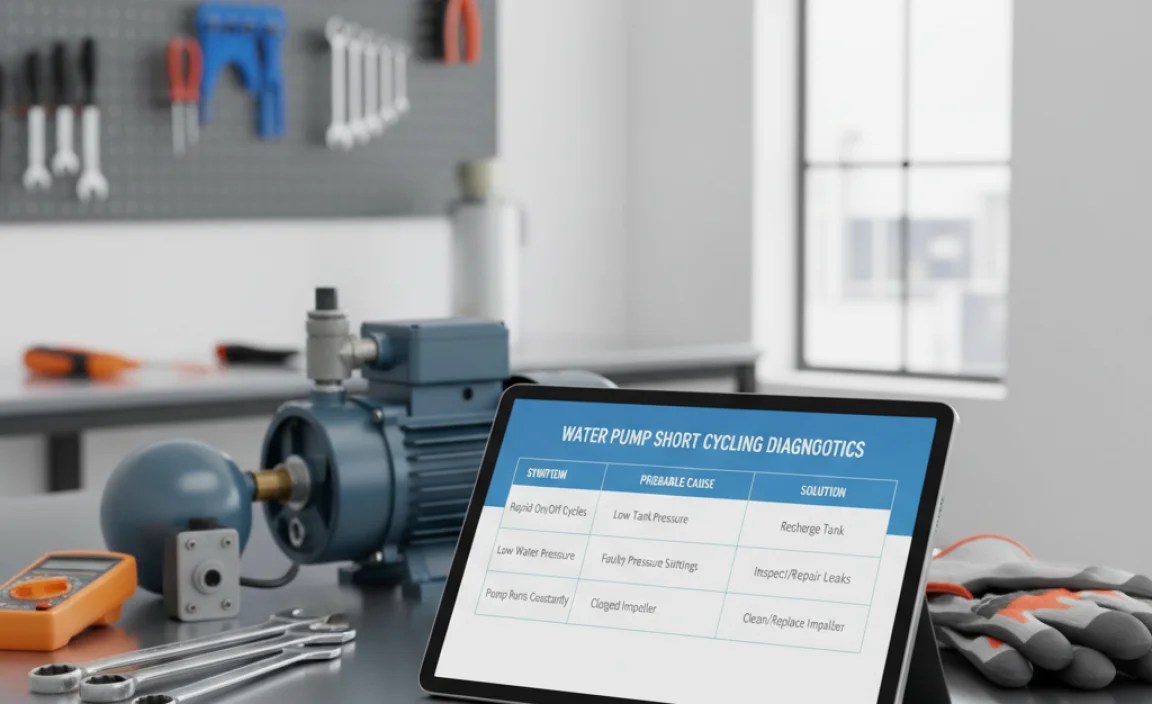
Here’s a handy table to help you quickly diagnose the problem:
| Symptom | Possible Cause | Solution |
|---|---|---|
| Pump cycles on and off rapidly | Low air pressure in pressure tank | Check and adjust air pressure in tank |
| Pump cycles erratically | Faulty pressure switch | Inspect, clean, or replace pressure switch |
| Pump cycles frequently, water pressure drops | Leaks in the system | Check and repair any leaks in pipes or fixtures |
| Tank sounds full of water | Waterlogged pressure tank | Drain and recharge air pressure in tank |
| Pump fills tank too quickly | Incorrect pump size | Consult professional, replace with correct size |
| Reduced water flow | Clogged well screen or intake | Contact professional for inspection and cleaning |
Preventative Maintenance Tips
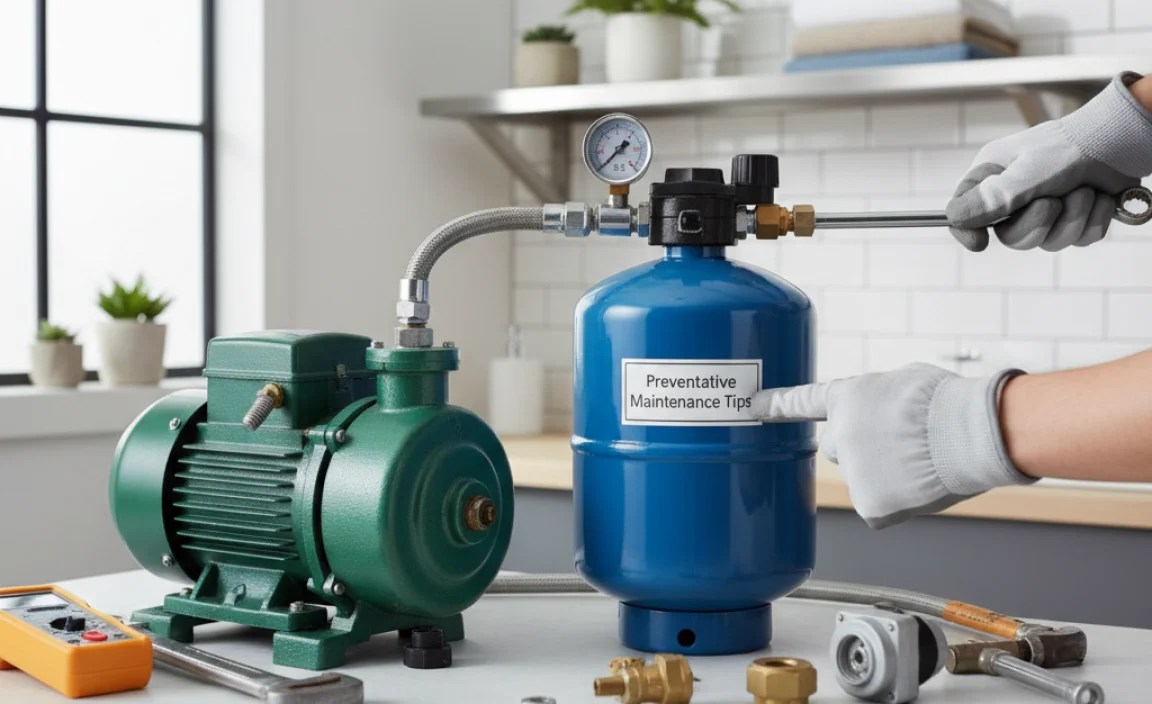
Preventing short cycling is always better than fixing it. Here are some tips to keep your water pump system in good shape:
- Regularly check air pressure: Check the air pressure in your pressure tank every few months and adjust as needed.
- Inspect for leaks: Periodically inspect your plumbing for any signs of leaks.
- Flush the tank: Drain and flush your pressure tank once a year to remove sediment buildup.
- Monitor pump performance: Pay attention to how your pump is running and address any issues promptly.
- Professional inspection: Have your well and pump system inspected by a professional every few years.
Tools You Might Need

Here’s a quick list of tools that might come in handy:
- Tire pressure gauge: For checking air pressure in the tank.
- Air compressor or hand pump: For adding air to the tank.
- Multimeter: For testing the pressure switch.
- Wrenches: For tightening connections and replacing parts.
- Plumber’s tape: For sealing pipe threads.
- Food coloring: For checking toilet leaks.
When to Call a Professional
While many short cycling issues can be resolved with DIY troubleshooting, there are times when it’s best to call a professional well technician or plumber. These include:
- If you’re not comfortable working with electrical components.
- If you can’t locate the source of the problem.
- If you suspect a problem with the well itself.
- If you need to replace the pump or pressure tank.
FAQ About Short Cycling
Here are some frequently asked questions about short cycling of water pumps:
What is short cycling?
Short cycling is when your water pump turns on and off too frequently, instead of running for longer periods. This can damage the pump and cause inconsistent water pressure.
Why is short cycling bad for my water pump?
The rapid on-off cycles put extra strain on the pump motor and other components, leading to premature wear and potential failure. It also wastes energy.
How do I check the air pressure in my pressure tank?
Turn off the pump, drain the tank, and use a tire pressure gauge on the Schrader valve at the top of the tank. The pressure should be 2 PSI below the pump’s cut-in pressure.
Can a leaky toilet cause short cycling?
Yes, even small leaks, like a leaky toilet, can cause a drop in water pressure, triggering the pump to turn on frequently.
How often should I check my water pump system?
You should check the air pressure in your pressure tank every few months and inspect for leaks periodically. A professional inspection every few years is also a good idea.
What size pump do I need?
The correct pump size depends on your well’s yield and your household’s water usage. Consult a well professional to determine the right size for your needs.
Is it safe to drink water when my pump is short cycling?
While short cycling itself doesn’t directly contaminate the water, it can indicate underlying issues that could affect water quality. It’s always a good idea to have your water tested regularly, especially if you’re experiencing pump problems.
Pros and Cons of DIY Fixes
Deciding whether to tackle short cycling issues yourself? Here’s a breakdown:
| DIY Fixes | Pros | Cons |
|---|---|---|
| Checking air pressure, tightening connections | Cost-effective, quick to learn, convenient | May not solve complex issues, risk of incorrect diagnosis |
| Replacing pressure switch, small pipe repairs | Saves on labor costs, builds skills | Requires some plumbing/electrical knowledge, potential for mistakes |
Conclusion
Short cycling can be a real headache, but understanding the causes and how to address them can save you money and extend the life of your water pump. By following these steps and performing regular maintenance, you can keep your system running smoothly and ensure a reliable water supply. Remember, if you’re ever unsure or uncomfortable with a repair, don’t hesitate to call a professional. Happy troubleshooting!
“`


