
How to Repair a Slow Leak in a Bike Tire: Easy Fix!

Got a slow leak in your bike tire? Don’t sweat it! First, find the leak by inflating the tire and listening or using soapy water. Next, remove the tire, patch the tube with a repair kit, and let it dry. Finally, reinstall the tube and tire, inflate, and you’re back on the road. This fix will save you time and money!
A slow leak in your bike tire can be super annoying. You pump it up, and the next day it’s soft again! It’s a common problem for cyclists, but don’t worry, it’s usually an easy fix. Instead of replacing the tube every time, you can patch it up yourself. This saves you money and keeps you riding.
This guide will walk you through each step to find and repair that pesky slow leak. We’ll cover everything from finding the hole to getting your tire back on the rim. Let’s get started and keep you rolling!
Tools and Materials You’ll Need

Before we dive into the repair, let’s gather the tools and materials. Having everything ready will make the process smooth and quick. Here’s what you’ll need:
- Bike pump: To inflate the tire and check for leaks. A floor pump with a gauge is ideal.
- Tire levers: To safely remove the tire from the rim.
- Bowl or bucket of water: To help locate the leak. Soapy water works best.
- Sponge or cloth: To apply soapy water.
- Inner tube patch kit: Includes patches, glue, and sandpaper.
- Sandpaper or metal scraper: To roughen the tube surface.
- Marker or pen: To mark the location of the leak.
- Rag: To clean your hands and the area around the puncture.
Step-by-Step Guide to Repairing a Slow Leak

Now that you have everything ready, let’s get to the repair. Follow these steps carefully, and you’ll have your tire fixed in no time.
Step 1: Locate the Leak
Finding the leak is the first and most important step. Here are a few methods to try:
- Inflate the tire: Pump up the tire to a pressure where you can feel air escaping.
- Listen closely: Hold the tire close to your ear and listen for a hissing sound. This can help you pinpoint the general area of the leak.
- Use soapy water:
- Mix water with a bit of dish soap in a bowl.
- Apply the soapy water to a section of the inflated tire using a sponge or cloth.
- Watch for bubbles to form. The spot where bubbles appear is where the leak is located.
- Mark the leak with a pen or marker.
- Check the valve: Sometimes, the leak is at the valve. Apply soapy water to the valve stem to check for leaks.
Step 2: Remove the Wheel
Once you’ve found the leak, you need to remove the wheel from the bike. Here’s how:
- Release the brakes: Disconnect the brake cable from the brake caliper to allow the wheel to move freely.
- Open the quick release or loosen the bolts: If your bike has a quick-release lever, open it. If it has bolts, use a wrench to loosen them.
- Remove the wheel: Carefully lift the bike or turn it upside down and remove the wheel from the frame or fork.
Step 3: Remove the Tire and Inner Tube
Now that the wheel is off, it’s time to take out the inner tube:
- Deflate the tire completely: Press the valve core to release any remaining air.
- Use tire levers:
- Insert one tire lever under the edge of the tire bead.
- Hook it onto a spoke.
- Insert a second tire lever a few inches away from the first.
- Slide the second lever around the rim to lift the tire bead off the rim.
- If the tire is tight, you might need a third lever.
- Remove the tire bead: Once one side of the tire is off the rim, you can usually pull the rest of that side off by hand.
- Remove the inner tube: Pull the valve stem out of the rim, then carefully pull the inner tube out from under the tire.
Step 4: Prepare the Inner Tube for Patching
Before applying the patch, you need to prepare the area around the leak:
- Dry the tube: Make sure the area around the leak is dry.
- Roughen the surface: Use sandpaper or a metal scraper to roughen the surface around the leak. This helps the glue adhere properly.
- Clean the area: Wipe away any debris or rubber particles with a clean rag.
Step 5: Apply the Patch
Now it’s time to apply the patch:
- Apply glue: Spread a thin, even layer of glue from the patch kit over the roughened area. Make sure the glue covers an area slightly larger than the patch.
- Let the glue dry: Wait for the glue to become tacky. This usually takes a few minutes. Check the instructions on your patch kit for the recommended drying time.
- Apply the patch: Remove the backing from the patch and carefully apply it over the glued area.
- Press firmly: Press down firmly on the patch for a minute or two to ensure it adheres well. You can use a smooth, hard object to help with this.
Step 6: Check the Tire for the Cause of the Leak
Before you put the tube back in, it’s important to find out what caused the puncture. Here’s how:
- Inspect the tire: Carefully run your fingers along the inside of the tire to feel for any sharp objects.
- Remove any debris: If you find a thorn, piece of glass, or any other object, remove it carefully.
- Check the rim: Make sure the rim tape is in good condition and covering the spoke holes. If the rim tape is damaged, replace it.
Step 7: Reinstall the Inner Tube and Tire
Now it’s time to put everything back together:
- Slightly inflate the tube: Add just enough air to give the tube some shape. This will help prevent it from getting pinched between the tire and the rim.
- Insert the valve stem: Place the valve stem into the hole in the rim.
- Tuck the tube into the tire: Carefully tuck the inner tube into the tire, working your way around the rim.
- Seat the tire bead:
- Start by pushing one side of the tire bead onto the rim.
- Then, work your way around the tire, pushing the other side of the bead onto the rim.
- Use your thumbs to push the tire bead over the rim.
- If the tire is tight, use tire levers to carefully seat the last section of the bead. Be careful not to pinch the inner tube.
- Check the tire seating: Make sure the tire bead is evenly seated around the entire rim. Look for a consistent line where the tire meets the rim.
Step 8: Inflate the Tire
The final step is to inflate the tire to the correct pressure:
- Inflate the tire: Use your bike pump to inflate the tire to the recommended pressure. This is usually printed on the sidewall of the tire.
- Check for leaks: After inflating, check the patch and valve stem for any leaks using soapy water.
- Fine-tune the pressure: Adjust the tire pressure as needed to suit your riding conditions and preferences.
Step 9: Reinstall the Wheel
With the tire repaired and inflated, reinstall the wheel on your bike:
- Place the wheel in the frame or fork: Make sure the wheel is properly aligned.
- Close the quick release or tighten the bolts: If your bike has a quick-release lever, close it firmly. If it has bolts, tighten them securely with a wrench.
- Reconnect the brakes: Reattach the brake cable to the brake caliper.
- Test the brakes: Make sure the brakes are working properly before you ride.
Tips for Preventing Future Leaks
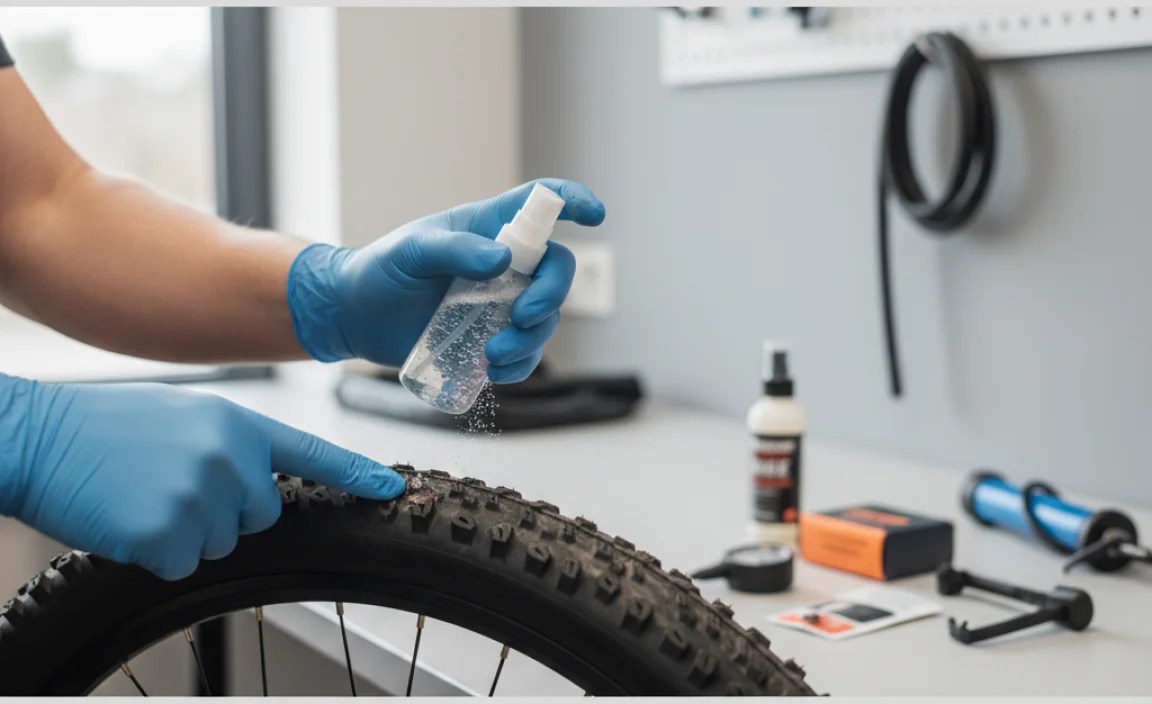
Preventing leaks is better than fixing them. Here are some tips to help you avoid future punctures:
- Maintain proper tire pressure: Underinflated tires are more prone to pinch flats.
- Inspect your tires regularly: Look for cuts, embedded objects, and wear.
- Use tire liners or sealant: These can provide an extra layer of protection against punctures.
- Avoid riding through debris: Steer clear of glass, thorns, and other sharp objects.
- Check your rim tape: Make sure it’s in good condition and properly covering the spoke holes.
Troubleshooting Common Issues
Sometimes, things don’t go as planned. Here are some common issues and how to troubleshoot them:
| Issue | Possible Cause | Solution |
|---|---|---|
| Patch not sticking | Glue not dry enough, dirty surface | Let glue dry longer, clean surface thoroughly |
| New leak near patch | Sharp object still in tire, rim tape damaged | Inspect tire again, replace rim tape |
| Tire difficult to seat | Tire bead not in the center of the rim, tube pinched | Ensure tube is evenly distributed, use tire levers carefully |
| Valve leaking | Valve core loose or damaged | Tighten or replace valve core |
Choosing the Right Patch Kit
Not all patch kits are created equal. Here’s what to look for when choosing a patch kit:
- Type of patches: Some kits have self-adhesive patches, while others require glue. Glue-on patches tend to be more reliable.
- Quality of glue: Make sure the glue is strong and durable.
- Sandpaper or scraper: The kit should include sandpaper or a scraper for roughening the tube surface.
- Size and quantity: Choose a kit with a variety of patch sizes and a sufficient number of patches.
- Reviews and reputation: Look for kits with good reviews from other cyclists.
When to Replace the Inner Tube
Sometimes, a puncture is beyond repair. Here are some situations where you should replace the inner tube instead of patching it:
- Large cuts or tears: If the tube has a large cut or tear, it’s unlikely that a patch will hold.
- Multiple punctures: If the tube has several punctures close together, it’s better to replace it.
- Valve damage: If the valve is damaged or leaking, the tube should be replaced.
- Old or worn tube: If the tube is old and brittle, it’s more likely to fail, so replace it.
The Importance of Tire Pressure
Maintaining the correct tire pressure is crucial for a comfortable and efficient ride. Here’s why:
- Reduced rolling resistance: Properly inflated tires roll faster and require less effort.
- Improved handling: Correct tire pressure provides better grip and control.
- Puncture prevention: Properly inflated tires are less likely to get pinch flats.
- Comfort: Adjusting tire pressure can improve ride comfort, especially on rough roads.
Refer to your tire’s sidewall for the recommended pressure range. A good floor pump with a pressure gauge is essential for accurate inflation. For more information, check out this article on bike pumps.
FAQs
What causes slow leaks in bike tires?
Slow leaks are often caused by small punctures from thorns, glass, or other debris. Sometimes, they can also be due to a faulty valve or a poorly seated tire.
Can I use any type of patch kit for my bike tire?
It’s best to use a patch kit specifically designed for bicycle inner tubes. These kits contain the right type of glue and patches for rubber tubes.
How long does a patched bike tube last?
A properly patched tube can last for a long time, even the lifespan of the tire. However, it’s essential to regularly inspect the patch for any signs of wear or peeling.
Is it better to patch a tube or replace it?
Patching is a great option for small punctures and can save you money. However, if the tube has a large cut, multiple punctures, or a damaged valve, it’s better to replace it.
How do I know if my tire pressure is correct?
Check the sidewall of your tire for the recommended pressure range. Use a bike pump with a pressure gauge to inflate the tire to the correct pressure.
What if I can’t find the leak?
If you’re having trouble finding the leak, try inflating the tube more and using soapy water more generously. Check the valve carefully, as leaks can sometimes occur there. If all else fails, you may need to replace the tube.
Can I prevent all slow leaks?
While you can’t prevent all leaks, you can reduce the likelihood by maintaining proper tire pressure, inspecting your tires regularly, and avoiding riding through debris.
Conclusion
Repairing a slow leak in your bike tire is a simple and rewarding skill. By following these steps, you can save money, reduce waste, and keep your bike running smoothly. Remember to take your time, be careful, and always prioritize safety. With a little practice, you’ll be able to fix flats quickly and confidently, so you can get back to enjoying your ride. Happy cycling!


