How to Adjust Bike Brakes After Wheel Repair: Easy Guide

Quick Summary: After fixing a flat or replacing a wheel, your bike brakes might rub or feel loose. To fix this, first, center the wheel in the frame. Then, check the brake cable tension and adjust it using the barrel adjuster. Finally, make sure the brake pads are aligned with the rim or rotor and tighten everything securely. Test your brakes before riding!
Ever changed a bike tire or replaced a wheel, only to find your brakes rubbing or feeling spongy? It’s a common headache! A small change to your wheel can throw off your brake alignment. Don’t worry, it’s usually a simple fix. This guide will walk you through each step to get your brakes working perfectly again. We’ll cover everything from centering your wheel to fine-tuning those brake pads. Let’s get started and make your ride safe and smooth!
What You’ll Need

Before you start, gather these basic tools. Having everything ready will make the job easier and faster.
- Allen wrenches: A set of different sizes to fit various brake components.
- Wrench: Usually 8mm, 9mm, 10mm or 15mm for brake bolts.
- Screwdriver: Both Phillips head and flathead may be needed.
- Pliers: For gently manipulating cables.
- Clean rag: To wipe down your rims or rotors.
Step 1: Check Wheel Alignment
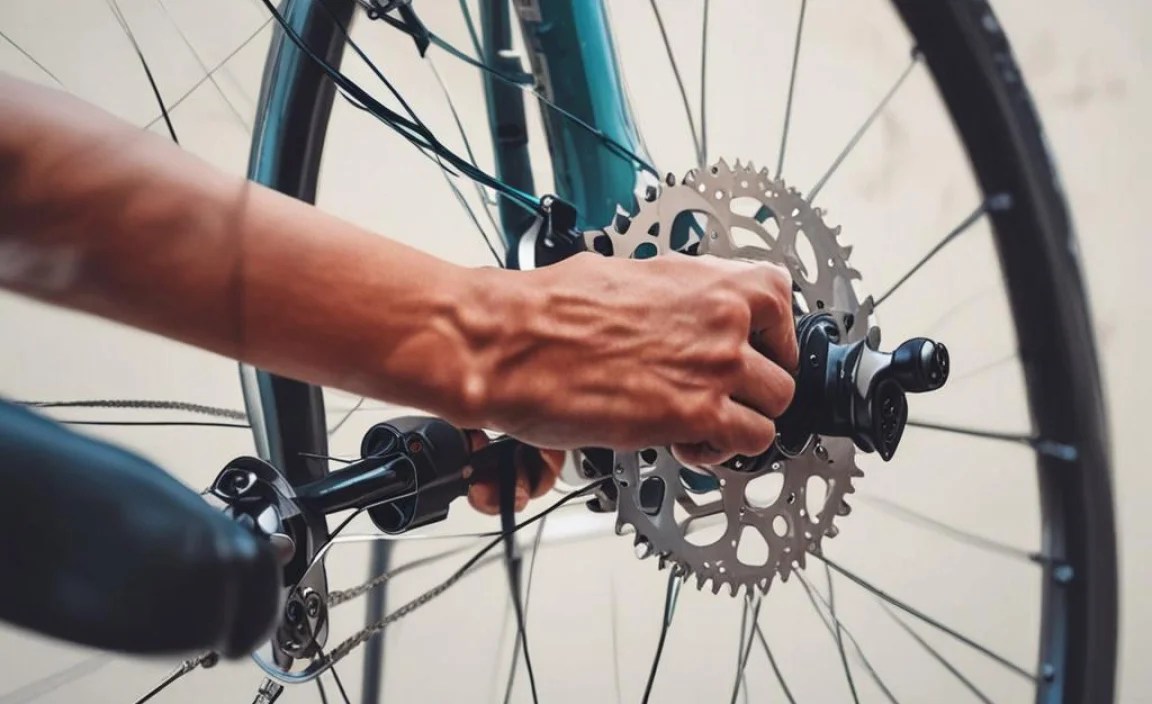
First, make sure your wheel is sitting straight in the frame or fork. An off-center wheel is a primary cause of brake issues after a repair.
- Loosen the wheel: If you have quick-release levers, open them. If you have axle nuts, loosen them a few turns.
- Center the wheel: Push the wheel firmly into the dropouts (the slots where the wheel sits). Eyeball the distance between the tire and the frame on both sides. It should be equal.
- Tighten securely: Close the quick-release lever or tighten the axle nuts. Make sure they are snug but not overly tight. Over-tightening can damage the hub or frame.
- Re-check: Spin the wheel and look at the gap between the tire and the frame again. If it’s still off, repeat the process.
Step 2: Inspect Brake Type and Components

Bike brakes come in a few main types, each with its own adjustment points. Identifying your brake type is crucial for proper adjustment.
Rim Brakes (V-Brakes and Caliper Brakes)
Rim brakes use pads that squeeze against the wheel rim to stop the bike. The two main types are V-brakes and caliper brakes.
- V-Brakes: These have long arms that pull the brake pads directly towards the rim.
- Caliper Brakes: These have a central pivot point and curved arms that move the brake pads.
Disc Brakes
Disc brakes use a rotor attached to the wheel hub and a caliper that squeezes the rotor. There are two kinds of disc brakes:
- Mechanical Disc Brakes: These use a cable to actuate the brake.
- Hydraulic Disc Brakes: These use fluid pressure to actuate the brake.
Inspect the components
Take a close look at each part of your brake system.
- Cables: Look for frays, kinks, or rust.
- Pads: Check for wear. If they’re thin, replace them.
- Levers: Make sure they move smoothly.
- Calipers: Check for dirt or damage.
Step 3: Adjusting Rim Brakes (V-Brakes and Caliper Brakes)

Adjusting rim brakes involves aligning the brake pads with the rim and setting the correct cable tension.
Adjusting V-Brakes
- Loosen the cable: Use an Allen wrench to loosen the cable clamp bolt on one of the brake arms.
- Position the pads: Make sure the pads are hitting the rim squarely and are not rubbing on the tire.
- Tighten the cable: Pull the cable taut with pliers and tighten the clamp bolt.
- Fine-tune tension: Use the barrel adjuster on the brake lever to fine-tune the cable tension. Turning it counter-clockwise increases tension, and clockwise decreases it.
- Check pad alignment: Squeeze the brake lever and watch the pads. They should hit the rim at the same time. If one pad hits before the other, adjust the small tension screws on each brake arm.
Adjusting Caliper Brakes
- Center the caliper: Loosen the bolt that holds the caliper to the frame.
- Adjust position: Manually center the caliper so that the brake pads are equally spaced from the rim.
- Tighten the bolt: Hold the caliper in place and tighten the bolt.
- Adjust cable tension: Use the barrel adjuster on the brake lever to adjust the cable tension.
- Check pad alignment: The pads should hit the rim squarely. Some caliper brakes have small screws to adjust pad angle.
Step 4: Adjusting Disc Brakes (Mechanical)

Mechanical disc brakes are adjusted using the cable tension and the position of the caliper.
- Loosen the cable: Use an Allen wrench to loosen the cable clamp bolt on the caliper.
- Position the caliper: Manually adjust the position of the caliper so that the pads are equally spaced from the rotor.
- Tighten the cable: Pull the cable taut with pliers and tighten the clamp bolt.
- Fine-tune tension: Use the barrel adjuster on the brake lever to fine-tune the cable tension.
- Check for rubbing: Spin the wheel and listen for rubbing. If the rotor is rubbing on the pads, you may need to further adjust the caliper position.
Step 5: Adjusting Disc Brakes (Hydraulic)
Hydraulic disc brakes are self-adjusting for pad wear, but you might need to realign the caliper after wheel work.
- Loosen the caliper: Loosen the bolts that hold the caliper to the frame or fork.
- Center the caliper: Spin the wheel and gently squeeze the brake lever. While holding the lever, tighten the caliper bolts. This helps center the caliper over the rotor.
- Check for rubbing: Spin the wheel and listen for rubbing. If the rotor is still rubbing, you may need to slightly adjust the caliper position by eye.
Step 6: Fine-Tuning and Troubleshooting
After the initial adjustments, fine-tuning is essential for optimal brake performance.
Cable Tension Adjustments
Use the barrel adjusters to dial in the perfect cable tension. Remember:
- Too loose: Brakes will feel spongy and require excessive lever travel.
- Too tight: Brakes may rub even when the lever is not engaged.
Pad Alignment
Make sure the brake pads are hitting the rim or rotor squarely. Misaligned pads can cause noise, poor braking performance, and uneven wear.
- Rim brakes: The entire pad surface should contact the rim.
- Disc brakes: The pads should be parallel to the rotor surface.
Troubleshooting Common Issues
Here are some common problems and how to solve them:
- Brakes rubbing:
- Check wheel alignment.
- Adjust caliper position.
- Loosen cable tension slightly.
- Spongy brakes:
- Tighten cable tension.
- Bleed hydraulic brakes (if applicable).
- Squealing brakes:
- Clean rims or rotors.
- Adjust pad alignment.
- Replace worn pads.
Step 7: Testing and Final Checks
Before hitting the road, always test your brakes thoroughly.
- Stationary test: Squeeze the brake levers firmly while the bike is stationary. The brakes should engage smoothly and stop the wheel from turning.
- Rolling test: Push the bike and apply the brakes. The bike should slow down and stop without pulling to one side.
- Ride test: Take a short ride in a safe area and test the brakes at different speeds. Make sure they provide adequate stopping power and control.
Maintenance Tips for Long-Lasting Brakes
Regular maintenance will keep your brakes in top condition and extend their lifespan.
- Clean regularly: Wipe down your rims or rotors with a clean rag to remove dirt and grime.
- Inspect pads: Check your brake pads regularly for wear. Replace them when they get thin.
- Lubricate cables: Apply a small amount of lubricant to your brake cables to keep them moving smoothly.
- Bleed hydraulic brakes: Bleed your hydraulic brakes periodically to remove air bubbles from the system.
- Check bolts: Make sure all bolts are tightened to the correct torque specifications.
Best Practices for Brake Pad Replacement
Knowing when and how to replace your brake pads is key to safe cycling.
When to Replace Brake Pads
Here’s a guide to knowing when it’s time for new pads:
- Rim Brake Pads: Replace when the grooves are almost gone, or the pad is worn close to the metal shoe.
- Disc Brake Pads: Replace when the pad material is less than 1.5mm thick.
Choosing the Right Brake Pads
Different pads suit different conditions:
- Organic Pads: Quieter, better initial bite, but wear faster. Great for dry conditions.
- Metallic Pads: Last longer, perform better in wet conditions, but can be noisy.
- Semi-Metallic Pads: A balance of both, suitable for varied conditions.
Step-by-Step Pad Replacement
Here’s how to change your brake pads:
- Remove the Wheel: Take the wheel off the bike.
- Remove Old Pads: For rim brakes, slide the old pads out. For disc brakes, remove the retaining bolt or clip and slide the pads out.
- Install New Pads: Slide the new pads into place, ensuring they face the correct direction.
- Reinstall Wheel: Put the wheel back on the bike.
- Adjust Brakes: Adjust the brake alignment and tension as described earlier.
Advanced Brake Adjustments
For those seeking more control over their braking, here are some advanced tips.
Adjusting Brake Lever Reach
Adjusting the lever reach can improve comfort and control, especially for riders with smaller hands.
- Locate the Adjustment Screw: Most brake levers have a small screw or dial near the lever pivot.
- Adjust the Reach: Turn the screw to move the lever closer to or farther from the handlebar.
- Test the Feel: Make sure you can comfortably reach the lever without stretching your fingers.
Balancing Brake Power
Some riders prefer more stopping power in the front or rear brake. Adjusting cable tension can help balance the braking force.
- Front Brake: Typically, the front brake provides more stopping power.
- Rear Brake: The rear brake is used for modulation and control, especially in slippery conditions.
Dealing with Contaminated Pads
Oil or grease on your brake pads can significantly reduce braking performance. Here’s how to deal with it:
- Remove the Pads: Take the contaminated pads off the bike.
- Clean the Pads: Use isopropyl alcohol or brake cleaner to thoroughly clean the pads.
- Sand the Pads: Lightly sand the surface of the pads to remove any residual contamination.
- Clean the Rotor/Rim: Clean the rotor or rim with isopropyl alcohol.
- Reinstall the Pads: Put the cleaned pads back on the bike and test the brakes.
Table: Common Brake Problems and Solutions
| Problem | Possible Cause | Solution |
|---|---|---|
| Brakes Rubbing | Misaligned caliper, warped rotor, loose wheel | Adjust caliper, straighten rotor, tighten wheel |
| Spongy Brakes | Air in hydraulic lines, stretched cable | Bleed brakes, replace cable |
| Squealing Brakes | Contaminated pads, misaligned pads | Clean pads/rotor, align pads |
| Weak Braking Power | Worn pads, contaminated pads, loose cable | Replace pads, clean pads/rotor, tighten cable |
| Brake Lever Bottoms Out | Stretched cable, low hydraulic fluid | Replace cable, bleed brakes |
Table: Brake Pad Types and Their Uses
| Pad Type | Material | Pros | Cons | Best Use |
|---|---|---|---|---|
| Organic | Resin, Kevlar | Quiet, good initial bite | Wears quickly | Dry conditions, casual riding |
| Metallic | Sintered metal | Long-lasting, good in wet | Noisy, can wear rotors | Wet conditions, aggressive riding |
| Semi-Metallic | Mix of organic and metal | Balanced performance | Can be noisy | All-around riding |
FAQ: Adjusting Bike Brakes After Wheel Repair
Here are some frequently asked questions to help you further understand and troubleshoot brake adjustments.
Why do my brakes rub after I reinstall my wheel?
The most common reason for brake rub after reinstalling a wheel is that the wheel is not perfectly centered in the frame or fork. Even a slight misalignment can cause the brake pads to contact the rim or rotor.
How do I center my wheel properly?
To center your wheel, loosen the quick-release lever or axle nuts, push the wheel firmly into the dropouts, and ensure the space between the tire and frame is equal on both sides. Then, tighten the quick-release or axle nuts securely.
What is a barrel adjuster, and how do I use it?
A barrel adjuster is a small, cylindrical adjuster located on the brake lever or caliper. It’s used to fine-tune the cable tension. Turning it counter-clockwise increases tension, while turning it clockwise decreases tension.
How do I know when my brake pads need to be replaced?
For rim brakes, replace the pads when the grooves are almost gone or the pad is worn close to the metal shoe. For disc brakes, replace the pads when the pad material is less than 1.5mm thick.
What should I do if my hydraulic disc brakes feel spongy?
Spongy hydraulic disc brakes usually indicate air in the brake lines. You’ll need to bleed the brakes to remove the air. This process involves opening a bleed port on the caliper and pushing fluid through the system to force out any air bubbles.
Can I use any type of brake pad on my bike?
No, you should always use brake pads that are specifically designed for your type of brake (rim or disc) and your specific brake model. Using the wrong pads can result in poor braking performance or damage to your brakes.
How often should I inspect my brakes?
You should inspect your brakes before every ride to ensure they are working properly. Look for signs of wear, damage, or misalignment. Regular inspections can help you catch small problems before they become big ones.
Conclusion
Adjusting your bike brakes after a wheel repair might seem daunting at first, but with these steps, you’ll be back on the road with confidence. Remember, safety is paramount. Always double-check your work and test your brakes thoroughly before heading out. Regular maintenance and timely adjustments will keep your brakes in top shape, ensuring a smooth and safe ride every time. Now you’re equipped to handle those minor adjustments and keep your bike running perfectly!