
Common Cycling Repair Kit Mistakes: Easy Fixes!

Quick Summary: Putting together a cycling repair kit? Avoid common mistakes like forgetting essential tools (tire levers, multi-tool), neglecting the right size tubes or CO2 cartridges, and skipping practice. Don’t overload your kit with unnecessary items, and always check your tools for wear and tear before heading out. A well-prepared kit and the knowledge to use it can save your ride!
A flat tire miles from home. A loose bolt on a busy road. These are every cyclist’s nightmares, but they don’t have to ruin your ride. A well-stocked cycling repair kit can be a lifesaver, turning a potential disaster into a minor inconvenience. But throwing a bunch of random tools into a bag isn’t enough. Many cyclists, especially beginners, make simple mistakes when assembling their kits, leaving them unprepared for common roadside repairs.
In this guide, we’ll cover the most frequent cycling repair kit mistakes and how to avoid them. We’ll make sure you have everything you need – and nothing you don’t – so you can ride with confidence. Let’s get started and make sure you’re ready for anything the road throws your way!
Essential Items Often Forgotten in Cycling Repair Kits

One of the most common mistakes is overlooking essential items. It’s easy to focus on the flashy tools and forget the basics that get you home. Here’s a breakdown of what often gets left behind:
1. Tire Levers: Don’t Get Caught Pinching
Tire levers are small but mighty. They help you remove your tire from the rim without damaging it. Forgetting these can lead to a frustrating and potentially damaging experience. Many cyclists resort to using screwdrivers or other metal objects, which can pinch the inner tube and damage the tire bead.
Why you need them:
- Safely remove tires from rims
- Prevent damage to inner tubes and tires
- Make tire changes faster and easier
2. The Right Size Inner Tube: A Perfect Fit Matters
Carrying the wrong size inner tube is surprisingly common. Tubes come in various sizes to match different tire widths and wheel diameters. A tube that’s too small won’t fit, and one that’s too large can bunch up and cause a flat.
How to choose the right size:
- Check your tire sidewall: The size is usually printed there (e.g., 700x25c).
- Match the tube size: Buy a tube that corresponds to your tire size range.
- Consider valve type: Presta or Schrader, depending on your rim.
3. Multi-Tool: The Swiss Army Knife for Bikes
A multi-tool is a compact collection of essential tools, like Allen wrenches, screwdrivers, and sometimes even a chain tool. It’s a space-saver and a lifesaver for roadside adjustments.
Key features to look for:
- Allen wrenches: Sizes 2.5mm to 8mm are common on bikes.
- Screwdrivers: Both flathead and Phillips head.
- Chain tool: For repairing broken chains (more on this later).
4. CO2 Inflator or Mini Pump: Air Apparent
You need a way to inflate your tire after fixing a flat. CO2 inflators are quick and easy, but you need to carry cartridges. Mini pumps are reliable but require more effort. Choose what suits your needs and riding style.
CO2 Inflator vs. Mini Pump:
| Feature | CO2 Inflator | Mini Pump |
|---|---|---|
| Speed | Very fast | Slower |
| Effort | Minimal | More effort required |
| Reliability | Reliant on cartridges | Always works (if you do!) |
| Cost | Cartridges need replacing | One-time purchase |
5. Patch Kit: Extend Your Tube’s Life
A patch kit allows you to repair small punctures in your inner tube. It’s a cost-effective way to extend the life of your tubes and avoid being stranded with multiple flats.
Types of patch kits:
- Glueless patches: Easy to apply, great for quick fixes.
- Traditional patches: Require glue, more permanent repair.
6. Chain Tool: For Unexpected Chain Breaks
A broken chain can stop you in your tracks. A chain tool allows you to remove damaged links and rejoin the chain, getting you back on the road. This is often integrated into a multi-tool.
How to use a chain tool:
- Position the tool on the chain pin.
- Turn the handle to push the pin out.
- Remove the damaged link(s).
- Use the tool to rejoin the chain.
7. Quick Links: Chain Repair Simplified
Quick links (or master links) are a simpler alternative to using a chain tool for chain repair. They allow you to easily connect the ends of a broken chain without needing to push out pins.
Why use quick links:
- Faster and easier than using a chain tool
- No specialized tool required (though pliers can help)
- Reliable and secure chain connection
8. Zip Ties and Duct Tape: The Universal Fixes
These aren’t cycling-specific, but they’re incredibly versatile. Zip ties can secure loose cables or temporarily fix a broken rack. Duct tape can patch a torn tire or secure a loose handlebar grip.
Uses for zip ties and duct tape:
- Securing loose cables
- Patching small tears in tires or clothing
- Temporarily fixing broken components
Overpacking: The Weight of Unnecessary Gear

While it’s important to have the essentials, carrying too much can weigh you down and make your ride less enjoyable. Here’s how to avoid overpacking:
1. Evaluate Your Needs: Tailor Your Kit to Your Ride
Consider the type of riding you do. A short, local ride requires less gear than a long-distance tour. Think about the terrain, weather conditions, and potential mechanical issues you might encounter. For example, mountain bikers might want to include a small shock pump, while road cyclists might prioritize lightweight tools.
2. Ditch the Duplicates: One is Enough
Avoid carrying multiple tools that perform the same function. For example, if your multi-tool has Allen wrenches, you don’t need to carry a separate set. Streamline your kit to minimize weight and space.
3. Leave the Workshop at Home: Focus on Roadside Repairs
Your repair kit should be for essential roadside repairs, not a full-blown workshop. Leave the more specialized tools (like a bottom bracket wrench or a spoke wrench) at home unless you’re on a very long or remote tour.
4. Consider a Saddle Bag or Frame Bag: Distribute the Load
Instead of stuffing everything into your jersey pockets, use a saddle bag or frame bag to carry your repair kit. This distributes the weight and keeps your pockets free for food and other essentials.
Neglecting Maintenance: Tools Need Love Too
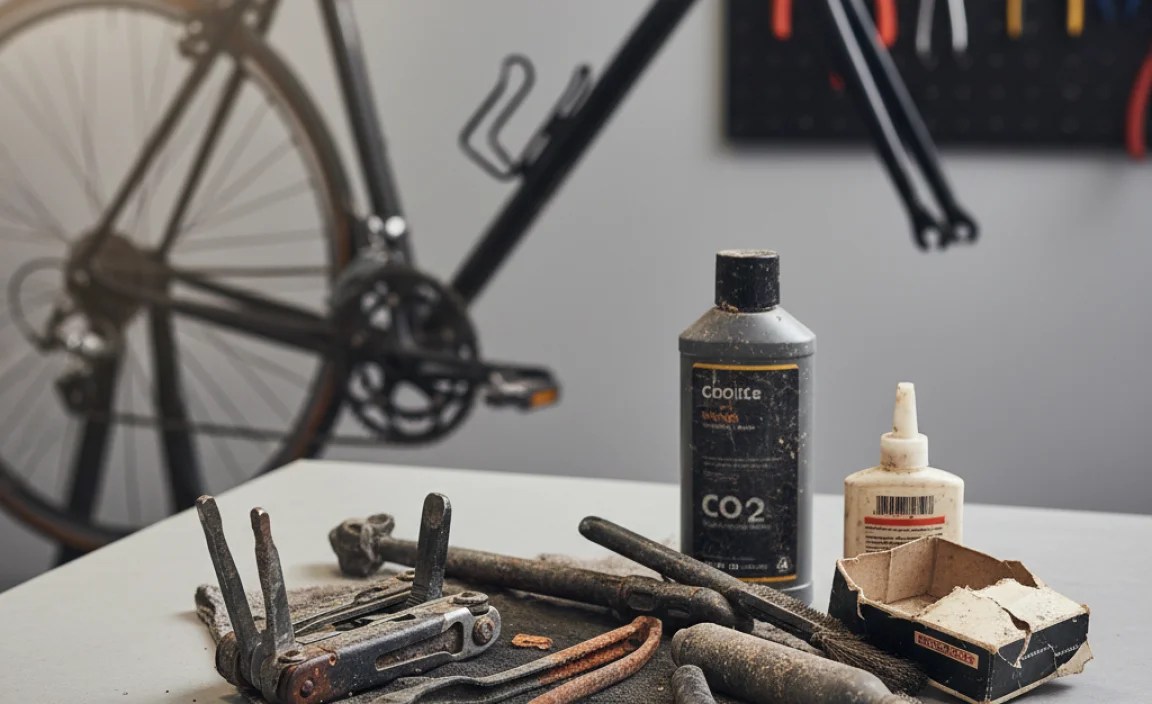
Your repair kit is only as good as the tools inside. Neglecting maintenance can lead to rusty, broken, or ineffective tools. Here’s how to keep your kit in top shape:
1. Regular Inspections: Spot Problems Early
Periodically inspect your tools for rust, damage, or wear. Replace any worn or broken tools immediately. Check your patch kit to make sure the glue hasn’t dried out. Give your mini pump a test to ensure it’s working properly.
2. Clean and Lubricate: Keep Things Moving
Clean your tools after each ride, especially if you’ve been riding in wet or dirty conditions. Lubricate moving parts, like the chain tool and the CO2 inflator, to prevent rust and ensure smooth operation. A little WD-40 or bike-specific lubricant can go a long way.
3. Replace Consumables: Don’t Run Out
Keep track of your consumables, like CO2 cartridges and patches. Replenish your supply after each use. There’s nothing worse than discovering you’re out of patches when you get a flat.
4. Store Properly: Protect from the Elements
Store your repair kit in a dry place to prevent rust and corrosion. A waterproof saddle bag or frame bag is ideal. If you live in a humid climate, consider using a desiccant pack to absorb moisture.
Lack of Practice: Know Your Tools

Having the right tools is only half the battle. You also need to know how to use them. Practice makes perfect, so take some time to familiarize yourself with your repair kit before you need it on the road.
1. Practice Changing a Tire: Become a Pro
The most common roadside repair is fixing a flat tire. Practice removing and installing your tire until you can do it quickly and efficiently. Pay attention to the direction of the tire tread and make sure you seat the tire bead properly to avoid pinch flats.
2. Use Your Multi-Tool: Get Familiar
Experiment with your multi-tool. Practice adjusting your brakes, derailleurs, and saddle height. Knowing how to make these adjustments can save you from an uncomfortable or even dangerous ride.
3. Repair a Chain: Master the Chain Tool
Chain repair can be tricky, but it’s a valuable skill. Practice using your chain tool to remove and rejoin a chain. Learn how to use quick links for a faster and easier repair. A YouTube tutorial can be a great resource.
4. Inflate with CO2: Get the Technique Right
Using a CO2 inflator can be intimidating at first. Practice using it at home before you need it on the road. Pay attention to the angle of the inflator and the amount of pressure you’re using. Be careful not to freeze your fingers!
Ignoring Specific Bike Needs: One Size Doesn’t Fit All

Every bike is different. What works for a road bike might not work for a mountain bike or an e-bike. Here’s how to tailor your repair kit to your specific bike:
1. Mountain Bikes: Tougher Terrain, Tougher Kit
Mountain bikes are subjected to more abuse than road bikes. Consider carrying extra items like a tire boot (for repairing large tire cuts), a shock pump (for adjusting suspension), and extra brake pads.
2. E-Bikes: Power and Complexity
E-bikes have unique needs. Consider carrying a spare battery (if possible), a motor-specific tool (if required), and extra zip ties for securing cables. Be aware of the extra weight of an e-bike and plan accordingly.
3. Tubeless Tires: A Different Approach
If you’re running tubeless tires, you’ll need a different set of tools. Carry tire plugs (for sealing punctures), a tubeless valve tool (for removing and installing valves), and extra sealant. A CO2 inflator can be helpful for seating the tire bead.
4. Disc Brakes: Specific Tools Required
Disc brakes require specific tools for maintenance and repair. Consider carrying a rotor truing tool (for straightening bent rotors), a brake pad spreader (for resetting pistons), and extra brake pads. Be careful not to contaminate the rotors with oil or grease.
The Importance of a Pre-Ride Check: A Final Safety Net
Even with a well-stocked and maintained repair kit, it’s important to perform a pre-ride check before every ride. This can help you identify potential problems before they become major issues.
1. Check Tire Pressure: Optimal Performance
Proper tire pressure is essential for performance, comfort, and safety. Use a tire gauge to check your tire pressure before each ride. Inflate your tires to the recommended pressure range (printed on the tire sidewall).
2. Inspect Brakes: Ensure Stopping Power
Check your brakes to make sure they’re working properly. Squeeze the brake levers and make sure they engage firmly. Inspect the brake pads for wear and replace them if necessary. Check the brake cables for fraying or damage.
3. Lubricate Your Chain: Smooth and Efficient
A well-lubricated chain is essential for smooth and efficient pedaling. Apply chain lubricant to your chain before each ride. Wipe off any excess lubricant to prevent dirt and grime from accumulating.
4. Quick Visual Inspection: Catch the Obvious
Give your bike a quick visual inspection before each ride. Check for loose bolts, cracks in the frame, and any other signs of damage. Address any issues before they become major problems.
Table: Common Cycling Repair Kit Mistakes and Solutions
| Mistake | Solution |
|---|---|
| Forgetting tire levers | Always include tire levers in your kit. |
| Carrying the wrong size tube | Check your tire size and match the tube size. |
| Omitting a multi-tool | Invest in a quality multi-tool with essential Allen wrenches and screwdrivers. |
| No inflation device | Choose between a CO2 inflator or mini pump and keep it in your kit. |
| Ignoring a patch kit | Carry a patch kit for small punctures. |
| Overpacking with unnecessary items | Evaluate your needs and ditch duplicates. |
| Neglecting tool maintenance | Inspect, clean, and lubricate your tools regularly. |
| Lack of practice | Practice using your tools at home. |
| Ignoring specific bike needs | Tailor your kit to your bike type (mountain, e-bike, etc.). |
| Skipping the pre-ride check | Check tire pressure, brakes, and chain before each ride. |
FAQ: Cycling Repair Kits
Here are some frequently asked questions about cycling repair kits:
- What’s the most important item in a cycling repair kit?
- Tire levers and a way to inflate your tire (CO2 inflator or mini pump) are the most crucial for fixing flat tires, the most common roadside issue.
- How often should I check my repair kit?
- Check your kit before every long ride and at least once a month for shorter rides. Replace used items and inspect tools for wear.
- Can I use a car tire pump on my bike?
- Yes, if your bike has Schrader valves (like car tires). For Presta valves, you’ll need an adapter or a pump designed for Presta valves.
- Are glueless patches as good as traditional patches?
- Glueless patches are convenient for quick fixes, but traditional patches with glue provide a more permanent repair.
- What size CO2 cartridge should I use?
- A 16g cartridge is usually sufficient for road bike tires, while mountain bike tires may require a 20g or 25g cartridge.
- Where should I store my cycling repair kit?
- A saddle bag or frame bag is ideal. These keep your kit organized, protected from the elements, and easily accessible.
- Is it worth carrying a spare folding tire?
- For long-distance touring or remote rides, a spare folding tire can be a lifesaver if you experience a major tire failure.
Conclusion
Building a comprehensive cycling repair kit doesn’t have to be daunting. By avoiding these common mistakes – forgetting essentials, overpacking, neglecting maintenance, skipping practice, ignoring specific bike needs, and neglecting the pre-ride check – you can create a kit that’s tailored to your needs and ready for anything the road throws your way. Remember, the best repair kit is one you know how to use. Take the time to familiarize yourself with your tools and practice common repairs. With a little preparation, you can ride with confidence, knowing you’re equipped to handle almost any mechanical issue that comes your way. Happy riding!


