
How To Verify Gauge Pressure With Hand Pump: Easy!

Have you ever wondered if your tire pressure gauge is telling the truth? Knowing the correct pressure is super important. It keeps you safe on your bike or helps your parents save gas in the car. But how do you verify gauge pressure with a hand pump? Let’s find out!
Sometimes, gauges can be wrong. They might be old or broken. We need to check them to be sure. This article will show you easy ways to do it. Get ready to become a pressure-checking pro!
Key Takeaways
- Knowing how to verify gauge pressure with a hand pump ensures accurate readings.
- Use a master gauge for a reliable comparison when checking pressure.
- Regularly check your pressure gauges to maintain safety and accuracy.
- A simple visual inspection can catch obvious damage to your gauge.
- Understanding gauge accuracy helps avoid errors in important applications.
How to Verify Gauge Pressure with Hand Pump: Overview

Verifying gauge pressure with a hand pump is important for many reasons. When you pump up a tire, you want to know you’re putting in the right amount of air. Too much or too little air can be dangerous. Accurate pressure helps tires last longer and keeps vehicles running well. So, how can we make sure our gauges are right?
One way is to compare your gauge to another one you know is accurate. This is like checking your watch against the clock on your phone. If they show the same time, you can trust your watch. With pressure gauges, you can use a master gauge. A master gauge is very accurate and used for checking other gauges. You can also use a hand pump with a built-in gauge that you trust. By comparing the readings, you can see if your gauge is working correctly.
- Use a master gauge for comparison.
- Check gauges regularly.
- Look for damage to the gauge.
- Compare with a known accurate gauge.
- Understand gauge accuracy.
Think of it like a detective checking clues. You’re looking for any signs that your gauge might be wrong. Does the needle move smoothly? Is the gauge clean and in good shape? By checking these things, you can be sure your gauge is giving you the right information. This keeps you safe and helps you take care of your things.
Fun Fact or Stat: Did you know that underinflated tires can decrease fuel efficiency by up to 3%?
Why Is Accurate Pressure Important?
Have you ever ridden a bike with flat tires? It’s hard work! Accurate pressure in tires makes riding easier and safer. When tires are properly inflated, they roll better. This means you don’t have to work as hard to pedal. It also helps you steer and stop more easily. For cars, accurate tire pressure helps save gas. It also makes the tires last longer.
Imagine your tires are like balloons. If they don’t have enough air, they’re soft and squishy. They can wear out quickly and even cause an accident. But if they have too much air, they’re hard and bouncy. They can also be dangerous. That’s why it’s important to check your tire pressure regularly. Use a good gauge and make sure it’s giving you the right reading.
Checking your tire pressure is like taking care of your teeth. You brush them every day to keep them healthy. You should check your tire pressure regularly to keep your tires healthy. This simple task can save you money and keep you safe. So, grab your gauge and start checking!
What Tools Do You Need?
To verify gauge pressure, you need a few simple tools. First, you’ll need a hand pump with a gauge. Make sure the pump is in good condition. The gauge on the pump should be easy to read. You’ll also need a master gauge. This is a gauge that you know is accurate. It’s like having a trusted friend who always tells the truth.
You might also need a tire pressure chart. This chart tells you the correct pressure for your tires. You can find this information in your car’s owner’s manual or on a sticker inside the driver’s side door. Having the right information is important. It helps you make sure your tires are inflated to the correct pressure.
Finally, you’ll need a little bit of time and patience. Checking your tire pressure is not hard. But it’s important to do it carefully. Take your time and follow the steps. You’ll be a pressure-checking pro in no time!
When Should You Check Your Gauges?
Checking your gauges regularly is a good habit. You should check them at least once a month. But there are other times when you should check them too. If you notice your tires look low, check the pressure. If the temperature changes a lot, check the pressure. Cold weather can make tire pressure go down. Hot weather can make it go up.
Imagine your tires are like balloons that change size with the weather. When it’s cold, the air inside shrinks. When it’s hot, the air expands. That’s why it’s important to check your tire pressure regularly. You want to make sure they always have the right amount of air.
Also, check your gauges before going on a long trip. You want to make sure your tires are in good shape for the journey. This will help you save gas and stay safe. So, make it a habit to check your gauges often. Your tires will thank you!
Fun Fact or Stat: The ideal tire pressure is usually found on a sticker inside your driver’s side doorframe or in your vehicle’s owner’s manual.
Steps to Check Your Gauge with a Hand Pump

Now, let’s talk about how to verify gauge pressure with a hand pump. First, gather your tools. You’ll need your hand pump, master gauge, and tire pressure chart. Find a place to work that is safe and flat. You don’t want to be checking your gauges on a busy street.
Next, check the pressure in your tire with your hand pump. Write down the reading. Then, use your master gauge to check the pressure in the same tire. Write down that reading too. Compare the two readings. Are they the same? If they are, your gauge is probably accurate. If they are different, your gauge might be wrong.
- Gather your tools.
- Check tire pressure with your hand pump.
- Check tire pressure with a master gauge.
- Compare the readings.
- Look for differences.
- Repeat the process.
Imagine you’re a scientist doing an experiment. You’re taking careful measurements and comparing them. This helps you find out if your gauge is working correctly. If you find that your gauge is wrong, you might need to replace it. A new gauge will help you keep your tires properly inflated. This will keep you safe on the road.
Fun Fact or Stat: Most passenger car tires should be inflated to between 30 and 35 PSI (pounds per square inch).
Gather Your Tools and Materials
Before you start, make sure you have everything you need. You’ll need a reliable hand pump with a built-in gauge. This is your main tool for checking pressure. You’ll also need a master gauge. This is a super accurate gauge that you can trust. Think of it as the gold standard for pressure readings.
You might also want to have a notebook and pen handy. This will help you keep track of your readings. Write down the pressure from your hand pump and the pressure from your master gauge. This makes it easier to compare the numbers and see if there’s a difference.
Finally, make sure you have a clean and safe place to work. You don’t want to be checking your gauges in a muddy or dangerous area. Find a flat surface where you can easily access your tires. This will make the process much smoother and easier.
Compare Readings from Both Gauges
Once you have readings from both gauges, it’s time to compare them. Look closely at the numbers. Are they the same? If they are, that’s great! It means your hand pump gauge is probably accurate. But if the numbers are different, you need to investigate further. How big is the difference? A small difference might be okay, but a big difference could mean your gauge is not working properly.
Imagine you’re playing a matching game. You have two sets of cards, and you need to find the pairs that are the same. In this case, your two sets of cards are the readings from your hand pump gauge and your master gauge. If the cards match, you’re in good shape. But if they don’t match, you need to figure out why.
If you find a difference, try checking the pressure again. Sometimes, gauges can be a little finicky. You might get a slightly different reading each time. Take a few readings with both gauges and see if the difference is consistent. If it is, it’s a good sign that your hand pump gauge is not accurate.
Document Your Findings
Keeping good records is important when you’re checking your gauges. Write down the date and time of your tests. Note the readings from both the hand pump gauge and the master gauge. Also, write down any observations you make. Did the gauge seem to be working smoothly? Did you notice any damage or wear?
Imagine you’re a scientist collecting data for an experiment. You want to be as thorough as possible. The more information you have, the easier it will be to spot any problems. Keeping good records can also help you track the performance of your gauges over time. You can see if they’re becoming less accurate as they get older.
You can use a simple notebook to record your findings. Or, you can use a spreadsheet on your computer. Choose whatever method works best for you. The important thing is to be consistent and keep good records. This will help you stay on top of your gauge maintenance and ensure your tires are always properly inflated.
Fun Fact or Stat: Consistent tire pressure checks can extend the life of your tires by thousands of miles!
Understanding Gauge Accuracy and Calibration

Understanding gauge accuracy is key to knowing if your readings are reliable. All gauges have some degree of error. This means they might not always show the exact pressure. The accuracy of a gauge is usually expressed as a percentage. For example, a gauge with an accuracy of +/- 2% might be off by 2% of the full scale reading.
Calibration is the process of checking and adjusting a gauge to make sure it’s accurate. Over time, gauges can drift out of calibration. This means they become less accurate. You can calibrate a gauge by comparing it to a known standard. If the gauge is not accurate, you can adjust it to match the standard. Some gauges can be calibrated at home. Others need to be calibrated by a professional.
- Learn about gauge accuracy.
- Understand calibration.
- Check for gauge drift.
- Calibrate your gauges.
- Know when to replace a gauge.
Think of it like tuning a musical instrument. If the instrument is out of tune, it won’t sound right. You need to adjust it to make sure it’s playing the correct notes. Calibration is like tuning your pressure gauge. It makes sure it’s giving you the correct readings. This keeps you safe and helps you take care of your things.
Fun Fact or Stat: Pressure gauges used in critical applications are often calibrated annually to maintain accuracy.
What Is Gauge Drift?
Gauge drift is when a gauge slowly loses its accuracy over time. This can happen for many reasons. The gauge might be exposed to extreme temperatures. It might be used frequently. Or it might simply be getting old. As a gauge drifts, its readings become less reliable. This can lead to errors in your pressure measurements.
Imagine your gauge is like a rubber band. When it’s new, it stretches easily and returns to its original shape. But over time, it loses its elasticity. It becomes stretched out and doesn’t return to its original shape. This is similar to what happens with gauge drift. The gauge loses its ability to accurately measure pressure.
To prevent gauge drift, store your gauges in a cool, dry place. Avoid exposing them to extreme temperatures or harsh chemicals. Also, handle them with care. Dropping a gauge can damage its internal components and cause it to drift out of calibration. Regularly checking your gauges against a master gauge can also help you detect gauge drift early on.
How Often Should You Calibrate?
The frequency of calibration depends on how often you use your gauges and how critical their accuracy is. If you use your gauges frequently, you should calibrate them more often. If you rely on your gauges for important applications, you should also calibrate them more often. A good rule of thumb is to calibrate your gauges at least once a year.
Think of it like getting your car serviced. You need to change the oil and check the brakes regularly. This keeps your car running smoothly and safely. Calibrating your gauges is like servicing them. It keeps them accurate and reliable.
Some industries have specific requirements for gauge calibration. For example, the aviation industry requires gauges to be calibrated more frequently than other industries. Check with your industry’s regulations to see if there are any specific requirements for gauge calibration. Following these guidelines will help you maintain accurate pressure measurements and ensure safety.
When to Replace Your Gauge
Even with regular calibration, gauges eventually wear out and need to be replaced. If you notice that your gauge is consistently inaccurate, it’s time to replace it. Also, if your gauge is damaged or broken, it should be replaced. Cracks in the gauge face or a bent needle are signs that the gauge needs to be replaced.
Imagine your gauge is like a pair of shoes. You can wear them for a while, but eventually they wear out. The soles might get holes in them, or the laces might break. When that happens, it’s time to get a new pair of shoes. The same is true for your pressure gauge. When it’s worn out or damaged, it’s time to replace it.
Replacing a gauge is a simple and inexpensive way to ensure accurate pressure measurements. Don’t wait until your gauge fails completely. Replace it as soon as you notice any problems. This will help you avoid errors and keep your tires properly inflated. A new gauge will give you peace of mind knowing that you’re getting accurate readings.
Fun Fact or Stat: Replacing a faulty pressure gauge can prevent tire blowouts and improve vehicle safety.
Common Mistakes to Avoid
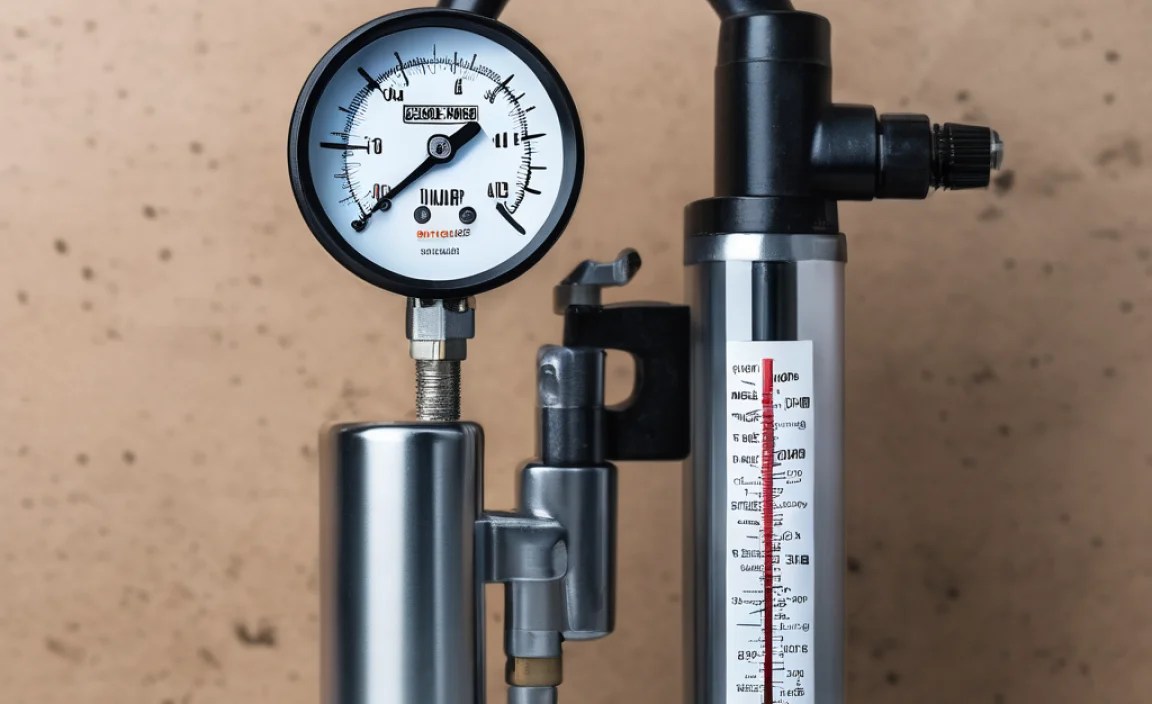
When verifying gauge pressure, it’s easy to make mistakes. One common mistake is not using a master gauge. If you don’t have a master gauge, you can’t be sure if your hand pump gauge is accurate. Another mistake is not checking the gauge regularly. Gauges can drift out of calibration over time, so it’s important to check them often.
Another mistake is using a damaged gauge. If your gauge is cracked or bent, it won’t give you accurate readings. Also, make sure you’re using the gauge correctly. Read the instructions carefully and follow them step by step. If you’re not sure how to use the gauge, ask someone for help.
- Don’t skip the master gauge.
- Check gauges regularly.
- Avoid using damaged gauges.
- Follow instructions carefully.
- Don’t ignore warning signs.
Think of it like following a recipe. If you skip a step or use the wrong ingredients, the dish won’t turn out right. The same is true for checking your pressure gauges. If you make mistakes, you won’t get accurate readings. This can lead to problems with your tires and your vehicle.
Fun Fact or Stat: About 75% of vehicles on the road have at least one tire that is improperly inflated.
Ignoring the Master Gauge
The master gauge is your best friend when it comes to verifying pressure. It’s the trusted source that you can rely on. Ignoring the master gauge is like trying to navigate without a map. You might get lost along the way. The master gauge provides a standard of comparison. It tells you whether your hand pump gauge is accurate or not.
Imagine you’re trying to measure the length of a table. You could use a ruler that you found in your junk drawer. But how do you know if that ruler is accurate? It might be bent or broken. A better approach would be to use a measuring tape that you know is accurate. The master gauge is like that accurate measuring tape.
Always use a master gauge when you’re verifying pressure. It’s the only way to be sure that your readings are accurate. If you don’t have a master gauge, you can purchase one online or at an auto parts store. Investing in a master gauge is a smart way to protect your tires and your vehicle.
Using a Damaged Gauge
A damaged gauge is like a broken clock. It might show you a time, but you can’t trust it. Cracks, bends, and other damage can affect the accuracy of a gauge. Even a small crack can let air leak out, causing the gauge to show a lower pressure than the actual pressure.
Imagine you’re trying to weigh yourself on a scale that’s missing a piece. The scale might show you a weight, but it won’t be accurate. You need to use a scale that’s in good condition to get an accurate reading. The same is true for your pressure gauge.
Never use a damaged gauge. If you notice any cracks, bends, or other damage, replace the gauge immediately. Using a damaged gauge can lead to inaccurate readings, which can cause problems with your tires and your vehicle. It’s better to be safe than sorry.
Not Checking Regularly
Regular checks are like regular visits to the doctor. They help you catch problems early on, before they become serious. Gauges can drift out of calibration over time. This means they become less accurate. By checking your gauges regularly, you can detect gauge drift early and take corrective action.
Imagine you’re trying to keep your plants healthy. You need to water them regularly and check for signs of pests or disease. If you wait too long between checks, the plants might die. The same is true for your pressure gauges. You need to check them regularly to keep them accurate.
Make it a habit to check your gauges at least once a month. This will help you stay on top of your gauge maintenance and ensure your tires are always properly inflated. Regular checks can save you money and keep you safe on the road.
Fun Fact or Stat: Regularly inflated tires can improve your gas mileage by up to 3%.
Benefits of Accurate Pressure Readings

Accurate pressure readings are important for many reasons. They help you maintain the correct tire pressure. This improves your vehicle’s handling and braking. It also extends the life of your tires. Accurate pressure readings can also save you money on gas. Underinflated tires increase rolling resistance, which means your engine has to work harder.
Imagine you’re running a race. If your shoes are too tight or too loose, you won’t be able to run as fast. You need shoes that fit just right to perform your best. The same is true for your tires. They need to be inflated to the correct pressure to perform their best.
- Improved handling.
- Longer tire life.
- Better fuel economy.
- Increased safety.
- Reduced wear and tear.
By taking the time to check your pressure gauges and make sure they’re accurate, you’re investing in your safety and your vehicle’s performance. Accurate pressure readings are a small thing that can make a big difference. So, grab your gauge and start checking!
Fun Fact or Stat: Proper tire inflation can help prevent tire blowouts, especially during hot weather.
Improved Vehicle Handling
Have you ever driven a car with flat tires? It feels like you’re driving through mud! Proper tire pressure makes a big difference in how your car handles. When your tires are inflated to the right pressure, your car will steer more easily. It will also be more stable on the road. This makes driving safer and more enjoyable.
Imagine you’re riding a bike. If the tires are flat, it’s hard to steer and balance. But if the tires are properly inflated, the bike is much easier to control. The same is true for your car. Proper tire pressure gives you better control and helps you avoid accidents.
Checking your tire pressure regularly is a simple way to improve your vehicle’s handling. Use an accurate gauge and inflate your tires to the recommended pressure. You’ll notice the difference right away. Your car will feel more responsive and easier to control.
Extended Tire Life
Tires are expensive! You want them to last as long as possible. Proper tire inflation is one of the best ways to extend the life of your tires. Underinflated tires wear out more quickly. They also generate more heat, which can damage the tire. Overinflated tires can also wear unevenly.
Imagine you’re wearing a pair of shoes that are too small. They’ll rub and cause blisters. The same is true for your tires. If they’re not inflated to the right pressure, they’ll wear out more quickly. By keeping your tires properly inflated, you can avoid premature wear and tear.
Check your tire pressure regularly and inflate your tires to the recommended pressure. This will help you get the most out of your tires. You’ll save money in the long run by not having to replace your tires as often. It’s a win-win situation!
Better Fuel Economy
Do you want to save money on gas? Proper tire inflation can help! Underinflated tires increase rolling resistance. This means your engine has to work harder to move the car. As a result, you’ll use more gas. By keeping your tires properly inflated, you can reduce rolling resistance and improve your fuel economy.
Imagine you’re pushing a shopping cart. If the wheels are flat, it’s hard to push. But if the wheels are properly inflated, the cart rolls much more easily. The same is true for your car. Proper tire pressure makes it easier for your car to roll, which saves you gas.
Check your tire pressure regularly and inflate your tires to the recommended pressure. You’ll see a difference in your gas mileage. You’ll save money every time you fill up your tank. It’s a simple way to make your car more efficient.
| Benefit | Description | Impact |
|---|---|---|
| Improved Handling | Proper tire pressure enhances vehicle stability and steering responsiveness. | Safer driving experience and better control in various conditions. |
| Extended Tire Life | Correct inflation prevents uneven wear and reduces stress on tire components. | Saves money by delaying tire replacement and maximizing tire lifespan. |
| Better Fuel Economy | Optimal tire pressure minimizes rolling resistance, reducing engine workload. | Lower gas consumption and reduced fuel costs over time. |
| Increased Safety | Properly inflated tires provide better grip and reduce the risk of blowouts. | Enhances overall vehicle safety and reduces the likelihood of accidents. |
Summary
In summary, knowing how to verify gauge pressure with a hand pump is essential for safety and efficiency. Regularly checking your gauges helps ensure accurate tire pressure. This leads to better vehicle handling, longer tire life, and improved fuel economy. Using a master gauge for comparison is a reliable method.
Don’t forget to inspect your gauges for damage and calibrate them as needed. Avoid common mistakes like ignoring the master gauge or using damaged equipment. By following these tips, you can maintain accurate pressure readings and enjoy the many benefits of properly inflated tires. This simple task can save you money and keep you safe on the road.
Conclusion
Verifying gauge pressure with a hand pump is a straightforward process. You can ensure the accuracy of your tire pressure readings. This leads to safer driving and better vehicle performance. By following the steps outlined in this article, you can maintain your tires properly. Accurate tire pressure is a key factor in vehicle safety. So, take the time to check your gauges regularly.
Frequently Asked Questions
Question No 1: Why is it important to verify the accuracy of my pressure gauge?
Answer: Verifying the accuracy of your pressure gauge ensures that you are inflating your tires to the correct pressure. Incorrect tire pressure can lead to poor handling, increased wear and tear, and reduced fuel efficiency. By using a master gauge and following proper verification techniques, you can avoid these problems and maintain optimal tire performance. This keeps you safe and saves you money in the long run. Regular checks also help identify any issues with your gauge. This allows you to replace it before it causes problems.
Question No 2: What is a master gauge, and why should I use one?
Answer: A master gauge is a highly accurate pressure measuring device. It serves as a reference standard for calibrating and verifying other gauges. Unlike regular gauges, master gauges are designed to minimize errors and provide precise readings. Using a master gauge when verifying gauge pressure with a hand pump ensures that your hand pump gauge is providing accurate measurements. This is crucial for maintaining proper tire inflation and avoiding the risks associated with under- or over-inflated tires. A master gauge offers reliability and peace of mind.
Question No 3: How often should I verify the accuracy of my pressure gauge?
Answer: It is recommended to verify the accuracy of your pressure gauge at least once a month. Regular verification helps detect any drift or inaccuracies that may develop over time due to wear and tear, temperature changes, or other factors. If you frequently use your gauge or if it is exposed to harsh conditions, you may want to verify it more often. Consistent verification ensures that you are always working with reliable measurements, promoting safety and efficiency in your tire maintenance routine. Knowing how to verify gauge pressure with a hand pump is a great habit.
Question No 4: Can temperature affect the accuracy of my pressure gauge?
Answer: Yes, temperature can affect the accuracy of your pressure gauge. Extreme temperatures can cause the internal components of the gauge to expand or contract, leading to inaccurate readings. It is best to verify your gauge in a stable, moderate temperature environment. Avoid checking your gauge immediately after it has been exposed to direct sunlight or extreme cold. Allow the gauge to acclimate to a more moderate temperature before taking measurements. This will help ensure the most accurate readings possible. Remember, how to verify gauge pressure with a hand pump accurately is key.
Question No 5: What are some common signs that my pressure gauge may be inaccurate?
Answer: There are several signs that may indicate your pressure gauge is inaccurate. These include inconsistent readings, a needle that sticks or jumps erratically, a cracked or damaged gauge face, or a gauge that consistently provides readings that are significantly different from other gauges. If you notice any of these signs, it is important to verify your gauge using a master gauge. If you are unable to verify its accuracy, it is best to replace the gauge to avoid potential problems. Properly knowing how to verify gauge pressure with a hand pump prevents these issues.
Question No 6: What should I do if I find that my pressure gauge is inaccurate?
Answer: If you find that your pressure gauge is inaccurate after verifying gauge pressure with a hand pump, the best course of action is to replace it. While some gauges may be recalibrated, this process often requires specialized equipment and expertise. For most users, it is more cost-effective and reliable to simply purchase a new gauge. When selecting a replacement gauge, choose a reputable brand and look for features such as a clear display, durable construction, and accurate measurement range. Always verify the accuracy of your new gauge before using it to inflate your tires.


