
How to Tell If a Cycle Is Refrigeration or Heat Pump

Quick Summary: To determine if a cycle is refrigeration or a heat pump, check if its primary purpose is cooling or heating. Refrigeration cycles cool a space or object, exhausting heat elsewhere. Heat pumps, on the other hand, can both heat and cool, transferring heat in or out depending on the season. Look for a reversing valve; its presence typically indicates a heat pump capable of switching between heating and cooling modes.
Ever wondered if that AC unit in your window is just a fancy refrigerator, or if there’s more to it? Figuring out whether a system is a refrigeration cycle or a heat pump can seem a bit puzzling. Both involve similar components and processes, but their purpose and operation differ significantly. It’s like knowing the difference between a road bike and a mountain bike—they both have wheels and pedals, but they’re designed for different terrains. Don’t worry; I’ll walk you through the key differences, so you can easily tell them apart. By the end of this article, you’ll be able to identify the telltale signs of each system and understand how they work. Let’s get started!
Understanding the Basics
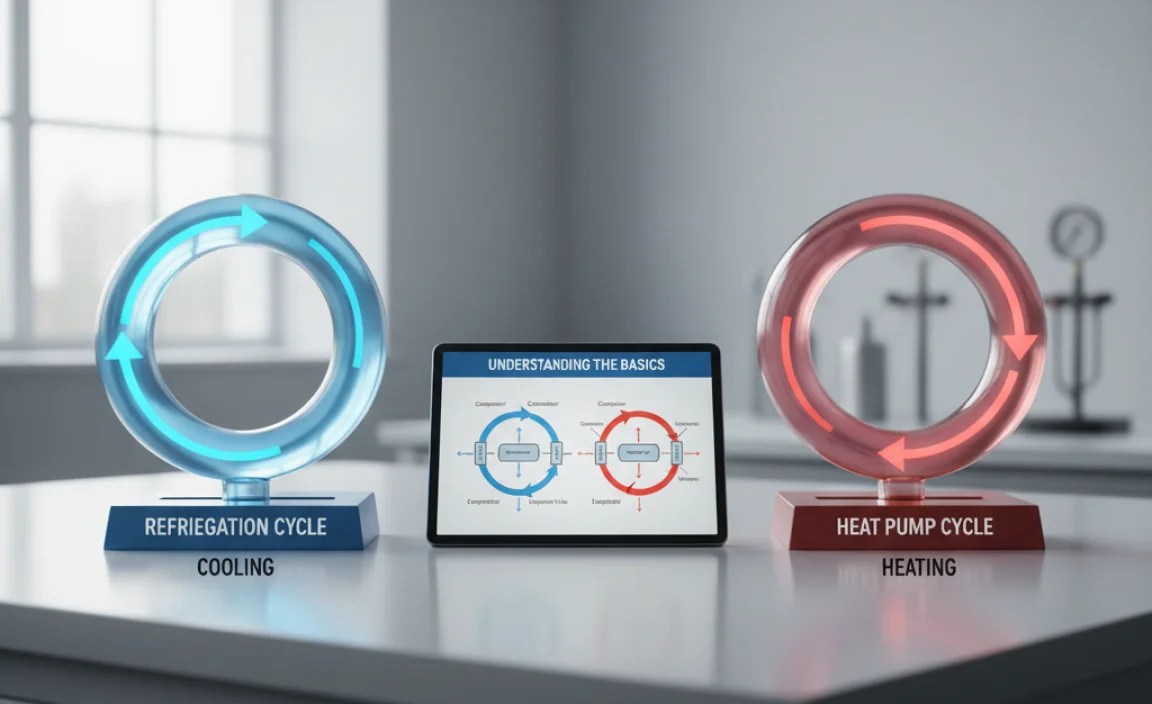
Before diving into how to differentiate between refrigeration and heat pump cycles, let’s clarify what each one is and how they function. This foundational knowledge will make it easier to grasp the distinctions.
What Is a Refrigeration Cycle?
A refrigeration cycle is a process designed to remove heat from an enclosed space or substance, thereby cooling it. Think of your kitchen refrigerator: it extracts heat from the inside, keeping your food cold, and expels that heat into the surrounding room.
The basic components of a refrigeration cycle include:
- Compressor: Compresses the refrigerant gas, increasing its temperature and pressure.
- Condenser: Rejects heat from the high-pressure refrigerant gas to the surroundings, causing it to condense into a high-pressure liquid.
- Expansion Valve (or Capillary Tube): Reduces the pressure of the liquid refrigerant, allowing it to expand and cool.
- Evaporator: Absorbs heat from the space being cooled, causing the liquid refrigerant to evaporate into a low-pressure gas.
The refrigerant circulates through these components in a closed loop, continuously removing heat from the designated area.
What Is a Heat Pump Cycle?
A heat pump cycle is a system that can both heat and cool a space by transferring heat from one area to another. In the winter, it extracts heat from the outside air (even when it’s cold) and transfers it inside. In the summer, it reverses the process, removing heat from inside and releasing it outside, functioning like an air conditioner.
The main components of a heat pump are similar to those of a refrigeration cycle, but with an added component:
- Compressor: Similar to the refrigeration cycle, it compresses the refrigerant.
- Condenser/Evaporator Coils: These act as either the condenser or evaporator, depending on the direction of the cycle.
- Expansion Valve: Controls the flow and pressure of the refrigerant.
- Reversing Valve: This is the critical component that allows the heat pump to switch between heating and cooling modes by changing the direction of refrigerant flow.
The presence of a reversing valve is the key indicator that a system is a heat pump rather than a simple refrigeration cycle.
Key Differences Between Refrigeration and Heat Pump Cycles

Now that we have a basic understanding of each cycle, let’s look at the key differences that will help you distinguish between them.
Primary Function
- Refrigeration: Primarily designed for cooling. It removes heat from a specific area and expels it elsewhere.
- Heat Pump: Designed for both heating and cooling. It can transfer heat into or out of a space depending on the desired outcome.
Reversing Valve
- Refrigeration: Does not have a reversing valve. The cycle operates in one direction only.
- Heat Pump: Includes a reversing valve, which allows the system to switch between heating and cooling modes.
Application
- Refrigeration: Typically used in refrigerators, freezers, and air conditioning units where the primary goal is to cool.
- Heat Pump: Used in systems where both heating and cooling are required, such as home HVAC systems and some industrial processes.
Operational Flexibility
- Refrigeration: Less flexible in terms of operation. It is optimized for cooling and cannot switch to heating.
- Heat Pump: More flexible due to its ability to switch between heating and cooling, providing year-round climate control.
How to Identify the Cycle Type

Identifying whether a system is a refrigeration cycle or a heat pump involves looking for specific components and understanding the system’s intended use. Here’s a step-by-step guide.
Step 1: Check for a Reversing Valve
The most definitive way to identify a heat pump is to look for a reversing valve. This valve is responsible for changing the direction of refrigerant flow, enabling the system to switch between heating and cooling modes.
- Location: The reversing valve is typically located near the compressor.
- Appearance: It is a valve with multiple ports and solenoid that controls the flow of refrigerant.
- If Present: If you find a reversing valve, the system is almost certainly a heat pump.
- If Absent: If there is no reversing valve, the system is likely a refrigeration cycle.
Step 2: Examine the System’s Documentation
System manuals and technical specifications often explicitly state whether the system is a refrigeration cycle or a heat pump. These documents can provide valuable information about the system’s capabilities and components.
- Look for: Terms like “heat pump,” “reversible cycle,” or “heating and cooling.”
- Check Schematics: System schematics can show the presence of a reversing valve and other key components.
Step 3: Observe the System’s Function
Observe whether the system can both heat and cool. If it only cools, it is likely a refrigeration cycle. If it can switch between heating and cooling, it is a heat pump.
- Cooling Mode: All refrigeration cycles and heat pumps in cooling mode remove heat from the indoor space and release it outdoors.
- Heating Mode: Only heat pumps can transfer heat from the outdoors into the indoor space.
Step 4: Inspect the System Components
Examine the components of the system. While many components are similar, the presence of certain features can indicate whether it is a refrigeration cycle or a heat pump.
- Dual-Function Coils: Heat pumps have coils that can act as both condensers and evaporators, depending on the cycle direction.
- Additional Sensors: Heat pumps often have additional sensors to monitor outdoor temperature and adjust the cycle accordingly.
Step 5: Consult with a Professional
If you’re still unsure, consult with an HVAC professional. They can quickly identify the type of system and provide additional information about its operation and maintenance.
Practical Examples
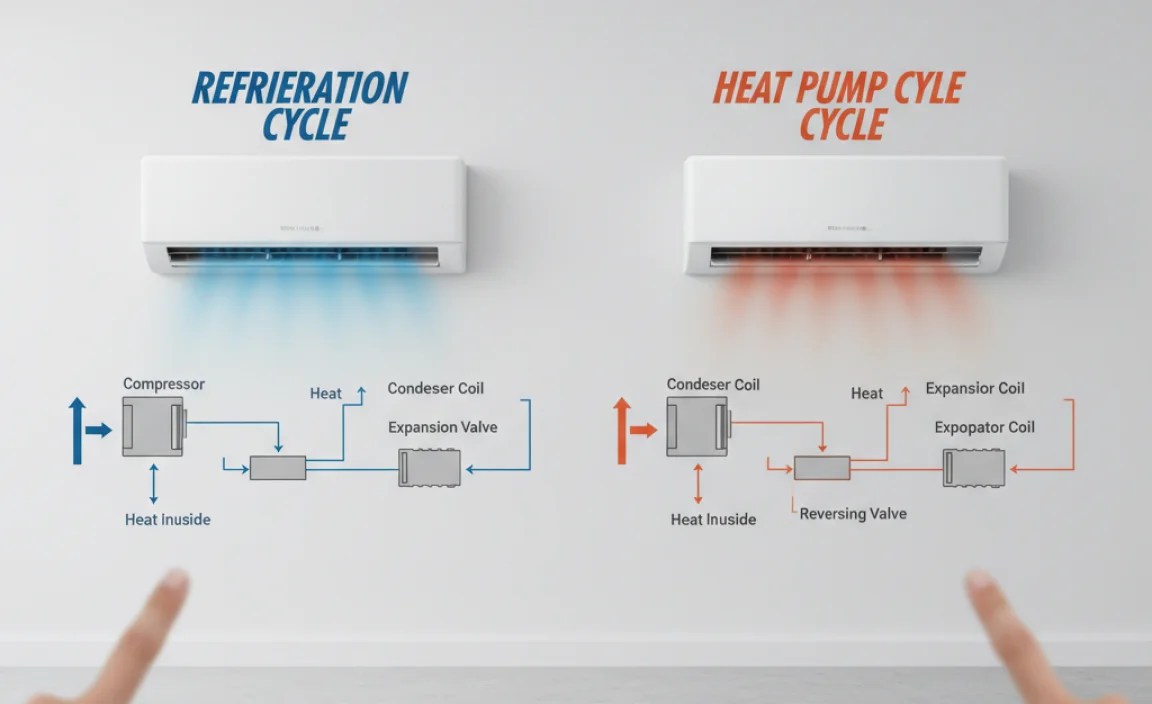
To further illustrate the differences, let’s look at some practical examples of refrigeration and heat pump systems.
Refrigeration Cycle Examples
- Household Refrigerator: Cools the interior and releases heat into the kitchen.
- Window Air Conditioner: Cools a room and expels heat outside.
- Commercial Refrigeration Units: Used in supermarkets to keep food cold.
- Automobile Air Conditioner: Cools the car’s interior and releases heat through the radiator.
Heat Pump Cycle Examples
- Residential Heat Pump: Provides both heating and cooling for homes.
- Geothermal Heat Pump: Uses the earth’s constant temperature to heat and cool buildings.
- Mini-Split Heat Pump: Ductless systems that offer both heating and cooling for individual rooms or zones.
- Commercial Heat Pump Systems: Used in large buildings to provide efficient climate control.
Advantages and Disadvantages

Both refrigeration cycles and heat pumps have their own sets of advantages and disadvantages. Understanding these can help you appreciate their specific applications and limitations.
Refrigeration Cycle
Advantages:
- Simplicity: Fewer components mean simpler design and maintenance.
- Cost-Effective for Cooling Only: Generally cheaper for applications where only cooling is needed.
- Reliability: Simpler systems tend to be more reliable.
Disadvantages:
- Limited Functionality: Cannot provide heating.
- Seasonal Limitations: Only useful during warmer months or in applications requiring constant cooling.
Heat Pump Cycle
Advantages:
- Dual Functionality: Provides both heating and cooling.
- Energy Efficiency: Can be more energy-efficient than separate heating and cooling systems, especially in moderate climates.
- Year-Round Use: Suitable for year-round climate control.
Disadvantages:
- Complexity: More complex design with additional components, increasing the potential for issues.
- Higher Initial Cost: Generally more expensive than simple refrigeration systems.
- Performance Limitations: Heating performance can decrease in very cold temperatures, requiring supplemental heating.
Troubleshooting Common Issues
Understanding common issues in both refrigeration and heat pump cycles can help you diagnose problems and perform basic maintenance.
Refrigeration Cycle Issues
| Issue | Possible Causes | Troubleshooting Steps |
|---|---|---|
| Not Cooling | Refrigerant leak, compressor failure, blocked condenser coil | Check for leaks, inspect compressor, clean condenser coil |
| Insufficient Cooling | Dirty evaporator coil, restricted airflow, low refrigerant | Clean evaporator coil, ensure proper airflow, check refrigerant levels |
| Excessive Noise | Worn compressor, loose components, fan issues | Inspect compressor, tighten loose parts, check fan operation |
Heat Pump Cycle Issues
| Issue | Possible Causes | Troubleshooting Steps |
|---|---|---|
| Not Heating or Cooling | Reversing valve failure, refrigerant leak, compressor issues | Check reversing valve, inspect for leaks, examine compressor |
| Poor Heating Performance | Frozen outdoor coil, low refrigerant, malfunctioning defrost cycle | Defrost outdoor coil, check refrigerant levels, inspect defrost cycle |
| Ice Buildup on Outdoor Unit | Defrost cycle malfunction, restricted airflow, low refrigerant | Inspect defrost cycle, ensure proper airflow, check refrigerant levels |
Maintenance Tips
Regular maintenance is essential for ensuring the efficient and reliable operation of both refrigeration and heat pump systems. Here are some maintenance tips to keep in mind.
Refrigeration Cycle Maintenance
- Clean Coils Regularly: Dust and debris can reduce the efficiency of the condenser and evaporator coils. Clean them at least twice a year.
- Check for Leaks: Inspect refrigerant lines and connections for any signs of leaks. Address leaks promptly to prevent performance issues.
- Maintain Airflow: Ensure that airflow around the unit is not obstructed. Keep vents and grilles clean and free from obstructions.
Heat Pump Cycle Maintenance
- Clean Coils Regularly: Similar to refrigeration cycles, keep the coils clean to ensure efficient heat transfer.
- Check Reversing Valve: Periodically inspect the reversing valve to ensure it is functioning correctly.
- Monitor Defrost Cycle: Ensure the defrost cycle is working properly to prevent ice buildup on the outdoor unit during winter.
- Inspect Ductwork: For ducted systems, inspect the ductwork for leaks and insulation issues.
- Change Filters Regularly: Replace air filters every 1-3 months to maintain proper airflow and indoor air quality.
FAQ Section
What is the main difference between a refrigeration cycle and a heat pump?
The main difference is that a refrigeration cycle is primarily for cooling, while a heat pump can both heat and cool.
How does a reversing valve work in a heat pump?
A reversing valve changes the direction of refrigerant flow, allowing the heat pump to switch between heating and cooling modes.
Can a refrigeration cycle be converted into a heat pump?
Yes, but it requires adding a reversing valve and making other modifications to the system.
Why is a heat pump more energy-efficient than a traditional furnace?
Heat pumps transfer heat rather than generate it, which can be more energy-efficient, especially in moderate climates.
What are the signs of a failing reversing valve?
Signs include the heat pump not switching between heating and cooling modes, or reduced performance in one mode.
How often should I clean the coils on my refrigeration or heat pump system?
It’s recommended to clean the coils at least twice a year to maintain efficiency and prevent performance issues.
Can I install a heat pump in a very cold climate?
Yes, but you may need a supplemental heating system, as heat pump performance can decrease in very cold temperatures.
Conclusion
Understanding the difference between a refrigeration cycle and a heat pump is essential for anyone looking to maintain or troubleshoot their climate control systems. By checking for a reversing valve, examining the system’s documentation, and observing its function, you can easily identify the type of cycle you’re dealing with. Whether it’s the simple cooling of a refrigerator or the versatile heating and cooling of a heat pump, knowing the basics will empower you to keep your systems running smoothly. And remember, regular maintenance and timely repairs are key to ensuring optimal performance and longevity. Happy tinkering!
“`


