
How to Cycle the ABS Pump on an Audi S4 B8.5

Quick Summary: Cycling the ABS pump on your Audi S4 B8.5 involves using a diagnostic tool like VCDS to activate the pump and bleed the brake system. This process is essential after replacing ABS components or if you have air in the system. By following the guided steps, you can ensure proper brake function and safety.
Is your Audi S4 B8.5’s ABS light stubbornly lit? Are you experiencing soft brake pedal feel after replacing a brake line or ABS module? Don’t worry, you’re not alone! Many Audi owners face the challenge of properly bleeding the ABS system. Air trapped in the ABS pump can be tricky to remove with traditional bleeding methods. The good news is, with the right tools and a systematic approach, you can cycle the ABS pump and restore optimal braking performance. This guide will walk you through the process, step-by-step, making it easy to understand and execute. Let’s get those brakes working like new!
Understanding the ABS Pump Cycling Process
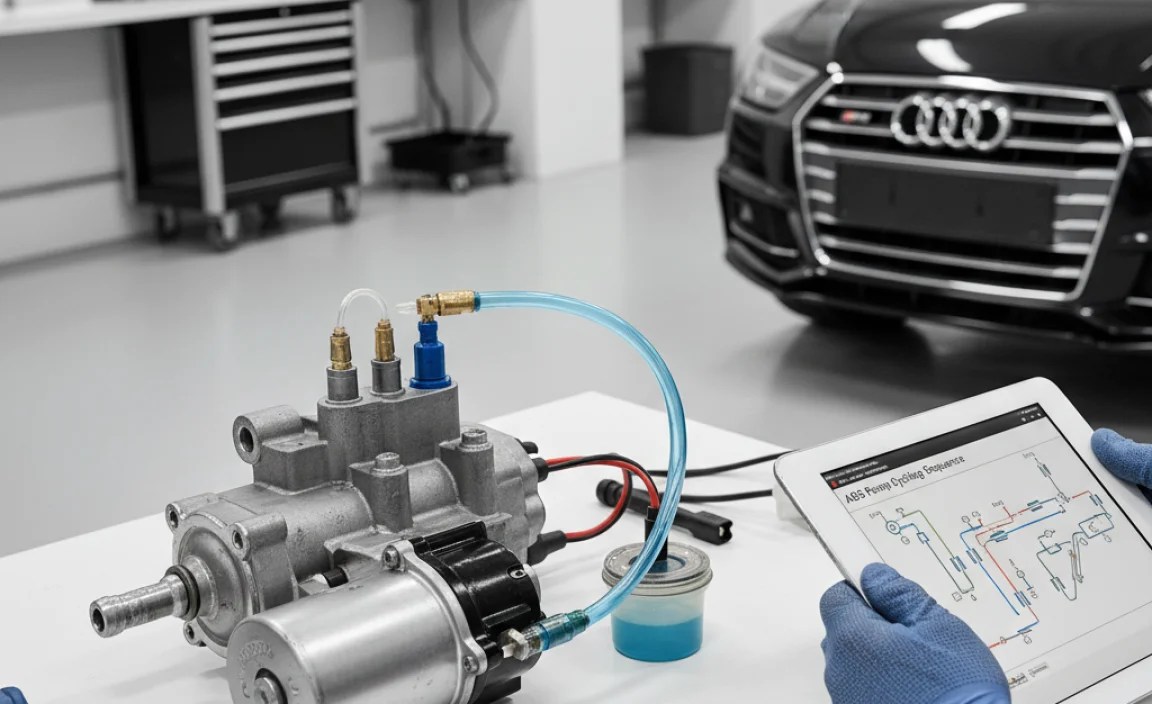
The Anti-lock Braking System (ABS) is a critical safety feature in your Audi S4 B8.5. It prevents wheel lockup during hard braking, allowing you to maintain steering control. The ABS pump is a key component of this system. When air gets trapped inside the ABS pump, it can compromise braking performance. Cycling the ABS pump forces the pump to activate, pushing out any trapped air and ensuring proper brake fluid circulation.
Why is ABS Pump Cycling Necessary?
- After Replacing ABS Components: Whenever you replace the ABS module, hydraulic unit, or any brake lines connected to the ABS system, air can enter the system.
- Soft Brake Pedal Feel: Air in the brake lines compresses, leading to a spongy or soft brake pedal.
- ABS Light On: An illuminated ABS warning light on your dashboard often indicates a problem within the ABS system, including air entrapment.
- Poor Braking Performance: Reduced braking efficiency and longer stopping distances can result from air in the ABS.
Tools and Materials You’ll Need

Before you begin, gather all the necessary tools and materials to ensure a smooth and efficient process.
- Diagnostic Tool (VCDS or Equivalent): A VCDS (Vag-Com Diagnostic System) tool is highly recommended for Audi vehicles. It allows you to communicate with the ABS module and activate the pump. Other compatible diagnostic tools may also work, but VCDS offers the most comprehensive functionality.
- Brake Fluid: Use the correct type of brake fluid specified for your Audi S4 B8.5. Typically, this will be DOT 4 brake fluid. Check your owner’s manual for the exact specification.
- Brake Bleeder Kit or Pressure Bleeder: A brake bleeder kit or pressure bleeder makes the bleeding process easier and more efficient. A pressure bleeder applies constant pressure to the brake fluid reservoir, preventing air from entering the system.
- Wrench for Bleeder Screws: You’ll need the correct size wrench to open and close the bleeder screws on each brake caliper. Typically, this is an 11mm wrench.
- Clear Tubing: Clear tubing to attach to the bleeder screws and direct the brake fluid into a container. This allows you to see any air bubbles being purged from the system.
- Catch Container: A container to collect the old brake fluid.
- Jack and Jack Stands: To safely lift your vehicle and access the brake calipers.
- Wheel Chocks: To secure the vehicle and prevent it from rolling.
- Gloves and Eye Protection: To protect yourself from brake fluid, which can be corrosive.
- Brake Cleaner: To clean up any spilled brake fluid.
- Shop Rags: For general cleaning and wiping.
Step-by-Step Guide to Cycling the ABS Pump

Follow these steps carefully to cycle the ABS pump and bleed your Audi S4 B8.5’s brake system.
Step 1: Prepare the Vehicle
- Park on a Level Surface: Ensure your vehicle is parked on a level surface to ensure accurate brake bleeding.
- Engage the Parking Brake: Engage the parking brake firmly to prevent the vehicle from rolling.
- Chock the Wheels: Place wheel chocks behind the rear wheels for added safety.
- Loosen the Lug Nuts: Loosen the lug nuts on all four wheels before lifting the vehicle.
- Lift the Vehicle: Use a jack to lift the vehicle and securely place it on jack stands. Make sure the jack stands are positioned on designated jacking points.
- Remove the Wheels: Remove all four wheels to access the brake calipers.
Step 2: Connect the Diagnostic Tool
- Locate the OBD-II Port: The OBD-II port is usually located under the dashboard on the driver’s side.
- Connect the VCDS Tool: Plug your VCDS diagnostic tool into the OBD-II port.
- Turn on the Ignition: Turn the ignition key to the “on” position, but do not start the engine.
- Open VCDS Software: Open the VCDS software on your laptop or computer.
- Select Control Module: Select the “Select” button to choose a control module.
- Choose ABS Brakes: Select “03 – ABS Brakes” from the list of control modules.
Step 3: Access the ABS Bleeding Function
- Security Access: You may need to enter a security access code to access certain functions. If prompted, enter the appropriate code (refer to your VCDS documentation or Ross-Tech website).
- Basic Settings: Navigate to “Basic Settings” within the ABS module.
- Select Bleeding Sequence: Look for a function labeled “Bleeding Sequence,” “ABS Bleeding,” or similar. Select this function.
- Follow On-Screen Instructions: VCDS will provide on-screen instructions for the bleeding procedure. Follow these instructions carefully.
Step 4: Bleed the Brakes
The VCDS tool will guide you through the specific bleeding sequence for each brake caliper. Here’s a general outline of the process:
- Prepare the First Caliper: Start with the brake caliper furthest from the master cylinder (typically the right rear). Attach the clear tubing to the bleeder screw and place the other end of the tubing into the catch container.
- Open the Bleeder Screw: The VCDS tool will prompt you to open the bleeder screw. Open it gently, usually about a quarter to half a turn.
- Activate the ABS Pump: The VCDS tool will then activate the ABS pump. You will hear the pump running and see brake fluid flowing through the clear tubing.
- Observe the Fluid: Watch the brake fluid flowing through the tubing for any air bubbles.
- Close the Bleeder Screw: Once the fluid runs clear and free of air bubbles, the VCDS tool will prompt you to close the bleeder screw. Close it gently but firmly.
- Repeat for Each Caliper: Repeat steps 1-5 for each of the remaining brake calipers, following the sequence specified by the VCDS tool. The typical bleeding sequence is:
- Right Rear
- Left Rear
- Right Front
- Left Front
- Monitor Brake Fluid Level: Regularly check the brake fluid level in the reservoir and top it off as needed to prevent air from entering the system.
Step 5: Finalize the Bleeding Process
- Complete the VCDS Procedure: Once you have bled all four brake calipers, follow the VCDS tool’s instructions to complete the bleeding procedure. This may involve running a final test or clearing any fault codes.
- Check for Leaks: Inspect all brake lines and connections for any leaks.
- Test the Brake Pedal: Pump the brake pedal several times to check for proper firmness. The pedal should feel firm and consistent.
- Reinstall the Wheels: Reinstall the wheels and tighten the lug nuts to the correct torque specification.
- Lower the Vehicle: Carefully lower the vehicle to the ground.
- Final Torque: Give the lug nuts a final torque to the manufacturer’s specification.
- Test Drive: Take the vehicle for a test drive to ensure the brakes are functioning properly. Pay attention to the brake pedal feel and stopping performance.
Tips for Successful ABS Pump Cycling

Here are some tips to help you successfully cycle the ABS pump and bleed your brakes:
- Use the Correct Brake Fluid: Always use the brake fluid specified for your vehicle. Mixing different types of brake fluid can damage the brake system.
- Don’t Let the Reservoir Run Dry: Keep a close eye on the brake fluid level in the reservoir and top it off as needed. Allowing the reservoir to run dry can introduce air into the system.
- Use a Pressure Bleeder: A pressure bleeder can make the bleeding process easier and more efficient. It applies constant pressure to the brake fluid reservoir, preventing air from entering the system.
- Follow the Correct Bleeding Sequence: Always follow the bleeding sequence specified by the VCDS tool or your vehicle’s service manual.
- Be Patient: Bleeding the brakes can take time, so be patient and work carefully.
- Clean Up Spills Immediately: Brake fluid can damage paint and other surfaces, so clean up any spills immediately with brake cleaner.
Common Issues and Troubleshooting
Even with careful attention, you might encounter some issues during the ABS pump cycling process. Here’s how to troubleshoot some common problems:
- Air Bubbles Persist: If you continue to see air bubbles after multiple bleeding attempts, check for leaks in the brake lines and connections. Also, make sure the bleeder screws are properly sealed.
- Soft Brake Pedal: A soft brake pedal after bleeding may indicate that there is still air in the system. Repeat the bleeding process, paying close attention to the ABS pump cycling procedure.
- ABS Light Remains On: If the ABS light remains on after bleeding, there may be another issue with the ABS system. Use the VCDS tool to check for fault codes and diagnose the problem.
- Difficulty Connecting to ABS Module: If you are having trouble connecting to the ABS module with the VCDS tool, check the connection to the OBD-II port and make sure the ignition is turned on. Also, verify that your VCDS software is up to date.
Alternative Methods (Without VCDS)
While VCDS is the preferred method for cycling the ABS pump, there are alternative methods that some people use. However, these methods are generally less effective and may not completely remove all the air from the ABS system.
- Aggressive Braking on a Gravel Road: Some people attempt to activate the ABS pump by repeatedly braking hard on a gravel road. This can sometimes force the ABS pump to cycle and purge some of the air. However, this method is not precise and can be risky.
- Professional Scan Tool: Some professional scan tools have the functionality to cycle the ABS pump. Check with your local mechanic or auto repair shop to see if they have the necessary equipment.
Important Note: These alternative methods are not recommended as a primary solution. They should only be considered as a last resort if you do not have access to a VCDS tool or other diagnostic equipment. It’s always best to use the proper tools and procedures to ensure the safety and effectiveness of your brake system.
Cost Considerations
Cycling the ABS pump yourself can save you money compared to taking your vehicle to a mechanic. Here’s a breakdown of the potential costs:
| Item | Estimated Cost |
|---|---|
| VCDS Diagnostic Tool | $200 – $400 (one-time purchase) |
| Brake Fluid | $10 – $20 per liter |
| Brake Bleeder Kit | $20 – $50 |
| Mechanic Labor (if applicable) | $100 – $200 per hour |
If you already own a VCDS tool, the cost of cycling the ABS pump yourself is relatively low. You’ll only need to purchase brake fluid and possibly a brake bleeder kit. However, if you need to purchase a VCDS tool, the initial investment will be higher. Keep in mind that a VCDS tool can be used for many other diagnostic and maintenance tasks on your Audi, so it can be a worthwhile investment in the long run.
Safety Precautions
Working on your vehicle’s brake system can be dangerous if proper safety precautions are not followed. Here are some important safety tips:
- Wear Gloves and Eye Protection: Brake fluid can be corrosive and harmful to your skin and eyes. Always wear gloves and eye protection when working with brake fluid.
- Work in a Well-Ventilated Area: Brake fluid fumes can be harmful, so work in a well-ventilated area.
- Dispose of Brake Fluid Properly: Brake fluid is a hazardous waste and should be disposed of properly. Check with your local recycling center or auto parts store for disposal options.
- Use Jack Stands: Never work under a vehicle that is only supported by a jack. Always use jack stands to support the vehicle.
- Double-Check Your Work: Before driving the vehicle, double-check all brake lines and connections to ensure they are properly tightened and there are no leaks.
FAQ: Cycling the ABS Pump
- Q: What happens if I don’t cycle the ABS pump after replacing brake components?
- A: If you don’t cycle the ABS pump, air can remain trapped in the system, leading to a soft brake pedal, reduced braking performance, and potentially an ABS warning light.
- Q: Can I cycle the ABS pump without VCDS?
- A: While there are alternative methods, VCDS is the most reliable and recommended method for cycling the ABS pump. Other methods may not completely remove all the air from the system.
- Q: How often should I bleed my brakes?
- A: It’s generally recommended to bleed your brakes every two years or 30,000 miles, or whenever you notice a soft brake pedal or reduced braking performance.
- Q: What type of brake fluid should I use?
- A: Use the brake fluid specified for your Audi S4 B8.5. Typically, this will be DOT 4 brake fluid. Check your owner’s manual for the exact specification.
- Q: Is it safe to drive with air in the brake lines?
- A: No, it is not safe to drive with air in the brake lines. Air in the brake lines can compromise braking performance and increase the risk of an accident.
- Q: Can I reuse old brake fluid?
- A: No, never reuse old brake fluid. Brake fluid absorbs moisture over time, which can reduce its effectiveness and damage the brake system.
- Q: What does VCDS stand for?
- A: VCDS stands for VAG-COM Diagnostic System. It is a diagnostic tool specifically designed for Volkswagen Audi Group (VAG) vehicles, including Audi, Volkswagen, Skoda, and SEAT.
Conclusion
Cycling the ABS pump on your Audi S4 B8.5 is a crucial maintenance task that ensures optimal braking performance and safety. While it may seem daunting at first, following this step-by-step guide will empower you to tackle this job with confidence. Remember to use the right tools, follow safety precautions, and be patient throughout the process. With a little effort, you can restore your brakes to their peak condition and enjoy a safer driving experience. So, grab your tools, follow the steps, and get ready to experience the satisfaction of a job well done! Happy cycling (and braking)!
“`


