
How to Initiate Defrost Cycle on Heat Pump: A Step-by-Step Guide

Quick Summary: To manually start the defrost cycle on your heat pump, first locate the emergency heat switch on your thermostat and turn it on for a few seconds. Then, switch it back to the regular heat setting. This should trigger the defrost cycle. If that doesn’t work, try resetting the entire system by turning off the breaker for a few minutes before turning it back on.
Is your heat pump covered in ice? It’s a common problem, especially during those cold winter months. While heat pumps have automatic defrost cycles, sometimes they need a little nudge. Don’t worry, it’s often a simple fix you can do yourself! This guide will walk you through the steps to manually initiate the defrost cycle on your heat pump, saving you time and potentially a service call. Let’s get that heat pump running smoothly again.
Understanding the Defrost Cycle

Before we jump into the “how-to,” it’s helpful to understand why your heat pump needs defrosting in the first place. Heat pumps work by transferring heat from the outside air into your home. Even when it’s cold outside, there’s still heat energy available. As the heat pump extracts this energy, the outdoor coil can get very cold, and moisture in the air can freeze on it, forming ice.
A layer of ice can act as an insulator, reducing the heat pump’s efficiency and its ability to heat your home effectively. That’s where the defrost cycle comes in. It temporarily reverses the heating process, sending hot refrigerant through the outdoor coil to melt the ice. This process typically lasts for a few minutes, and you might notice steam rising from the unit.
Why Manually Initiate Defrost?
Most modern heat pumps have an automatic defrost cycle that kicks in when sensors detect ice buildup. However, sometimes these sensors malfunction, or the cycle might not activate frequently enough in very cold or humid conditions. This is when manually initiating the defrost cycle becomes necessary.
Safety First!
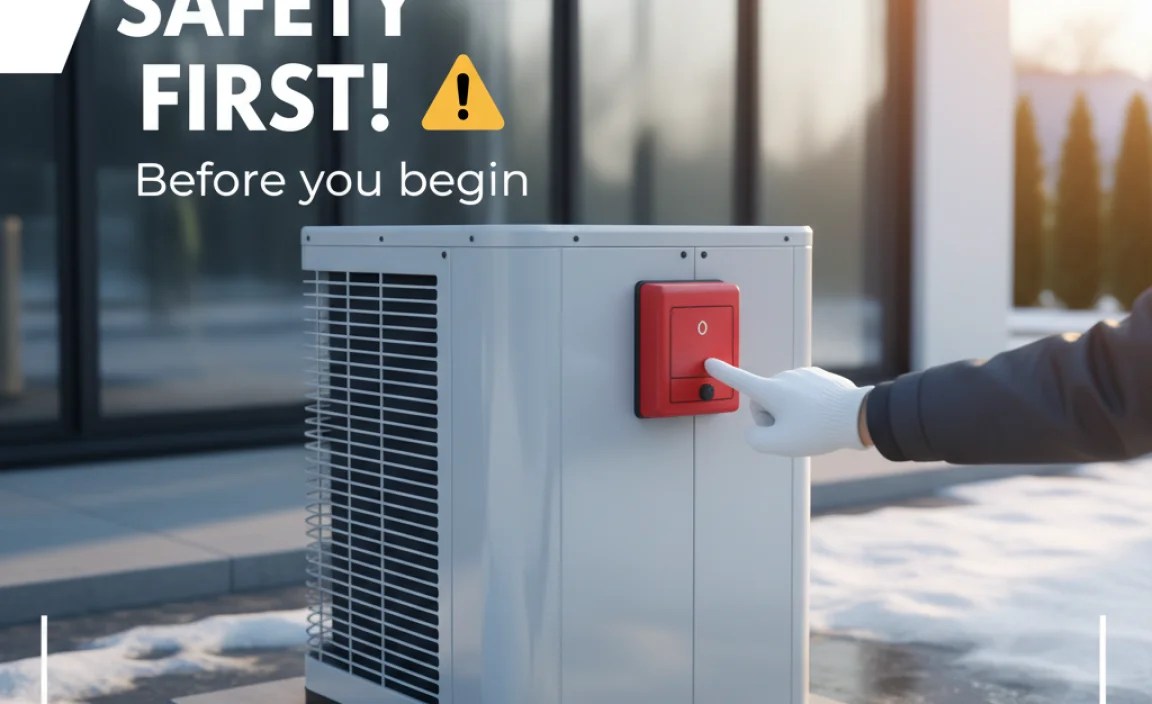
Before you start, remember these safety precautions:
- Turn off the power: Before inspecting any electrical components, turn off the heat pump at the breaker.
- Wear gloves: Protect your hands from sharp edges or cold surfaces.
- Don’t force anything: If something feels stuck, don’t try to force it. Contact a qualified technician.
Tools You Might Need

Luckily, you usually don’t need any special tools to initiate a defrost cycle. However, these items might come in handy:
- Screwdriver: For removing access panels (if necessary).
- Flashlight: For better visibility, especially in dark areas.
- Multimeter: To check the voltage.
Step-by-Step Guide to Initiate Defrost Cycle

Here’s how to manually trigger the defrost cycle on your heat pump. Keep in mind that the exact steps might vary slightly depending on the model, but these methods generally apply to most heat pumps.
Method 1: Using the Thermostat (Emergency Heat)
This is the most common and easiest method.
- Locate the Emergency Heat Switch: Find the “Emergency Heat” or “Auxiliary Heat” switch on your thermostat. It’s usually a clearly labeled button or switch.
- Turn on Emergency Heat: Switch the thermostat to the “Emergency Heat” mode. This setting bypasses the heat pump and uses electric resistance heating.
- Wait Briefly: Leave the emergency heat on for a few minutes (usually 5-10 minutes). This will signal the system to start the defrost cycle when you switch it back.
- Return to Normal Mode: Switch the thermostat back to the regular “Heat” mode.
- Observe the Heat Pump: Go outside and observe the outdoor unit. You should hear the fan stop, and after a short delay, you should see steam rising from the coil as the ice melts.
Method 2: Resetting the Heat Pump (Power Cycle)
This method involves turning off the power to the heat pump and then turning it back on. This can sometimes reset the system and trigger the defrost cycle.
- Locate the Breaker: Find the circuit breaker that controls the heat pump. It’s usually labeled in your electrical panel.
- Turn Off the Breaker: Flip the breaker to the “Off” position.
- Wait a Few Minutes: Leave the breaker off for at least 5-10 minutes. This allows the system to fully discharge any stored energy.
- Turn On the Breaker: Flip the breaker back to the “On” position.
- Monitor the Heat Pump: Observe the outdoor unit. It may take a few minutes for the system to restart and initiate the defrost cycle.
Method 3: Forcing Defrost with a Test Pin (Advanced)
Warning: This method is more technical and should only be attempted if you’re comfortable working with electrical components. Incorrectly performing this method could damage your heat pump. Consult your heat pump’s manual before attempting. If you’re not comfortable, call a qualified technician.
- Locate the Control Panel: Find the control panel on the outdoor unit. This is usually behind a removable access panel.
- Identify the Defrost Test Pin: Inside the control panel, look for a pair of test pins labeled “Defrost Test,” “Test,” or similar. The location and labeling will vary depending on the heat pump model. Refer to your heat pump’s service manual for the exact location.
- Short the Test Pins: Using an insulated screwdriver or a jumper wire, carefully short the two test pins together for a few seconds. This will simulate a signal that triggers the defrost cycle.
- Remove the Jumper: Remove the screwdriver or jumper wire from the test pins.
- Observe the Heat Pump: The heat pump should now enter the defrost cycle. You should hear the fan stop and see steam rising from the coil.
Method 4: Using the Service Valve (Advanced)
Warning: This method involves manipulating refrigerant lines and should only be performed by qualified HVAC technicians. Incorrectly handling refrigerant can be dangerous and illegal.
Some heat pumps have a service valve that can be used to manually initiate the defrost cycle. This involves slightly adjusting the valve to change the refrigerant flow and force the system into defrost mode. However, this method requires specialized knowledge and equipment and should only be attempted by a professional.
Troubleshooting Common Issues
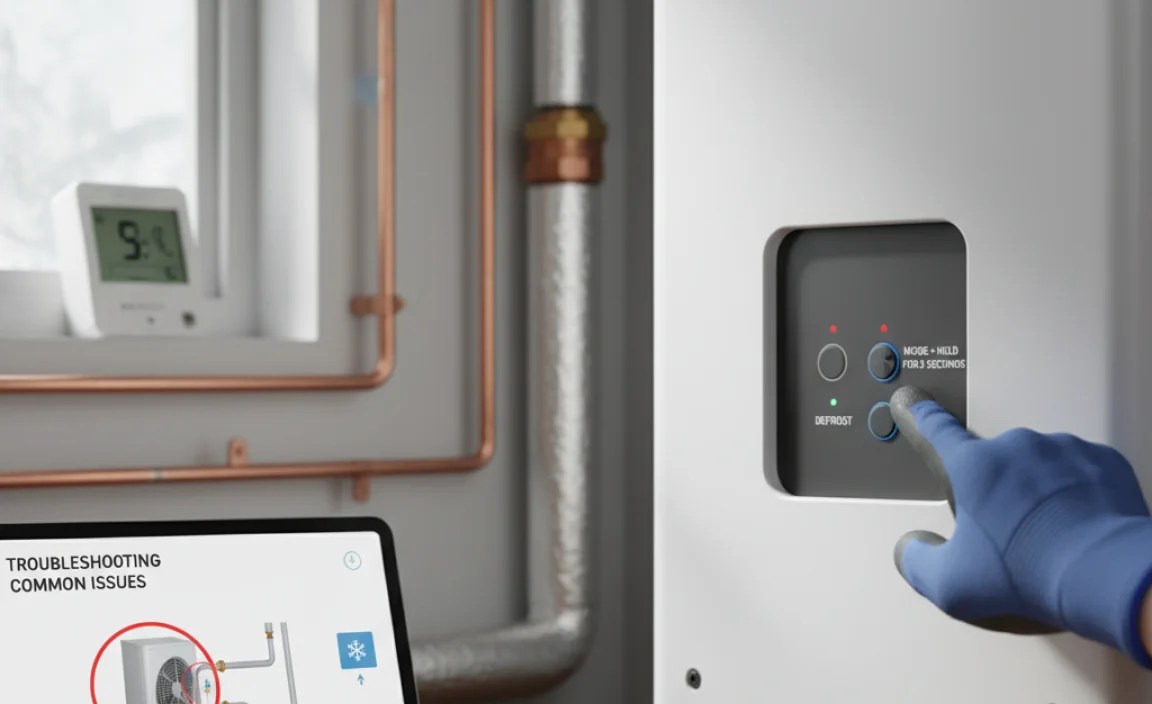
Sometimes, initiating the defrost cycle doesn’t go as planned. Here are some common issues and how to address them:
- Heat pump doesn’t enter defrost mode: Double-check that you followed the steps correctly. Make sure the thermostat is set to “Heat” and the breaker is on. If the problem persists, there might be a faulty sensor or other component that requires professional repair.
- Defrost cycle runs too frequently: If your heat pump is defrosting more than usual, it could indicate a problem with the defrost control board or a faulty sensor. Contact a qualified technician to diagnose and repair the issue.
- Ice buildup continues after defrost: If ice continues to accumulate even after the defrost cycle, there might be an airflow problem or a refrigerant leak. Check for any obstructions around the outdoor unit and schedule a professional inspection to check for leaks.
Preventative Maintenance Tips
Preventing ice buildup is always better than having to manually initiate the defrost cycle. Here are some tips to keep your heat pump running smoothly:
- Keep the area around the outdoor unit clear: Remove any leaves, snow, or other debris that could restrict airflow.
- Trim back vegetation: Overhanging branches or shrubs can block airflow and contribute to ice buildup.
- Clean the outdoor coil: Periodically clean the outdoor coil with a garden hose to remove dirt and debris. Be careful not to damage the fins.
- Schedule regular maintenance: Have a qualified HVAC technician inspect and service your heat pump at least once a year. They can identify and address any potential problems before they become major issues.
When to Call a Professional
While you can often manually initiate the defrost cycle yourself, there are times when it’s best to call a qualified HVAC technician. Here are some situations where professional help is recommended:
- You’re not comfortable working with electrical components: If you’re not confident in your ability to safely perform the steps outlined in this guide, it’s best to leave it to a professional.
- The heat pump is making strange noises: Unusual noises could indicate a mechanical problem that requires professional attention.
- The heat pump is not heating or cooling properly: If your heat pump is not providing adequate heating or cooling, there might be a refrigerant leak or other serious issue.
- You suspect a refrigerant leak: Refrigerant leaks can be harmful to the environment and should be repaired by a qualified technician.
- The problem persists after attempting manual defrost: If you’ve tried the steps in this guide and the heat pump is still not defrosting properly, there’s likely a more complex issue that requires professional diagnosis and repair.
Understanding Heat Pump Efficiency
Maintaining your heat pump properly is crucial for its efficiency. A well-maintained heat pump will not only provide better heating and cooling but also save you money on your energy bills. Here’s a table illustrating the impact of maintenance on heat pump efficiency:
| Maintenance Task | Impact on Efficiency | Frequency |
|---|---|---|
| Coil Cleaning | Increases efficiency by 10-20% | Annually |
| Filter Replacement | Maintains optimal airflow and efficiency | Every 1-3 months |
| Refrigerant Check | Ensures optimal heat transfer | Every 1-2 years |
| Component Inspection | Prevents breakdowns and maintains efficiency | Annually |
Cost Considerations
While manually initiating a defrost cycle can save you money by avoiding a service call, it’s important to consider the long-term costs of neglecting heat pump maintenance. Here’s a breakdown of potential costs associated with heat pump issues:
| Issue | Potential Cost | Prevention |
|---|---|---|
| Frozen Coil | Increased energy bills, potential damage to compressor | Regular defrost cycle checks, proper maintenance |
| Refrigerant Leak | $200 – $1000+ for repair and recharge | Annual inspections by a qualified technician |
| Compressor Failure | $1500 – $4000+ for replacement | Regular maintenance, proper operation |
| Defrost Control Board Failure | $200 – $500+ for replacement | Surge protection, regular inspections |
Frequently Asked Questions (FAQs)
Here are some common questions about heat pump defrost cycles:
- Q: How often should my heat pump defrost?
- A: The frequency depends on the weather conditions. In very cold and humid weather, it might defrost every hour or two. In milder conditions, it might only defrost a few times a day.
- Q: Is it normal to see steam coming from my heat pump during defrost?
- A: Yes, it’s perfectly normal. The steam is simply the ice melting and evaporating.
- Q: Why does my heat pump blow cold air during the defrost cycle?
- A: During defrost, the heat pump temporarily switches to cooling mode to heat the outdoor coil. To compensate for this, the auxiliary heat (electric resistance heat) should kick in to keep your home warm. If you’re not feeling any heat, check your auxiliary heat settings.
- Q: Can I use a garden hose to melt the ice on my heat pump?
- A: While it might seem like a quick solution, using a garden hose can actually make the problem worse. The water can refreeze and create even more ice. It’s best to let the defrost cycle do its job.
- Q: What if my heat pump is constantly running but not heating?
- A: This could indicate a number of problems, such as a refrigerant leak, a faulty compressor, or a problem with the reversing valve. Contact a qualified technician for diagnosis and repair.
- Q: How can I tell if my heat pump’s defrost cycle is working properly?
- A: You should see steam rising from the outdoor unit, and the ice should melt within a few minutes. If the ice doesn’t melt or the cycle seems excessively long, there might be a problem.
- Q: My heat pump is making a loud buzzing noise during defrost. Is that normal?
- A: Some buzzing is normal, but excessive or unusual noises could indicate a problem with the reversing valve or other components. It’s best to have it checked by a professional.
Conclusion
Manually initiating the defrost cycle on your heat pump can be a simple solution to a common problem. By following these steps, you can often get your heat pump back up and running without the need for a costly service call. Remember to prioritize safety and consult a professional if you’re not comfortable working with electrical components or if the problem persists. Regular maintenance and preventative measures can also help to minimize ice buildup and ensure that your heat pump operates efficiently for years to come. Now you can confidently tackle that icy heat pump and keep your home warm all winter long!
“`


