
Does a Heat Pump Defrost Cycle Occur When Not Running?

Quick Summary: No, a heat pump’s defrost cycle should not occur when the system is completely off. The defrost cycle is triggered by specific conditions, such as low outdoor temperatures and ice buildup on the outdoor coil, which require the heat pump to be actively running. If your heat pump is defrosting when it’s turned off, it indicates a malfunction that needs professional attention.
Heat pumps are fantastic for keeping our homes comfortable year-round, but they can sometimes seem a bit mysterious. One common question is whether a heat pump can go into defrost mode even when it’s not actively heating or cooling. It’s a valid concern, especially if you’re trying to save energy or are just curious about how your system works. Seeing your heat pump seemingly “working” when it’s supposed to be off can be confusing and even a little alarming.
In this guide, we’ll break down exactly how the defrost cycle works, what triggers it, and why it shouldn’t be happening when your heat pump is off. We’ll also cover what to do if you suspect your heat pump is defrosting when it shouldn’t be. By the end, you’ll have a clear understanding of your heat pump and how to keep it running efficiently. Let’s dive in!
Understanding the Heat Pump Defrost Cycle

To understand why a heat pump shouldn’t defrost when it’s off, it’s important to first grasp what the defrost cycle is and why it’s necessary. Here’s a breakdown:
What is the Defrost Cycle?
During the heating season, a heat pump extracts heat from the outside air and transfers it indoors. When outdoor temperatures drop below freezing, moisture in the air can freeze on the outdoor coil. This ice buildup acts as an insulator, reducing the heat pump’s ability to absorb heat and decreasing its efficiency. The defrost cycle is designed to melt this ice and keep the system running efficiently.
How Does the Defrost Cycle Work?
The defrost cycle essentially reverses the heat pump’s operation. Here’s a simplified step-by-step look:
- Reversing Valve Activation: The reversing valve switches the flow of refrigerant, causing the outdoor coil to become the condenser and the indoor coil to become the evaporator.
- Hot Refrigerant Flow: Hot refrigerant is directed to the outdoor coil, melting the ice that has accumulated.
- Temporary Heating Stop: During this process, the heat pump temporarily stops providing heat to the inside of your home.
- Auxiliary Heat Activation (Optional): To compensate for the temporary loss of heat, most heat pumps activate auxiliary heat (usually electric resistance heat) to keep your home warm.
- Cycle Termination: Once the outdoor coil is clear of ice, the reversing valve switches back, and the heat pump resumes normal heating operation.
What Triggers the Defrost Cycle?
The defrost cycle is typically triggered by a combination of factors:
- Low Outdoor Temperature: Usually below 40°F (4.4°C), but this can vary depending on the specific model.
- Coil Temperature: Sensors detect the temperature of the outdoor coil; when it drops below freezing, it signals potential ice buildup.
- Time Interval: Many heat pumps have a timer that initiates a defrost cycle at regular intervals (e.g., every 30, 60, or 90 minutes) if the other conditions are met.
- Pressure Sensors: Some advanced systems use pressure sensors to detect ice buildup based on changes in refrigerant pressure.
Why a Heat Pump Shouldn’t Defrost When Off

Now that we know how the defrost cycle works, let’s clarify why it shouldn’t occur when the heat pump is completely turned off:
No Power, No Defrost
The defrost cycle requires power to activate the reversing valve, run the compressor (to circulate refrigerant), and engage the auxiliary heat. If the heat pump is completely off, there’s no power to initiate these processes.
Control System Inactivity
The control system, which includes sensors and timers, is responsible for monitoring conditions and triggering the defrost cycle. When the heat pump is off, the control system is inactive, meaning it can’t detect the need for defrosting or initiate the cycle.
Potential for Damage
If a heat pump were to attempt a defrost cycle without power, it could potentially damage components. For example, the reversing valve could get stuck, or the compressor could be forced to start under unfavorable conditions.
Possible Causes of a Heat Pump Defrosting When Off

If you observe your heat pump seemingly going through a defrost cycle when it’s turned off, it’s a sign that something is wrong. Here are some potential causes:
- Faulty Control Board: A malfunctioning control board could send incorrect signals to the reversing valve or other components, causing them to activate even when the system is off.
- Sticking Reversing Valve: The reversing valve might be stuck in a position that mimics the defrost cycle. This could be due to dirt, debris, or mechanical failure.
- Wiring Issues: Short circuits or damaged wiring could cause components to activate unexpectedly.
- Thermostat Problems: Although less likely, a faulty thermostat could send incorrect signals to the heat pump, even when it’s set to the “off” position.
Troubleshooting Steps
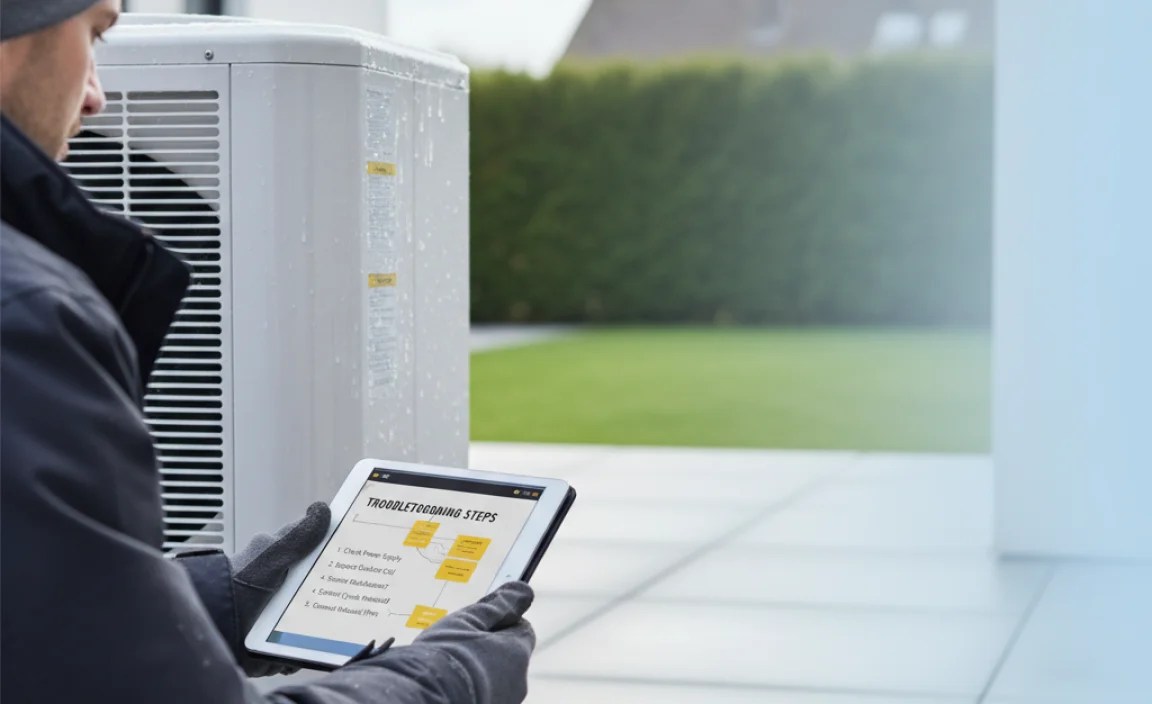
If you suspect your heat pump is defrosting when it’s off, here are some troubleshooting steps you can take:
- Verify Power Status: Ensure the heat pump is truly off. Check the thermostat setting and the main power switch for the unit.
- Observe the System: Watch the outdoor unit closely. Note any unusual noises, fan activity, or steam coming from the coil.
- Check for Error Codes: Some heat pumps display error codes on the control panel. Consult your owner’s manual to understand what the code means.
- Inspect Wiring: Look for any obvious signs of damaged or loose wiring around the outdoor unit. Caution: Turn off the power to the unit before inspecting wiring.
- Contact a Professional: If you’re not comfortable working with electrical components or refrigerant, it’s best to call a qualified HVAC technician.
When to Call a Professional

While some minor issues can be addressed with simple troubleshooting, certain situations require professional help. Call an HVAC technician if:
- You’re not comfortable working with electrical components or refrigerant.
- You suspect a major component like the control board or reversing valve is faulty.
- The heat pump is making unusual noises or emitting strange smells.
- The problem persists after you’ve tried basic troubleshooting steps.
Preventative Maintenance Tips
Preventative maintenance can help keep your heat pump running smoothly and prevent unexpected issues like defrosting when it’s off. Here are some tips:
- Regular Inspections: Schedule annual inspections with a qualified HVAC technician. They can identify potential problems before they become major issues.
- Coil Cleaning: Keep the outdoor coil clean by removing any debris like leaves, grass clippings, and dirt. You can gently rinse the coil with a garden hose.
- Filter Replacement: Replace the air filter regularly (usually every 1-3 months). A dirty filter can restrict airflow and reduce the heat pump’s efficiency.
- Clearance Around Unit: Ensure there’s adequate clearance (at least 2-3 feet) around the outdoor unit to allow for proper airflow.
- Monitor Performance: Pay attention to how your heat pump is performing. If you notice any changes in heating or cooling, or any unusual noises, address them promptly.
Cost Considerations
Addressing issues like a heat pump defrosting when it’s off can involve various costs. Here’s a breakdown of potential expenses:
| Type of Repair | Average Cost | Description |
|---|---|---|
| Control Board Replacement | $200 – $600 | Replacing a faulty control board that’s causing incorrect signals. |
| Reversing Valve Replacement | $300 – $800 | Replacing a stuck or malfunctioning reversing valve. |
| Wiring Repair | $100 – $300 | Repairing or replacing damaged wiring. |
| Professional Inspection | $75 – $200 | Cost of a qualified HVAC technician to diagnose the problem. |
These costs can vary depending on the complexity of the repair, the brand and model of your heat pump, and the labor rates in your area. Regular maintenance can help prevent these issues and reduce overall costs.
Heat Pump Efficiency and Defrost Cycles
The defrost cycle, while necessary, does impact the overall efficiency of your heat pump. Here’s how:
Energy Consumption
During the defrost cycle, the heat pump temporarily switches to cooling mode, which requires energy. Additionally, the auxiliary heat (usually electric resistance heat) is often activated to compensate for the temporary loss of heat, which can be quite energy-intensive.
Impact on SEER and HSPF
The Seasonal Energy Efficiency Ratio (SEER) and Heating Seasonal Performance Factor (HSPF) are used to measure the efficiency of heat pumps. The impact of defrost cycles is factored into these ratings, providing a more accurate representation of real-world performance. However, excessive or unnecessary defrost cycles can still reduce overall efficiency.
Strategies to Improve Efficiency
Here are some strategies to minimize the impact of defrost cycles and improve your heat pump’s efficiency:
- Proper Sizing: Ensure your heat pump is properly sized for your home. An undersized unit will run more frequently and may require more frequent defrost cycles.
- Smart Thermostat: Use a smart thermostat to optimize heating schedules and minimize unnecessary operation.
- Regular Maintenance: Keep the system clean and well-maintained to ensure it operates efficiently.
- Upgrade to a High-Efficiency Model: Consider upgrading to a newer, high-efficiency heat pump with advanced defrost controls.
Advanced Defrost Control Systems
Modern heat pumps often incorporate advanced defrost control systems to minimize energy waste and improve performance. Here are some examples:
- Demand Defrost: These systems use sensors and algorithms to determine when defrosting is actually needed, rather than relying on a fixed time interval. This can significantly reduce the number of unnecessary defrost cycles.
- Intelligent Defrost: These systems monitor various parameters, such as coil temperature, outdoor temperature, and pressure, to optimize the defrost cycle for maximum efficiency.
- Variable-Speed Compressors: Heat pumps with variable-speed compressors can adjust their output to match the heating demand, which can reduce the need for defrosting.
Heat Pump Types and Defrosting
Different types of heat pumps may have slightly different defrost characteristics. Here’s a brief overview:
Air-Source Heat Pumps
These are the most common type of heat pump. They extract heat from the outside air. Air-source heat pumps are prone to ice buildup in cold weather and rely heavily on the defrost cycle.
Geothermal Heat Pumps
Also known as ground-source heat pumps, these systems extract heat from the ground. Because the ground temperature is more stable than the air temperature, geothermal heat pumps are less likely to experience ice buildup and require fewer defrost cycles.
Mini-Split Heat Pumps
These ductless systems are becoming increasingly popular. Mini-split heat pumps also use air as a heat source and have defrost cycles similar to traditional air-source heat pumps. However, some models have advanced defrost controls to improve efficiency.
DIY vs. Professional Heat Pump Service
Deciding whether to tackle heat pump maintenance and repairs yourself or hire a professional can be tricky. Here’s a comparison to help you decide:
| Task | DIY | Professional |
|---|---|---|
| Filter Replacement | Easy and recommended | Not necessary |
| Coil Cleaning | Can be done with care | Recommended for thorough cleaning |
| Troubleshooting | Basic checks only | Comprehensive diagnosis |
| Refrigerant Handling | Not recommended | Required for refrigerant-related issues |
| Complex Repairs | Not recommended | Essential for major component failures |
For simple tasks like filter replacement and coil cleaning, DIY can save you money. However, for more complex issues, especially those involving electrical components or refrigerant, it’s best to call a professional.
FAQ About Heat Pump Defrost Cycles
Here are some frequently asked questions about heat pump defrost cycles:
- Q: How often should my heat pump go into defrost mode?
- A: It depends on the outdoor temperature and humidity. In cold, damp conditions, it might defrost every 30-90 minutes. In milder conditions, it might defrost less frequently.
- Q: Is it normal to see steam coming from my heat pump during the defrost cycle?
- A: Yes, that’s perfectly normal. The steam is simply the ice melting off the coil.
- Q: Why does my heat pump blow cold air during the defrost cycle?
- A: The heat pump temporarily switches to cooling mode to melt the ice. Most systems activate auxiliary heat to compensate for the temporary loss of warm air.
- Q: Can I manually trigger a defrost cycle?
- A: Some thermostats have a “defrost” setting, but it’s generally not recommended to manually trigger a defrost cycle unless necessary. Let the system do its job automatically.
- Q: How can I tell if my heat pump is defrosting too often?
- A: If your heat pump is defrosting more frequently than every 30 minutes, or if it’s defrosting when the outdoor temperature is above freezing, there might be a problem.
- Q: Will a dirty air filter affect the defrost cycle?
- A: Yes, a dirty air filter can reduce airflow and cause the heat pump to work harder, potentially leading to more frequent defrost cycles.
- Q: Can I use a heat pump in very cold climates?
- A: Yes, but some heat pumps are better suited for cold climates than others. Look for models with a high HSPF rating and advanced defrost controls.
Conclusion
To reiterate, a heat pump should not be running a defrost cycle when it’s completely turned off. If you observe this happening, it’s a clear sign that something is amiss and requires investigation. By understanding how the defrost cycle works, recognizing potential issues, and following the troubleshooting steps outlined in this guide, you can ensure your heat pump operates efficiently and reliably.
Remember, regular maintenance is key to preventing problems and extending the life of your heat pump. Whether you choose to handle basic tasks yourself or rely on a professional, staying proactive will save you time, money, and headaches in the long run. Keep your system clean, monitor its performance, and don’t hesitate to seek professional help when needed. With the right care, your heat pump will keep you comfortable for years to come.
“`


