
How Often Should a Heat Pump Cycle? A Simple Guide

Quick Summary: A heat pump should cycle 2-3 times per hour under normal conditions. Shorter, more frequent cycles may indicate a problem like a dirty filter, refrigerant leak, or an oversized unit. Longer, less frequent cycles could mean the system is struggling to meet the thermostat setting. Consistent, abnormal cycling needs a professional’s attention to prevent damage and ensure efficient operation.
Is your heat pump turning on and off more than you think it should? It’s a common concern! A heat pump that cycles too often can drive up your energy bills and might signal a bigger problem. On the other hand, a heat pump that *never* seems to cycle might not be doing its job properly either. Figuring out the right balance can feel tricky, but don’t worry – we’ll walk you through the ideal cycling frequency and what to do if yours isn’t behaving as expected. Let’s get started and keep your home comfortable and your energy bills in check!
Understanding Heat Pump Cycling

Heat pumps are designed to maintain a consistent temperature in your home by cycling on and off. But what exactly does “cycling” mean, and why is it important to understand the frequency?
What is Heat Pump Cycling?
Cycling refers to the process of your heat pump turning on to heat or cool your home and then turning off once the desired temperature is reached. This on-and-off pattern is normal and necessary for efficient operation. Unlike furnaces that produce heat, heat pumps transfer heat, making the cycling process a bit different.
Why is Cycling Frequency Important?
The frequency of these cycles can tell you a lot about your heat pump’s health and efficiency. Too-frequent cycling (short cycling) can indicate problems like:
- Reduced Efficiency: The unit doesn’t run long enough to reach peak efficiency.
- Increased Wear and Tear: Starting and stopping puts extra stress on components.
- Higher Energy Bills: Inefficient operation leads to wasted energy.
On the other hand, infrequent cycling or very long cycles can point to issues such as:
- Inadequate Heating or Cooling: The system struggles to maintain the set temperature.
- Potential Component Failure: The unit may be working overtime, leading to breakdowns.
- Comfort Issues: Uneven temperatures throughout your home.
Ideal Heat Pump Cycling Frequency

So, what’s the magic number? How often *should* your heat pump cycle?
The General Rule: 2-3 Cycles Per Hour
Under normal conditions, a heat pump should cycle about 2 to 3 times per hour. Each cycle should run for a reasonable amount of time – typically 10 to 20 minutes – to effectively heat or cool your home.
Factors Affecting Cycling Frequency
Keep in mind that several factors can influence how often your heat pump cycles:
- Outdoor Temperature: Colder temperatures in winter or hotter temperatures in summer will cause the heat pump to cycle more frequently.
- Indoor Temperature Settings: Setting your thermostat to a higher or lower temperature than usual will also affect cycling.
- Insulation: Poor insulation will make your heat pump work harder to maintain the set temperature.
- Size of the Unit: An oversized or undersized heat pump will cycle more frequently or infrequently, respectively.
- Airflow: Blocked vents or a dirty air filter can restrict airflow, causing the unit to cycle improperly.
Seasonal Variations
You’ll likely notice differences in cycling frequency between seasons:
- Winter: Expect more frequent cycles as the heat pump works harder to extract heat from the cold air.
- Summer: Similar to winter, hotter temperatures mean the heat pump will cycle more often to remove heat from your home.
- Spring and Fall: Milder temperatures usually result in less frequent cycling.
Troubleshooting Common Cycling Problems
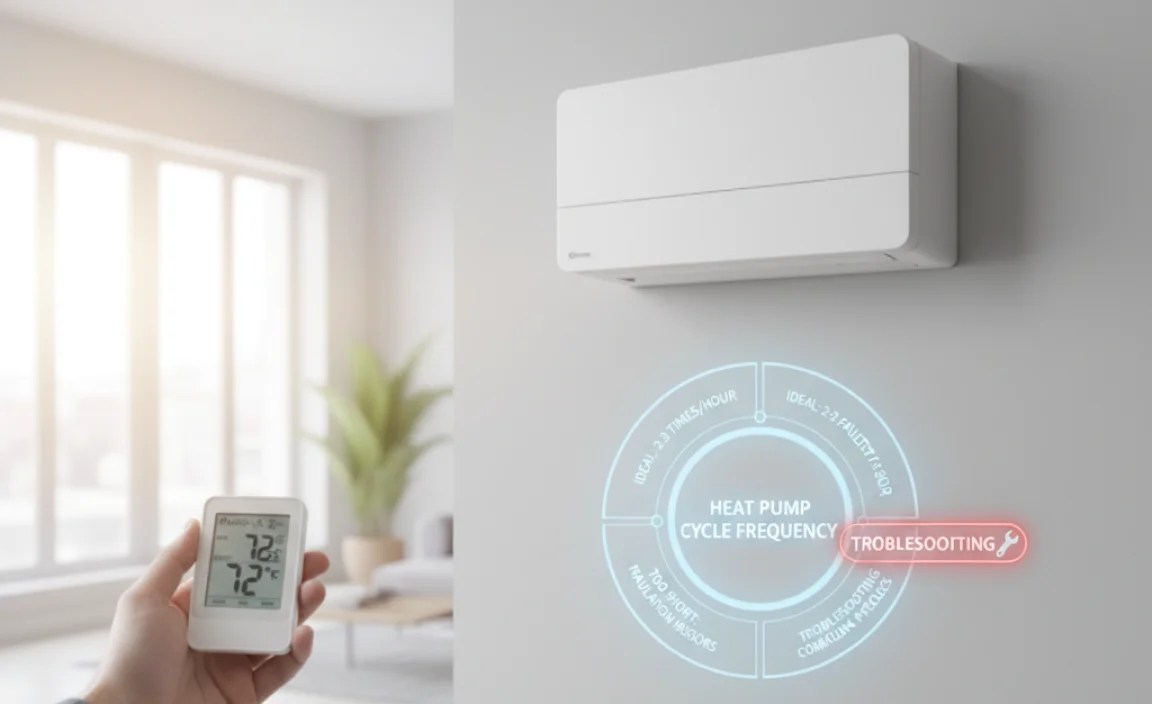
If your heat pump isn’t cycling as expected, don’t panic! Here are some common issues and how to address them.
Short Cycling (Frequent On/Off)
Short cycling is when your heat pump turns on and off rapidly, without running for a sufficient amount of time. This is a common problem with several potential causes.
Possible Causes:
- Dirty Air Filter: A clogged filter restricts airflow, causing the unit to overheat and shut down prematurely.
- Oversized Unit: A heat pump that’s too large for your home will cool or heat the space quickly and then shut off, leading to short cycles.
- Refrigerant Leaks: Low refrigerant levels can cause the unit to overheat and cycle off.
- Electrical Issues: Faulty wiring or a malfunctioning thermostat can also cause short cycling.
Troubleshooting Steps:
- Check and Replace the Air Filter: This is the easiest and most common fix. Replace the filter every 1-3 months, or more often if you have pets or allergies.
- Inspect Vents: Make sure all vents are open and unobstructed to ensure proper airflow.
- Check Thermostat Settings: Ensure the thermostat is set correctly and is not in a location that’s exposed to direct sunlight or drafts.
- Call a Professional: If the problem persists after checking these common issues, it’s time to call a qualified HVAC technician. Refrigerant leaks and electrical issues require professional attention.
Long Cycling (Infrequent On/Off)
Long cycling occurs when your heat pump runs for extended periods without turning off, or doesn’t turn on frequently enough.
Possible Causes:
- Undersized Unit: A heat pump that’s too small for your home will struggle to reach the set temperature and run continuously.
- Poor Insulation: Insufficient insulation allows heat to escape in winter or enter in summer, forcing the unit to work harder.
- Leaky Ductwork: Leaks in the ductwork can cause conditioned air to escape, reducing the system’s efficiency.
- Compressor Issues: A failing compressor may not be able to effectively transfer heat, leading to long cycles.
Troubleshooting Steps:
- Check Insulation: Inspect your home’s insulation, particularly in the attic and walls. Add more insulation if needed.
- Seal Ductwork: Seal any visible leaks in the ductwork with duct tape or mastic sealant.
- Check for Air Leaks: Seal windows and doors with weather stripping or caulk to prevent air leaks.
- Call a Professional: Undersized units and compressor problems require professional evaluation and repair.
DIY Maintenance Tips for Optimal Cycling

Regular maintenance can help keep your heat pump cycling efficiently and prevent many common problems.
Regular Filter Changes
As mentioned earlier, a clean air filter is crucial for proper airflow. Set a reminder to check and replace the filter every 1-3 months.
Clean the Outdoor Unit
The outdoor unit can accumulate dirt, leaves, and debris, which can restrict airflow and reduce efficiency. Clean the unit regularly by removing any visible debris and gently hosing it down. Be careful not to damage the fins.
Inspect and Clean the Fins
The fins on the outdoor unit help dissipate heat. Over time, they can become bent or damaged, reducing their effectiveness. Use a fin comb to straighten any bent fins and gently clean them with a soft brush.
Keep the Area Around the Unit Clear
Ensure that there is at least 2-3 feet of clear space around the outdoor unit to allow for proper airflow. Trim any bushes or plants that are growing too close.
Schedule Professional Maintenance
It’s a good idea to have your heat pump professionally inspected and maintained at least once a year. A technician can identify and address any potential problems before they become major issues.
When to Call a Professional

While some cycling issues can be resolved with DIY maintenance, others require professional attention. Here are some situations when you should call an HVAC technician:
- Refrigerant Leaks: Refrigerant leaks require specialized equipment and training to repair.
- Electrical Problems: Electrical issues can be dangerous and should only be handled by a qualified electrician or HVAC technician.
- Compressor Issues: Compressor repairs are complex and often require replacing the entire unit.
- Unusual Noises: Strange noises such as grinding, squealing, or banging can indicate serious mechanical problems.
- Persistent Cycling Issues: If you’ve tried the DIY troubleshooting steps and the cycling problems persist, it’s time to call a professional.
Choosing the Right Size Heat Pump
Selecting the right size heat pump for your home is essential for efficient and reliable operation. An oversized or undersized unit will not only cycle improperly but also lead to higher energy bills and reduced comfort.
Understanding BTU and Tonnage
Heat pump size is measured in British Thermal Units (BTU) or tons. One ton is equal to 12,000 BTU. The appropriate size depends on several factors, including:
- Square Footage: The size of your home.
- Climate: The average temperatures in your area.
- Insulation: The quality of your home’s insulation.
- Window Efficiency: The type and efficiency of your windows.
Calculating the Correct Size
A professional HVAC technician can perform a load calculation to determine the correct size heat pump for your home. This calculation takes into account all of the factors mentioned above and ensures that you get a unit that’s perfectly matched to your needs.
The Importance of Professional Installation
Even if you choose the right size heat pump, improper installation can lead to cycling problems and reduced efficiency. Always hire a qualified HVAC technician to install your heat pump. They will ensure that the unit is properly connected, charged, and calibrated.
Heat Pump Cycling and Energy Efficiency
Efficient heat pump cycling is directly linked to energy savings. When your heat pump cycles properly, it uses less energy to maintain a comfortable temperature in your home.
The Impact of Short Cycling on Energy Bills
Short cycling is particularly detrimental to energy efficiency. When a heat pump short cycles, it never reaches its peak efficiency. The frequent starts and stops consume more energy than a longer, more consistent cycle.
Optimizing Cycling for Savings
By addressing cycling problems and maintaining your heat pump properly, you can significantly reduce your energy bills. Here are some additional tips for optimizing cycling for savings:
- Use a Programmable Thermostat: A programmable thermostat allows you to adjust the temperature settings based on your schedule, reducing energy consumption when you’re away or asleep.
- Avoid Extreme Temperature Changes: Setting your thermostat to an extreme temperature will cause the heat pump to work harder and cycle more frequently. Instead, aim for gradual temperature changes.
- Consider a Smart Thermostat: Smart thermostats learn your preferences and automatically adjust the temperature settings for optimal comfort and energy savings.
Heat Pump Technology and Cycling
Advancements in heat pump technology have led to more efficient and consistent cycling.
Variable-Speed Heat Pumps
Traditional heat pumps have a single-speed compressor, which means they operate at full capacity whenever they’re turned on. Variable-speed heat pumps, on the other hand, have a compressor that can operate at different speeds. This allows them to adjust their output to match the heating or cooling demand, resulting in more consistent temperatures and less frequent cycling. These are also known as inverter heat pumps. You can learn more about inverter heat pumps at the U.S. Department of Energy.
Benefits of Variable-Speed Technology
- Improved Comfort: More consistent temperatures throughout your home.
- Increased Efficiency: Reduced energy consumption and lower energy bills.
- Quieter Operation: Variable-speed heat pumps are typically quieter than traditional units.
- Longer Lifespan: Reduced wear and tear on components.
Smart Home Integration
Many modern heat pumps can be integrated with smart home systems, allowing you to control and monitor your system remotely. This can help you optimize cycling and energy efficiency.
Heat Pump Cycling FAQs
Here are some frequently asked questions about heat pump cycling:
- Q: Is it normal for my heat pump to run constantly in very cold weather?
- A: Yes, it’s normal for a heat pump to run almost continuously when temperatures are very low. Heat pumps are designed to extract heat from the outside air, and this becomes more difficult as the temperature drops. As long as your home is maintaining a comfortable temperature, the continuous operation is not necessarily a cause for concern.
- Q: How do I know if my heat pump is short cycling?
- A: If your heat pump turns on and off frequently, with cycles lasting only a few minutes, it’s likely short cycling. You may also notice that your home doesn’t reach the set temperature, or that your energy bills are higher than usual.
- Q: Can a dirty air filter really cause cycling problems?
- A: Absolutely! A dirty air filter restricts airflow, causing the heat pump to overheat and shut down prematurely. This is one of the most common causes of short cycling.
- Q: Should I turn off my heat pump when I’m not home?
- A: It’s generally more efficient to set your thermostat to a slightly lower temperature when you’re away, rather than turning off the heat pump completely. This allows the system to maintain a consistent temperature without working too hard to reheat the space when you return.
- Q: How often should I schedule professional maintenance for my heat pump?
- A: It’s recommended to schedule professional maintenance at least once a year. A technician can inspect the system, clean the components, and identify any potential problems before they become major issues.
- Q: Are some heat pump brands more efficient than others?
- A: Yes, different heat pump brands and models have varying efficiency ratings. Look for models with high SEER (Seasonal Energy Efficiency Ratio) and HSPF (Heating Seasonal Performance Factor) ratings for optimal energy savings.
- Q: Can improper installation cause cycling issues?
- A: Yes, improper installation can lead to numerous problems, including incorrect cycling, reduced efficiency, and premature failure. Always hire a qualified HVAC technician for heat pump installation.
Heat Pump Cycling: Key Takeaways
Let’s recap the key points about heat pump cycling:
| Topic | Key Points |
|---|---|
| Ideal Cycling Frequency | 2-3 cycles per hour under normal conditions. |
| Short Cycling | Frequent on/off cycles, often caused by a dirty filter, oversized unit, or refrigerant leak. |
| Long Cycling | Infrequent on/off cycles, often caused by an undersized unit, poor insulation, or leaky ductwork. |
| DIY Maintenance | Regular filter changes, cleaning the outdoor unit, and keeping the area around the unit clear. |
| Professional Help | Call a professional for refrigerant leaks, electrical problems, compressor issues, or persistent cycling problems. |
| Energy Efficiency | Proper cycling optimizes energy efficiency and reduces energy bills. |
Conclusion
Understanding how often your heat pump should cycle is crucial for maintaining a comfortable home and managing your energy costs. By paying attention to the cycling frequency and addressing any issues promptly, you can ensure that your heat pump operates efficiently and reliably for years to come. Remember to perform regular maintenance, and don’t hesitate to call a professional when needed. With the right care and attention, your heat pump will keep you comfortable year-round without breaking the bank!
“`


