
Pump for Large Wheels: Get Yours Today!

Quick Summary:
Need to inflate tires on your bike with large wheels? You’ll want a floor pump with a long hose and high-pressure capability (at least 100 PSI). Look for a pump with a gauge that’s easy to read and a head that fits both Presta and Schrader valves. A stable base is also key for easy pumping.
Large wheels on bikes, like those found on mountain bikes, gravel bikes, or even some e-bikes, need a pump that can handle higher volumes of air. It can be frustrating to struggle with a pump that just doesn’t get the job done. You’re not alone!
This guide will walk you through exactly what to look for in a pump for large wheels. We’ll cover the key features, types of pumps, and even how to use them correctly. Get ready to keep your tires properly inflated and enjoy smoother, faster rides. Let’s get pumping!
Choosing the Right Pump for Large Wheels

When it comes to bikes with large wheels, not all pumps are created equal. You need a pump that can deliver enough air volume to fill those tires quickly and efficiently. Here’s what to consider:
1. Pump Type: Floor vs. Hand
Floor pumps are your best bet for home use. They offer better leverage and can deliver higher pressures with less effort.
Hand pumps are more portable for on-the-go inflation but require more effort to reach higher pressures.
For large wheels, a floor pump is generally recommended unless you specifically need something for the trail.
2. Pressure Rating (PSI)
PSI stands for “pounds per square inch” and measures air pressure. Larger tires, especially on mountain bikes, often require lower pressures than road bike tires. However, you still want a pump capable of reaching at least 100 PSI for versatility.
Check your tire sidewall for the recommended PSI range. Don’t exceed the maximum pressure listed!
3. Gauge Accuracy and Readability
An accurate gauge is essential for proper inflation. Digital gauges are the most precise, but analog gauges are generally reliable and easier to read in bright sunlight.
Look for a gauge with clear markings and a large display.
4. Valve Compatibility (Presta vs. Schrader)
Most bike pumps are designed to work with both Presta and Schrader valves. Presta valves are commonly found on road and high-end mountain bikes, while Schrader valves are similar to those on car tires.
Make sure the pump head is compatible with both valve types or has an adapter for switching between them. Some pumps have “smart heads” that automatically detect the valve type.
5. Hose Length and Material
A longer hose makes it easier to reach the valve, especially on bikes with long wheelbases or awkward valve positions. Flexible hoses are also easier to maneuver.
Look for hoses made from durable materials like rubber or reinforced plastic.
6. Base Stability
A wide, stable base prevents the pump from tipping over during use. This is especially important when inflating tires to higher pressures.
Some pumps have bases made from steel or aluminum for added stability.
7. Comfort and Ergonomics
Consider the handle design and overall ergonomics of the pump. A comfortable handle will make it easier to pump for extended periods.
Look for handles with a non-slip grip and a comfortable shape.
Recommended Pumps for Large Wheels

Here are a few pumps that are well-suited for inflating tires on bikes with large wheels:
- Lezyne Classic Floor Drive: Known for its durability and accuracy.
- Topeak JoeBlow Sport III: A reliable and affordable option.
- Park Tool PFP-5: A shop-quality pump built to last.
- Serfas TCPG: A user-friendly pump with a large gauge.
- PRO Performance Floor Pump: Designed for high-volume inflation.
Step-by-Step Guide to Inflating Your Tires

Now that you’ve chosen the right pump, let’s go through the process of inflating your tires.
1. Prepare Your Bike and Pump
- Make sure your bike is stable, either on a stand or leaning against a wall.
- Check the recommended PSI range on your tire sidewall.
- Prepare your pump by ensuring the head is set to the correct valve type (Presta or Schrader).
2. Connect the Pump Head to the Valve
- For Presta valves: Unscrew the valve nut at the tip of the valve.
- For Schrader valves: Simply remove the valve cap.
- Firmly press the pump head onto the valve, ensuring a tight seal. Some pump heads have a lever that you need to flip to secure the connection.
3. Inflate the Tire
- Begin pumping, using smooth, consistent strokes.
- Keep an eye on the pressure gauge as you pump.
- Stop when you reach the desired PSI.
4. Remove the Pump Head
- Flip the lever (if applicable) to release the pump head.
- Carefully remove the pump head from the valve.
- For Presta valves: Screw the valve nut back on.
- Replace the valve cap on Schrader valves.
5. Check the Tire Pressure
Use a separate tire pressure gauge to double-check the pressure. This is especially important if you’re using an analog pump gauge, which may not be perfectly accurate.
Troubleshooting Common Pumping Problems
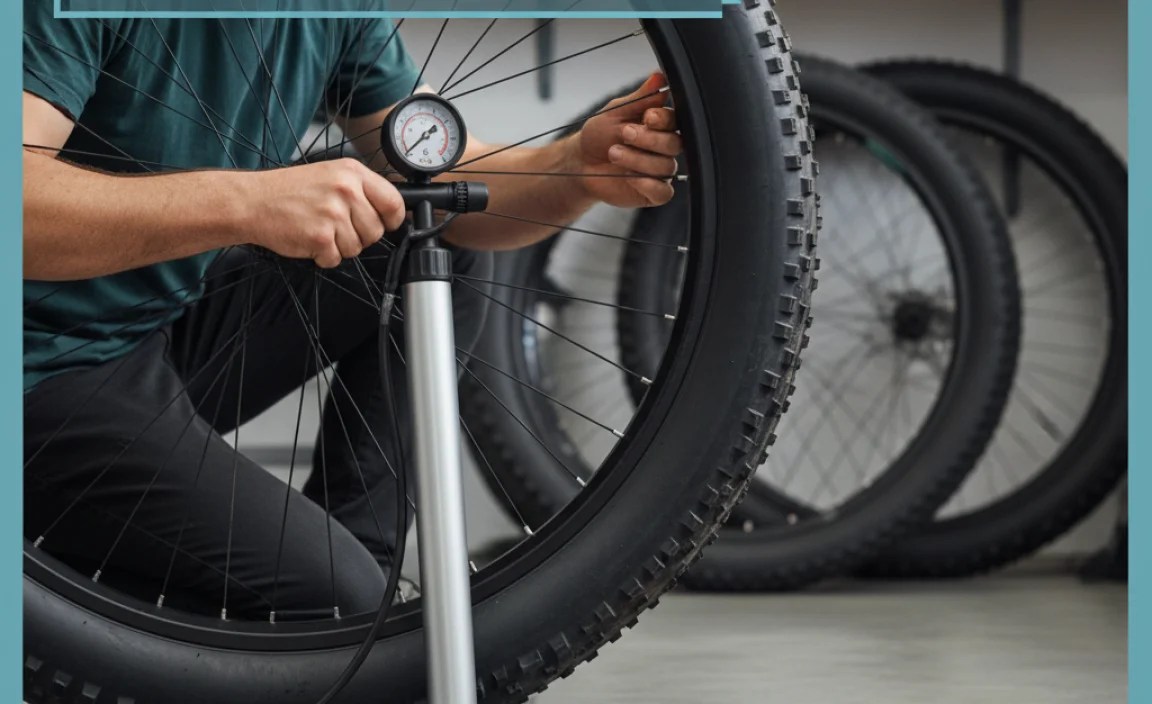
Even with the right pump, you might encounter some issues. Here are a few common problems and how to solve them:
- Air Leaking Around the Valve: Make sure the pump head is securely attached and the valve is clean. Try repositioning the pump head or replacing the valve core.
- Pump Not Building Pressure: Check for leaks in the hose or pump head. Make sure the pump head is set to the correct valve type.
- Gauge Not Working: Try a different pump or tire pressure gauge to verify the reading. The gauge may be damaged and need replacement.
- Difficulty Pumping: Ensure the hose isn’t kinked or blocked. If the pump feels unusually stiff, lubricate the internal parts according to the manufacturer’s instructions.
Maintaining Your Pump for Longevity
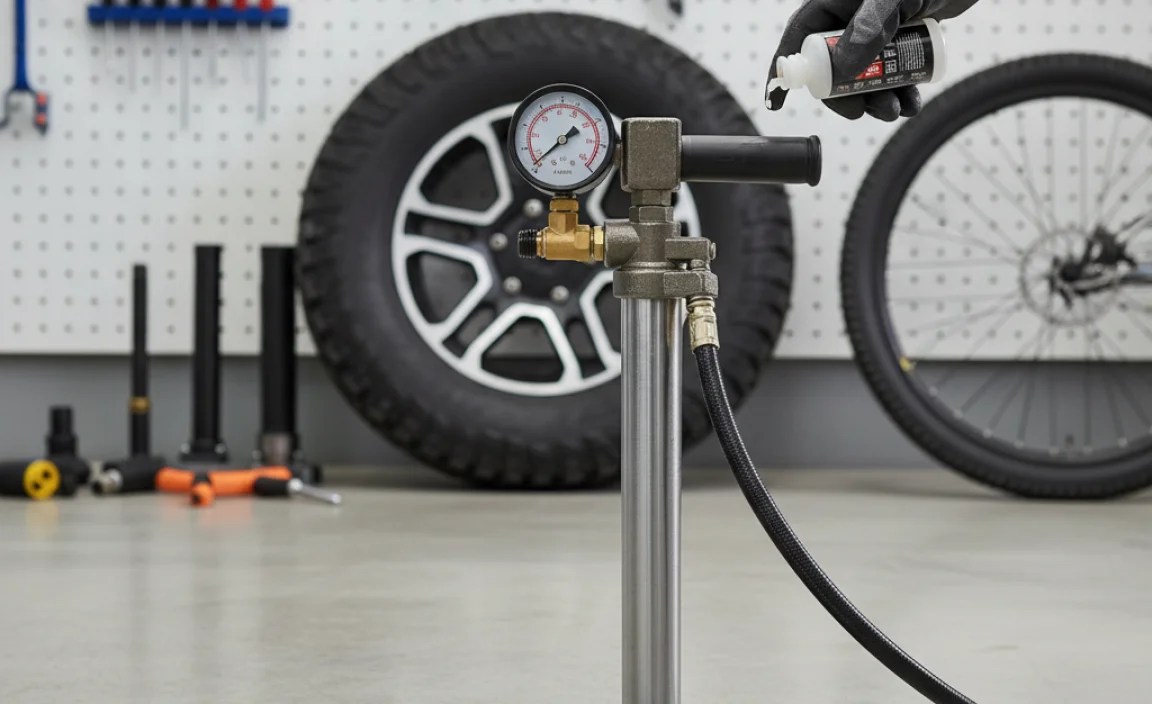
A little maintenance goes a long way in extending the life of your pump. Here are some tips:
- Clean the Pump Head: Regularly clean the pump head to remove dirt and debris.
- Lubricate Moving Parts: Lubricate the piston and other moving parts with a silicone-based lubricant.
- Store Properly: Store the pump in a dry place to prevent rust and corrosion.
- Replace Worn Parts: Replace worn hoses, seals, and pump heads as needed.
Understanding Tire Pressure for Different Riding Styles
The ideal tire pressure depends on several factors, including your weight, riding style, and the type of terrain you’ll be riding on.
Here’s a general guideline:
- Road Bikes: 80-130 PSI (higher pressure for lower rolling resistance)
- Mountain Bikes: 25-40 PSI (lower pressure for better traction)
- Gravel Bikes: 30-60 PSI (a balance of rolling resistance and comfort)
- E-bikes: Consult the tire manufacturer’s recommendations, as e-bikes often require higher pressures due to the added weight.
Experiment with different tire pressures to find what works best for you. A few PSI can make a big difference in comfort and performance. Start with the tire manufacturer’s recommendations and adjust from there.
The Importance of a Quality Gauge
A quality gauge is essential for maintaining optimal tire pressure. Overinflating your tires can lead to a harsh ride and increased risk of punctures, while underinflating them can increase rolling resistance and make the bike harder to handle. A reliable gauge ensures you’re always riding with the correct pressure.
Types of Gauges: Analog vs. Digital
There are two primary types of gauges: analog and digital. Analog gauges are more traditional and use a needle to indicate pressure on a dial. Digital gauges provide a numerical readout, often with greater precision.
| Feature | Analog Gauge | Digital Gauge |
|---|---|---|
| Accuracy | Generally accurate, but can vary | Highly accurate |
| Readability | Easy to read in most conditions | May be difficult to read in direct sunlight |
| Durability | More durable, less prone to damage | More sensitive, can be damaged by impact |
| Cost | Generally less expensive | Generally more expensive |
| Battery Required | No | Yes |
Valve Types and Compatibility
Understanding valve types is crucial for selecting the right pump head. The two most common valve types are Presta and Schrader.
Presta Valve
The Presta valve is commonly found on road bikes and high-end mountain bikes. It is narrower than a Schrader valve and has a valve nut that must be loosened before inflating.
Schrader Valve
The Schrader valve is similar to the valves found on car tires. It is wider than a Presta valve and has a spring-loaded core.
| Feature | Presta Valve | Schrader Valve |
|---|---|---|
| Diameter | Narrower | Wider |
| Commonly Found On | Road bikes, high-end mountain bikes | Mountain bikes, hybrid bikes, car tires |
| Inflation | Requires loosening valve nut | Simple push-on connection |
| Pressure Retention | Generally better | Can sometimes leak air |
| Ease of Use | Slightly more complex | Simpler |
Portable Pumps for On-the-Go Inflation
While floor pumps are ideal for home use, portable pumps are essential for on-the-go inflation. There are two main types of portable pumps: hand pumps and CO2 inflators.
Hand Pumps
Hand pumps are compact and lightweight, making them easy to carry on rides. However, they require more effort to inflate tires to higher pressures.
CO2 Inflators
CO2 inflators use cartridges of compressed carbon dioxide to quickly inflate tires. They are faster and easier to use than hand pumps, but you need to carry spare cartridges.
When choosing a portable pump, consider the following factors:
- Size and Weight: Look for a pump that is compact and lightweight.
- Inflation Power: Choose a pump that can reach the desired pressure for your tires.
- Valve Compatibility: Make sure the pump is compatible with both Presta and Schrader valves.
- Durability: Look for a pump made from durable materials that can withstand the rigors of riding.
Additional Tips for Effective Inflation
Here are some additional tips to ensure effective tire inflation:
- Check Tire Condition: Before inflating, inspect your tires for cuts, bulges, or other damage.
- Use Tire Levers: When changing tires, use tire levers to avoid damaging the rims or tires. REI has a good guide to changing tires.
- Inflate Gradually: Inflate tires gradually, checking the pressure frequently.
- Listen for Leaks: Listen for air leaks around the valve and tire bead.
- Carry a Repair Kit: Always carry a repair kit with a spare tube, tire levers, and a portable pump or CO2 inflator.
FAQ: Choosing a Pump for Large Wheels
Here are some frequently asked questions about choosing a pump for large wheels:
Q: What PSI should I inflate my mountain bike tires to?
A: Mountain bike tire pressure typically ranges from 25-40 PSI. Check the tire sidewall for the manufacturer’s recommended range and adjust based on your weight, riding style, and terrain.
Q: Can I use a car tire inflator on my bike tires?
A: While car tire inflators can technically work, they are often too powerful and can easily overinflate bike tires. It’s best to use a pump specifically designed for bikes.
Q: How often should I check my tire pressure?
A: Check your tire pressure before every ride, especially if you haven’t ridden in a while. Tires can lose air over time, even when not in use.
Q: What’s the difference between a Presta and Schrader valve?
A: Presta valves are narrower and have a valve nut that needs to be loosened before inflating. Schrader valves are wider and similar to those on car tires.
Q: Do I need a special pump for tubeless tires?
A: While a standard floor pump can work for tubeless tires, a pump with a “boost” chamber or a dedicated tubeless inflator can make seating the tire bead easier.
Q: How do I know if my pump is compatible with my valve type?
A: Most pumps come with a head that is either dual-sided (one side for Presta, one for Schrader) or has an adapter to switch between valve types. Check the pump’s instructions or packaging for compatibility information.
Q: What should I do if my tire keeps losing air?
A: If your tire is losing air rapidly, check for punctures or damage to the tire or tube. If the leak is slow, try tightening the valve core or replacing the valve. For tubeless setups, ensure the sealant is fresh and properly coating the inside of the tire.
Conclusion
Choosing the right pump for large wheels doesn’t have to be complicated. By considering the factors we’ve discussed – pump type, pressure rating, gauge accuracy, valve compatibility, and more – you can find a pump that meets your needs and makes tire inflation a breeze. Remember to maintain your pump properly and check your tire pressure regularly to ensure a safe and enjoyable ride. Happy pumping!


