
Best Pump for Stroller Tires: Ride Smoothly!

Quick Summary:
Need to inflate your stroller tires? You’ll typically need a hand pump or a mini pump with a Schrader valve adapter. Check your tire’s PSI rating (usually printed on the sidewall), connect the pump securely to the valve, and pump until you reach the recommended pressure. Don’t over-inflate! A good pump makes all the difference for a smooth ride.
Stroller tires, just like bicycle tires, need the right amount of air to roll smoothly and safely. But figuring out the right pump and technique can be tricky. Are you tired of struggling with the wrong pump or guessing the correct pressure? Don’t worry! We’ll walk you through choosing the best pump for your stroller, understanding tire pressure, and inflating those tires like a pro. Get ready for a smoother ride!
Choosing the Right Pump for Your Stroller Tires

Selecting the right pump is the first step to hassle-free stroller maintenance. Here’s what to consider:
Valve Type: Schrader vs. Presta
The first thing you need to figure out is the valve type on your stroller tires. There are two main types:
- Schrader: This is the same type of valve you find on car tires. It’s wider and has a spring-loaded pin in the center. Most stroller tires use Schrader valves.
- Presta: This valve is narrower and has a locking nut at the tip. You’ll usually find Presta valves on high-end bicycle tires, but it’s rare to see them on strollers.
How to tell the difference? Schrader valves are wider and look like the valves on car tires. Presta valves are skinny with a little nut you have to unscrew.
Pump Types: Hand Pumps, Mini Pumps, and Floor Pumps
Once you know your valve type, you can choose the right pump. Here are the most common options:
- Hand Pumps: These are small, portable, and inexpensive. They’re great for quick top-ups on the go. Look for one specifically designed for inflating tires.
- Mini Pumps: Similar to hand pumps, but often more compact and lightweight. Some mini pumps have built-in pressure gauges.
- Floor Pumps: Also known as track pumps, these are larger and more efficient than hand pumps. They have a footplate for stability and a long handle for easy pumping. Floor pumps are ideal for home use.
Recommendation: For strollers, a good quality hand pump or mini pump with a Schrader valve adapter is usually the best choice. They’re easy to carry and can handle the lower pressure requirements of stroller tires.
Features to Look For
When choosing a pump, keep an eye out for these features:
- Pressure Gauge: A built-in pressure gauge is essential for accurate inflation. It prevents over-inflation, which can damage the tire.
- Schrader Valve Compatibility: Make sure the pump is compatible with Schrader valves, or comes with an adapter.
- Comfortable Handle: A comfortable handle will make pumping easier, especially if you’re inflating the tires frequently.
- Durable Construction: Look for a pump made from high-quality materials that will last.
Understanding Stroller Tire Pressure (PSI)

Knowing the correct tire pressure is crucial for a smooth and safe ride. Here’s what you need to know:
Finding the Recommended PSI
The recommended tire pressure, measured in PSI (pounds per square inch), is usually printed on the sidewall of the tire. Look for a range like “30-35 PSI” or a single number followed by “PSI.”
Important: Always stay within the recommended PSI range. Over-inflating can cause the tire to burst, while under-inflating can lead to a bumpy ride and increased wear and tear.
Why Tire Pressure Matters
Maintaining the correct tire pressure offers several benefits:
- Smooth Ride: Properly inflated tires absorb bumps and provide a more comfortable ride for your child.
- Easy Maneuvering: Correct pressure makes the stroller easier to push and steer.
- Tire Longevity: Proper inflation reduces wear and tear, extending the life of your tires.
- Safety: Correctly inflated tires provide better grip and stability, reducing the risk of accidents.
Factors Affecting Tire Pressure
Several factors can affect tire pressure:
- Temperature: Tire pressure decreases in cold weather and increases in warm weather.
- Load: A heavier load (child and cargo) may require slightly higher pressure.
- Terrain: Rough terrain may benefit from slightly lower pressure for better grip.
Step-by-Step Guide: Inflating Stroller Tires
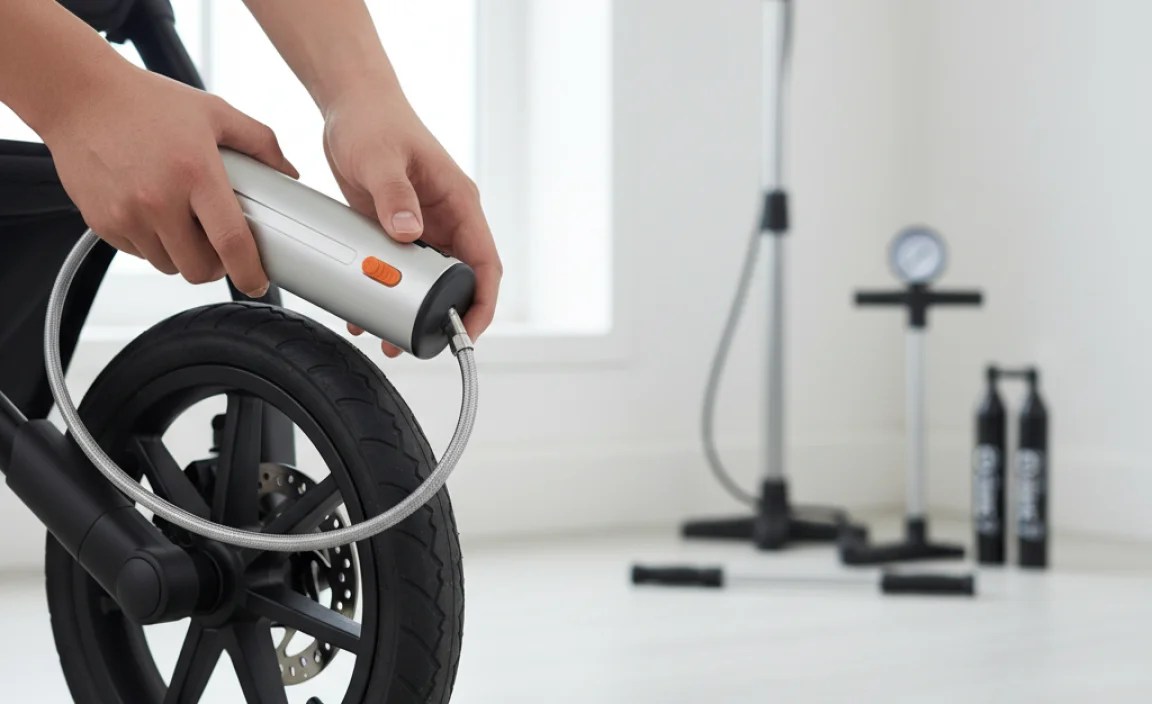
Now that you have the right pump and understand tire pressure, let’s get those tires inflated! Here’s a step-by-step guide:
Tools You’ll Need
- Hand pump or mini pump with Schrader valve adapter
- Tire pressure gauge (if your pump doesn’t have one)
- Clean cloth (optional, for wiping the valve)
Step 1: Locate the Valve
Find the valve stem on the tire. Remove the valve cap by unscrewing it counterclockwise. Store the cap in a safe place so you don’t lose it.
Step 2: Connect the Pump
Attach the pump head to the valve stem. Make sure it’s securely connected to prevent air leaks. If your pump has a lever, flip it to lock the pump head onto the valve.
Step 3: Inflate the Tire
Begin pumping in a steady, even motion. Keep an eye on the pressure gauge (if your pump has one). If you’re using a separate gauge, remove the pump briefly and check the pressure.
Step 4: Check the Pressure
Inflate the tire to the recommended PSI. It’s better to slightly under-inflate than over-inflate. If you accidentally over-inflate, release some air by pressing the pin inside the Schrader valve with a small tool (like the tip of the valve cap).
Step 5: Disconnect the Pump
Once the tire is at the correct pressure, disconnect the pump. If your pump has a lever, flip it to release the pump head. Remove the pump head from the valve stem.
Step 6: Replace the Valve Cap
Screw the valve cap back onto the valve stem clockwise. This protects the valve from dirt and debris.
Step 7: Repeat for Other Tires
Repeat the process for the other tires on your stroller.
Troubleshooting Common Inflation Problems
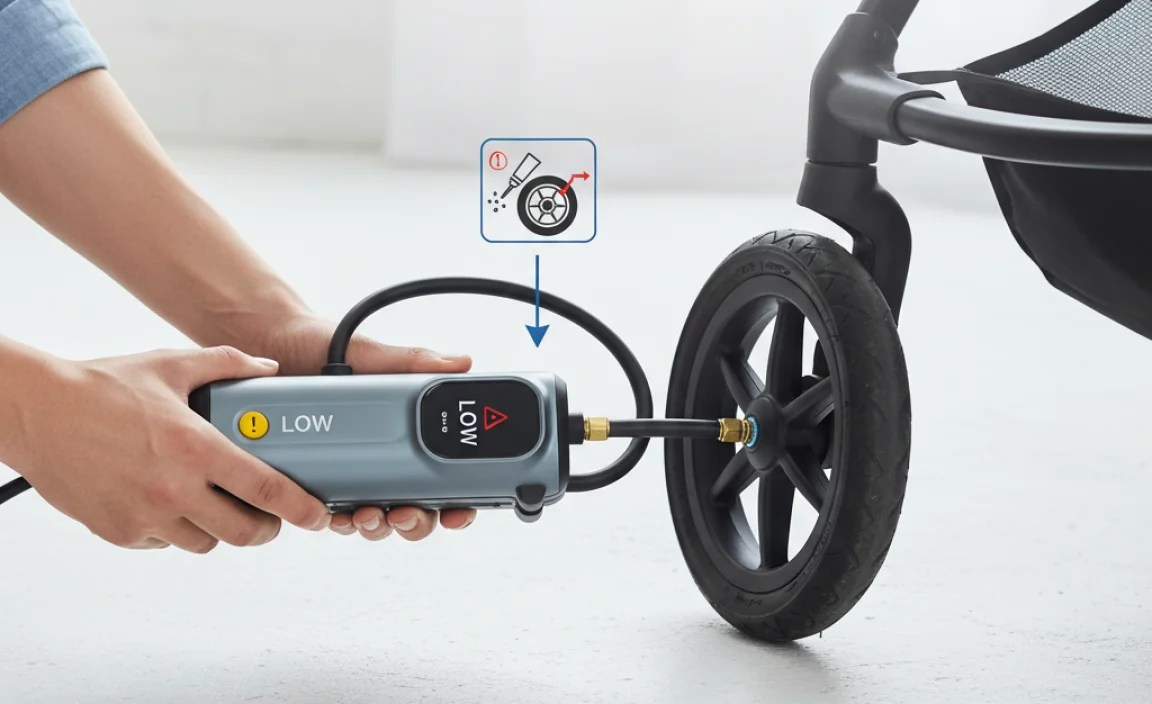
Sometimes, things don’t go as planned. Here are some common problems and how to fix them:
- Air Leaking Around the Valve: Make sure the pump head is securely attached to the valve stem. Try repositioning it or using a different adapter.
- Pump Not Building Pressure: Check the pump’s seals and make sure the hose is not cracked or damaged. The pump may need to be repaired or replaced.
- Difficulty Attaching the Pump: Ensure you’re using the correct adapter for your valve type. Some pumps have reversible heads for Schrader and Presta valves.
- Tire Won’t Hold Air: The tire may have a puncture. You’ll need to repair or replace the tire.
Maintaining Your Stroller Tires for Longevity

Proper maintenance will keep your stroller tires rolling smoothly for years. Here are some tips:
- Regularly Check Tire Pressure: Check the tire pressure at least once a month, or more often if you use the stroller frequently.
- Inspect Tires for Wear and Tear: Look for cuts, cracks, or bulges in the tire. Replace worn tires promptly.
- Clean Tires Regularly: Wipe the tires with a damp cloth to remove dirt and debris.
- Store Stroller Properly: Store the stroller in a cool, dry place away from direct sunlight.
Pump Recommendations
Here are a few recommended pumps for stroller tires:
| Pump Name | Type | Features | Price Range |
|---|---|---|---|
| Topeak Pocket Rocket | Mini Pump | Lightweight, compact, Schrader valve compatible | $25-$35 |
| Schwinn 12-Inch Air Pump | Hand Pump | Easy to use, built-in gauge, durable | $15-$25 |
| Serfas MP-999T | Mini Pump | High pressure, dual head for Schrader/Presta, compact | $30-$40 |
Alternative Inflation Methods
What if you don’t have a pump handy?
Using a Bicycle Pump at a Bike Shop or Gas Station
Many bike shops and gas stations have public air pumps that you can use. These pumps usually have a Schrader valve adapter. Just be careful not to over-inflate the tires.
Using an Air Compressor (Carefully!)
If you have an air compressor, you can use it to inflate your stroller tires. However, be extremely careful! Air compressors can quickly over-inflate tires. Use a pressure regulator and check the pressure frequently.
When to Replace a Tire
Even with the best maintenance, tires eventually wear out. Here are some signs that it’s time to replace your stroller tires:
- Visible Wear: The tread is worn down, and the tire is smooth in places.
- Cracks or Cuts: There are cracks or cuts in the sidewall of the tire.
- Bulges or Warps: The tire has bulges or warps.
- Frequent Leaks: You’re constantly having to add air to the tire.
Replacing stroller tires is usually a straightforward process. You’ll need a tire lever (or a flathead screwdriver) and a new tire. Follow the manufacturer’s instructions for replacing the tire.
FAQ About Pumps for Stroller Tires
1. What kind of pump do I need for stroller tires?
You’ll typically need a hand pump or mini pump with a Schrader valve adapter, as most stroller tires use Schrader valves. Floor pumps are also an option for home use.
2. How do I know what PSI to inflate my stroller tires to?
The recommended PSI (pounds per square inch) is usually printed on the sidewall of the tire. Look for a range like “30-35 PSI” or a single number followed by “PSI.”
3. Can I use a bicycle pump for stroller tires?
Yes, you can use a bicycle pump if it has a Schrader valve adapter or a dual head that works with both Schrader and Presta valves. Make sure to check the pressure with a gauge.
4. What happens if I over-inflate my stroller tires?
Over-inflating can cause the tire to burst, leading to a bumpy and unsafe ride. Always stay within the recommended PSI range.
5. How often should I check the pressure in my stroller tires?
Check the tire pressure at least once a month, or more often if you use the stroller frequently.
6. What if my stroller tire keeps losing air?
The tire may have a puncture. You’ll need to repair or replace the tire. Also, check the valve core to make sure it is tight.
7. Can I use an air compressor to inflate my stroller tires?
Yes, but be extremely careful! Air compressors can quickly over-inflate tires. Use a pressure regulator and check the pressure frequently.
Conclusion
Keeping your stroller tires properly inflated is essential for a smooth, safe, and enjoyable ride. By choosing the right pump, understanding tire pressure, and following our step-by-step guide, you can easily maintain your stroller tires and avoid common problems. Remember to check the pressure regularly, inspect the tires for wear and tear, and replace them when necessary. With a little bit of care, your stroller tires will provide years of reliable service, making every outing with your little one a breeze.


