
Ultimate Pump for All Wheel Sizes: Ride Easy!

Quick Summary: Yes, one pump can often handle all your bike tires! Most modern bike pumps work with both Presta and Schrader valves, the two main types you’ll find. To switch between them, you might need to adjust or flip a small part inside the pump head. Some pumps even auto-adjust. Just check your pump’s instructions to be sure!
Ever get stuck with the wrong pump for your bike tire? It’s a common problem that can sideline your ride. Different bikes use different valve types, and it’s frustrating to have a pump that only works for one. But don’t worry! The good news is that many bike pumps are designed to work with all wheel sizes and valve types. This guide will show you how to choose and use a pump that fits all your bikes, so you can keep rolling without the hassle.
Understanding Bike Tire Valves

Before we dive into pumps, let’s quickly cover the two main types of bike tire valves:
- Presta Valves: These are skinny valves with a small nut at the top that you need to unscrew to inflate. They’re common on road bikes and some higher-end mountain bikes.
- Schrader Valves: These are wider and sturdier, similar to what you find on car tires. They’re often used on mountain bikes, hybrid bikes, and kids’ bikes.
Knowing the difference helps you pick the right pump or adapter.
Choosing a Versatile Bike Pump
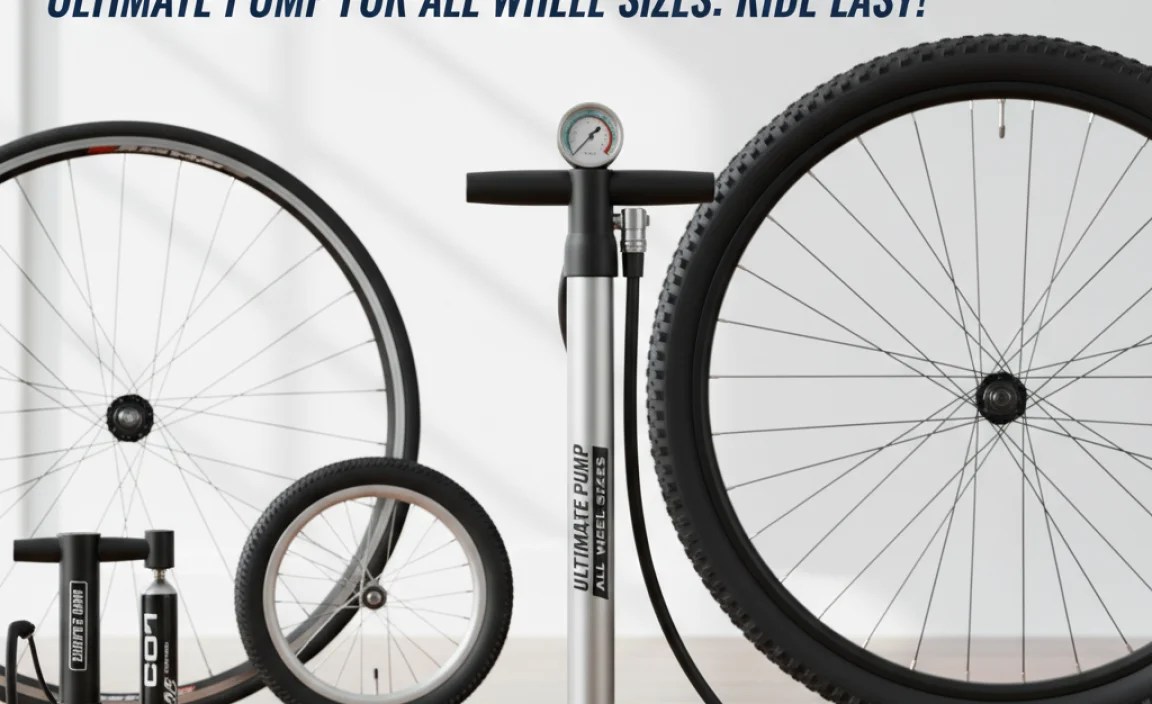
The key to pumping up all your tires is to find a pump that handles both Presta and Schrader valves. Here’s what to look for:
Dual-Head Pumps
These pumps have two separate openings – one for Presta and one for Schrader. Just pick the right one for your valve. They’re super easy to use.
Convertible-Head Pumps
These pumps have a single head that can be adjusted to fit either Presta or Schrader valves. You might need to flip an internal part or unscrew and re-screw a piece inside the pump head. The pump’s instructions will show you how.
Auto-Adjust Pumps
Some newer pumps automatically detect the valve type and adjust accordingly. These are the simplest to use, but they might be a bit more expensive.
Step-by-Step: Pumping Up Your Tires

Here’s a general guide to pumping up your tires. Always check your pump’s specific instructions, as models vary.
Step 1: Prepare the Valve
- Presta: Unscrew the small nut at the top of the valve and press it in briefly to loosen it.
- Schrader: Just remove the valve cap.
Step 2: Attach the Pump Head
- Make sure the pump head is set to the correct valve type. If it’s a convertible head, adjust it as needed.
- Firmly press the pump head onto the valve, making sure it’s snug and secure.
- If your pump has a lever, flip it to lock the pump head onto the valve. This creates an airtight seal.
Step 3: Start Pumping
- Use a smooth, steady motion to pump air into the tire.
- Keep an eye on the pressure gauge (if your pump has one) to avoid over-inflating.
Step 4: Remove the Pump Head
- If your pump has a lever, flip it to release the pump head.
- Carefully pull the pump head straight off the valve.
Step 5: Finish Up
- Presta: Screw the small nut back down on the valve.
- Schrader: Replace the valve cap.
Floor Pumps vs. Hand Pumps

You have two main choices for bike pumps:
- Floor Pumps: These are larger pumps that you stand on the ground. They’re great for home use because they’re more efficient and have a pressure gauge.
- Hand Pumps: These are small and portable, perfect for taking on rides. They’re not as efficient as floor pumps, but they can get you out of a jam.
For home use, a floor pump that handles both valve types is a great investment. For on-the-go repairs, a small hand pump or CO2 inflator is essential.
Maintaining Your Bike Pump

To keep your pump working well, follow these tips:
- Clean the Pump Head: Dirt and debris can clog the pump head, preventing a good seal. Clean it regularly with a damp cloth.
- Check the Hose: Look for cracks or leaks in the hose. Replace it if needed.
- Lubricate the Piston: A dry piston can make pumping difficult. Apply a small amount of silicone grease to the piston as needed.
- Store Properly: Keep your pump in a dry place to prevent rust and corrosion.
Troubleshooting Common Pump Problems
Sometimes, things don’t go as planned. Here are some common issues and how to fix them:
- Pump Won’t Attach: Make sure the pump head is set to the correct valve type and that it’s firmly pressed onto the valve.
- Air Leaks: Check the connection between the pump head and the valve. Make sure the lever (if there is one) is properly engaged. Also, inspect the valve on your bike tire for damage.
- Hard to Pump: The piston might need lubrication. Also, check for kinks or blockages in the hose.
- Pressure Gauge Not Working: The gauge might be broken. If so, you’ll need to replace the pump.
Recommended Bike Pumps
Here are a few pumps that work well with all wheel sizes and valve types:
| Pump Name | Type | Valve Compatibility | Features | Price Range |
|---|---|---|---|---|
| Topeak JoeBlow Sport III | Floor Pump | Presta & Schrader | Easy-to-read gauge, comfortable handle | $40 – $50 |
| Lezyne Micro Floor Drive HP | Hand Pump | Presta & Schrader (convertible) | Compact, high-pressure | $50 – $60 |
| Serfas E-Lusso | Floor Pump | Presta & Schrader (auto-adjust) | Automatic valve adjustment, stable base | $60 – $70 |
| Park Tool PMP-4 | Hand Pump | Presta & Schrader (convertible) | Durable, lightweight | $30 – $40 |
| Blackburn Chamber HV | Floor Pump | Presta & Schrader | High-volume for mountain bike tires, stable base | $70 – $80 |
Understanding Tire Pressure
Getting the right tire pressure is crucial for a comfortable and efficient ride. Here’s a quick guide:
Road Bikes
Road bike tires typically need high pressure, usually between 80 and 130 PSI (pounds per square inch). Check the sidewall of your tire for the recommended pressure range.
Mountain Bikes
Mountain bike tires use lower pressure, typically between 25 and 40 PSI. Lower pressure provides better traction on trails.
Hybrid Bikes
Hybrid bike tires usually need somewhere in the middle, around 50 to 70 PSI. Again, check the tire sidewall for the recommended range.
E-Bikes
E-bike tire pressures can vary widely depending on the specific bike and tire type. Always refer to the manufacturer’s recommendations, as e-bikes can place additional stress on tires. Regularly check and maintain proper inflation for safety and performance.
Important: Always stay within the tire manufacturer’s recommended pressure range. Over-inflating can cause a blowout, while under-inflating can lead to a flat tire or poor handling.
Using CO2 Inflators
CO2 inflators are a quick way to inflate your tires on the road. They use small cartridges of compressed carbon dioxide to fill your tire in seconds.
How to Use a CO2 Inflator
- Attach the inflator head to the valve.
- Screw in the CO2 cartridge to pierce it.
- Control the flow of CO2 to inflate the tire.
- Remove the inflator head and dispose of the empty cartridge properly.
Pros and Cons of CO2 Inflators
| Pros | Cons |
|---|---|
| Fast inflation | Single-use cartridges |
| Lightweight and portable | Can be wasteful |
| Easy to use | Requires practice |
CO2 inflators are great for emergencies, but it’s a good idea to practice using one before you need it on the road. Also, remember to carry spare cartridges.
Safety Tips for Pumping Tires
Safety should always be your top priority. Keep these tips in mind when pumping your tires:
- Use a Pressure Gauge: Avoid over-inflating by using a pump with a pressure gauge.
- Check the Tire Sidewall: Always check the tire sidewall for the recommended pressure range.
- Inspect Your Tires: Look for cuts, bulges, or wear before inflating. Replace damaged tires.
- Be Careful with CO2 Inflators: CO2 cartridges can get very cold when used. Wear gloves to protect your hands.
Valve Extenders: When You Need Them
Valve extenders are small adapters that screw onto your Presta valve, making it longer. You’ll need them if you have deep-section rims, where the valve stem might not be long enough to reach the pump head.
How to Install Valve Extenders
- Remove the Presta valve core using a valve core tool.
- Screw the valve extender onto the valve stem.
- Reinstall the valve core into the end of the extender.
Make sure the extender is securely tightened to prevent leaks.
Tubeless Tire Setup
Tubeless tires are becoming increasingly popular, especially on mountain bikes and gravel bikes. They offer several advantages, including:
- Fewer flat tires
- Lower tire pressure for better traction
- Improved rolling resistance
However, setting up tubeless tires can be a bit tricky. You’ll need:
- Tubeless-ready wheels and tires
- Rim tape
- Tubeless sealant
- A pump that can deliver a high volume of air quickly (a floor pump with a “tubeless” setting is ideal)
The process involves sealing the rim with tape, installing the tire, adding sealant, and then inflating the tire to seat the beads. It might take a few tries to get it right, but the benefits are worth it.
Understanding Different Types of Bike Tires
Different types of bikes need different types of tires. Here’s a quick overview:
- Road Bike Tires: These are narrow and smooth, designed for speed on paved surfaces.
- Mountain Bike Tires: These are wider and have knobby treads for traction on dirt trails.
- Hybrid Bike Tires: These are a compromise between road and mountain bike tires, with a smooth center for efficiency and some side tread for grip.
- Gravel Bike Tires: These are similar to road bike tires but wider and with a slightly textured tread for grip on gravel roads.
Choosing the right tire for your bike and riding style can make a big difference in performance and comfort.
FAQ Section
Q: Can I use a car tire pump on my bike?
A: You can, but only if your bike has Schrader valves. You’ll also need to be very careful not to over-inflate, as car tire pumps deliver a lot of air quickly. A bike-specific pump is generally a better choice.
Q: How do I know what tire pressure to use?
A: Look for the recommended pressure range printed on the sidewall of your tire. Start in the middle of the range and adjust based on your weight, riding style, and terrain.
Q: What’s the difference between Presta and Schrader valves?
A: Presta valves are narrow and have a small nut at the top that you need to unscrew to inflate. Schrader valves are wider and sturdier, similar to car tire valves.
Q: My pump won’t attach to the valve. What should I do?
A: Make sure the pump head is set to the correct valve type and that it’s firmly pressed onto the valve. If your pump has a lever, make sure it’s properly engaged to create an airtight seal.
Q: How often should I check my tire pressure?
A: It’s a good idea to check your tire pressure before every ride, especially if you haven’t ridden in a while. Tires can slowly lose air over time.
Q: What is a good pressure for E-Bike tires?
A: E-bike tire pressures can vary widely depending on the specific bike and tire type. Always refer to the manufacturer’s recommendations, as e-bikes can place additional stress on tires.
Q: Can I use a pump with a gauge for tubeless tires?
A: Yes, a pump with a gauge is highly recommended for tubeless tires. Accurate pressure is crucial for tubeless setups to prevent burping (air loss) and ensure optimal performance. Look for a pump with a gauge that reads in small increments for fine-tuning.
Conclusion
Finding a {pump for all wheel sizes} doesn’t have to be a chore. By understanding the different valve types and pump features, you can choose a versatile pump that will keep all your bikes rolling smoothly. Remember to maintain your pump, check your tire pressure regularly, and follow safety guidelines. With the right pump and a little know-how, you’ll be ready to tackle any ride with confidence. Happy cycling!


