
DIY Geothermal Heat Pump In Floor Heating Plumbing Diagram: Easy?

Do you know how houses stay warm in winter? Some homes use special systems. These systems use the Earth’s heat. It’s like magic! Have you ever heard of a geothermal heat pump? These pumps can heat your home. They can also cool it. People can even install them themselves. It involves things like a DIY geothermal heat pump in floor heating plumbing diagram.
These systems use pipes under the ground. The ground stays at a steady temperature. This temperature helps heat or cool your house. It’s a clever way to save energy!
Did you know you can heat your floors? It’s called in-floor heating. Imagine warm floors in winter! It feels so cozy. A DIY geothermal heat pump in floor heating plumbing diagram shows how to do it. It combines the Earth’s heat with warm floors.
Key Takeaways
- A DIY geothermal heat pump in floor heating plumbing diagram helps you build your own system.
- Geothermal systems use the Earth’s constant temperature for heating and cooling.
- In-floor heating provides comfortable warmth from the ground up.
- Installing a geothermal system can save you money on energy bills.
- Planning and careful installation are key to a successful DIY project.
Understanding Geothermal Heat Pump Diagrams

A DIY geothermal heat pump in floor heating plumbing diagram is like a map. It shows you how to connect all the parts. These parts include pipes, pumps, and the heat exchanger. The diagram helps you understand how the system works. It also shows you how to put it together. You need to follow the diagram carefully. This makes sure your system works right. A good diagram makes the project easier. It helps you avoid mistakes. Understanding the diagram is the first step. Then you can start building your own geothermal system. Imagine having a warm house and saving money. That’s what a good diagram can help you do.
- Diagrams show how to connect pipes and pumps.
- They help you understand the system.
- Good diagrams prevent mistakes.
- Following a diagram ensures proper installation.
- Understanding the diagram is the first step.
Learning to read a DIY geothermal heat pump in floor heating plumbing diagram is a useful skill. It helps you understand how your heating system works. You can also fix small problems yourself. This saves you money on repairs. The diagram shows you where each part goes. It also shows how they connect. You will see lines for pipes and symbols for pumps. The diagram might look complicated at first. But with practice, you can learn to read it. Then you can build your own geothermal system. Imagine the satisfaction of knowing you built it yourself. Plus, you’ll be helping the environment by using clean energy.
Why is a diagram important?
Have you ever tried to build something without instructions? It can be very hard! A DIY geothermal heat pump in floor heating plumbing diagram is like instructions. It shows you exactly what to do. It helps you avoid mistakes. Without a diagram, you might connect the pipes wrong. This could cause the system to not work. A diagram makes the project much easier. It also makes it safer. You can follow the steps one by one. This ensures that everything is done correctly. A good diagram is a must-have for any DIY project.
What symbols are used?
Diagrams use symbols to show different parts. A circle might mean a pump. A line might mean a pipe. These symbols are like a secret code. Once you learn the code, you can read any diagram. Different diagrams might use different symbols. But many symbols are the same. Learning these symbols is like learning a new language. It helps you understand how things work. It also helps you build things yourself. You’ll feel like a real engineer!
Where can you find diagrams?
You can find diagrams in many places. Some websites offer free diagrams. You can also find them in books. Your local library might have books on geothermal systems. Some companies that sell geothermal parts also provide diagrams. Make sure the diagram is clear and easy to read. It should also match the parts you are using. A good diagram will save you time and trouble. Look for diagrams that are made for beginners. These will be easier to understand.
Fun Fact or Stat: The first geothermal heating system in the US was installed in Boise, Idaho, in the 1890s!
Planning Your In-Floor Heating System

Planning is key to a successful DIY geothermal heat pump in floor heating plumbing diagram project. First, you need to decide where the pipes will go. Think about which rooms you want to heat. You also need to think about the type of flooring you have. Some floors work better with in-floor heating than others. Measure the area of each room carefully. This will help you figure out how much pipe you need. Also, consider the layout of your house. This will affect how you run the pipes. A well-planned system will be more efficient. It will also be easier to install. Take your time with the planning stage. It will save you headaches later.
- Decide which rooms to heat.
- Consider your flooring type.
- Measure each room carefully.
- Plan the pipe layout.
- A good plan saves time and trouble.
- Consider future repairs when planning.
Choosing the right materials is also important. You will need special pipes for in-floor heating. These pipes are made to handle hot water. They are also flexible. This makes them easy to install. You will also need a pump to circulate the water. The pump needs to be strong enough to push the water through the pipes. You will also need a control system. This system lets you adjust the temperature in each room. Make sure to buy high-quality materials. This will ensure your system lasts a long time. Don’t try to save money by buying cheap materials. It could cost you more in the long run.
What type of pipes should you use?
There are different types of pipes for in-floor heating. PEX pipes are a popular choice. They are flexible and easy to install. They can also handle high temperatures. Copper pipes are another option. They are more expensive but very durable. Choose pipes that are designed for in-floor heating. This will ensure they can handle the heat and pressure. Ask your local hardware store for advice. They can help you choose the right pipes for your project.
How do you calculate the pipe length?
Calculating the pipe length is important. You don’t want to buy too much or too little pipe. Measure the area of each room. Then, decide how far apart you want the pipes to be. A common spacing is 6 inches. Use this spacing to calculate the total pipe length. Add extra pipe for connections and turns. It’s always better to have a little extra than not enough. There are online calculators that can help you. These calculators make the job easier.
How do you choose the right pump?
The pump is the heart of your in-floor heating system. It circulates the hot water through the pipes. Choose a pump that is strong enough for your system. Consider the size of your house. Also, consider the length of the pipes. A bigger house needs a stronger pump. Ask a professional for advice on choosing the right pump. They can help you calculate the flow rate you need. A good pump will keep your floors warm and comfortable.
Fun Fact or Stat: In-floor heating has been used since Roman times, where they circulated hot air under the floors!
Connecting to a Geothermal Heat Pump

Connecting your in-floor heating to a DIY geothermal heat pump is a big step. The heat pump takes heat from the ground. Then, it sends that heat to your floors. You need to connect the pipes from the floor to the heat pump. This is where the plumbing diagram comes in handy. It shows you how to connect everything correctly. Make sure all the connections are tight. This will prevent leaks. You might need special fittings to connect the pipes. Ask your local hardware store for help. They can show you what you need. Connecting to a geothermal heat pump is a great way to save energy. It’s also good for the environment.
- Connect the in-floor heating pipes to the heat pump.
- Use the plumbing diagram for guidance.
- Make sure all connections are tight.
- Use the right fittings for the pipes.
- Geothermal heat pumps save energy.
- Ensure the system is properly insulated.
Before you start, turn off the power to the heat pump. This will keep you safe. Then, follow the diagram step by step. Connect the supply pipe from the heat pump to the in-floor heating manifold. The manifold is a device that distributes the hot water to each loop of pipe. Then, connect the return pipe from the manifold back to the heat pump. Double-check all the connections. Make sure they are secure. Once you are done, turn the power back on. Test the system to make sure it is working correctly. If you have any problems, consult a professional.
What is a manifold?
A manifold is like a traffic controller for hot water. It takes hot water from the heat pump. Then, it sends it to each loop of pipe in your floor. It also collects the cool water from the pipes. Then, it sends it back to the heat pump to be reheated. The manifold lets you control the temperature in each room. You can adjust the flow of water to each loop. This is how you can make some rooms warmer than others. The manifold is an important part of your in-floor heating system.
How do you bleed the air from the system?
Air can get trapped in the pipes. This can make the system not work well. You need to bleed the air out of the system. There are special valves for this purpose. These valves are usually located on the manifold. Open the valves one by one. Let the air escape. Close the valves when water starts to come out. This process might take some time. But it’s important to do it correctly. Bleeding the air will make your system more efficient.
How do you test the system?
After you connect everything, you need to test the system. Turn on the heat pump. Then, check each loop of pipe. Make sure it is getting warm. Use a thermometer to measure the temperature. The temperature should be even across the floor. If some areas are cold, there might be a problem. Check the connections. Make sure there is no air in the pipes. If you can’t fix the problem yourself, call a professional.
Fun Fact or Stat: Geothermal heat pumps can be used in almost any climate!
Understanding Plumbing Diagrams for In-Floor Heating

Plumbing diagrams are essential for installing in-floor heating. A DIY geothermal heat pump in floor heating plumbing diagram shows the layout of the pipes. It also shows how they connect to the heat pump. The diagram includes important details. It shows pipe sizes, valve locations, and pump specifications. Understanding the diagram is crucial. It helps you avoid mistakes. It ensures the system works efficiently. A good diagram makes installation easier. It also helps with future repairs. Learning to read these diagrams is a valuable skill.
- Plumbing diagrams show pipe layout.
- They include pipe sizes and valve locations.
- Understanding diagrams prevents mistakes.
- Diagrams aid in efficient installation.
- Good diagrams help with future repairs.
- Use updated diagrams for your specific system.
A plumbing diagram is like a roadmap for your heating system. It shows you where everything goes. It also shows how everything connects. The diagram uses symbols to represent different parts. These symbols are standard across the industry. Learning these symbols will help you read any plumbing diagram. The diagram also shows the flow of water. This is important for understanding how the system works. Take the time to study the diagram. It will make the installation process much smoother. Plus, you’ll have a better understanding of your heating system.
What are common plumbing symbols?
Plumbing diagrams use symbols to represent different parts. A circle might represent a valve. A line might represent a pipe. An arrow shows the direction of water flow. A rectangle might represent a pump. Learning these symbols is like learning a new language. There are charts available online that show common plumbing symbols. Keep a chart handy when you are reading a plumbing diagram. This will help you understand what each symbol means.
How do you read a flow diagram?
A flow diagram shows how water moves through the system. Arrows indicate the direction of flow. The diagram shows where the water enters the system. It also shows where it exits. The diagram also shows any branches in the system. These branches might lead to different rooms. Understanding the flow of water is important. It helps you understand how the system heats your home. It also helps you troubleshoot any problems.
What are the different types of valves?
Valves control the flow of water in the system. There are different types of valves. Ball valves are used to turn the water on and off. Check valves prevent water from flowing backwards. Thermostatic valves control the temperature in each room. Each type of valve has a specific purpose. Understanding the different types of valves is important. It helps you choose the right valves for your system. It also helps you maintain the system.
Fun Fact or Stat: Some geothermal systems can also provide hot water for your home!
Installing the Geothermal Loop
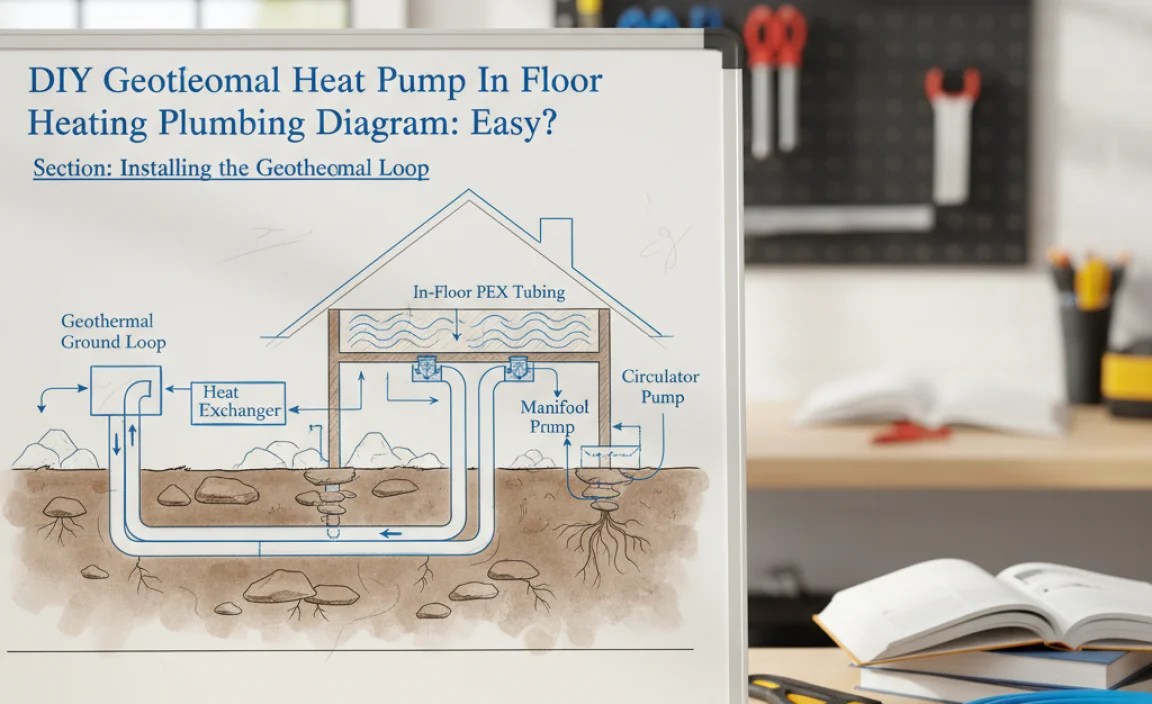
The geothermal loop is a key part of the system. It’s where the heat exchange happens. The loop is buried underground. It can be horizontal or vertical. A DIY geothermal heat pump in floor heating plumbing diagram will show you how to install it. Horizontal loops are cheaper to install. But they need more land. Vertical loops are more expensive. But they take up less space. The loop is filled with a special fluid. This fluid absorbs heat from the ground. Then, it carries the heat to the heat pump. Installing the loop correctly is very important. It ensures the system works efficiently.
| Type of Loop | Cost | Space Needed | Installation Difficulty |
|---|---|---|---|
| Horizontal Loop | Lower | More | Easier |
| Vertical Loop | Higher | Less | Harder |
| Pond Loop | Moderate | Requires Pond | Moderate |
| Slinky Loop | Moderate | Moderate | Moderate |
- The geothermal loop exchanges heat with the ground.
- Loops can be horizontal or vertical.
- Horizontal loops need more land.
- Vertical loops are more expensive.
- The loop is filled with special fluid.
- Proper installation is crucial for efficiency.
Before you start, check with your local authorities. You might need a permit to install a geothermal loop. Also, make sure you know where any underground utilities are located. You don’t want to dig into a gas line or a water pipe. Dig the trenches for the loop. Then, lay the pipes in the trenches. Connect the pipes to the heat pump. Fill the trenches with dirt. Make sure the ground is level. Test the system to make sure it is working correctly. If you have any problems, consult a professional.
How deep should you bury the loop?
The depth of the loop depends on your climate. In colder climates, you need to bury the loop deeper. This will protect it from freezing. A general rule is to bury the loop at least 6 feet deep. Check with your local authorities for specific requirements. Burying the loop at the right depth is important. It ensures the system works efficiently. It also protects the pipes from damage.
What type of fluid should you use?
The fluid in the loop carries heat from the ground to the heat pump. You need to use a special fluid designed for geothermal systems. A common choice is a mixture of water and antifreeze. The antifreeze prevents the fluid from freezing. Choose a fluid that is safe for the environment. Some fluids can be harmful if they leak into the ground. Ask your local hardware store for advice. They can help you choose the right fluid for your system.
How do you pressure test the loop?
Before you bury the loop, you need to pressure test it. This will make sure there are no leaks. Connect a pressure gauge to the loop. Then, pump air into the loop. The pressure should hold steady for several hours. If the pressure drops, there is a leak. Find the leak and repair it. Then, test the loop again. Pressure testing is important. It prevents leaks after the loop is buried.
Fun Fact or Stat: Geothermal energy is a renewable energy source, meaning it replenishes naturally!
Connecting In-Floor Heating Pipes
Connecting the in-floor heating pipes is a detailed job. You need to follow the DIY geothermal heat pump in floor heating plumbing diagram carefully. The pipes need to be connected to a manifold. The manifold distributes hot water to each zone. Each zone is a separate area of your floor. You need to use the correct fittings. These fittings ensure a tight seal. This prevents leaks. Take your time and double-check your work. A mistake can cause problems later. Connecting the pipes correctly is essential. It ensures even heat distribution. It also prevents costly repairs.
- Connect pipes to the manifold carefully.
- The manifold distributes hot water to zones.
- Use the correct fittings for a tight seal.
- Double-check connections to prevent leaks.
- Ensure even heat distribution.
- Insulate pipes to minimize heat loss.
Before you start, make sure you have all the necessary tools. You will need a pipe cutter, a crimping tool, and fittings. Cut the pipes to the correct length. Then, attach the fittings. Use the crimping tool to create a secure connection. Make sure the connections are tight. There should be no gaps. Connect the pipes to the manifold. Follow the diagram to ensure you connect them correctly. Test each connection for leaks. If you find a leak, fix it immediately.
What tools do you need?
You will need several tools to connect the pipes. A pipe cutter is used to cut the pipes to the correct length. A crimping tool is used to secure the fittings. A measuring tape is used to measure the pipes. A level is used to make sure the pipes are level. A wrench is used to tighten the fittings. Having the right tools makes the job easier. It also ensures a professional-looking result.
How do you avoid leaks?
Leaks can be a big problem in in-floor heating systems. To avoid leaks, use the correct fittings. Make sure the fittings are compatible with the pipes. Use a crimping tool to create a secure connection. Don’t over-tighten the fittings. This can damage the pipes. Test each connection for leaks after you make it. If you find a leak, fix it immediately. By taking these precautions, you can avoid leaks.
How do you insulate the pipes?
Insulating the pipes is important. It prevents heat loss. This makes the system more efficient. Use pipe insulation to wrap the pipes. Secure the insulation with tape. Make sure the insulation covers the entire pipe. Pay special attention to the connections. These are areas where heat can easily escape. Insulating the pipes will save you money on energy bills.
Fun Fact or Stat: In-floor heating can improve air quality by reducing dust circulation!
Testing and Maintaining Your System
Testing and maintaining your DIY geothermal heat pump in floor heating plumbing diagram system is important. It ensures everything works well. After installation, test the system. Check for leaks. Make sure the heat is distributed evenly. Regular maintenance keeps your system running smoothly. This includes cleaning filters and checking connections. A well-maintained system lasts longer. It also saves you money on repairs. A plumbing diagram helps you troubleshoot problems. By testing and maintaining your system, you ensure comfort and efficiency.
- Test the system after installation.
- Check for leaks and even heat.
- Clean filters regularly.
- Check connections for tightness.
- Regular maintenance extends system life.
- Keep the plumbing diagram for troubleshooting.
To test the system, turn it on. Let it run for a few hours. Then, walk around your house. Feel the floor in each room. The floor should be warm. The temperature should be consistent. If some areas are cold, there might be a problem. Check the manifold. Make sure the valves are open. Check the pump. Make sure it is running. If you still have problems, consult a professional. Regular maintenance includes cleaning the filters. The filters keep dirt and debris out of the system. Clean the filters every few months. Also, check the connections. Make sure they are tight. This will prevent leaks.
How often should you clean the filters?
You should clean the filters every few months. The filters trap dirt and debris. Over time, they can become clogged. This reduces the efficiency of the system. Cleaning the filters is easy. Just remove them and rinse them with water. Let them dry before putting them back in. Check your system’s manual for specific instructions. Regular filter cleaning keeps your system running smoothly.
How do you check for leaks?
Leaks can cause water damage and reduce system efficiency. To check for leaks, look for wet spots around the pipes and connections. You can also use a leak detector. This device beeps when it detects moisture. If you find a leak, turn off the system. Then, repair the leak. Leaks should be fixed promptly to prevent further damage.
What if the floor is not heating evenly?
If the floor is not heating evenly, there might be several causes. First, check the manifold. Make sure the valves are open. Second, check the pump. Make sure it is running. Third, bleed the air from the system. Air can get trapped in the pipes. This prevents the water from circulating properly. If you still have problems, consult a professional. They can diagnose the problem and recommend a solution.
Fun Fact or Stat: Geothermal systems have a lifespan of 20-25 years for the heat pump and 50+ years for the ground loop!
Summary
A DIY geothermal heat pump in floor heating plumbing diagram can help you create an efficient heating system. Geothermal systems use the Earth’s heat. This saves energy and money. In-floor heating provides comfortable warmth. Planning is important. Choose the right materials. Follow the diagram carefully. Connect the pipes correctly. Test the system after installation. Regular maintenance keeps the system running smoothly. With careful planning and installation, you can enjoy the benefits of a DIY geothermal heat pump in floor heating plumbing diagram system for years to come. It is a big project but the benefits are worth it.
Conclusion
Installing a DIY geothermal heat pump in floor heating plumbing diagram system can be a rewarding project. It requires careful planning and attention to detail. You need to follow the plumbing diagrams closely. Understanding the system is very important. It will save you money on energy bills. It is also good for the environment. It is a great way to heat your home. You will enjoy warm floors and save money. It is a complex project, but it is possible to do it yourself.
Frequently Asked Questions
Question No 1: What is a geothermal heat pump?
Answer: A geothermal heat pump is a device that uses the Earth’s natural heat to warm or cool your home. The Earth stays at a fairly constant temperature all year round. In the winter, the heat pump pulls heat from the ground and brings it inside. In the summer, it takes heat from inside your home and sends it back into the ground. It’s like a refrigerator, but it works for your whole house. It is a great way to save energy and reduce your carbon footprint. A DIY geothermal heat pump in floor heating plumbing diagram can help you build your own system.
Question No 2: What is in-floor heating?
Answer: In-floor heating is a system that heats your home from the floor up. Pipes are installed under your floor. Hot water circulates through these pipes. This warms the floor. The heat then rises and warms the room. It’s a very comfortable way to heat your home. It also saves energy. Because the heat comes from the floor, you don’t need to set the thermostat as high. It is a very efficient and comfortable way to heat your home. You can combine in-floor heating with a geothermal heat pump for even greater savings.
Question No 3: Is it hard to install a DIY geothermal heat pump with in-floor heating?
Answer: Installing a DIY geothermal heat pump in floor heating plumbing diagram system is a big project. It requires a lot of planning and work. You need to understand plumbing and electrical systems. You also need to be able to dig trenches and lay pipes. If you are comfortable with these tasks, you can do it yourself. But if you are not, it’s best to hire a professional. A professional can ensure the system is installed correctly. They can also help you avoid costly mistakes. Even if you hire a professional, understanding the basics of the system is helpful.
Question No 4: How does a plumbing diagram help?
Answer: A plumbing diagram is like a roadmap for your heating system. It shows you where all the pipes go. It also shows you how they connect to the heat pump and the manifold. The diagram uses symbols to represent different parts. Learning these symbols will help you understand the diagram. The diagram also shows the flow of water. This is important for understanding how the system works. Take the time to study the diagram. It will make the installation process much smoother. Plus, you’ll have a better understanding of your heating system. A DIY geothermal heat pump in floor heating plumbing diagram is crucial for a successful project.
Question No 5: How much money can I save with a geothermal heat pump and in-floor heating?
Answer: A geothermal heat pump and in-floor heating system can save you a lot of money. Geothermal systems are very efficient. They use less energy than traditional heating systems. In-floor heating is also very efficient. It heats the room evenly and comfortably. Together, these two systems can save you up to 70% on your heating bills. The exact amount of savings depends on your climate and the size of your house. But you can expect to save a significant amount of money. You will also be helping the environment by using clean energy. It is a big investment but it pays off in the long run.
Question No 6: Where can I find a good DIY geothermal heat pump in floor heating plumbing diagram?
Answer: You can find DIY geothermal heat pump in floor heating plumbing diagrams in several places. Some websites offer free diagrams. You can also find them in books at your local library. Some companies that sell geothermal parts also provide diagrams. Make sure the diagram is clear and easy to read. It should also match the parts you are using. A good diagram will save you time and trouble. Look for diagrams that are made for beginners. These will be easier to understand. You can also ask a professional for help finding a good diagram. They may have some recommendations.


