
Do All Heat Pumps Have a Defrost Cycle? Here’s What You Need to Know

Quick Summary: Yes, virtually all heat pumps have a defrost cycle. This is essential because heat pumps can ice up in cold weather. The defrost cycle melts the ice, allowing the heat pump to continue heating your home efficiently. Without it, the heat pump’s performance would drop significantly.
Living with a heat pump means enjoying energy-efficient heating and cooling. But what happens when winter arrives? You might notice your heat pump occasionally going into a “defrost” mode. It’s a common question: Do all heat pumps have this defrost cycle? The answer is almost always yes! It’s a crucial part of how they work in colder climates. If you’ve ever wondered why your heat pump sometimes seems to switch to cooling mode in the winter, this article will explain everything you need to know. We’ll cover what the defrost cycle is, why it’s necessary, and what to expect when it kicks in. Let’s dive in!
Understanding the Heat Pump Defrost Cycle

The defrost cycle is a process that removes ice buildup from the outdoor coil of a heat pump during the heating season. To understand why it’s needed, we need to quickly grasp how a heat pump works.
How Heat Pumps Work in Heating Mode
In heating mode, a heat pump extracts heat from the outside air and transfers it inside your home. Even when it feels cold outside, there’s still some heat energy present. The heat pump uses a refrigerant to absorb this heat and circulate it through a series of coils. As the refrigerant moves through the outdoor coil, it evaporates and absorbs heat from the air. This process cools the outside coil.
Why Defrosting is Necessary
When the outdoor coil’s temperature drops below freezing (32°F or 0°C), moisture in the air can freeze on the coil’s surface. This ice buildup acts as an insulator, reducing the heat pump’s ability to extract heat from the air. The more ice that accumulates, the less efficient the heat pump becomes. Eventually, if the ice isn’t removed, the heat pump may struggle to heat your home at all. That’s where the defrost cycle comes in.
How the Defrost Cycle Works

The defrost cycle is essentially a temporary switch to cooling mode. Here’s a breakdown of the process:
- Reversing the Refrigerant Flow: The heat pump reverses the flow of refrigerant, sending hot refrigerant to the outdoor coil.
- Melting the Ice: The hot refrigerant warms the coil, melting the ice that has accumulated.
- Temporary Cooling Inside: Because the heat pump is briefly in cooling mode, you might notice a temporary drop in the temperature of the air coming from your vents. Auxiliary heat (electric resistance heat) usually kicks in to offset this.
- Cycle Duration: The defrost cycle typically lasts between 5 and 15 minutes.
- Returning to Heating Mode: Once the ice is melted, the heat pump switches back to its normal heating mode.
Detecting the Defrost Cycle
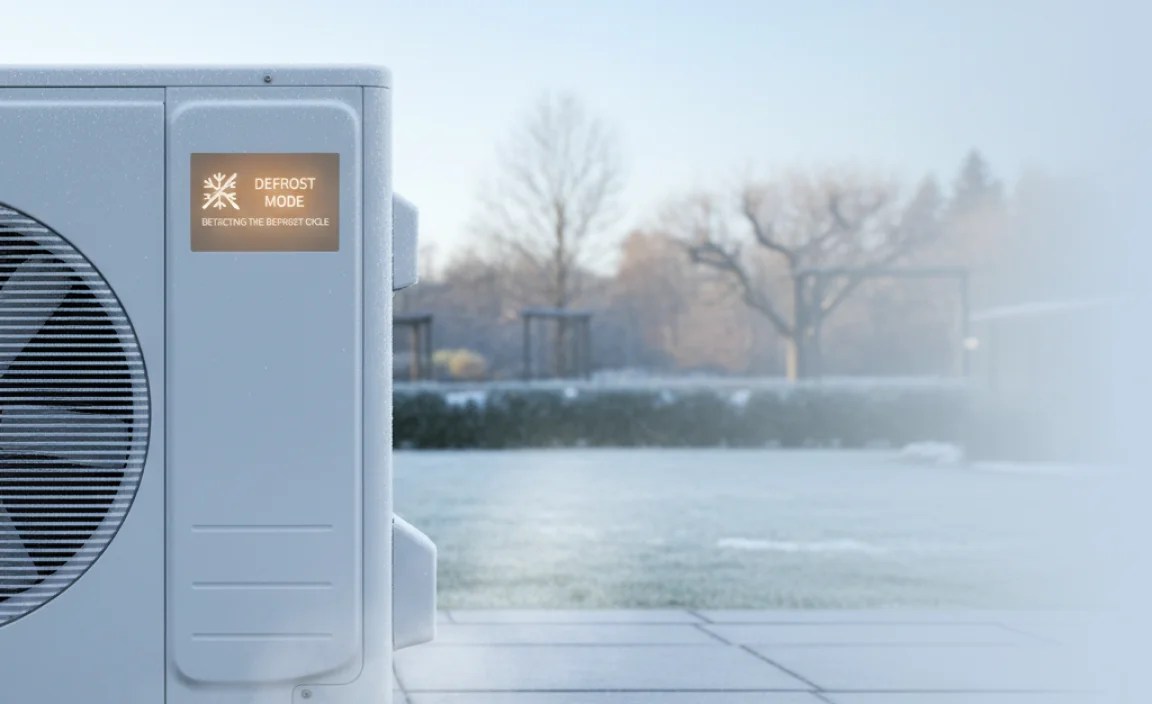
There are several signs that your heat pump is in defrost mode:
- Steam or Fog: You might see steam or fog rising from the outdoor unit as the ice melts.
- Fan Shutoff: The outdoor fan usually stops running during the defrost cycle. This helps the coil heat up more quickly.
- Cool Air from Vents: You might feel a brief blast of cool air from your indoor vents.
- Noises: You might hear gurgling or hissing sounds as the refrigerant reverses and the ice melts.
Factors Influencing Defrost Cycle Frequency

The frequency of the defrost cycle depends on several factors:
- Outdoor Temperature: Heat pumps will defrost more often when temperatures are near freezing (around 32°F or 0°C).
- Humidity: High humidity levels increase the amount of moisture in the air, leading to faster ice buildup.
- Heat Pump Model: Some heat pump models have more efficient defrost cycles than others.
- Airflow: Restricted airflow to the outdoor unit can cause it to ice up more quickly.
Types of Defrost Cycles

Heat pumps use different methods to initiate the defrost cycle:
- Timed Defrost: This is the simplest type. The heat pump automatically defrosts at preset intervals (e.g., every 30, 60, or 90 minutes) regardless of whether ice is present.
- Temperature-Based Defrost: This type uses a temperature sensor on the outdoor coil to detect when the coil temperature drops below a certain threshold, indicating ice buildup.
- Demand Defrost: This is the most efficient type. It uses a combination of temperature and pressure sensors to determine when defrosting is actually needed. This minimizes unnecessary defrost cycles.
Is the Defrost Cycle Normal?
Yes, the defrost cycle is a completely normal and necessary part of heat pump operation in cold weather. It’s a sign that your heat pump is working as designed to keep your home warm.
When to Be Concerned
While the defrost cycle is normal, there are situations where you should be concerned:
- Excessive Frequency: If your heat pump is defrosting very frequently (e.g., every 20-30 minutes), there might be an underlying issue.
- Long Defrost Cycles: If the defrost cycle lasts longer than 15-20 minutes, something might be wrong.
- Ice Buildup During Defrost: If ice continues to build up on the coil even during the defrost cycle, it indicates a problem.
- Lack of Heat: If your home isn’t getting warm even when the heat pump isn’t in defrost mode, there might be a separate issue.
Troubleshooting Defrost Cycle Issues
If you suspect there’s a problem with your heat pump’s defrost cycle, here are some things you can check:
- Check Airflow: Make sure the outdoor unit isn’t blocked by snow, leaves, or other debris. Clear any obstructions to ensure proper airflow.
- Inspect the Coil: Look for excessive ice buildup on the outdoor coil. If the coil is completely encased in ice, try manually defrosting it with a garden hose (in milder weather) or by turning off the heat pump and letting it thaw naturally.
- Check the Fan: Ensure the outdoor fan is running properly. If the fan isn’t working, it could cause the coil to ice up more quickly.
- Clean the Coil: A dirty outdoor coil can reduce airflow and increase the likelihood of ice buildup. Clean the coil with a coil cleaner or a gentle stream of water (avoid high pressure).
- Check the Refrigerant Level: Low refrigerant can cause the heat pump to ice up more frequently. This requires a professional to diagnose and repair.
Maintaining Your Heat Pump for Optimal Performance
Regular maintenance can help ensure your heat pump operates efficiently and reliably, including proper defrost cycle function. Here are some tips:
- Schedule Professional Maintenance: Have your heat pump inspected and serviced by a qualified HVAC technician at least once a year.
- Clean or Replace Air Filters: Clogged air filters restrict airflow, which can affect heat pump performance and increase the likelihood of icing.
- Keep the Outdoor Unit Clear: As mentioned earlier, keep the outdoor unit free of debris.
- Monitor Performance: Pay attention to how your heat pump is operating. Note any unusual noises, frequent defrost cycles, or reduced heating capacity.
Heat Pump Defrost Cycle Problems and Solutions
Here’s a table summarizing common defrost cycle problems and potential solutions:
| Problem | Possible Causes | Solutions |
|---|---|---|
| Frequent Defrost Cycles | Low refrigerant, dirty coil, restricted airflow, faulty sensors | Check refrigerant level (professional), clean coil, clear obstructions, replace sensors (professional) |
| Long Defrost Cycles | Faulty defrost timer, malfunctioning reversing valve, iced-up coil | Replace defrost timer (professional), repair/replace reversing valve (professional), manually defrost coil |
| Ice Buildup During Defrost | Refrigerant leak, faulty reversing valve, damaged coil | Repair refrigerant leak (professional), repair/replace reversing valve (professional), repair/replace coil (professional) |
| No Defrost Cycle | Faulty defrost timer, broken sensors, wiring issues | Replace defrost timer (professional), replace sensors (professional), repair wiring (professional) |
Heat Pump Efficiency and the Defrost Cycle
The defrost cycle does impact the overall efficiency of a heat pump. During the defrost cycle, the heat pump is temporarily operating in cooling mode, which means it’s using energy to melt the ice rather than heating your home. However, the impact is relatively small compared to the overall energy savings provided by a heat pump. Newer heat pumps with demand defrost systems minimize the frequency and duration of the defrost cycle, further improving efficiency.
Advanced Heat Pump Technologies
Manufacturers are constantly developing new technologies to improve heat pump performance and efficiency. Here are a few examples:
- Inverter Technology: Inverter-driven heat pumps can adjust their output based on the heating demand, providing more consistent temperatures and improved efficiency.
- Variable-Speed Fans: Variable-speed fans can optimize airflow and reduce energy consumption.
- Improved Defrost Controls: Advanced defrost control algorithms can minimize unnecessary defrost cycles and improve defrost efficiency.
Comparing Defrost Systems
Here is a table comparing the different types of defrost systems commonly found in heat pumps:
| Defrost System Type | Description | Advantages | Disadvantages |
|---|---|---|---|
| Timed Defrost | Defrosts at preset intervals. | Simple and inexpensive. | Can defrost unnecessarily, reducing efficiency. |
| Temperature-Based Defrost | Defrosts when the coil temperature drops below a set point. | More efficient than timed defrost. | Can still defrost unnecessarily if the temperature sensor is inaccurate. |
| Demand Defrost | Defrosts only when ice buildup is detected using temperature and pressure sensors. | Most efficient type of defrost, minimizing unnecessary cycles. | More complex and expensive. |
Choosing the Right Heat Pump
When selecting a heat pump, consider the following factors:
- Climate: Choose a heat pump that is designed for your climate. Some heat pumps are better suited for colder climates than others. Look for models with a high heating seasonal performance factor (HSPF).
- Efficiency: Look for a heat pump with a high seasonal energy efficiency ratio (SEER) for cooling and a high HSPF for heating.
- Defrost System: Consider a heat pump with a demand defrost system for optimal efficiency.
- Features: Look for features like inverter technology, variable-speed fans, and advanced controls.
- Warranty: Choose a heat pump with a good warranty to protect your investment.
Expert Advice on Heat Pump Defrost Cycles
Here’s some expert advice to keep in mind:
- Don’t Panic: The defrost cycle is a normal part of heat pump operation. Don’t be alarmed if you see steam or feel cool air coming from your vents.
- Monitor Performance: Pay attention to how your heat pump is operating. If you notice any unusual behavior, contact a qualified HVAC technician.
- Regular Maintenance is Key: Regular maintenance can help prevent problems and ensure your heat pump operates efficiently for years to come.
- Consider a Programmable Thermostat: A programmable thermostat can help you optimize your heating and cooling schedule and save energy.
DIY vs. Professional Help
Some heat pump maintenance tasks, like cleaning the outdoor unit and replacing air filters, can be done yourself. However, more complex issues, such as refrigerant leaks, faulty sensors, and reversing valve problems, require the expertise of a qualified HVAC technician. When in doubt, it’s always best to call a professional.
Heat Pumps and Climate Change
Heat pumps are an energy-efficient alternative to traditional heating and cooling systems. By using electricity to transfer heat rather than burning fossil fuels, heat pumps can significantly reduce your carbon footprint. As the world transitions to cleaner energy sources, heat pumps will play an increasingly important role in combating climate change.
Resources for Further Learning
Here are some useful resources for learning more about heat pumps:
- U.S. Department of Energy – Heat Pump Systems
- Energy Star – Heat Pumps
- AHRI Directory of Certified Products
FAQ About Heat Pump Defrost Cycles
Here are some frequently asked questions about heat pump defrost cycles:
Q: Why does my heat pump seem to switch to cooling mode in the winter?
A: This is the defrost cycle. The heat pump temporarily reverses its operation to melt ice buildup on the outdoor coil.
Q: How long does a defrost cycle last?
A: Typically, a defrost cycle lasts between 5 and 15 minutes.
Q: Is it normal to see steam coming from my heat pump in the winter?
A: Yes, this is normal. The steam is created when the ice on the coil melts during the defrost cycle.
Q: How often should my heat pump defrost?
A: The frequency depends on the outdoor temperature and humidity. Generally, it should not defrost more often than every 30 minutes.
Q: Can I manually defrost my heat pump?
A: In some cases, you can manually defrost the heat pump by turning it off and letting the ice melt naturally. You can also use a garden hose on a mild day. Be careful not to damage the coil.
Q: What happens if my heat pump doesn’t defrost?
A: If your heat pump doesn’t defrost, ice can build up on the coil, reducing its efficiency and potentially causing damage.
Q: Should I be concerned if my heat pump is defrosting frequently?
A: If your heat pump is defrosting very frequently (e.g., every 20-30 minutes), there might be an underlying issue, such as low refrigerant or restricted airflow. Contact a professional for assistance.
Conclusion
So, to reiterate: Almost all heat pumps have a defrost cycle, and it’s a normal part of their operation in cold weather. Understanding how the defrost cycle works, recognizing the signs, and performing regular maintenance can help you keep your heat pump running efficiently and reliably for years to come. If you ever suspect a problem, don’t hesitate to contact a qualified HVAC technician. With proper care, your heat pump will keep your home comfortable and save you money on energy bills.
“`


