
How to Use Inline Gauge with Compressor: Easy Guide

Do you know how to check your bike’s tires? Many people use a gas station air pump. But, how do you know the right amount of air? That’s where an inline gauge helps. Let’s learn how to use inline gauge with compressor. It is easier than you think!
Imagine your basketball is flat. You grab your pump and start adding air. But you keep pumping too much! An inline gauge stops this. It shows you the air level as you fill. This helps you get it just right.
Have you ever seen a car tire explode from too much air? It can be scary! Using an inline gauge prevents this. It gives you control. You will know exactly how to use inline gauge with compressor to stay safe. Let’s explore how!
Key Takeaways
- An inline gauge shows the exact air pressure as you fill items.
- Using an inline gauge prevents over-inflation and potential damage.
- Learning how to use inline gauge with compressor is simple and safe.
- Inline gauges work for bike tires, car tires, and sports equipment.
- Always check the recommended pressure before filling anything with air.
Understanding Inline Gauges With Compressors
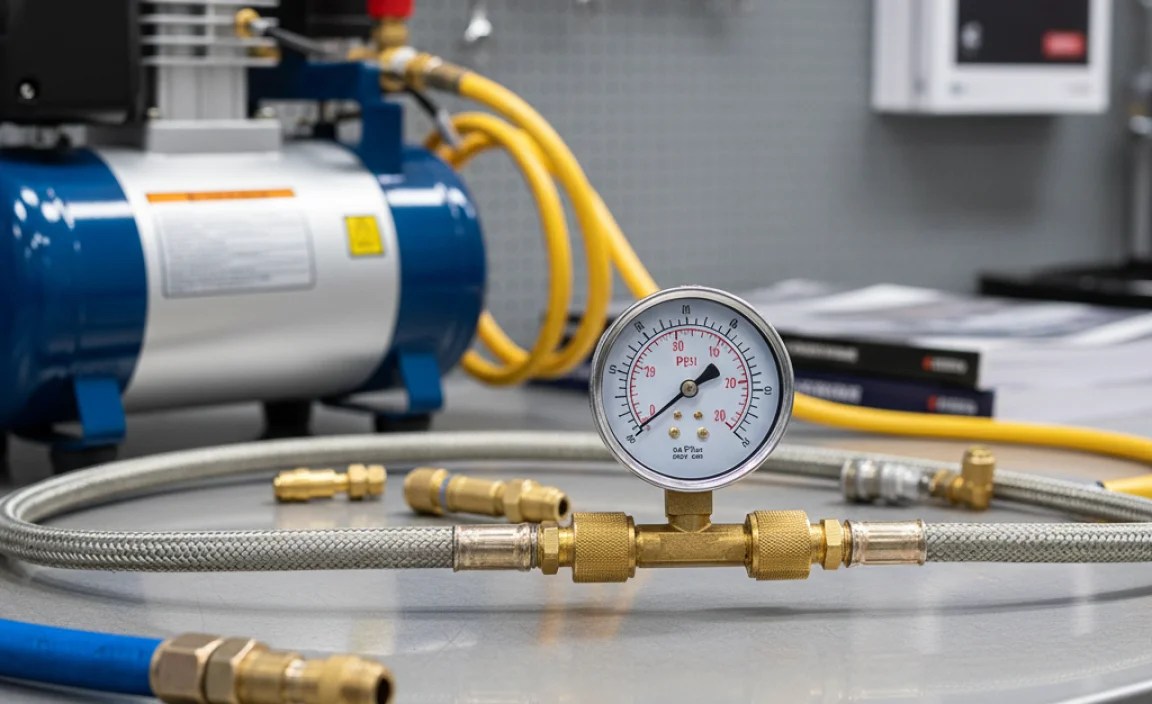
Inline gauges are useful tools. They help you control air pressure. Air pressure is how much air is inside something. Too much or too little air can cause problems. An inline gauge connects to your air compressor. It shows the air pressure as you fill something. This lets you stop at the right amount. It’s like having a speedometer for air! Learning how to use inline gauge with compressor ensures your tires or balls are never over or under inflated. This is important for safety and performance. Imagine your bike tires are too soft. Riding is hard work! Or, imagine they are too hard. The ride is bumpy. The right air pressure makes things work best. An inline gauge helps you find that sweet spot.
- Inline gauges show air pressure.
- They connect to air compressors.
- They help prevent over-inflation.
- They improve safety and performance.
- Correct pressure makes things work better.
Think about blowing up a balloon. If you blow too much, it pops! An inline gauge is like a smart balloon pump. It tells you when to stop. This is very useful for things like car tires. Car tires need the right pressure to drive safely. Too little air can cause a flat. Too much air can cause a blowout. An inline gauge helps you avoid these problems. It makes filling tires easy and safe. This is why understanding how to use inline gauge with compressor is so important.
Why Use an Inline Gauge?
Have you ever wondered why some bike tires feel so much faster than others? The answer often lies in the tire pressure. Too little pressure, and you’re working harder than you need to. Too much, and you risk a bumpy ride or even a blowout. Inline gauges help you dial in the perfect pressure every time. They take the guesswork out of inflating your tires, balls, and other inflatables. They connect directly to your air compressor. They display the pressure in real-time. This precise measurement is key to achieving optimal performance and safety. Wouldn’t you want to make every bike ride as smooth and efficient as possible? An inline gauge is your answer.
How Does an Inline Gauge Work?
An inline gauge uses a simple but clever mechanism to measure air pressure. Inside the gauge, there’s a small tube or diaphragm that flexes when air is applied. This flexing movement is then translated into a reading on the gauge’s display. The display usually shows pressure in pounds per square inch (PSI). Some gauges also show pressure in other units, like bar. The gauge is designed to be connected in-line between your air compressor and the item you are inflating. This allows it to measure the pressure as the air flows. Understanding this process makes learning how to use inline gauge with compressor much easier. The real-time feedback allows for precise control over the inflation process.
Choosing the Right Inline Gauge
When picking an inline gauge, think about what you will use it for. Different gauges have different pressure ranges. A gauge for bike tires might not work well for car tires. Look for a gauge that matches the pressure you need. Also, check the gauge’s accuracy. A good gauge should give you a correct reading. Some gauges are digital, and some are analog. Digital gauges show the pressure on a screen. Analog gauges use a needle. Both types can work well. Pick the one you like best. Knowing how to use inline gauge with compressor also means picking the right gauge for the job. This ensures you get the best results.
Fun Fact or Stat: Did you know that under-inflated tires can decrease your gas mileage by up to 3%?
Setting Up Your Compressor With an Inline Gauge
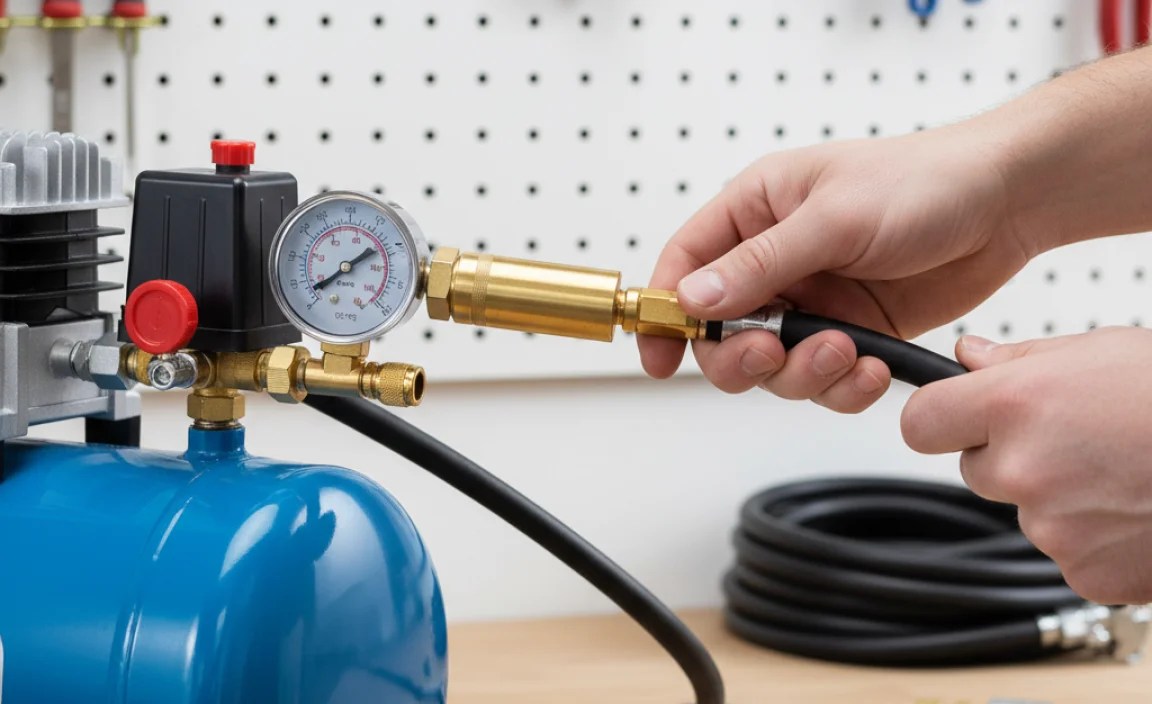
Setting up your compressor with an inline gauge is easy. First, make sure your compressor is off. Find the air hose connection. This is where you will connect the gauge. Most gauges screw onto the hose. Make sure it is tight. You do not want any air leaks. Some gauges have a quick-connect fitting. These are even easier to use. Once the gauge is on, connect the hose to your tire or ball. Now you are ready to go. Learning how to use inline gauge with compressor starts with proper setup. This ensures that you get accurate readings and avoid any air leaks. A secure connection is key to safe and efficient inflation. Always double-check that everything is connected tightly before turning on the compressor.
- Turn off the air compressor first.
- Find the air hose connection.
- Screw the gauge onto the hose tightly.
- Connect the hose to your item.
- Double-check all connections.
Think about building with LEGOs. If the pieces are not connected well, your tower will fall. The same is true for your air compressor setup. If the gauge is loose, air will leak. You will not get a correct reading. This can lead to over-inflation or under-inflation. A tight connection ensures that all the air goes into your tire or ball. This is why it is important to check everything. Take your time and make sure it is right. Understanding how to use inline gauge with compressor includes knowing how to set it up correctly.
Choosing the Right Fittings
Fittings are the connectors that attach the inline gauge to your air compressor and the item you’re inflating. They come in different sizes and types. Make sure you choose fittings that are compatible with your equipment. Common types include threaded fittings and quick-connect fittings. Threaded fittings screw together. Quick-connect fittings snap together. Quick-connect fittings are often easier to use. However, threaded fittings can provide a more secure connection. If you’re unsure which fittings to use, check the manuals for your air compressor and inline gauge. Using the correct fittings ensures a tight, leak-free connection. This is vital for accurate pressure readings and safe operation. It’s a key part of learning how to use inline gauge with compressor.
Checking for Air Leaks
Air leaks can throw off your pressure readings and make it hard to inflate items properly. After connecting your inline gauge and air hose, turn on the compressor and listen for any hissing sounds. Hissing usually indicates a leak. Check all the connections. Make sure they are tight. You can also use a soapy water solution to find leaks. Brush the solution on the connections. If bubbles form, there’s a leak. Tighten the connections or replace any damaged parts. Addressing air leaks ensures accurate pressure readings. It is a crucial step in how to use inline gauge with compressor. Ignoring leaks can lead to frustration and potentially dangerous over-inflation.
Calibrating Your Inline Gauge
Calibration is making sure your gauge reads the correct pressure. Over time, gauges can lose accuracy. This can happen from bumps or changes in temperature. You can check your gauge against another gauge you know is correct. If the readings are different, your gauge might need calibration. Some gauges have a way to adjust the reading. Others may need to be replaced. Accurate readings are key to using the gauge correctly. Knowing how to use inline gauge with compressor includes checking and maintaining its accuracy. Regular calibration helps ensure your tires and balls are always inflated to the right pressure.
Fun Fact or Stat: Most professional mechanics calibrate their pressure gauges at least once a year to ensure accuracy.
Reading and Interpreting Gauge Measurements

Reading an inline gauge is simple. The gauge shows you the air pressure. The pressure is usually in PSI (pounds per square inch). Look at the needle or the digital display. It will point to a number. That number is the air pressure. Now, you need to know what the right pressure should be. Check the side of your tire or ball. It will tell you the recommended pressure. Inflate your item until the gauge matches that number. Understanding how to use inline gauge with compressor also means knowing how to read the gauge correctly. Accurate readings ensure you inflate your items to the right pressure, avoiding over- or under-inflation. Remember, the right pressure makes things work better and keeps you safe.
- Gauges show air pressure in PSI.
- Look at the needle or digital display.
- Find the recommended pressure on your item.
- Inflate until the gauge matches the number.
- Accurate readings are very important.
Imagine you are baking a cake. You need to measure the ingredients. Too much flour, and the cake is dry. Too little, and it is flat. The same is true for air pressure. The right amount is key. The gauge is your measuring cup. It tells you exactly how much air is inside. Knowing how to read it is like knowing how to read a recipe. It helps you get it just right. Learning how to use inline gauge with compressor makes this easy.
Understanding PSI and Other Units
PSI stands for pounds per square inch. It is a common way to measure air pressure. Some gauges also show pressure in BAR or kPa. BAR is often used in Europe. kPa stands for kilopascals. It is another way to measure pressure. Knowing what these units mean can be helpful. However, PSI is the most common in the United States. When you look at your tire or ball, the pressure is usually listed in PSI. Focus on that number. Understanding how to use inline gauge with compressor includes knowing what the numbers mean. This helps you inflate things to the right pressure, no matter what unit is used.
Finding the Recommended Pressure
The recommended pressure is very important. It tells you how much air to put in your tire or ball. You can usually find it printed on the side of the item. Look for a number followed by “PSI.” For car tires, you can also find the recommended pressure on a sticker inside the driver’s side door. Always follow the recommended pressure. Too much or too little air can be dangerous. Finding this number is a key part of how to use inline gauge with compressor. It ensures you are inflating your items safely and correctly.
Recognizing Over- and Under-Inflation
Over-inflation means there is too much air. Under-inflation means there is too little air. Both can cause problems. Over-inflated tires can burst. Under-inflated tires can wear out quickly. They can also make your car use more gas. Check your tires often. Use your inline gauge to make sure they have the right pressure. If the gauge reads higher than the recommended pressure, let some air out. If it reads lower, add more air. Knowing how to use inline gauge with compressor helps you avoid these problems. It keeps your tires in good shape and keeps you safe on the road.
Fun Fact or Stat: Over-inflating tires can reduce the contact area with the road, decreasing traction and increasing the risk of skidding.
Best Practices for Inflating Tires

Inflating tires correctly is important for safety. First, find the right pressure. Check the tire or the car door sticker. Connect your inline gauge to the compressor. Then, connect it to the tire valve. Start the compressor. Watch the gauge. Stop when it reaches the right pressure. Check the pressure again after a few minutes. This makes sure there are no leaks. Doing this right is part of how to use inline gauge with compressor safely. It helps your tires last longer and keeps you safe on the road. Always double-check your work and never exceed the maximum pressure listed on the tire.
- Find the right tire pressure first.
- Connect the gauge to the compressor.
- Connect to the tire valve.
- Watch the gauge as you fill the tire.
- Check the pressure after a few minutes.
Think about building a house. You need a strong foundation. The right tire pressure is like that foundation. It supports the weight of the car. It helps you steer and stop safely. If the pressure is wrong, the car will not handle well. It can be dangerous. Taking the time to inflate your tires correctly is worth it. It keeps you and your passengers safe. This is why understanding how to use inline gauge with compressor is so important for every driver.
Checking Tire Pressure When Cold
Tire pressure changes with temperature. When it is cold, the pressure goes down. When it is hot, the pressure goes up. It is best to check your tire pressure when the tires are cold. This means they have not been driven on for a few hours. If you check them after driving, the pressure will be higher. This can give you a wrong reading. Checking when cold gives you the most accurate result. Knowing how to use inline gauge with compressor also means knowing when to check the pressure. This helps you keep your tires properly inflated all year round.
Inflating Different Types of Tires
Different types of tires need different pressures. Car tires, truck tires, and bike tires all have different requirements. Look for the recommended pressure on the tire itself. Use the correct pressure for your specific tires. Using the wrong pressure can damage the tires. It can also make your vehicle unsafe to drive. Always double-check the recommended pressure before inflating any tire. This is an important part of how to use inline gauge with compressor. It ensures your tires perform their best and keep you safe on the road.
Avoiding Over-Inflation
Over-inflation can be dangerous. Too much air can cause the tire to burst. It can also reduce the contact area between the tire and the road. This makes it harder to steer and stop. Always watch the gauge as you inflate your tires. Stop when you reach the recommended pressure. Never exceed the maximum pressure listed on the tire. If you accidentally over-inflate, let some air out until you reach the correct pressure. Avoiding over-inflation is a key part of how to use inline gauge with compressor safely. It protects your tires and keeps you safe on the road.
Fun Fact or Stat: The maximum pressure listed on a tire is not the recommended pressure. It’s the maximum amount of pressure the tire can handle.
Using Inline Gauges for Sports Equipment

Inline gauges are great for sports equipment too. Think about basketballs, soccer balls, and volleyballs. They all need the right amount of air. Too little air, and they are hard to play with. Too much air, and they can be damaged. An inline gauge helps you get it just right. Check the ball for the recommended pressure. Then, use the gauge to fill it to that level. This makes the ball perform its best. Learning how to use inline gauge with compressor extends to sports equipment. It ensures your balls are always ready for the game.
- Sports balls need the right air pressure.
- Too little air makes them hard to use.
- Too much air can damage them.
- Check the ball for the right pressure.
- Use the gauge to fill it correctly.
Imagine playing basketball with a flat ball. It is hard to dribble and shoot. The game is not fun. The right air pressure makes a big difference. It makes the ball bounce better. It makes it easier to control. An inline gauge helps you achieve this. It takes the guesswork out of inflating your sports balls. This is why understanding how to use inline gauge with compressor is useful for any athlete or sports fan.
Finding the Correct Pressure for Balls
Finding the right pressure for balls is easy. Look for the recommended pressure printed on the ball. It is usually near the valve. The pressure is often given in PSI. Some balls might also list the pressure in BAR. If you cannot find the pressure on the ball, check the manufacturer’s website. They should have the information you need. Using the correct pressure ensures the ball performs as it should. It also helps prevent damage. This is a key part of how to use inline gauge with compressor for sports equipment.
Using Different Needle Adapters
Different sports balls use different needle adapters. A needle adapter is the small piece that goes into the ball’s valve. Make sure you use the right adapter for your ball. Using the wrong adapter can damage the valve. This can make it hard to inflate the ball in the future. Most inline gauge kits come with several different adapters. Choose the one that fits your ball’s valve snugly. Using the correct adapter is an important detail in how to use inline gauge with compressor for sports equipment. It helps you avoid damaging your balls.
Storing Sports Balls Properly
Storing sports balls properly can help them last longer. Do not leave them in direct sunlight or extreme temperatures. This can damage the material and affect the pressure. Store them in a cool, dry place. When storing them for a long time, it is a good idea to let some air out. This prevents over-inflation due to temperature changes. Proper storage, combined with knowing how to use inline gauge with compressor, can keep your sports balls in top condition for years to come. This saves you money and ensures you always have a ball ready to play with.
Fun Fact or Stat: A properly inflated basketball should bounce between 52 and 56 inches when dropped from a height of 6 feet.
Troubleshooting Common Issues
Sometimes, things go wrong. Your gauge might not read correctly. Or, the air might leak. These problems can be frustrating. But, they are usually easy to fix. First, check all the connections. Make sure they are tight. If the gauge is not reading correctly, it might need to be calibrated. If air is leaking, replace the hose or fittings. Knowing how to use inline gauge with compressor also means knowing how to fix common problems. This keeps your equipment working well and saves you time and money.
- Check all connections for tightness.
- Calibrate the gauge if it is not reading right.
- Replace hoses or fittings if they leak.
- Clean the gauge and fittings regularly.
- Store the equipment properly to prevent damage.
Think about riding a bike. Sometimes, the chain comes off. It can be annoying. But, you learn how to put it back on. The same is true for your air compressor and gauge. Problems will happen. But, you can learn how to fix them. This makes you a more confident and skilled user. Understanding how to use inline gauge with compressor includes knowing how to troubleshoot common issues. This ensures you can always inflate your tires and balls with ease.
Dealing With Air Leaks
Air leaks are a common problem. They can make it hard to inflate items properly. The first step is to find the leak. Listen for a hissing sound. Check all the connections. Use soapy water to find small leaks. If you find a leak, tighten the connection. If that does not work, replace the fitting or hose. Air leaks can waste energy and make your compressor work harder. Addressing them quickly saves you money and keeps your equipment in good condition. Knowing how to use inline gauge with compressor includes knowing how to find and fix air leaks.
Gauge Not Reading Accurately
If your gauge is not reading accurately, it might need to be calibrated. Some gauges have a calibration screw. You can use this to adjust the reading. Compare your gauge to another gauge you know is accurate. If the readings are different, adjust your gauge until they match. If your gauge does not have a calibration screw, it might need to be replaced. Accurate readings are very important for safe and proper inflation. Knowing how to use inline gauge with compressor includes knowing how to check and maintain its accuracy.
Compressor Not Working Properly
If your compressor is not working properly, check the power supply. Make sure it is plugged in and turned on. Check the air filter. A dirty filter can restrict airflow. Clean or replace the filter as needed. Check the pressure switch. It might need to be adjusted. If the compressor still does not work, it might need to be repaired or replaced. A properly functioning compressor is essential for using an inline gauge effectively. Knowing how to use inline gauge with compressor also means knowing how to maintain your compressor.
Fun Fact or Stat: Regular maintenance of your air compressor can extend its lifespan by several years.
##
: Inline Gauge Comparison| Feature | Analog Gauge | Digital Gauge |
|——————-|———————–|———————–|
| Reading Type | Needle on a scale | Digital display |
| Accuracy | Can vary slightly | Generally more precise|
| Ease of Use | Simple to read | Easy to read numbers |
| Durability | More robust | Can be more fragile |
| Battery Required | No | Yes |
| Cost | Generally less expensive| Often more expensive |Maintaining Your Inline Gauge and CompressorTaking care of your inline gauge and compressor is important. It helps them last longer. Clean them regularly. Wipe them down with a cloth. Check the hoses for cracks. Replace them if needed. Drain the water from the compressor tank. Water can cause rust. Store the equipment in a dry place. Proper maintenance keeps your equipment working well. This makes learning how to use inline gauge with compressor even more rewarding. It saves you money and ensures you always have reliable tools.
- Clean the gauge and compressor often.
- Check hoses for cracks and replace them.
- Drain water from the compressor tank.
- Store the equipment in a dry place.
- Follow the manufacturer’s instructions.
Think about your favorite toy. If you take care of it, it will last longer. The same is true for your tools. Regular maintenance prevents problems. It keeps them in good working order. Taking the time to care for your inline gauge and compressor is worth it. It ensures they are always ready when you need them. Understanding how to use inline gauge with compressor includes knowing how to maintain them properly.Cleaning the Gauge and FittingsCleaning the gauge and fittings is easy. Use a clean cloth to wipe them down. Remove any dirt or debris. Use a small brush to clean hard-to-reach areas. Do not use harsh chemicals. They can damage the gauge. Regular cleaning helps keep the gauge accurate. It also prevents corrosion. Clean fittings ensure a good seal. This prevents air leaks. Taking a few minutes to clean your gauge and fittings can extend their lifespan. It is a simple but important part of how to use inline gauge with compressor.Draining Water From the Compressor TankWater can build up in the compressor tank. This happens because of condensation. Water can cause rust and damage the tank. It is important to drain the water regularly. Most compressors have a drain valve at the bottom of the tank. Open the valve to let the water out. Do this after each use. This prevents water from building up and causing problems. Draining the water is a simple but important maintenance task. It is a key part of how to use inline gauge with compressor and keeping your equipment in good condition.Storing the Equipment ProperlyStoring your inline gauge and compressor properly can help them last longer. Store them in a dry place. Avoid storing them in direct sunlight or extreme temperatures. This can damage the materials. Coil the hoses neatly. This prevents them from getting tangled or damaged. Cover the equipment to protect it from dust. Proper storage keeps your equipment in good condition. It ensures it is always ready when you need it. Knowing how to use inline gauge with compressor also includes knowing how to store it properly.Fun Fact or Stat: Storing your air compressor in a cool, dry place can prevent rust and extend its lifespan by up to 25%.SummaryLearning how to use inline gauge with compressor can be very useful. It helps you inflate tires, sports balls, and other items to the correct pressure. This is important for safety and performance. Inline gauges are easy to set up and use. They show you the air pressure in real-time. This prevents over-inflation and under-inflation. Remember to check the recommended pressure before inflating anything. Also, take care of your equipment. Clean it regularly and store it properly. With a little practice, you will become an expert at using an inline gauge.By following these tips, you can ensure your tires and balls are always inflated to the right pressure. This keeps you safe on the road and makes your sports games more fun. Using an inline gauge is a simple way to improve the performance of your equipment and extend its lifespan. So, grab your gauge and compressor, and get started today!ConclusionUsing an inline gauge with a compressor is a simple way to ensure accurate inflation. It helps you maintain the correct air pressure in your tires, sports equipment, and other inflatables. Remember to always check the recommended pressure and follow the steps outlined in this article. By learning how to use inline gauge with compressor, you can improve safety, performance, and the lifespan of your equipment.Frequently Asked Questions
Question No 1: What is an inline gauge?
Answer: An inline gauge is a tool that shows the air pressure as you fill something with air. It connects between your air compressor and the item you are inflating, like a tire or a ball. The gauge displays the pressure in real-time, so you can stop when you reach the right level. It helps prevent over-inflation and under-inflation. Learning how to use inline gauge with compressor starts with understanding what the gauge does. It is a simple device that makes inflating things much easier and safer.
Question No 2: Why should I use an inline gauge with my compressor?
Answer: Using an inline gauge gives you better control over the air pressure. It prevents you from putting too much or too little air into your tires or balls. Too much air can cause damage or even be dangerous. Too little air can affect performance. An inline gauge helps you get it just right. It also saves you time and effort. You will not have to keep checking the pressure with a separate gauge. Understanding how to use inline gauge with compressor ensures you always inflate things to the right level.
Question No 3: How do I connect an inline gauge to my compressor?
Answer: Connecting an inline gauge is easy. First, turn off your air compressor. Find the air hose connection. Screw the gauge onto the hose tightly. Some gauges have quick-connect fittings, which are even easier. Make sure the connection is secure to prevent air leaks. Then, connect the hose to the item you want to inflate. Double-check all connections before turning on the compressor. Learning how to use inline gauge with compressor starts with a proper setup. This ensures accurate readings and safe operation.
Question No 4: What does PSI mean on an inline gauge?
Answer: PSI stands for pounds per square inch. It is a unit of measurement for air pressure. The number on the gauge tells you how much force the air is exerting on each square inch of the container. For example, a tire might need 35 PSI. This means the air inside is pushing with 35 pounds of force on every square inch of the tire. Knowing what PSI means helps you understand the gauge readings. This is important when learning how to use inline gauge with compressor to inflate things to the correct pressure.
Question No 5: Can I use an inline gauge for all types of tires and balls?
Answer: Yes, you can use an inline gauge for most types of tires and balls. However, make sure the gauge has the correct pressure range for your needs. A gauge for bike tires might not work well for car tires. Also, use the correct needle adapter for different types of balls. Always check the recommended pressure on the tire or ball before inflating. Knowing how to use inline gauge with compressor means choosing the right gauge and adapter for the job. This ensures you get accurate results and avoid damage.
Question No 6: What should I do if my inline gauge is not working correctly?
Answer: If your gauge is not working correctly, first check all the connections. Make sure they are tight and there are no air leaks. If the gauge is not reading accurately, it might need to be calibrated. Some gauges have a calibration screw that you can adjust. If the gauge still does not work, it might need to be replaced. Accurate readings are very important for safe inflation. Knowing how to use inline gauge with compressor includes troubleshooting common issues. This ensures your equipment is always working properly.


