
How to Use Gauge for Road Bike High PSI Tyres: Easy!

Did you ever ride your bike and the tires felt flat? It is hard to pedal when your tires do not have enough air. Road bikes need high pressure in their tires. This helps them roll fast and smooth. Knowing how to use gauge for road bike high PSI tyres is important. It keeps you safe and makes riding more fun.
Have you seen racers on TV zooming by? Their tires are always perfectly inflated. Using a gauge helps you get the right air pressure. It is like giving your bike a boost. Let’s learn how to do it the right way.
Road bikes need special care. Their thin tires need a lot of air. This is measured in PSI, or pounds per square inch. Too little air, and you risk a flat tire. Too much, and the tire could burst! That is why a gauge is your best friend. Let’s explore how to use gauge for road bike high PSI tyres.
Key Takeaways
- It is important to check your road bike tire pressure before each ride.
- A reliable pressure gauge helps you inflate your tires accurately.
- Look for the recommended PSI range printed on the side of your tire.
- How to use gauge for road bike high PSI tyres ensures optimal performance and safety.
- Properly inflated tires improve speed, comfort, and reduce the chance of flats.
Why Use a Gauge For High PSI Road Bike Tyres?

A gauge is super important for your road bike. Road bike tires need very high pressure. This high pressure makes the bike go faster. It also helps prevent flat tires. Without a gauge, you are just guessing. Guessing can be dangerous. Too little air makes the bike slow and increases the risk of flats. Too much air can cause the tire to explode. A gauge tells you the exact pressure. This helps you ride safely and enjoy your bike more. Knowing how to use gauge for road bike high PSI tyres keeps you in control. It makes sure your tires are just right for a great ride.
- A gauge provides accurate tire pressure readings.
- High PSI tires require precise inflation.
- Gauges prevent over or under-inflation.
- Correct pressure improves speed and handling.
- It helps prevent flat tires and accidents.
- Using a gauge extends the life of your tires.
Using a gauge might seem tricky at first. But it is easier than you think. Most gauges are small and easy to carry. Some are digital, showing the exact number. Others are analog, with a needle pointing to the pressure. Both types work well. The important thing is to use it every time you pump up your tires. This way, you know your tires are always ready for a ride. It is like a quick safety check before you start your adventure. Knowing how to use gauge for road bike high PSI tyres becomes second nature with practice.
Why Is Correct Pressure So Important?
Have you ever tried riding a bike with flat tires? It’s really hard work! Correct pressure makes a big difference. It makes the bike roll smoothly and quickly. It also helps you steer better. Think of it like this: your tires are like the shoes for your bike. If your shoes don’t fit right, you won’t run well. The same goes for your tires. Correct pressure helps you ride faster, easier, and safer. Plus, it reduces the chance of getting a flat tire.
What Happens If You Over-Inflate?
Imagine blowing up a balloon too much. What happens? It pops! The same can happen with your bike tires. Over-inflating them can be dangerous. The tire could explode while you are riding. This can cause a crash. Always check the PSI range on your tire. Never go over the maximum number. Using a gauge helps you avoid this problem. It gives you peace of mind knowing your tires are safe.
How Often Should You Check Your Tires?
Think of checking your tires like brushing your teeth. You should do it often! Road bike tires lose air over time. Check them before every ride. This only takes a few seconds. It’s a simple way to stay safe. It also helps you enjoy your ride more. A quick check with your gauge can prevent problems later. Regular checks are part of being a responsible rider. They ensure your tires are always ready for action.
Fun Fact or Stat: Did you know that professional cyclists check their tire pressure multiple times a day to ensure optimal performance?
Choosing The Right Gauge For Road Bike Tyres

Choosing the right gauge is important. There are two main types: digital and analog. Digital gauges show the pressure on a screen. They are easy to read and very accurate. Analog gauges have a needle that points to the pressure. They are often cheaper but can be harder to read. Consider what is important to you. Do you want easy reading or a lower price? Some gauges are built into the pump. Others are separate and can be carried with you. Make sure the gauge is designed for high PSI tires. Road bike tires need higher pressure than other bikes. Knowing how to use gauge for road bike high PSI tyres starts with picking the right tool.
- Digital gauges offer precise readings.
- Analog gauges are generally more affordable.
- Consider a gauge that fits your pump.
- Look for a gauge with a high PSI range.
- Choose a gauge that is easy to read.
- Check reviews before buying a gauge.
When choosing a gauge, think about where you will use it. A small, portable gauge is great for taking on rides. This way, you can check your tires anytime, anywhere. A gauge built into your pump is good for home use. It makes inflating your tires quick and easy. Read reviews before you buy. This can help you find a gauge that is accurate and reliable. A good gauge is an investment in your safety and enjoyment. Learning how to use gauge for road bike high PSI tyres is easier with the right equipment.
What Are The Benefits of a Digital Gauge?
Digital gauges are like having a calculator for your tires. They show the exact pressure on a screen. This makes it easy to read, even in bright sunlight. Digital gauges are also very accurate. They give you a precise reading every time. Some digital gauges even have extra features. They can remember the last pressure reading. This helps you track how your tires are doing.
Are Analog Gauges Still a Good Choice?
Analog gauges are the classic choice. They have been around for a long time. They are simple to use and don’t need batteries. Analog gauges are often cheaper than digital ones. They are a good option if you are on a budget. While they may not be as precise, they still give you a good idea of your tire pressure. Many experienced cyclists still prefer analog gauges.
What Features Should You Look For?
Think about what you need from a gauge. Do you want a digital display? Do you need a portable gauge? Look for a gauge that is easy to use. Make sure it has a clear display. Check that it can handle the high pressure of road bike tires. Read reviews to see what other people think. A good gauge will make inflating your tires much easier. It will also help you stay safe on the road.
Fun Fact or Stat: Some high-end digital gauges can measure tire pressure in multiple units, like PSI, Bar, and kPa.
Step-by-Step Guide: How to Use Gauge for Road Bike

Using a gauge is simple once you know the steps. First, find the valve on your tire. Remove the cap. Next, attach the gauge to the valve. Make sure it is on tight. You should not hear any air leaking. If you do, adjust the gauge until it seals properly. Read the pressure on the gauge. Compare it to the recommended PSI on your tire. If needed, add air with a pump. Check the pressure again after pumping. Repeat until you reach the correct PSI. Remove the gauge and replace the valve cap. Now you know how to use gauge for road bike high PSI tyres!
- Remove the valve cap from your tire.
- Attach the gauge firmly to the valve.
- Read the pressure displayed on the gauge.
- Compare the reading to the recommended PSI.
- Inflate or deflate as needed to reach the target.
- Replace the valve cap after checking.
Remember to be gentle when attaching the gauge. Do not force it. If it does not fit easily, check the valve type. Some gauges work with both Presta and Schrader valves. Presta valves are thin and have a small nut on the end. Schrader valves are wider, like those on car tires. Make sure your gauge is compatible with your valve type. Practice makes perfect. The more you use your gauge, the easier it will become. Knowing how to use gauge for road bike high PSI tyres ensures safe and enjoyable rides.
Finding the Valve on Your Tire
The valve is where you put air into your tire. It’s usually covered by a small cap. There are two main types of valves on road bikes. Presta valves are thin and pointy. They have a small nut at the end. Schrader valves are wider and look like car tire valves. Your gauge needs to fit the type of valve on your tire. Knowing which valve you have is the first step.
Attaching the Gauge Correctly
Attaching the gauge properly is important. If it’s not on tight, air will leak. This will give you a wrong reading. Make sure the gauge is pushed all the way onto the valve. You should feel it click into place. If you have a Presta valve, unscrew the nut a little bit before attaching the gauge. This lets the air flow more easily.
Reading and Adjusting the Pressure
Once the gauge is attached, read the pressure. Compare it to the PSI range on your tire. If the pressure is too low, use a pump to add air. If it’s too high, gently release some air. Do this by pressing the valve core slightly. Check the pressure again after each adjustment. Aim for the middle of the recommended PSI range.
Fun Fact or Stat: Some gauges come with a bleed valve, which allows you to release small amounts of air for precise adjustments.
Understanding PSI and Tyre Pressure for Road Bikes

PSI stands for pounds per square inch. It measures the amount of air pressure in your tire. Road bike tires need high PSI. This is because they are thin and designed for speed. The right PSI depends on your weight and the tire size. Check the sidewall of your tire. It will show the recommended PSI range. Do not go below or above this range. Too little air can cause flats. Too much air can cause the tire to burst. Understanding how to use gauge for road bike high PSI tyres means understanding PSI.
| Rider Weight (lbs) | Recommended PSI (23mm Tyre) | Recommended PSI (25mm Tyre) | Recommended PSI (28mm Tyre) |
|---|---|---|---|
| 120-140 | 90-100 | 80-90 | 70-80 |
| 140-160 | 100-110 | 90-100 | 80-90 |
| 160-180 | 110-120 | 100-110 | 90-100 |
| 180-200+ | 120-130 | 110-120 | 100-110 |
Remember, these are just guidelines. Experiment to find what feels best for you. Tire pressure affects how your bike rides. Higher pressure makes it faster but less comfortable. Lower pressure is more comfortable but slower. Consider the road conditions. Rough roads might need slightly lower pressure. Smooth roads can handle higher pressure. Knowing how to use gauge for road bike high PSI tyres helps you fine-tune your ride. It ensures you get the best performance and comfort.
- PSI measures tire air pressure.
- Road bikes need high PSI for speed.
- Check the tire sidewall for recommended PSI.
- Adjust PSI based on your weight and tire size.
- Consider road conditions when setting PSI.
- Experiment to find your ideal tire pressure.
Why Does Tyre Width Matter?
Thicker tires need less pressure. This is because they have more volume. They can absorb bumps better. Thinner tires need more pressure. This helps them roll faster. They have less volume, so they need more air to support your weight. Knowing your tire width is important. It helps you choose the right PSI.
How Does Rider Weight Affect PSI?
If you are heavier, you need more pressure. This is because your tires have to support more weight. If you are lighter, you need less pressure. Using too little pressure can cause flats. Using too much pressure can make the ride uncomfortable. Adjust your PSI based on your weight for the best ride.
What If You Don’t Know Your Weight?
If you don’t know your exact weight, estimate. It’s better to start with a higher pressure and then let some air out. This way, you avoid the risk of a flat tire. You can also ask a bike shop for help. They can help you find the right PSI for your weight and tire size.
Fun Fact or Stat: Some professional cyclists use different tire pressures in their front and rear tires for better handling.
Troubleshooting Common Gauge Problems
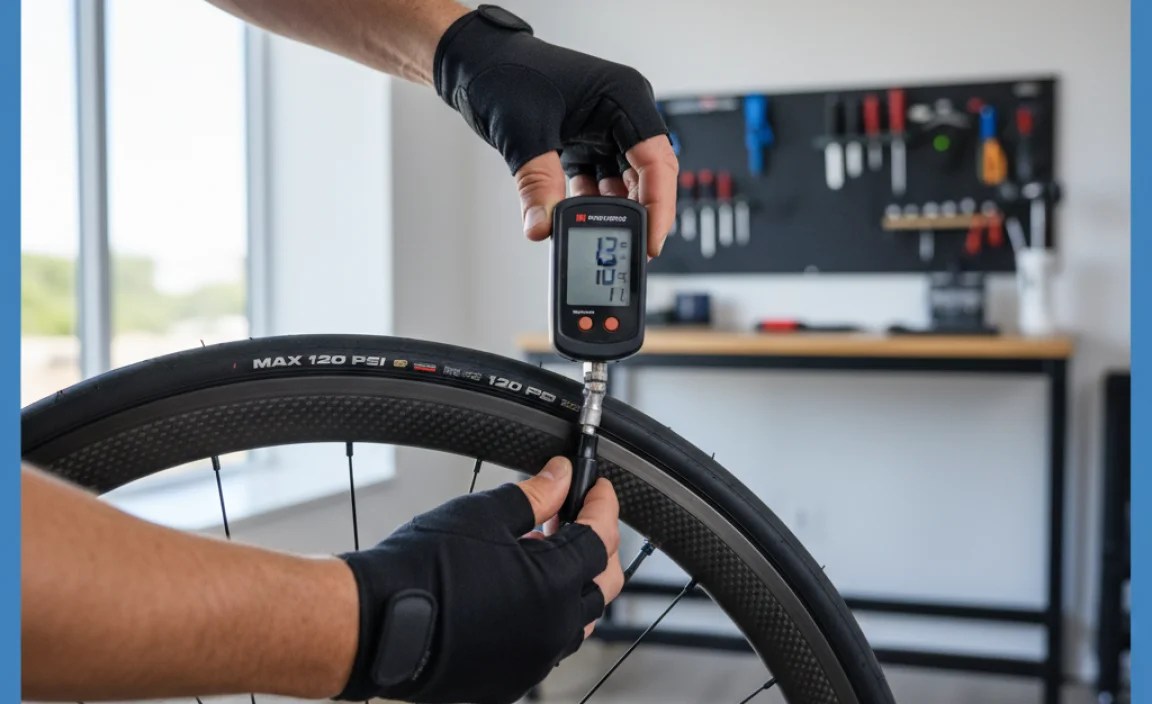
Sometimes, gauges can have problems. One common issue is air leaking. This happens when the gauge is not attached properly. Make sure the gauge is pushed all the way onto the valve. Another problem is inaccurate readings. This can be caused by a faulty gauge. Try a different gauge to see if the reading is the same. If your gauge is digital, check the battery. A low battery can cause inaccurate readings. Knowing how to use gauge for road bike high PSI tyres includes fixing these issues.
- Check for air leaks around the valve.
- Try a different gauge to verify readings.
- Replace the battery in digital gauges.
- Clean the valve and gauge connections.
- Ensure the gauge is compatible with the valve type.
- Calibrate your gauge if possible.
If you suspect your gauge is faulty, try calibrating it. Some gauges can be calibrated using a known pressure source. If you cannot calibrate it, it might be time for a new gauge. Regular maintenance can help prevent problems. Keep your gauge clean and dry. Store it in a safe place. This will help it last longer and give you accurate readings. Knowing how to use gauge for road bike high PSI tyres also means taking care of your equipment.
Why Is My Gauge Leaking Air?
Air leaks are a common problem. They usually happen because the gauge is not properly sealed. Check that the gauge is pushed all the way onto the valve. Make sure the valve is clean. Sometimes, dirt can prevent a good seal. Try cleaning the valve with a cloth. If the leak continues, the gauge might be damaged.
How Do I Know If My Gauge Is Accurate?
It can be hard to tell if your gauge is accurate. One way is to compare it to another gauge. If the readings are very different, one of the gauges is probably wrong. You can also take your bike to a shop. They have professional gauges that are very accurate. They can check your gauge for you.
What If My Digital Gauge Won’t Turn On?
If your digital gauge won’t turn on, check the battery. The battery might be dead. Replace the battery with a new one. Make sure you use the correct type of battery. If the gauge still won’t turn on, it might be broken. You may need to buy a new gauge.
Fun Fact or Stat: Some bike shops offer gauge calibration services to ensure accurate readings.
Maintaining Your Road Bike Tyres for Optimal Performance
Keeping your tires in good shape is important. Check them regularly for cuts or bulges. These can weaken the tire and cause a flat. Keep your tires clean. Dirt and debris can damage the rubber. Store your bike in a cool, dry place. Sunlight and heat can cause the tires to degrade. Inflate your tires to the correct PSI before each ride. This helps them roll smoothly and prevents flats. Knowing how to use gauge for road bike high PSI tyres is key to maintenance.
- Inspect tires for cuts and bulges regularly.
- Clean tires to remove dirt and debris.
- Store your bike in a cool, dry place.
- Check and adjust tire pressure before each ride.
- Replace tires when they show signs of wear.
- Use tire sealant to prevent flats.
Replacing your tires when they are worn is also important. Look for signs of wear, such as a flat spot in the middle of the tire. Also, replace the tire if it has many cuts or is starting to crack. New tires can make a big difference in your ride quality. They will roll smoother and grip the road better. Learning how to use gauge for road bike high PSI tyres is just one part of taking care of your bike.
How Do You Know When to Replace Your Tires?
Tires don’t last forever. Over time, they wear down. The rubber gets thin, and they lose their grip. Look for signs of wear. These include cuts, cracks, and a flat spot in the middle of the tire. If you see any of these signs, it’s time for new tires. Don’t wait until your tire blows out.
What Is Tire Sealant and How Does It Help?
Tire sealant is a liquid that you put inside your tires. It helps prevent flats. If you get a small puncture, the sealant will fill the hole. This lets you keep riding without stopping. Tire sealant is a great way to avoid flats. It’s especially useful for long rides.
How Can You Protect Your Tires from Sun Damage?
Sunlight can damage your tires. It can cause the rubber to dry out and crack. To protect your tires, store your bike indoors. If you have to store it outside, cover the tires. You can use a tarp or a bike cover. This will help keep the sun off your tires.
Fun Fact or Stat: Some cyclists rotate their tires (front to back) to even out wear and extend their lifespan.
Summary
Using a gauge for your road bike tires is really important. It helps you keep the right amount of air in your tires. This makes your bike faster and safer. A gauge tells you the exact pressure. You can choose between digital and analog gauges. Digital gauges are easy to read. Analog gauges are often cheaper. Remember to check your tires before every ride. How to use gauge for road bike high PSI tyres is a skill that every cyclist should know. Correct tire pressure makes a big difference. It improves your speed, comfort, and safety. Learning how to use a gauge is easy. It is a small step that can make a big impact on your rides. Keep your tires in good shape, and you will enjoy cycling even more.
Conclusion
Learning how to use gauge for road bike high PSI tyres is a key skill. It ensures your tires are properly inflated. This leads to better performance and safety. It is also important to understand PSI. Check your tire pressure regularly. This helps you avoid flats and accidents. By using a gauge, you can enjoy smooth and efficient rides. Properly inflated tires make cycling more fun. So, grab your gauge and keep those tires in top shape!
Frequently Asked Questions
Question No 1: Why is it important to use a gauge for high PSI road bike tyres?
Answer: Using a gauge for high PSI road bike tires is very important because it helps you make sure your tires have the right amount of air. Road bike tires need high pressure to roll fast and prevent flat tires. If you guess the pressure, you might put too little or too much air in the tires. Too little air makes the bike slow and increases the risk of flats. Too much air can cause the tire to explode, which is dangerous. A gauge tells you the exact pressure, so you can be sure your tires are safe and ready to ride. Knowing how to use gauge for road bike high PSI tyres is crucial for safety and performance.
Question No 2: How often should I check the pressure in my road bike tyres?
Answer: You should check the pressure in your road bike tires before every ride. Road bike tires lose air over time, even when you are not using them. Checking the pressure before each ride only takes a few seconds. It is a simple way to stay safe and ensure your tires are properly inflated. Think of it like checking your brakes before you start driving a car. Regular checks can prevent problems and make your ride more enjoyable. Plus, knowing your tires are properly inflated gives you peace of mind. So, make it a habit to check your tires before every adventure. Knowing how to use gauge for road bike high PSI tyres will help you with your check!
Question No 3: What is the difference between a Presta and Schrader valve, and how does it affect my gauge choice?
Answer: Presta and Schrader valves are two different types of valves used on bike tires. Presta valves are thin and have a small nut on the end. They are common on road bikes. Schrader valves are wider and look like the valves on car tires. Your gauge needs to be compatible with the type of valve on your tires. Some gauges work with both types of valves. Others only work with one. Make sure you know which type of valve your tires have before you buy a gauge. If you have Presta valves, you may need to unscrew the nut a little bit before attaching the gauge. This allows air to flow more easily. Understanding how to use gauge for road bike high PSI tyres starts with knowing your valve type.
Question No 4: What PSI range should I aim for in my road bike tyres?
Answer: The correct PSI range for your road bike tires depends on several things. These include your weight, the tire size, and the type of riding you are doing. Check the sidewall of your tire for the recommended PSI range. This is usually printed on the tire. As a general rule, heavier riders need higher pressure. Thinner tires also need higher pressure. If you are riding on rough roads, you might want to use slightly lower pressure for more comfort. Experiment to find what feels best for you. Always stay within the recommended PSI range on the tire. This will help prevent flats and ensure a safe ride. Knowing how to use gauge for road bike high PSI tyres is important for setting the right pressure.
Question No 5: What are the signs that my tyre pressure gauge is not working correctly?
Answer: There are a few signs that your tire pressure gauge might not be working correctly. If the gauge is leaking air when you attach it to the valve, it might be damaged. If the readings are very different from what you expect, the gauge might be inaccurate. Try comparing it to another gauge to see if the readings are the same. If your gauge is digital, check the battery. A low battery can cause inaccurate readings. If you suspect your gauge is faulty, it is best to replace it. An inaccurate gauge can lead to over or under-inflated tires, which can be dangerous. So, it’s better to be safe and use a reliable gauge. Knowing how to use gauge for road bike high PSI tyres relies on having a working gauge!
Question No 6: Can I use a car tyre pressure gauge for my road bike?
Answer: While you technically can use a car tire pressure gauge for your road bike, it’s not recommended. Car tire gauges are often not as accurate at the higher PSI levels required for road bike tires. Road bike tires need much higher pressure than car tires. Car gauges may not be designed to measure those high pressures accurately. Also, the chuck (the part that attaches to the valve) might not fit properly on a Presta valve. It is best to use a gauge that is specifically designed for bicycles. These gauges are more accurate and will fit your valves properly. Using the right tools makes the job easier and safer. Knowing how to use gauge for road bike high PSI tyres requires the right equipment!


