
How to Read Bar on Bike Pressure Gauge: Easy Guide

Have you ever seen a bike tire that looks flat? Do you know how much air to put in? It’s important to check your tire pressure. A bike pressure gauge helps you do this. But how to read bar on bike pressure gauge? Don’t worry, it’s easier than you think! We will show you how.
Did you know that the right tire pressure makes biking safer and more fun? Too little air makes it hard to pedal. Too much air can make the tires explode! Learning how to read bar on bike pressure gauge helps you avoid these problems. Let’s get started and learn all about it!
Key Takeaways
- Knowing how to read bar on bike pressure gauge keeps your tires properly inflated.
- Use the correct bar or PSI to inflate tires for a smoother, safer ride.
- Under-inflated tires cause harder pedaling and increase the risk of flats.
- Over-inflated tires can burst, leading to dangerous accidents and injuries.
- Regularly check and adjust tire pressure to match riding conditions and preferences.
Understanding How To Read Bar On Bike Pressure Gauge

Learning how to read bar on bike pressure gauge is super important. A pressure gauge tells you how much air is in your tires. It helps you know if your tires have too much or too little air. The right amount of air makes riding easier and safer. Most gauges show pressure in two ways: PSI and bar. PSI means “pounds per square inch.” Bar is another way to measure pressure. 1 bar is about 14.5 PSI. Knowing both helps you use different types of pumps. Always check what your tire says. It will tell you the right PSI or bar range. Keeping your tires in this range makes them last longer. It also makes your ride more comfortable.
- A bike pressure gauge measures the air inside your tires.
- PSI and bar are common units on the gauge.
- Check your tire sidewall for the recommended pressure range.
- Maintaining proper pressure improves ride quality and safety.
- Under-inflation leads to slow rides and possible tire damage.
- Over-inflation can cause blowouts and accidents.
Imagine you’re going on a long bike ride. You don’t want flat tires slowing you down. Understanding how to read bar on bike pressure gauge will keep you rolling smoothly. Think of it like this: your tires are like balloons. Too little air, and they’re floppy and slow. Too much air, and they might pop! You want them just right. Knowing the right pressure for your tires helps you have fun. It also keeps you safe on your biking adventures. Always double-check the gauge before you hit the road or trail.
Fun Fact or Stat: The first bicycle tire pressure gauges were invented in the late 1800s!
Why Is Tire Pressure So Important?
Why does tire pressure matter so much? Well, it affects how your bike rides. If your tires are low, it’s harder to pedal. It feels like you’re riding through mud! Low pressure also makes your tires wear out faster. They can even get pinch flats. These happen when the tire gets squeezed against the rim. Proper tire pressure makes pedaling easier. It also helps your tires last longer. Knowing how to read bar on bike pressure gauge is key. It helps you keep your tires in good shape. This saves you money in the long run. You won’t have to buy new tires as often.
PSI vs. Bar: What’s the Difference?
PSI and bar are both ways to measure air pressure. But what’s the difference? PSI is used more often in some countries, like the United States. Bar is common in Europe and other places. One bar is equal to about 14.5 PSI. So, if your tire says 4 bar, that’s about 58 PSI. Most gauges show both numbers. This makes it easy to use any pump. Understanding both helps when you’re traveling. You can use whatever pump is available. Just remember the conversion if you need to. Learning how to read bar on bike pressure gauge in both units is helpful.
What Happens If My Tires Are Over-Inflated?
What happens if you put too much air in your tires? Over-inflated tires can be dangerous. They can burst or explode, especially on hot days. This can cause you to lose control of your bike. It can also damage your tires and rims. Over-inflated tires also make your ride bumpy. They don’t absorb bumps as well. This can make your hands and body sore. Always stay within the recommended pressure range. Knowing how to read bar on bike pressure gauge prevents this. It keeps you safe and comfortable. Don’t overfill your tires!
How To Find The Right Tire Pressure

Finding the right tire pressure is like finding the perfect recipe. It’s not too hard, but it needs a little attention. First, look at the side of your tire. There, you’ll see a range of numbers. These numbers tell you the minimum and maximum pressure. It might say something like “35-65 PSI” or “2.5-4.5 bar“. This means your tire should have between 35 and 65 PSI, or 2.5 and 4.5 bar. Now, think about where you’re riding. If you’re on smooth roads, you can go closer to the higher number. If you’re on bumpy trails, go closer to the lower number. This helps your tires grip better and makes the ride smoother. Remember, how to read bar on bike pressure gauge accurately is key here!
- Check the tire sidewall for the recommended pressure range.
- Consider the type of terrain you will be riding on.
- Use higher pressure for smooth roads, lower for rough trails.
- Adjust pressure based on your weight for optimal performance.
- Always stay within the minimum and maximum pressure limits.
- Use a reliable bike pressure gauge for accurate readings.
Imagine you’re baking a cake. The recipe tells you how much of each ingredient to use. Too much flour, and the cake is dry. Too little, and it’s soggy. Tire pressure is the same. The numbers on your tire are like the recipe. They tell you how much air to put in. If you’re light, you might use less air. If you’re heavier, you might use more. This helps the tires support you properly. Now you know that how to read bar on bike pressure gauge and finding your ideal pressure is important!
Fun Fact or Stat: Mountain bike tires often use lower pressure than road bike tires for better grip on trails!
What Does The Tire Sidewall Tell Me?
Your tire sidewall is like a treasure map. It has lots of important information. The most important thing is the pressure range. It might say something like “Min. 35 PSI, Max. 65 PSI.” This means you should never put less than 35 PSI or more than 65 PSI in the tire. The sidewall also tells you the tire size. This helps you buy the right size tube if you get a flat. It also shows the tire’s recommended direction. Some tires have a special tread pattern for better grip. Knowing how to read bar on bike pressure gauge and the information on the sidewall helps you take care of your tires.
How Does My Weight Affect Tire Pressure?
Your weight affects how much air you need in your tires. If you’re heavier, you need more air. This helps the tires support you properly. If you’re lighter, you can use less air. This makes the ride more comfortable. A good rule of thumb is to add a little air if you’re heavier. Take out a little if you’re lighter. Test the pressure and see how it feels. Knowing how to read bar on bike pressure gauge helps you adjust. It allows you to find the perfect pressure for your weight. This makes your ride more enjoyable.
What Happens If I Ignore The Pressure Range?
Ignoring the pressure range can cause problems. If you put too little air, you risk getting a flat tire. The tire can get pinched against the rim. It also makes it harder to pedal. If you put too much air, the tire can explode. This is dangerous and can damage your bike. Always stay within the recommended range. Use a bike pressure gauge to check. Knowing how to read bar on bike pressure gauge keeps you safe. It also helps your tires last longer. Don’t ignore the pressure range!
Using a Bike Pressure Gauge: A Step-by-Step Guide

Using a bike pressure gauge might seem tricky. But it’s really quite simple once you get the hang of it. First, find the valve on your tire. There are two main types: Schrader and Presta. Schrader valves are like the ones on car tires. Presta valves are thinner and have a little nut on top. Unscrew the cap on the valve. If it’s a Presta valve, also unscrew the nut a little. Next, attach the gauge to the valve. Make sure it’s on tight so no air leaks out. Now, look at the gauge. It will show you the current pressure in PSI or bar. If you need to add air, use a pump. If you need to let air out, press the little button on the gauge. Knowing how to read bar on bike pressure gauge accurately makes this process easier.
- Identify the type of valve on your bike: Schrader or Presta.
- Remove the valve cap and, if Presta, loosen the valve nut.
- Attach the bike pressure gauge securely to the valve.
- Read the pressure displayed on the gauge in PSI or bar.
- Adjust pressure as needed using a pump or by releasing air.
- Always double-check the pressure after making adjustments.
Imagine you’re checking the oil in a car. You pull out the dipstick and look at the level. A bike pressure gauge is like that dipstick for your tires. It tells you how much air you have. Putting the gauge on the valve is like inserting the dipstick. Reading the gauge is like checking the oil level. Now you know that how to read bar on bike pressure gauge and maintaining the pressure is similar to other maintenance tasks! It’s a quick and easy way to keep your bike running smoothly.
Fun Fact or Stat: Digital bike pressure gauges offer more precise readings compared to analog gauges!
How Do I Attach The Gauge Correctly?
Attaching the gauge correctly is important. If it’s not on tight, air will leak out. This will give you a wrong reading. Make sure the gauge head matches your valve type. Schrader valves need a Schrader head. Presta valves need a Presta head. Push the gauge head straight onto the valve. You should feel it click into place. If you’re using a Presta valve, make sure the nut is loose. This lets air flow in and out. Knowing how to read bar on bike pressure gauge starts with a proper connection. This ensures you get an accurate reading.
What If Air Leaks Out When I Attach The Gauge?
If air leaks out when you attach the gauge, don’t panic. It means the gauge isn’t sealed properly. Take the gauge off and try again. Make sure it’s pushed on all the way. Wiggle it a little to get a better seal. If it still leaks, check the gauge head. It might be worn out or damaged. You might need to replace it. Knowing how to read bar on bike pressure gauge is useless if the gauge leaks. Make sure your gauge is in good condition. A good seal gives the best result.
How Often Should I Check My Tire Pressure?
You should check your tire pressure often. At least once a week is a good idea. Check it before every long ride. Tires lose air over time. This is normal. Changes in temperature can also affect pressure. Cold weather makes the pressure go down. Hot weather makes it go up. Regular checks keep your tires properly inflated. Knowing how to read bar on bike pressure gauge helps you stay on top of this. It ensures a safe and comfortable ride.
Different Types of Bike Pressure Gauges

There are different types of bike pressure gauges. Each has its own advantages. Some gauges are digital. They show the pressure on a screen. Digital gauges are very accurate. Some gauges are analog. They have a needle that points to the pressure. Analog gauges are simple and don’t need batteries. Some pumps have a gauge built in. This makes it easy to check pressure while you pump. Some gauges are standalone. They are small and easy to carry with you. Consider what you need when choosing a gauge. If you want accuracy, go digital. If you want simplicity, go analog. Knowing how to read bar on bike pressure gauge is important regardless of the type.
- Digital gauges provide precise pressure readings on a screen.
- Analog gauges use a needle to indicate pressure levels.
- Floor pumps often include built-in pressure gauges for convenience.
- Handheld gauges are portable and easy to carry on rides.
- Some gauges are designed for specific valve types, like Presta or Schrader.
- Choose a gauge based on accuracy, ease of use, and portability.
Imagine you’re choosing a new video game. Some games have amazing graphics but are hard to play. Other games are simple but lots of fun. Choosing a bike pressure gauge is similar. A digital gauge is like a game with great graphics. It’s accurate and easy to read. An analog gauge is like a simple game. It’s easy to use and doesn’t need batteries. Now you know that how to read bar on bike pressure gauge is only part of the equation! The right gauge helps you keep your tires in top shape.
Fun Fact or Stat: Some high-end bike pressure gauges can measure pressure down to 0.1 PSI!
What Are The Benefits of Digital Gauges?
Digital gauges have several benefits. They are very accurate. They show the pressure on a screen. This makes it easy to read, even in bright sunlight. Digital gauges often have extra features. They can show pressure in PSI, bar, and other units. Some even have a memory function. This lets you store previous readings. Digital gauges need batteries. But they usually last a long time. Knowing how to read bar on bike pressure gauge is easier with a digital gauge. The clear display helps you get it right every time.
What Are The Benefits of Analog Gauges?
Analog gauges also have benefits. They are simple and easy to use. They don’t need batteries. This makes them reliable in all conditions. Analog gauges are often less expensive than digital ones. They are durable and can withstand rough handling. Some people prefer the look and feel of an analog gauge. Knowing how to read bar on bike pressure gauge is straightforward with an analog gauge. The needle points to the pressure.
Which Type of Gauge Is Best For Me?
Which type of gauge is best for you? It depends on your needs and preferences. If you want accuracy and extra features, go digital. If you want simplicity and reliability, go analog. If you want convenience, choose a pump with a built-in gauge. If you want portability, choose a small handheld gauge. Consider your budget. Digital gauges are usually more expensive. Knowing how to read bar on bike pressure gauge is important. But choosing the right gauge is the first step. Pick the one that fits your needs best.
| Feature | Digital Gauge | Analog Gauge |
|---|---|---|
| Accuracy | High | Medium |
| Ease of Reading | High | Medium |
| Battery Required | Yes | No |
| Cost | Higher | Lower |
Common Mistakes When Checking Tire Pressure
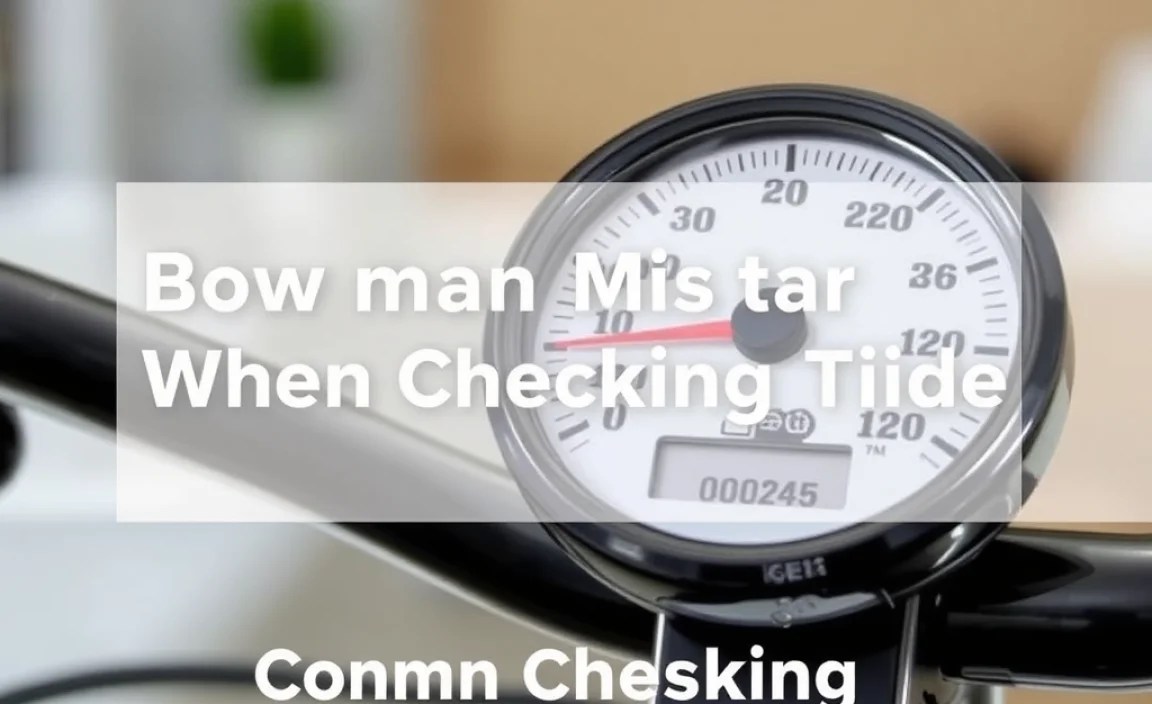
Even with the best tools, mistakes can happen. When checking tire pressure, avoid common errors. One mistake is not attaching the gauge properly. This leads to air leaks and wrong readings. Another mistake is ignoring the tire’s pressure range. Putting too much or too little air can damage the tire. Forgetting to check the valve can also cause problems. A loose valve can leak air. Using a faulty gauge is another common error. Make sure your gauge is accurate. Knowing how to read bar on bike pressure gauge is important. But avoiding these mistakes is also key.
- Failing to attach the gauge securely, causing air leaks.
- Ignoring the recommended pressure range on the tire sidewall.
- Forgetting to inspect the valve for leaks or damage.
- Using a bike pressure gauge that is inaccurate or malfunctioning.
- Not accounting for temperature changes affecting tire pressure.
- Assuming all tires require the same pressure level.
Imagine you’re building a LEGO set. You follow the instructions carefully. But you accidentally skip a step. The whole thing might fall apart! Checking tire pressure is similar. You need to follow the steps carefully. Avoid common mistakes. This ensures your tires are properly inflated. Now you know that how to read bar on bike pressure gauge and paying attention to detail is important! This keeps you safe on your bike.
Fun Fact or Stat: Temperature changes can affect tire pressure by about 1 PSI per 10 degrees Fahrenheit!
What If The Gauge Shows Different Readings Each Time?
If the gauge shows different readings each time, there could be a problem. It could be a faulty gauge. Try using a different gauge to see if the readings are consistent. It could also be an air leak. Check the valve and gauge connection. Make sure they are tight. If the problem persists, take your bike to a shop. A mechanic can help you diagnose the issue. Knowing how to read bar on bike pressure gauge is important. But consistent readings are even more important.
How Can I Tell If My Gauge Is Faulty?
There are ways to tell if your gauge is faulty. Compare it to another gauge. If the readings are very different, one of the gauges is likely faulty. Check the gauge for damage. Look for cracks or leaks. If the gauge is old, it might be less accurate. Consider replacing it. Knowing how to read bar on bike pressure gauge relies on an accurate gauge. If you suspect yours is bad, get a new one.
What Should I Do If I Over-Inflate My Tires?
If you over-inflate your tires, don’t panic. Simply let some air out. Use the pressure release button on the gauge. Or gently press the valve core. Check the pressure again. Make sure it’s within the recommended range. Over-inflating can be dangerous. It can cause the tire to burst. Knowing how to read bar on bike pressure gauge helps you avoid this. But if it happens, let some air out.
Maintaining Your Bike Pressure Gauge
Like any tool, a bike pressure gauge needs care. This keeps it working well. Store it in a dry place. This prevents rust and damage. Avoid dropping it. This can damage the internal parts. Check the gauge regularly. Make sure it’s accurate. Compare it to another gauge. If it’s not accurate, replace it. Clean the gauge head. Dirt can block the air flow. Knowing how to read bar on bike pressure gauge is important. But keeping your gauge in good shape is also vital.
- Store the bike pressure gauge in a dry, protected environment.
- Handle the gauge with care to avoid dropping or damaging it.
- Regularly check the gauge’s accuracy against a known standard.
- Clean the gauge head to prevent dirt and debris from affecting readings.
- Replace the gauge if it becomes inaccurate or unreliable.
Imagine your bike pressure gauge is like a musical instrument. A guitar needs to be tuned. A piano needs to be cleaned. A gauge needs to be cared for. Keeping it clean and dry helps it last longer. Now you know that how to read bar on bike pressure gauge is important. But maintaining the gauge ensures accurate readings. This keeps you safe on your bike.
Fun Fact or Stat: A well-maintained bike pressure gauge can last for many years!
How Do I Clean My Bike Pressure Gauge?
Cleaning your bike pressure gauge is easy. Use a clean, dry cloth. Wipe the gauge head. Remove any dirt or debris. Use a small brush to clean hard-to-reach areas. Avoid using water or solvents. These can damage the gauge. Store the gauge in a clean bag or case. Knowing how to read bar on bike pressure gauge is important. But a clean gauge gives the best results.
How Do I Store My Bike Pressure Gauge?
Store your bike pressure gauge in a safe place. Keep it away from moisture and extreme temperatures. A toolbox or drawer is a good option. A clean bag or case protects it from dust. Avoid leaving it in direct sunlight. This can damage the gauge. Knowing how to read bar on bike pressure gauge requires a good gauge. Store it properly to keep it working well.
When Should I Replace My Bike Pressure Gauge?
Replace your bike pressure gauge when it becomes inaccurate. Compare it to another gauge. If the readings are different, it’s time for a new one. Also, replace it if it’s damaged. Cracks or leaks can affect its accuracy. A new gauge ensures you get the right pressure. Knowing how to read bar on bike pressure gauge is useless with a bad gauge. Replace it to keep your tires properly inflated.
Summary
Learning how to read bar on bike pressure gauge is key for safe and enjoyable biking. The gauge measures tire pressure in PSI or bar. Finding the right pressure involves checking your tire sidewall. It also means considering your riding conditions. Using the gauge correctly ensures accurate readings. Digital and analog gauges offer different benefits. Avoiding common mistakes and maintaining your gauge are important. With this knowledge, you can keep your tires properly inflated. This improves your ride and keeps you safe.
Conclusion
Understanding how to read bar on bike pressure gauge is important for every cyclist. It helps you maintain proper tire pressure. This improves your bike’s performance and your safety. Check your tires regularly. Use a reliable gauge. Adjust the pressure based on your needs. Enjoy your smooth and safe rides!
Frequently Asked Questions
Question No 1: What does “PSI” mean on a bike pressure gauge?
Answer: PSI stands for “pounds per square inch.” It’s a unit of measurement that tells you how much air pressure is inside your bike tire. The higher the PSI, the more air is in the tire. Your bike tire will have a recommended PSI range printed on its sidewall. Make sure you keep your tire pressure within that range. Using a bike pressure gauge, you can ensure the correct PSI for optimal performance and safety. Proper PSI ensures a smooth and efficient ride, reducing the risk of flats and improving overall control.
Question No 2: What does “bar” mean on a bike pressure gauge?
Answer: Bar is another unit of measurement for air pressure. It is commonly used in Europe and other parts of the world. One bar is approximately equal to 14.5 PSI. So, if your tire recommends 4 bar, that’s about 58 PSI. Many bike pressure gauges show both PSI and bar. This makes it easy to use no matter where you are. It is important to know what bar means to properly inflate your tires. Knowing how to read bar on bike pressure gauge is a key skill for any cyclist to ensure safe and efficient rides.
Question No 3: How do I know what PSI or bar my tires should be?
Answer: Look at the sidewall of your tire. You’ll see a range of numbers, like “35-65 PSI” or “2.5-4.5 bar.” This range tells you the minimum and maximum pressure for that tire. The right pressure depends on a few things. Your weight, the type of riding you do, and the tire itself all play a role. If you are heavier, you might need more pressure. If you’re riding on rough roads, you might want less pressure. Always stay within the range printed on the tire. Using a bike pressure gauge, regularly check and adjust your tire pressure accordingly.
Question No 4: Can I use a car tire pressure gauge on my bike?
Answer: Yes, you can use a car tire pressure gauge on your bike, but with a couple of things to keep in mind. First, make sure the gauge is compatible with your bike’s valve type (Schrader or Presta). Car tire gauges are usually designed for Schrader valves. If your bike has Presta valves, you will need an adapter. Second, car tire gauges may not be as accurate for the lower pressures used in bike tires. Bike-specific gauges are often more precise. However, a car gauge can still give you a general idea of your tire pressure. Knowing how to read bar on bike pressure gauge is always useful, regardless of the type of gauge you use.
Question No 5: What happens if I put too much air in my bike tires?
Answer: Putting too much air in your bike tires can be dangerous. Over-inflated tires can burst or explode, especially on hot days. This can cause you to lose control of your bike and crash. It can also damage your tires and rims. Over-inflated tires also make your ride bumpy and uncomfortable. Always stay within the recommended pressure range on the tire sidewall. Use a bike pressure gauge to check the pressure carefully. If you accidentally over-inflate your tires, let some air out until you reach the correct pressure.
Question No 6: How do I release air from my bike tires if I over-inflate them?
Answer: Releasing air from your bike tires is simple. If you’re using a bike pressure gauge with a pressure release button, press the button while the gauge is attached to the valve. This will release a small amount of air. Check the pressure on the gauge and repeat until you reach the desired level. If your gauge doesn’t have a release button, gently press the valve core (the small pin inside the valve) with a small tool or the end of the gauge. Be careful not to damage the valve core. Knowing how to read bar on bike pressure gauge is crucial, but understanding how to adjust the pressure is equally important for safe and comfortable rides.


