
How to Test Custom-Built Bike Gauge: Easy Guide

Do you love riding your bike? Have you ever wondered if all the parts are working right? Bike gauges help us check things like tire pressure. What if you build your own bike gauge? Then, you need to know how to test your custom-built bike gauge to make sure it works!
Bike gauges keep you safe. They tell you if your tires have enough air. They can also show other important things. Learning how to test custom-built bike gauge is a fun project. It helps you understand how bikes work. Let’s explore how to do it!
Have you ever built something cool? Testing it is the best part! It’s like a science experiment. You get to see if your idea works. Testing a bike gauge is important. It makes sure your gauge gives you the right information. This keeps you safe on your bike rides.
Key Takeaways
- Always double-check your custom-built bike gauge against a known, working gauge.
- Look for leaks in your gauge using soapy water for accurate readings.
- A stable needle or digital display means your gauge is likely working well.
- Test your gauge at different pressure levels for consistent accuracy.
- Record your test results to track performance and identify any issues early.
Why Learn How to Test Custom-Built Bike Gauge?

Building your own bike gauge is a cool project. But, knowing how to test custom-built bike gauge is very important. You need to make sure it gives you correct information. A faulty gauge can lead to flat tires or even accidents. Testing helps you trust your gauge. It ensures your safety while riding. You also learn a lot about how gauges work. This knowledge can help you fix other things too. Imagine building a gauge that is more accurate than the ones you can buy! That’s what testing helps you achieve. Don’t just build. Test and improve!
- Safety is the most important reason to test.
- Accuracy ensures correct tire pressure.
- Learning about gauge mechanics is educational.
- Troubleshooting helps improve your design.
- Confidence in your DIY projects is rewarding.
Think about a time you rode your bike with low tires. It’s hard to pedal! A good bike gauge helps you avoid that. Knowing how to test custom-built bike gauge means you can keep your tires perfect. You will ride faster and easier. Plus, you will know you built something that works great! This is a very useful skill to learn. It combines building and testing. You get to be both an inventor and a scientist. Always test your creations to make them the best they can be.
What Tools Do I Need to Test It?
To test your bike gauge, you will need a few things. First, get a known, working bike gauge. This will be your comparison tool. You also need an air pump with a gauge. This helps you add air to the tire. Soapy water in a spray bottle is useful for finding leaks. A notebook and pen will help you record your test results. Lastly, you need a bike tire to test on. Do you remember a time when you had to find tools for a project? This is just like that! Having the right tools makes testing easier and more accurate.
How Often Should I Perform These Tests?
You should test your custom-built bike gauge regularly. Test it after you build it. Then, test it every few weeks. This ensures it stays accurate. If you drop the gauge, test it again. Temperature changes can also affect readings. So, test it when the weather changes. Regular testing helps you catch problems early. It keeps your gauge working well. Think of it like checking the oil in a car. Regular checks keep things running smoothly. Testing often is a good habit to have.
What If My Gauge Fails the Test?
If your gauge fails the test, don’t worry! First, check for leaks. Use soapy water to find them. Tighten any loose connections. Next, compare your gauge to the known, working one. See what the difference is. Maybe your gauge needs to be adjusted. If it’s a digital gauge, check the battery. A low battery can cause problems. If you still can’t fix it, rebuild the gauge. Think of it as a learning experience. Each try gets you closer to a perfect gauge!
Fun Fact or Stat: Did you know that properly inflated tires can improve your bike’s efficiency by up to 10%? That’s like getting a free push with every pedal stroke!
Understanding Bike Gauge Components
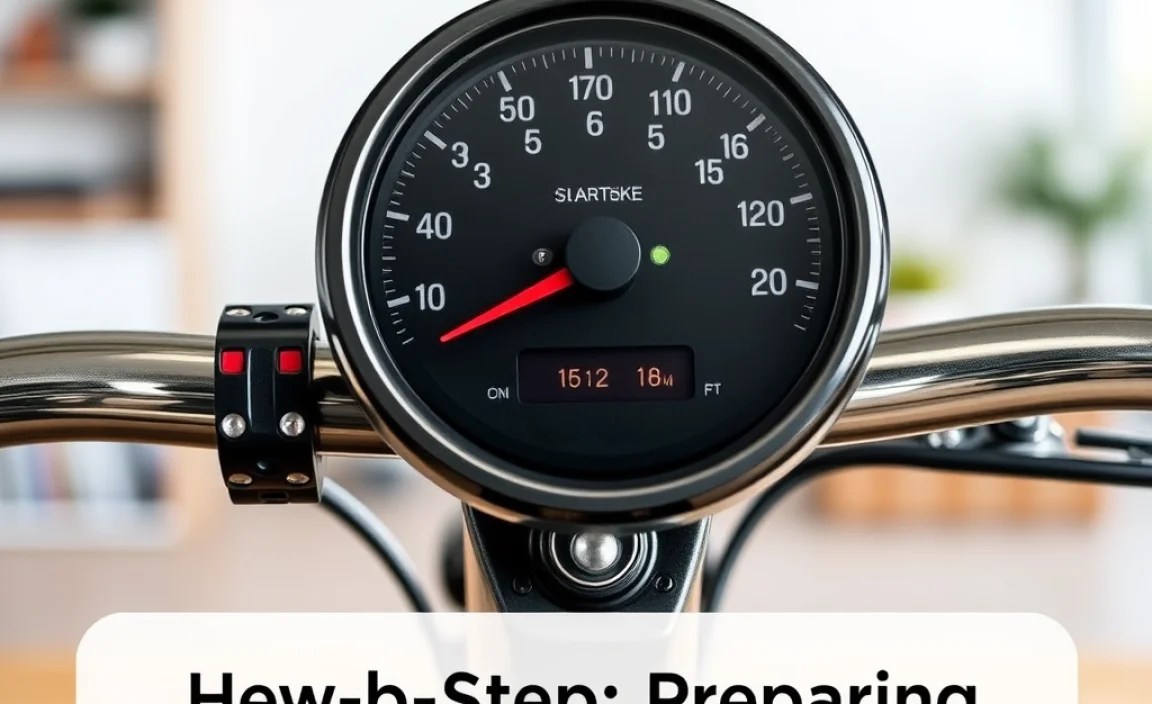
To understand how to test custom-built bike gauge, you must know the parts. A bike gauge has a few main parts. The air inlet connects to the tire valve. The pressure sensor measures the air pressure. The display shows you the reading. This can be a needle or a digital screen. The housing protects all the parts. When you build your gauge, think about each part. Make sure they are all connected well. This will help your gauge work correctly. Understanding the parts makes testing easier too. You know what to check if something goes wrong.
- Air inlet connects to the tire valve.
- Pressure sensor measures air pressure.
- Display shows the pressure reading.
- Housing protects the internal parts.
- Calibration screw adjusts accuracy.
- Bleed valve releases air pressure.
Imagine your bike gauge as a little machine. Each part has a job. The air inlet is like the door. It lets air in. The pressure sensor is like the brain. It figures out how much air there is. The display is like the mouth. It tells you the answer. If one part doesn’t work, the whole machine fails. That’s why it is so important to understand each component. When you know how each part works, you can fix problems easier. This makes you a better builder and tester.
What Types of Sensors Are Used?
Bike gauges use different types of sensors. Some use a Bourdon tube. This is a curved tube that straightens when air pressure increases. Others use a diaphragm. This is a thin, flexible disc that bends with pressure. Digital gauges use electronic pressure sensors. These sensors convert pressure into an electrical signal. Each type of sensor has its pros and cons. Bourdon tubes are simple and reliable. Diaphragms are more sensitive. Electronic sensors are very accurate. The type of sensor affects how the gauge works and how to test it.
How Does the Display Show the Pressure?
The display shows the pressure in different ways. Analog gauges use a needle. The needle moves along a scale. The scale shows the pressure in PSI or Bar. Digital gauges use a screen. The screen shows the pressure as numbers. Some digital gauges have extra features. They can show the pressure in different units. They might also have a backlight. The display needs to be clear and easy to read. This helps you get accurate readings. A good display makes the gauge more useful.
What Materials Are Best for the Housing?
The housing protects the gauge parts. It needs to be strong and durable. Plastic is a common material. It is lightweight and inexpensive. Metal is also a good choice. It is stronger but heavier. Rubber can add extra protection. It can absorb shocks and prevent damage. The best material depends on what you want. Do you want something light? Choose plastic. Do you want something strong? Choose metal. Think about where you will use the gauge. This helps you pick the right material.
Fun Fact or Stat: Some professional cyclists use gauges accurate to within 0.1 PSI to fine-tune their tire pressure for optimal performance!
Step-by-Step: Preparing for the Test

Knowing how to test custom-built bike gauge involves good prep. First, gather all your tools. You need your gauge, a known gauge, and an air pump. Find a clean and quiet place to work. This helps you focus. Check your known gauge. Make sure it is working correctly. If it’s not, find another one. You want a reliable comparison. Next, inspect your custom-built bike gauge. Look for any damage or loose parts. Fix any problems before you start. Good prep makes the test easier and more accurate.
- Gather all necessary tools and equipment.
- Find a clean and quiet workspace.
- Verify the accuracy of your reference gauge.
- Inspect your custom gauge for any defects.
- Prepare a notebook to record test results.
- Have a bike tire ready for testing.
Have you ever started a project without being ready? It can be frustrating! You waste time looking for things. Preparing for the test is like getting ready for a big bike ride. You check your tires, your brakes, and your helmet. You want to be sure everything is ready. Testing your gauge is the same. You want to be sure you have everything you need. This makes the test go smoothly. It also helps you get the best results. Always be prepared before you start!
Calibrating the Reference Gauge
Before you test your gauge, calibrate the reference gauge. Calibration makes sure it is accurate. Use a professional calibration service if possible. If not, compare it to another trusted gauge. Adjust the reference gauge if needed. Some gauges have a calibration screw. Turn the screw until the reading is correct. A calibrated reference gauge is very important. It is the standard you use to test your gauge. Without it, you don’t know if your gauge is correct.
Setting Up a Testing Environment
Setting up the right testing environment is key. Choose a place with good lighting. You need to see the gauge clearly. Make sure the temperature is stable. Extreme temperatures can affect readings. Avoid drafts or wind. These can also cause inaccurate results. A stable and controlled environment helps you get reliable data. Think of it like a science lab. Scientists control everything to get the best results. You should do the same when testing your gauge.
Documenting Your Testing Process
Documenting your testing process is very important. Write down each step you take. Record the readings from both gauges. Note the date and time of the test. Also, write down any problems you see. This helps you track your progress. It also helps you find patterns. Maybe your gauge is always off at high pressures. Documentation helps you see these patterns. It also helps you repeat the test later. Good documentation makes your testing more scientific.
Fun Fact or Stat: The first tire pressure gauges were invented in the late 1800s, shortly after the invention of the pneumatic tire!
Performing the Bike Gauge Test

Now, it’s time to learn how to test custom-built bike gauge! First, connect both gauges to the bike tire. Use the air pump to add air. Start with a low pressure, like 20 PSI. Record the readings from both gauges. Then, add more air. Go to 40 PSI, then 60 PSI. Record the readings each time. Compare the readings. Are they the same? If not, how different are they? Repeat this process several times. This helps you see if your gauge is consistent. Consistency is important for accuracy.
| Pressure (PSI) | Reference Gauge Reading | Custom Gauge Reading | Difference |
|---|---|---|---|
| 20 | 20 | 21 | 1 |
| 40 | 40 | 42 | 2 |
| 60 | 60 | 63 | 3 |
| 80 | 80 | 84 | 4 |
- Connect both gauges to the bike tire.
- Inflate the tire to different pressure levels.
- Record readings from both gauges at each level.
- Compare the readings to identify discrepancies.
- Repeat the process multiple times for consistency.
- Check for leaks using soapy water.
Imagine you are baking a cake. You follow the recipe carefully. You measure each ingredient. You bake it for the right time. Testing your gauge is like that. You follow the steps carefully. You record the results. You compare them to the recipe. This helps you see if your gauge is working right. Each step is important. Don’t skip any steps. This ensures you get the best results. Testing is a process. Follow it carefully for success.
Taking Accurate Readings
Taking accurate readings is key to how to test custom-built bike gauge. Make sure the gauge is connected properly. Read the gauge at eye level. This prevents parallax errors. Wait a few seconds for the reading to stabilize. Don’t rush. Record the reading carefully. Double-check your numbers. Small errors can make a big difference. Practice taking readings. The more you practice, the better you will get. Accurate readings are the foundation of a good test.
Identifying Discrepancies
Identifying discrepancies is an important part of testing. A discrepancy is a difference between the gauges. If your gauge reads 2 PSI higher, that’s a discrepancy. Note the size and direction of the discrepancy. Is it always high? Is it worse at high pressures? Understanding the discrepancies helps you fix your gauge. Maybe you need to adjust the calibration. Maybe there is a leak. Finding discrepancies is like being a detective. You look for clues to solve the mystery.
Checking for Leaks
Leaks can ruin your gauge readings. They cause inaccurate results. Use soapy water to check for leaks. Spray the connections with soapy water. Look for bubbles. Bubbles mean there is a leak. Tighten the connections to stop the leak. If you can’t fix the leak, replace the part. Leaks are like holes in a bucket. They let the air out. You need to fix them to get accurate readings. Checking for leaks is a simple but important step.
Fun Fact or Stat: Some high-end bike gauges use digital sensors that can measure pressure changes as small as 0.01 PSI!
Analyzing Test Results for Your Bike Gauge
After testing, you need to analyze the results. Look at the data you collected. Calculate the average difference between the gauges. This tells you how accurate your gauge is. Look for patterns in the data. Does the gauge read high at all pressures? Or only at high pressures? This helps you understand the problem. Compare your results to the manufacturer’s specifications. Is your gauge within the acceptable range? If not, you need to fix it. Analyzing the results is like solving a puzzle. You use the data to find the solution.
- Calculate the average difference between gauges.
- Look for patterns in the recorded data.
- Compare results to manufacturer specifications.
- Identify potential sources of error.
- Determine if adjustments are needed.
- Document your analysis and conclusions.
Imagine you are a doctor. You take the patient’s temperature. You check their heart rate. You look at their symptoms. Then, you analyze the data. You figure out what is wrong. Analyzing your test results is like that. You look at the numbers. You look for patterns. You figure out what is wrong with your gauge. This helps you fix it and make it better. Analysis is the key to improvement. Always analyze your results to learn and grow.
Calculating Accuracy and Error
To calculate accuracy, compare your gauge to the reference gauge. Find the difference between the readings. Divide the difference by the reference reading. Multiply by 100 to get the percentage error. A smaller percentage means better accuracy. For example, if the reference gauge reads 50 PSI and yours reads 49 PSI, the error is 2%. ( (50-49) / 50 ) * 100 = 2%. Knowing the accuracy helps you trust your gauge. It also helps you make adjustments.
Identifying Sources of Error
Errors can come from many places. A leaky connection can cause low readings. A faulty sensor can cause inaccurate readings. Temperature changes can also affect the results. Make sure to control these factors. Check your equipment carefully. Look for any potential problems. Identifying the sources of error helps you fix them. It also helps you improve your testing process. Think of it like debugging a computer program. You look for the bugs to fix the code.
Making Necessary Adjustments
Based on your analysis, you may need to adjust your gauge. Some gauges have a calibration screw. Turn the screw to adjust the reading. Other gauges may need to be rebuilt. Replace any faulty parts. After making adjustments, test the gauge again. See if the accuracy has improved. Keep adjusting and testing until you get the desired results. This is an iterative process. Each adjustment gets you closer to a perfect gauge.
Fun Fact or Stat: The accuracy of a bike gauge can be affected by altitude, with higher altitudes leading to slightly lower pressure readings!
Maintaining Your Custom-Built Bike Gauge
Knowing how to test custom-built bike gauge also means knowing how to keep it working well. Store your gauge in a safe place. Avoid extreme temperatures. Keep it away from moisture. Clean it regularly with a soft cloth. Check the connections often. Tighten any loose parts. Replace any worn parts. If you have a digital gauge, replace the battery when needed. Regular maintenance helps your gauge last longer. It also keeps it accurate. Think of it like taking care of your bike. You clean it, oil it, and fix it when needed. This keeps it running smoothly.
- Store the gauge in a safe, dry place.
- Clean the gauge regularly with a soft cloth.
- Check connections and tighten loose parts.
- Replace worn or damaged components promptly.
- Replace the battery in digital gauges when needed.
- Calibrate the gauge periodically.
Imagine your bike gauge as a friend. You want to treat it well. You want to keep it safe. You want to help it work its best. Taking care of your gauge is like taking care of a friend. You protect it from harm. You keep it clean. You help it when it needs it. This makes your gauge a reliable tool. It also makes you a responsible builder. Always take pride in your creations. Take care of them so they can take care of you.
Proper Storage Techniques
Proper storage is key to keeping your gauge in good condition. Store it in a case or box. This protects it from dust and damage. Keep it away from direct sunlight. Sunlight can fade the display. Avoid storing it in extreme temperatures. Heat and cold can affect the accuracy. A cool, dry place is best. Think of it like storing your favorite toys. You want to keep them safe so you can play with them again and again.
Regular Cleaning and Inspection
Cleaning your gauge is simple. Use a soft cloth to wipe it down. Avoid using harsh chemicals. These can damage the gauge. Inspect the connections regularly. Look for any cracks or leaks. Tighten any loose parts. Regular cleaning and inspection help you catch problems early. It also keeps your gauge looking good. Think of it like brushing your teeth. Regular cleaning keeps them healthy and strong.
Replacing Worn Components
Over time, some parts may wear out. The air inlet may become loose. The display may fade. The sensor may become less accurate. Replace these parts when needed. You can buy replacement parts online or at a bike shop. Replacing worn parts keeps your gauge working well. It also extends its lifespan. Think of it like replacing the tires on your bike. New tires make your bike ride smoother and faster.
Fun Fact or Stat: Some bike gauges are designed to withstand over 100,000 uses before needing significant maintenance!
Summary
Learning how to test custom-built bike gauge is very useful. It helps you make sure your gauge works correctly. First, gather your tools. You need a known gauge, an air pump, and soapy water. Next, prepare your testing area. Make sure it is clean and quiet. Then, perform the test. Connect both gauges to the tire. Add air and record the readings. Compare the readings and look for any discrepancies. Finally, analyze the results. Calculate the accuracy and identify any sources of error. By following these steps, you can ensure your custom-built bike gauge is accurate and reliable.
Conclusion
Testing your custom-built bike gauge is a crucial step. It ensures accuracy and safety. You can ride confidently knowing your tire pressure is correct. Learning how to test custom-built bike gauge empowers you. You can maintain your gauge effectively. Always follow the steps. Keep your gauge in top condition. Enjoy your safe and accurate bike rides!
Frequently Asked Questions
Question No 1: Why is it important to test a custom-built bike gauge?
Answer: Testing a custom-built bike gauge is very important for several reasons. First, it ensures the gauge is accurate. An inaccurate gauge can lead to incorrect tire pressure. This can affect your bike’s performance and safety. Second, testing helps you identify any potential problems with the gauge. Maybe there is a leak, or the sensor is faulty. Catching these problems early can prevent bigger issues later. Finally, testing gives you confidence in your gauge. You know it is working correctly, so you can trust it on your rides. Testing is a crucial step in the building process.
Question No 2: What tools do I need to test my custom-built bike gauge?
Answer: To test your custom-built bike gauge, you need a few essential tools. First, you need a known, working bike gauge. This will serve as your reference gauge. You also need an air pump with a built-in gauge. This helps you inflate the tire to different pressures. Soapy water in a spray bottle is useful for checking for leaks. A notebook and pen will help you record your test results. Finally, you need a bike tire to test on. Having these tools ready makes the testing process much smoother and more efficient.
Question No 3: How often should I test my custom-built bike gauge?
Answer: You should test your custom-built bike gauge regularly to ensure it remains accurate. After you first build it, test it immediately. This verifies it works from the start. Then, test it every few weeks to monitor its performance. If you drop the gauge or expose it to extreme temperatures, test it again. These events can affect its accuracy. Regular testing helps you catch any issues early. It also gives you confidence in your gauge’s readings. A good rule of thumb is to test it at least once a month.
Question No 4: What should I do if my gauge is not accurate?
Answer: If your custom-built bike gauge is not accurate, there are several steps you can take. First, check for leaks. Use soapy water to spray the connections. Look for bubbles. If you find a leak, tighten the connection or replace the faulty part. Next, compare your gauge to the reference gauge. See how much it is off. If it is consistently off by the same amount, you may be able to adjust the calibration. If these steps don’t work, you may need to rebuild the gauge or replace the sensor.
Question No 5: Can temperature affect the accuracy of my bike gauge?
Answer: Yes, temperature can affect the accuracy of your bike gauge. Extreme temperatures can cause the materials in the gauge to expand or contract. This can change the readings. For example, a gauge may read higher in hot weather and lower in cold weather. To minimize this effect, test your gauge at room temperature. Avoid testing it in direct sunlight or freezing conditions. If you must test it in extreme temperatures, allow the gauge to adjust to the temperature before taking readings. Understanding this helps improve your how to test custom-built bike gauge process.
Question No 6: What are some common mistakes to avoid when testing a bike gauge?
Answer: There are several common mistakes to avoid when testing a bike gauge. One mistake is not using a reliable reference gauge. Always use a gauge that you know is accurate. Another mistake is not checking for leaks. Leaks can cause inaccurate readings. Also, make sure to take readings at eye level to avoid parallax errors. Don’t rush the testing process. Allow the gauge to stabilize before taking a reading. Finally, always document your results. This helps you track your progress and identify any patterns. Avoiding these mistakes will improve the accuracy of your testing.


