
How to Attach Gauge to Mini Pump: Easy Guide

Do you like riding your bike? Do you know how to attach a gauge to a mini pump? It can be tricky. Not all pumps have gauges. A gauge helps you see how much air is in your tires. Too little air makes it hard to pedal. Too much air can pop the tire.
A mini pump is small and easy to carry. But using it can be hard. Adding a gauge makes it easier to get the right amount of air. Let’s learn how to do it. This will make your bike rides safer and more fun.
Key Takeaways
- Knowing how to attach a gauge to a mini pump helps you inflate tires correctly.
- Using a gauge prevents over-inflation and tire damage, ensuring safer rides.
- A mini pump with a gauge is portable, making it easy to check tire pressure anywhere.
- Different types of gauges exist; choose one that fits your mini pump and needs.
- Always double-check the tire pressure after inflating to ensure accuracy.
Understanding Mini Pumps and Gauges

A mini pump is a small, portable air pump for bike tires. They are great for fixing flats on the road. But mini pumps are not always easy to use. It can be hard to tell how much air is in the tire. That’s why a gauge is helpful. A gauge shows the air pressure in the tire. Air pressure is measured in PSI (pounds per square inch). Knowing the PSI helps you inflate the tire to the right level. Too little air, and the bike is hard to pedal. Too much air, and the tire can burst. So, understanding how these tools work together will improve your biking experience and keep you safe.
- Mini pumps are easy to carry on bike rides.
- Gauges measure air pressure in PSI.
- Correct air pressure makes biking easier.
- Too much air can damage the tire.
- Using both helps you ride safely.
Attaching a gauge to a mini pump makes inflating tires easier and more precise. Without a gauge, you have to guess how much air is in the tire. This can lead to problems. You might not have enough air for a smooth ride. Or, you might put in too much air and risk a flat tire. A gauge removes the guesswork. It gives you a clear reading of the tire pressure. This helps you get the right amount of air every time. This is important for a comfortable and safe bike ride. Make sure you learn how to use these tools together.
Why Use a Gauge?
Have you ever tried to guess something and been way off? That’s what it’s like inflating a tire without a gauge! A gauge tells you exactly how much air is inside. This stops you from adding too much or too little. Imagine baking a cake without measuring. It might not taste very good. The same goes for bike tires. Too much air can make the tire pop. Too little air makes biking hard. A gauge helps you get it just right. This means a smoother, safer ride. Plus, it can even make your tires last longer.
Types of Gauges
Did you know there are different kinds of gauges? Some are digital and show the pressure on a screen. Others are analog, with a needle pointing to the pressure. Digital gauges are easy to read. Analog gauges don’t need batteries. Some gauges attach directly to the pump. Others are separate and you use them after pumping. Each type has its pros and cons. Think about what’s important to you. Do you want something easy to read? Or something that always works, even without power? Knowing the types helps you pick the best one.
Reading a Gauge
Reading a gauge is like reading a speedometer in a car. It tells you how fast you’re going with air! Look for the PSI number. That’s the pressure in your tire. Check the side of your tire. It will tell you the right PSI range. The range might be something like 30-50 PSI. Add air until the gauge shows a number in that range. If it goes over, let a little air out. Practice makes perfect. Soon, you’ll be a pro at reading your gauge. This helps you enjoy every bike ride safely.
Fun Fact or Stat: A tire inflated to the correct pressure can improve your cycling efficiency by up to 10%!
Steps to Attach a Gauge

Attaching a gauge to a mini pump is easier than you think. First, you need to gather your tools. You will need your mini pump and a gauge. Make sure the gauge is compatible with your pump. Some gauges screw on. Others attach with a quick-release lever. Read the instructions that came with your gauge. This will tell you the best way to attach it. Once the gauge is attached, you are ready to inflate your tires. Remember to check the tire pressure often. This will keep your rides smooth and safe.
- Gather your mini pump and gauge.
- Check if the gauge fits your pump.
- Read the gauge’s instructions.
- Attach the gauge securely.
- Check tire pressure regularly.
Different gauges attach in different ways. Some gauges screw onto the pump’s hose. Others use a lever to clamp on. Make sure you understand how your gauge works. If it screws on, tighten it gently. Don’t overtighten, or you could damage the threads. If it uses a lever, make sure it’s locked in place. A loose connection will give you a wrong reading. This can lead to over- or under-inflation. Always double-check the connection before you start pumping. A secure fit ensures an accurate reading and a safe ride.
Choosing the Right Gauge
Choosing the right gauge is like picking the right tool for a job. Some gauges work better with certain pumps. Some are easier to read than others. Think about where you’ll be using it. If you’re on the road, a small, light gauge is best. If you’re at home, a bigger gauge might be fine. Read reviews and ask friends for advice. The right gauge will make inflating your tires much easier. It will also give you peace of mind on your rides.
Preparing Your Pump
Before you attach the gauge, check your pump. Make sure it’s clean and in good working order. A dirty or broken pump won’t work well. This can make it hard to get an accurate reading. Clean the pump head with a cloth. Check the hose for cracks or leaks. If you find any problems, fix them before you start. A well-maintained pump will give you the best results. It will also last longer. This saves you money in the long run.
Connecting the Gauge
Connecting the gauge is a key step. Follow the instructions that came with your gauge. Most gauges either screw on or clamp on. If it screws on, turn it gently until it’s snug. Don’t force it. If it clamps on, make sure the lever is locked. A good connection is important. It will give you an accurate reading. A bad connection will give you a false reading. This could lead to problems. Double-check the connection before you start pumping. A little extra care here can save you trouble later.
Fun Fact or Stat: Digital gauges often have an accuracy of +/- 1 PSI, while analog gauges can vary by +/- 3 PSI.
Checking Tire Pressure with a Gauge

Using a gauge to check tire pressure is very important. It helps you keep your tires in good shape. Knowing how to attach gauge to mini pump is only the first step. You also need to know how to use it. First, find the recommended tire pressure. This is usually printed on the side of the tire. Next, attach the gauge to the tire valve. Read the pressure on the gauge. If it’s too low, add air with your mini pump. If it’s too high, let some air out. Always check the pressure again after adding or removing air. This will make sure you have the right amount.
- Find the recommended tire pressure.
- Attach the gauge to the tire valve.
- Read the pressure on the gauge.
- Add or remove air as needed.
- Recheck the pressure after adjusting.
When you check your tire pressure, pay attention to the numbers. The recommended pressure is a range, not a single number. For example, it might say 30-50 PSI. This means you can safely inflate your tire to anywhere between 30 and 50 PSI. If you’re riding on smooth roads, you might want to inflate to the higher end of the range. This will make your bike roll faster. If you’re riding on bumpy roads, you might want to inflate to the lower end of the range. This will give you a more comfortable ride. Experiment to find what works best for you.
Finding the Right PSI
Do you know where to find the right PSI for your tires? Look on the side of the tire. There’s usually a range listed. It might say something like “40-65 PSI.” This means your tire should have between 40 and 65 pounds of pressure. If you can’t find the PSI on the tire, ask a bike shop. They can help you find the right number. Knowing the right PSI is important. It keeps you safe and makes your ride better.
Attaching the Gauge to the Valve
Attaching the gauge to the valve is a key step. Make sure the gauge is securely attached. If it’s loose, it won’t give you a good reading. Most gauges have a lever that you flip to lock them in place. Make sure the lever is fully engaged. If the gauge still leaks air, try adjusting the position. Sometimes, the valve stem can be bent. This can make it hard to get a good seal. Be patient and keep trying. A good connection is worth the effort.
Reading the Pressure Correctly
Reading the pressure correctly is important. Look closely at the gauge. Digital gauges show the number clearly on a screen. Analog gauges have a needle that points to the pressure. Make sure you’re looking at the right scale. Some gauges show both PSI and BAR. PSI is the most common unit in the US. BAR is used in other countries. If you’re not sure, ask someone to help you. Getting the right reading is the first step to safe riding. Always double-check to be sure.
Fun Fact or Stat: Checking your tire pressure before each ride can reduce your risk of flat tires by 20%!
| Tire Pressure | Road Condition | Riding Style | Benefits |
|---|---|---|---|
| High (e.g., 50 PSI) | Smooth Pavement | Fast Riding | Lower rolling resistance, faster speed |
| Medium (e.g., 40 PSI) | Mixed Terrain | Comfortable Riding | Good balance of speed and comfort |
| Low (e.g., 30 PSI) | Bumpy Roads | Off-Road Riding | Increased grip, more comfortable ride |
| Very Low (e.g., 20 PSI) | Snow/Sand | Technical Riding | Maximum grip and control |
Troubleshooting Gauge Issues
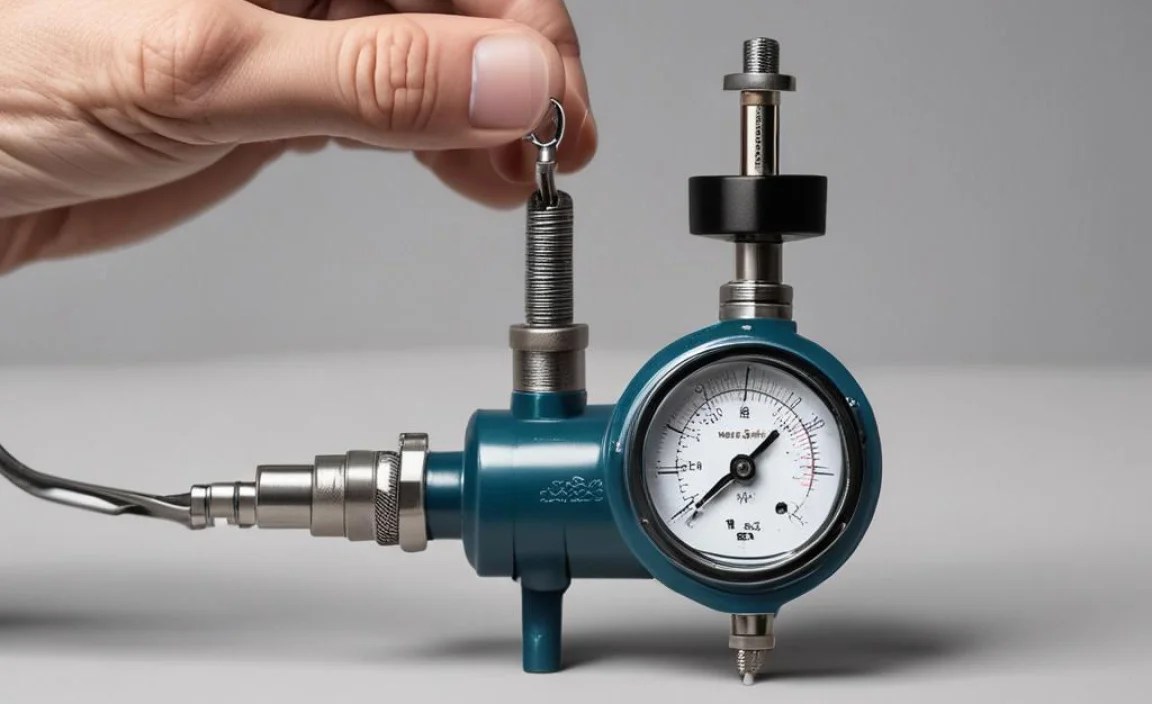
Sometimes, things don’t go as planned. You might have problems when using your gauge. Maybe the gauge doesn’t show a reading. Or maybe the reading seems wrong. Knowing how to attach gauge to mini pump properly is important for avoiding these issues. First, check the connection between the gauge and the tire valve. Make sure it’s secure. Next, check the gauge itself. Is it working properly? If it’s a digital gauge, make sure the battery is good. If it’s an analog gauge, make sure the needle moves freely. If you still have problems, try a different gauge. It could be that your gauge is broken.
- Check the gauge connection.
- Check the gauge’s battery (if digital).
- Make sure the needle moves (if analog).
- Try a different gauge.
- Check for leaks around the valve.
If your gauge is giving you a strange reading, don’t ignore it. A wrong reading can lead to over- or under-inflation. This can damage your tires or make your ride unsafe. Compare the reading to what you expect. If it seems way off, there’s probably a problem. Check the gauge again. Make sure it’s properly attached. If the reading is still strange, try a different gauge. It’s better to be safe than sorry. Take the time to troubleshoot the problem. This will ensure a safe and enjoyable ride.
Gauge Not Showing a Reading
What if your gauge shows nothing? First, check the battery if it’s digital. A dead battery means no reading. Next, check the connection. Is the gauge firmly on the valve? A loose connection won’t work. If it’s an analog gauge, the needle might be stuck. Tap it gently to see if it moves. If none of these work, the gauge might be broken. It’s time for a new one. A working gauge is a must for safe biking.
Inaccurate Readings
What if the gauge seems wrong? Maybe it shows a flat tire when you know it’s not. Or maybe it shows too much pressure. First, check the tire itself. Does it look and feel right? If not, the gauge might be right. If the tire seems okay, check the gauge connection. A loose connection can cause bad readings. Also, make sure you’re using the gauge correctly. Some gauges need to be held a certain way. If it’s still wrong, the gauge could be faulty. Get a new one to be sure.
Air Leaking While Checking
Is air leaking when you check the pressure? This usually means the gauge isn’t sealed right. Make sure it’s pushed all the way onto the valve. Try wiggling it gently. Sometimes, the valve stem is dirty or bent. Clean it with a cloth. If it’s bent, you might need a new tube. Also, check the gauge itself. The rubber seal inside might be worn out. If so, you’ll need a new gauge. Don’t ignore air leaks. They can lead to flat tires.
Fun Fact or Stat: Most common gauge issues are due to poor connections or low batteries, both easily fixable!
Maintaining Your Mini Pump and Gauge

Taking care of your mini pump and gauge is important. It will help them last longer. It will also make sure they work well. Keep them clean and dry. Wipe them down after each use. Store them in a safe place. This will protect them from damage. Check them regularly for wear and tear. Replace parts as needed. Knowing how to attach gauge to mini pump is useless if the equipment is faulty. A well-maintained pump and gauge will keep you riding safely.
- Keep your pump and gauge clean.
- Store them in a safe place.
- Check them regularly for wear.
- Replace worn parts as needed.
- Keep them dry to prevent rust.
Cleaning your pump and gauge is easy. Just wipe them down with a damp cloth. Don’t use soap or harsh chemicals. These can damage the parts. Pay special attention to the pump head and the gauge connection. These areas can get dirty easily. Dirt can interfere with the seal. This can cause leaks. A clean pump and gauge will work better and last longer. Make it a habit to clean them after each ride. This will keep them in top condition.
Cleaning Tips
Want your pump and gauge to last? Clean them often! Use a damp cloth to wipe off dirt. Don’t use soap, it can hurt the parts. Pay attention to the pump head. It gets dirty fast. Also, clean the gauge connection. Dirt can cause leaks. A clean tool works better. Plus, it lasts longer. Make cleaning part of your routine. Your bike will thank you!
Storage Solutions
Where do you keep your pump and gauge? Don’t just throw them in a bag. Store them in a safe place. A small toolbox works great. Or a special bike bag. Keep them away from water and dirt. Store them where they won’t get bumped. This stops damage. Good storage keeps them working well. It also makes them easy to find. That way, you’re always ready to ride.
Checking for Wear and Tear
Do you check your pump and gauge? You should! Look for cracks in the hose. Check for loose parts. Make sure the gauge needle moves. If you see problems, fix them fast. Replace worn parts. A little checkup saves trouble later. It keeps you safe on the road. Don’t wait for something to break. Check your gear often. It’s part of being a good biker.
Fun Fact or Stat: Regular maintenance can extend the life of your mini pump and gauge by up to 50%!
Different Types of Gauges for Mini Pumps
There are many kinds of gauges. Some are made for mini pumps. Knowing the differences helps you choose the right one. Digital gauges show the pressure on a screen. They are easy to read. Analog gauges have a needle. They don’t need batteries. Some gauges attach to the pump. Others are separate. Some have extra features. Think about what you need. This will help you pick the best gauge. How to attach gauge to mini pump depends on the type you choose.
- Digital gauges are easy to read.
- Analog gauges don’t need batteries.
- Some gauges attach to the pump.
- Others are separate.
- Some have extra features.
When choosing a gauge, think about how you will use it. If you ride a lot, you might want a durable gauge. If you ride at night, a gauge with a backlight is helpful. If you want precise readings, look for a digital gauge with high accuracy. Some gauges also have features like pressure release buttons. These let you easily let out air if you over-inflate. Consider these features when making your choice. The right gauge will make inflating your tires easier and more enjoyable.
Digital Gauges
Digital gauges are like little computers for your tires. They show the pressure on a screen. This makes them easy to read, even in bright sunlight. They often have extra features. Some remember the last reading. Some let you switch between PSI and BAR. They need batteries, though. So, keep some spares handy. A digital gauge is great for accuracy. It’s also easy to use. If you like gadgets, this is the gauge for you.
Analog Gauges
Analog gauges are the old-school choice. They use a needle to show the pressure. No batteries needed! They’re simple and reliable. They might be harder to read than digital gauges. But they always work. They’re also tough. They can handle bumps and drops. If you want something simple and dependable, pick an analog gauge. It’s a classic for a reason.
Inline vs. Separate Gauges
Do you want a gauge that attaches to the pump? Or one that you use separately? Inline gauges stay on the pump. They’re always ready to use. Separate gauges are smaller. You can use them on different bikes. Think about how you ride. If you only have one bike, inline is fine. If you have many bikes, separate might be better. Both types work well. It’s all about what you like best. Choose the one that fits your needs.
Fun Fact or Stat: Sales of digital gauges have increased by 30% in the last five years due to their ease of use!
Summary
Learning how to attach a gauge to a mini pump is a great skill. A gauge helps you keep your tires properly inflated. This makes your bike rides safer and more enjoyable. By understanding the different types of gauges and how to use them, you can maintain optimal tire pressure. Remember to choose a gauge that fits your pump and your needs. Check your tire pressure regularly. A little bit of care goes a long way. This will extend the life of your tires and improve your biking experience.
Conclusion
Using a mini pump with a gauge is a smart way to keep your tires in good shape. A gauge helps you know exactly how much air is in your tires. This prevents over-inflation and flat tires. Knowing how to attach gauge to mini pump makes biking safer and more fun. So, get yourself a gauge and start riding with confidence!
Frequently Asked Questions
Question No 1: Why should I use a gauge with my mini pump?
Answer: A gauge helps you see the exact air pressure in your tires. Without a gauge, you have to guess. Guessing can lead to over- or under-inflation. Over-inflation can cause a tire to burst. Under-inflation makes it hard to pedal. A gauge gives you an accurate reading. This ensures your tires are properly inflated. Proper inflation makes biking safer and more efficient. Knowing how to attach gauge to mini pump ensures you can accurately inflate your tires anywhere.
Question No 2: What is PSI, and why is it important?
Answer: PSI stands for pounds per square inch. It’s how we measure air pressure in tires. The right PSI is important for a good ride. Too little PSI, and the tire is soft. This makes pedaling harder. It can also damage the rim. Too much PSI, and the tire is hard. This makes the ride bumpy. It can also cause the tire to explode. Check the side of your tire for the recommended PSI range. Keep your tire pressure within that range for the best ride.
Question No 3: How do I know what PSI my tires should be?
Answer: Look at the side of your tire. You’ll see a range of numbers followed by “PSI.” This is the recommended pressure range for your tire. For example, it might say “40-65 PSI.” This means your tire should have between 40 and 65 pounds of pressure. The right pressure depends on the tire and your weight. If you’re not sure, start in the middle of the range. Then, adjust as needed for comfort and performance. Learning how to attach gauge to mini pump helps to make this process easier.
Question No 4: What are the different types of gauges?
Answer: There are two main types of gauges: digital and analog. Digital gauges show the pressure on a screen. They are easy to read and often have extra features. Analog gauges have a needle that points to the pressure. They don’t need batteries. Some gauges attach directly to the pump. Others are separate. Each type has its pros and cons. Choose the one that works best for you. Consider accuracy, ease of use, and durability.
Question No 5: How do I attach a gauge to my mini pump?
Answer: Attaching a gauge to a mini pump depends on the type of gauge. Some gauges screw onto the pump’s hose. Others use a lever to clamp on. Read the instructions that came with your gauge. This will tell you the best way to attach it. Make sure the connection is secure. A loose connection will give you a wrong reading. This can lead to over- or under-inflation. Always double-check the connection before you start pumping.
Question No 6: What do I do if my gauge isn’t working properly?
Answer: If your gauge isn’t working, first check the connection. Make sure it’s securely attached to the tire valve. If it’s a digital gauge, check the battery. A dead battery can cause problems. If it’s an analog gauge, make sure the needle moves freely. If you still have problems, try a different gauge. It could be that your gauge is broken. Don’t rely on a faulty gauge. Get a new one to ensure accurate readings. This is important for your safety.


