
How to Maintain a Deep Cycle Battery for Your Sump Pump

Quick Summary: To keep your deep cycle battery ready for sump pump duty, regularly check and clean terminals, use a smart charger to avoid overcharging, keep the battery fully charged, and store it in a cool, dry place. Replace the battery every 3-5 years, or as needed based on performance. Regular maintenance ensures your sump pump is ready to protect your home during power outages.
A sump pump is your first line of defense against basement flooding, but it’s useless during a power outage without a backup. That’s where a deep cycle battery comes in, providing the juice to keep your sump pump running when the lights go out. But these batteries don’t last forever, and neglecting them can leave you vulnerable. Learning how to maintain a deep cycle battery for your sump pump is crucial for reliable flood protection. Don’t worry; it’s not complicated! We’ll walk you through the easy steps to keep your battery in top shape, ensuring your basement stays dry.
Why Deep Cycle Battery Maintenance Matters

Deep cycle batteries are designed to provide a steady amount of power over a long period, perfect for backing up a sump pump. But they’re different from car batteries. Car batteries give a short burst of energy to start the engine, while deep cycle batteries handle long, slow discharges. This makes them ideal for running a sump pump during an outage.
Proper maintenance isn’t just about extending the battery’s life. It’s about ensuring your sump pump will work when you need it most. A well-maintained battery will:
- Provide reliable backup power.
- Last longer, saving you money.
- Prevent unexpected sump pump failures.
Ignoring maintenance can lead to a dead battery when you need it most. Let’s dive into how to keep your deep cycle battery in peak condition.
Tools You’ll Need
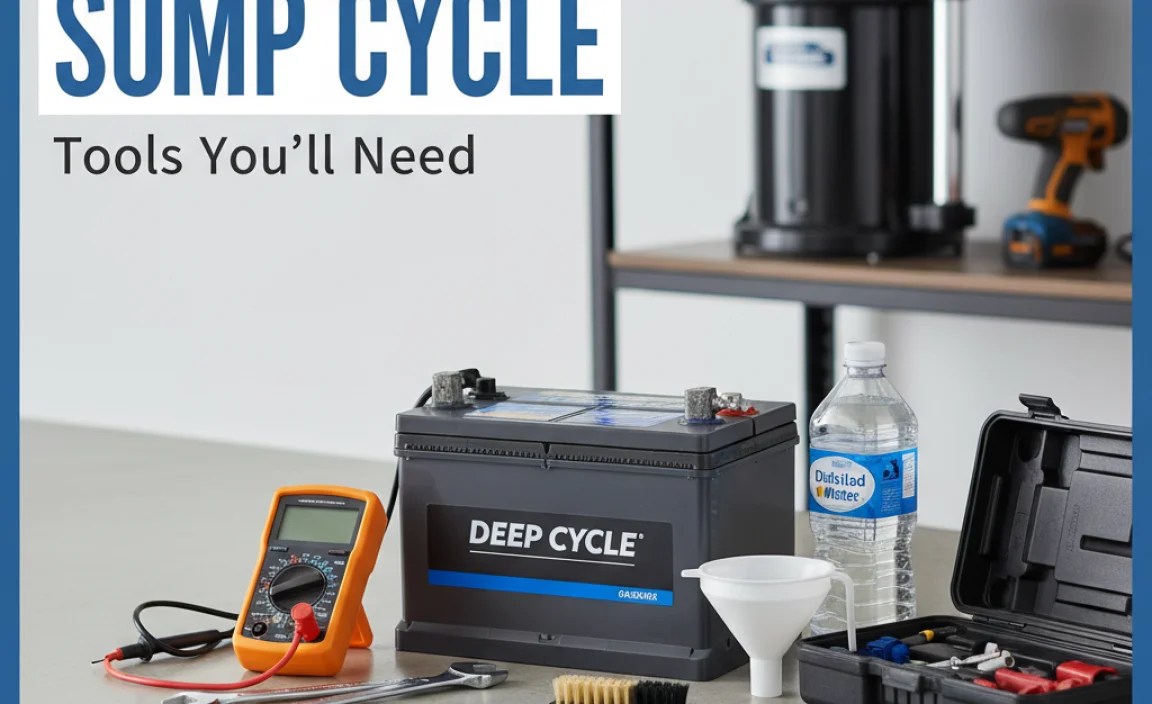
Before you start, gather these simple tools:
- Battery terminal cleaner: For removing corrosion.
- Wire brush: To scrub terminals.
- Wrench set: For loosening and tightening connections.
- Voltmeter: To check the battery’s charge.
- Smart charger: To charge the battery safely.
- Distilled water: For flooded lead-acid batteries.
- Safety glasses and gloves: For protection.
Step-by-Step Guide to Deep Cycle Battery Maintenance

Step 1: Visual Inspection
Start with a thorough visual check. Look for:
- Cracks or bulges: These indicate damage, and the battery may need replacing.
- Corrosion: White or bluish deposits on the terminals.
- Leaks: Any signs of acid leakage.
If you see any of these issues, address them immediately. Cracks or leaks mean the battery needs replacing. Corrosion needs cleaning.
Step 2: Cleaning the Terminals
Corrosion can prevent your battery from charging and discharging properly. Here’s how to clean it:
- Disconnect the battery: Always disconnect the negative terminal first.
- Apply terminal cleaner: Spray the cleaner on the terminals and cable clamps.
- Scrub with a wire brush: Remove all corrosion.
- Wipe clean: Use a clean cloth to wipe away residue.
- Reconnect the battery: Attach the positive terminal first, then the negative.
- Apply protectant: Use a terminal protectant spray to prevent future corrosion.
Step 3: Checking the Electrolyte Level (Flooded Lead-Acid Batteries Only)
If you have a flooded lead-acid battery (the kind with removable caps on top), you need to check the electrolyte level regularly. This doesn’t apply to sealed AGM or gel batteries.
- Remove the caps: Carefully remove the caps on top of the battery.
- Check the level: The electrolyte should cover the plates inside.
- Add distilled water: If the level is low, add distilled water until the plates are covered. Do not use tap water.
- Replace the caps: Securely replace the caps.
Important: Never overfill the battery. The electrolyte expands during charging.
Step 4: Charging the Battery
Keeping your deep cycle battery fully charged is crucial. Use a smart charger designed for deep cycle batteries. These chargers have multiple stages to prevent overcharging.
- Connect the charger: Attach the charger to the battery terminals.
- Set the charger: Choose the correct voltage and battery type (usually 12V for sump pump batteries).
- Monitor the charging: Let the charger run until it indicates the battery is fully charged.
- Disconnect the charger: Once charged, disconnect the charger.
Tip: Charge the battery after each use and at least every three months if it’s not in use.
Step 5: Testing the Battery
Regularly test your battery to ensure it can hold a charge. A simple voltmeter can give you a good indication of the battery’s health.
- Charge the battery: Make sure the battery is fully charged.
- Let it rest: Allow the battery to sit for a few hours after charging.
- Connect the voltmeter: Attach the voltmeter to the terminals.
- Read the voltage: A healthy 12V battery should read around 12.6-12.8 volts.
Here’s a general guide to interpreting the voltage:
| Voltage | State of Charge |
|---|---|
| 12.6V – 12.8V | 100% |
| 12.4V | 75% |
| 12.2V | 50% |
| 12.0V | 25% |
| Below 12.0V | Discharged |
If the voltage is consistently low, even after charging, the battery may need replacing. You can also take the battery to an auto parts store for a load test, which provides a more accurate assessment of its health.
Step 6: Proper Storage
If you’re not using the battery for an extended period, proper storage is essential.
- Charge before storing: Fully charge the battery before storing it.
- Cool, dry place: Store the battery in a cool, dry place. Avoid extreme temperatures.
- Disconnect: Disconnect the battery from the sump pump system.
- Check periodically: Check the battery’s voltage every few months and recharge it if necessary.
Choosing the Right Charger

Using the correct charger is critical for maintaining your deep cycle battery. Here’s what to look for:
- Smart charger: A smart charger has multiple charging stages and automatically adjusts the charging rate.
- Deep cycle setting: Make sure the charger has a setting specifically for deep cycle batteries.
- Automatic shut-off: The charger should automatically shut off when the battery is fully charged to prevent overcharging.
Overcharging is a common cause of battery damage. A smart charger prevents this by reducing the charging rate as the battery reaches full charge and shutting off automatically.
Extending Battery Life: Tips and Tricks

Here are some extra tips to maximize the lifespan of your deep cycle battery:
- Avoid deep discharge: Try not to let the battery discharge completely. Recharge it as soon as possible after use.
- Use the right size battery: Make sure your battery is properly sized for your sump pump. A larger battery will provide more runtime and won’t be stressed as much.
- Regular maintenance: Stick to a regular maintenance schedule to catch issues early.
- Temperature control: Avoid exposing the battery to extreme temperatures, which can shorten its life.
Common Mistakes to Avoid
Here are some common mistakes people make when maintaining deep cycle batteries:
- Using the wrong charger: Using a car battery charger on a deep cycle battery can damage it.
- Overcharging: Overcharging can cause the battery to overheat and shorten its life.
- Neglecting electrolyte levels: For flooded batteries, failing to check and maintain electrolyte levels can damage the plates.
- Ignoring corrosion: Letting corrosion build up on the terminals can prevent proper charging and discharging.
- Deep discharging: Repeatedly discharging the battery completely can significantly reduce its lifespan.
Troubleshooting Common Issues
Here are some common problems you might encounter and how to troubleshoot them:
- Battery won’t charge:
- Check the charger: Make sure the charger is working properly.
- Check connections: Ensure all connections are clean and tight.
- Test the battery: Use a voltmeter to check the battery’s voltage. If it’s very low, the battery may be damaged.
- Battery discharges quickly:
- Check for shorts: Look for any shorts in the wiring.
- Test the battery: Have the battery load tested to check its capacity.
- Replace if needed: The battery may be nearing the end of its life.
- Corrosion on terminals:
- Clean regularly: Clean the terminals with a terminal cleaner and wire brush.
- Apply protectant: Use a terminal protectant spray to prevent future corrosion.
Deep Cycle Battery Types
Understanding the different types of deep-cycle batteries can help you choose the right one for your sump pump backup system.
| Battery Type | Pros | Cons |
|---|---|---|
| Flooded Lead-Acid (FLA) | Most affordable, high surge current capability. | Requires regular maintenance (checking water levels), vents hydrogen gas, shorter lifespan. |
| Absorbent Glass Mat (AGM) | Maintenance-free, spill-proof, better performance than FLA, longer lifespan. | More expensive than FLA, can be damaged by overcharging. |
| Gel Cell | Maintenance-free, spill-proof, very low self-discharge, performs well in extreme temperatures. | Most expensive, very sensitive to overcharging, lower surge current capability. |
For sump pump backup, AGM batteries are often the best choice due to their maintenance-free design and reliable performance. However, consider your budget and specific needs when making a decision.
Signs It’s Time to Replace Your Battery
Even with the best maintenance, deep cycle batteries eventually wear out. Here are signs it’s time for a replacement:
- Reduced runtime: The sump pump runs for a shorter time on battery power than it used to.
- Low voltage: The battery consistently shows low voltage, even after charging.
- Swelling or bulging: The battery case is deformed.
- Frequent charging: You need to charge the battery more often.
- Age: Most deep cycle batteries last 3-5 years. If your battery is older than that, it’s likely time to replace it.
FAQ: Deep Cycle Battery Maintenance for Sump Pumps
Q: How often should I check my deep cycle battery?
A: You should visually inspect your battery monthly and check the voltage every three months. If you have a flooded lead-acid battery, check the electrolyte level monthly.
Q: Can I use a car battery charger for my deep cycle battery?
A: No, car battery chargers are not designed for deep cycle batteries and can damage them. Use a smart charger specifically designed for deep cycle batteries.
Q: What voltage should my 12V deep cycle battery read when fully charged?
A: A fully charged 12V deep cycle battery should read around 12.6-12.8 volts.
Q: How do I dispose of a deep cycle battery?
A: Deep cycle batteries contain hazardous materials and should be recycled properly. Take them to an auto parts store, recycling center, or hazardous waste collection site.
Q: What is the best way to store a deep cycle battery long-term?
A: Charge the battery fully before storing it in a cool, dry place. Disconnect it from the sump pump system and check the voltage every few months, recharging as needed.
Q: What does “equalizing” a battery mean?
A: Equalizing is a controlled overcharge that reverses the buildup of negative chemical effects like stratification and sulfation. It’s best to refer to your battery’s specifications for the manufacturer’s recommendation to ensure it’s necessary and doesn’t cause harm.
Q: How long should a deep cycle battery last for a sump pump?
A: With proper maintenance, a deep cycle battery should last between 3 to 5 years. Lifespan will vary depending on usage, charging habits, and environmental conditions.
Conclusion
Maintaining a deep cycle battery for your sump pump doesn’t have to be a chore. By following these simple steps, you can ensure your battery is ready to provide reliable backup power when you need it most. Regular inspection, cleaning, proper charging, and smart storage will extend the life of your battery and give you peace of mind knowing your basement is protected from flooding, even during a power outage. Stay proactive, and your sump pump battery will be a dependable guardian for years to come.
“`


