
How Long Is a Defrost Cycle on a Heat Pump?

Quick Summary: A typical defrost cycle on a heat pump lasts between 3 to 15 minutes. The frequency depends on factors like outdoor temperature, humidity, and the heat pump’s efficiency. Most heat pumps defrost every 30 to 90 minutes when temperatures are near freezing. Understanding these cycles helps you recognize normal operation and potential issues.
Is your heat pump making strange noises or emitting steam in the winter? Don’t worry; it’s probably just defrosting. Many homeowners get concerned when they notice their heat pump running a defrost cycle. It’s a normal and necessary process, but understanding how it works and what to expect can ease your mind. This guide will explain how long a defrost cycle usually lasts, what factors influence it, and how to spot potential problems. Let’s dive in and get you comfortable with your heat pump’s winter routine!
Why Do Heat Pumps Need Defrost Cycles?

Heat pumps are incredibly efficient heating and cooling systems. In winter, they extract heat from the outside air to warm your home. When the outdoor temperature drops to or below freezing, moisture in the air can freeze on the outdoor coil. This frost buildup reduces the heat pump’s ability to absorb heat, making it work harder and less efficiently. The defrost cycle melts this ice, allowing the heat pump to operate effectively.
The Science Behind Frost Formation
To understand why defrosting is crucial, let’s look at the science of frost formation:
- Moisture in the Air: Air always contains some amount of water vapor.
- Freezing Temperatures: When the outdoor temperature drops below freezing (32°F or 0°C), this moisture can turn into ice.
- Coil Temperature: The heat pump’s outdoor coil is even colder than the ambient air as it extracts heat. This makes it a prime spot for frost to form.
- Impact of Frost: A layer of frost acts as insulation, preventing the coil from efficiently absorbing heat.
Typical Defrost Cycle Duration
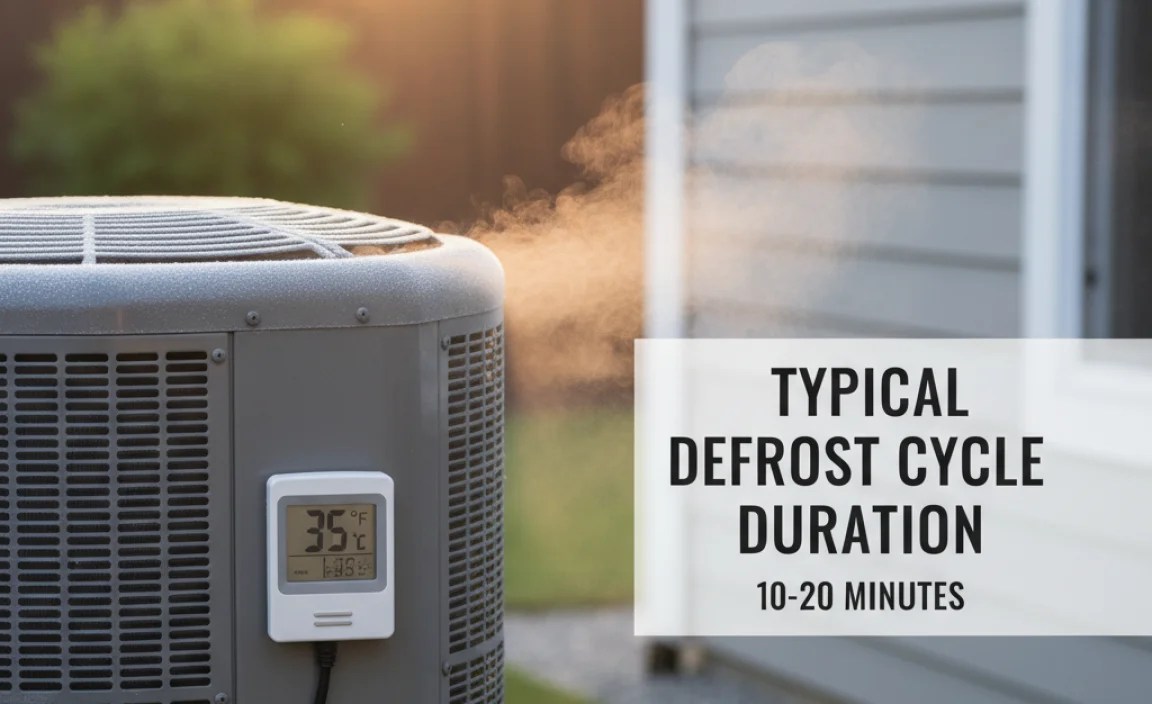
The length of a defrost cycle can vary, but here’s a general guideline:
- Average Duration: Most defrost cycles last between 3 to 15 minutes.
- Frequency: Heat pumps typically defrost every 30 to 90 minutes when temperatures are around freezing.
It’s important to note that these are just averages. Several factors can affect how long and how often your heat pump defrosts.
Factors Affecting Defrost Cycle Length and Frequency

Several factors influence how long and how often your heat pump needs to defrost:
- Outdoor Temperature: The closer the temperature is to freezing, the more frequently the heat pump will defrost. At very low temperatures (below 20°F), the heat pump may defrost more often or switch to auxiliary heat.
- Humidity: High humidity levels mean more moisture in the air, leading to quicker frost buildup and more frequent defrost cycles.
- Heat Pump Efficiency: Newer, more efficient heat pumps may have better defrost controls and require less frequent or shorter cycles.
- Coil Condition: A dirty or damaged coil can exacerbate frost buildup, causing more frequent and longer defrost cycles.
- Airflow: Restricted airflow around the outdoor unit can also lead to increased frost formation.
- Defrost Control Settings: Some heat pumps have adjustable defrost settings that can be configured by a technician.
How to Tell If Your Heat Pump Is Defrosting

Knowing what to look for can help you identify when your heat pump is in defrost mode:
- Steam or Fog: You might see steam or fog rising from the outdoor unit as the ice melts.
- Fan Stops: The outdoor fan usually stops running during the defrost cycle to help the coil heat up more quickly.
- Noise: You might hear a hissing or bubbling sound as the refrigerant reverses to heat the coil.
- Auxiliary Heat: The system might switch to auxiliary heat (electric resistance heat) to keep your home warm while the outdoor unit defrosts. You might notice a slight temperature difference during this time.
- Ice Melting: Obvious signs of ice melting and water dripping from the unit.
Understanding the Defrost Cycle Process
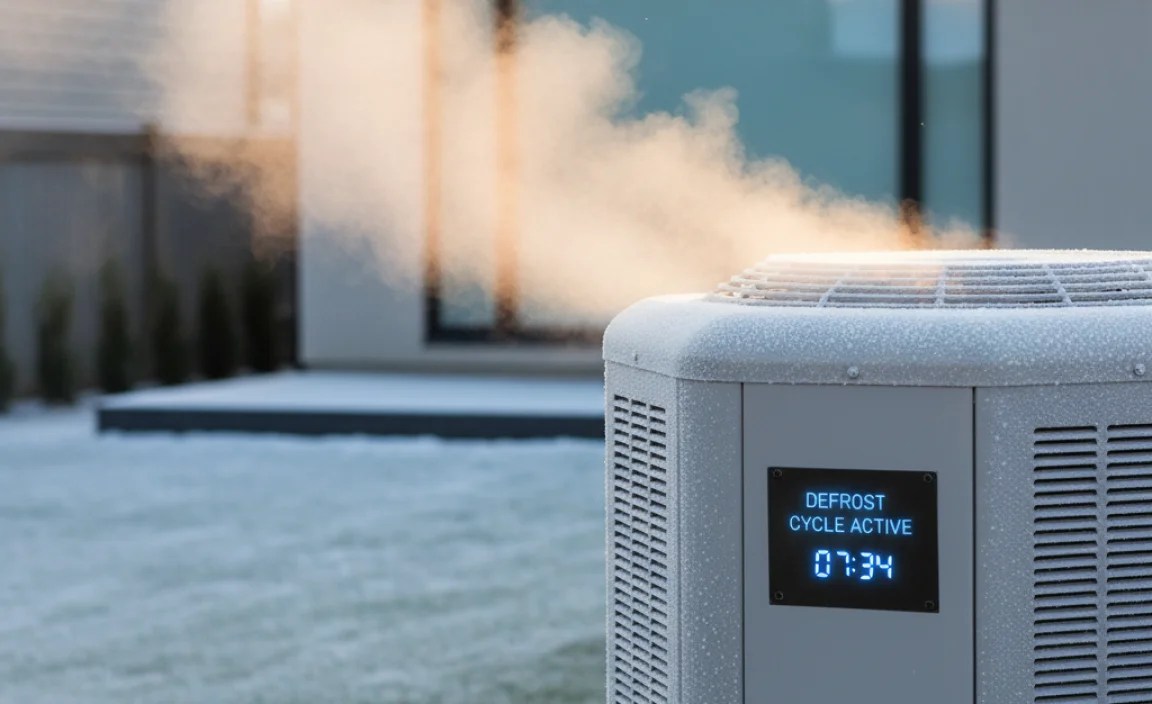
The defrost cycle involves several steps:
- Initiation: The heat pump’s control board monitors the coil temperature and air pressure. When it detects conditions that indicate frost buildup, it initiates the defrost cycle.
- Refrigerant Reversal: The flow of refrigerant is reversed. Instead of extracting heat from the outside air, the heat pump sends hot refrigerant to the outdoor coil.
- Coil Heating: The hot refrigerant warms the coil, melting the ice and frost.
- Fan Shutdown: The outdoor fan is turned off to speed up the melting process.
- Termination: Once the coil reaches a certain temperature or after a set amount of time, the defrost cycle ends. The refrigerant flow returns to normal, and the fan starts running again.
Common Issues and Troubleshooting
While defrost cycles are normal, certain issues can indicate a problem:
- Too Frequent Defrosting: If your heat pump is defrosting more often than every 30 minutes, there might be an issue with airflow, refrigerant levels, or the defrost control.
- Long Defrost Cycles: If a defrost cycle lasts longer than 15 minutes, it could indicate a problem with the reversing valve or a buildup of ice due to poor drainage.
- No Defrosting: If the heat pump never defrosts, ice can build up excessively, damaging the unit and reducing its efficiency.
- Ice Buildup: Excessive ice buildup, even after a defrost cycle, can point to drainage issues or a faulty defrost system.
Troubleshooting Steps
Here are some steps you can take to troubleshoot potential issues:
- Check Airflow: Make sure the outdoor unit is free from obstructions like leaves, snow, or debris. Clear away anything that could be blocking airflow.
- Inspect the Coil: Look for any visible damage or excessive dirt on the coil. Clean the coil gently with a soft brush or garden hose if needed.
- Check Drainage: Ensure that water can drain freely from the base of the unit. Clear any ice or debris that might be blocking the drain.
- Monitor Performance: Keep an eye on how frequently the heat pump is defrosting and how long the cycles last. Note any unusual noises or performance issues.
When to Call a Professional
If you notice any of the following issues, it’s best to call a qualified HVAC technician:
- Refrigerant Leaks: If you suspect a refrigerant leak (hissing sound, oily residue), call a professional immediately.
- Electrical Problems: If you notice any electrical issues (burning smell, sparking), turn off the unit and call a technician.
- Complex Repairs: Repairs involving the reversing valve, control board, or other internal components should be handled by a professional.
- Persistent Issues: If you’ve tried troubleshooting and the problem persists, it’s time to get expert help.
Maintaining Your Heat Pump for Optimal Performance
Regular maintenance can help ensure your heat pump operates efficiently and reliably. Here are some tips:
- Regular Cleaning: Clean the outdoor coil regularly to remove dirt, leaves, and debris.
- Air Filter Replacement: Replace the air filter in your indoor unit every 1-3 months to maintain good airflow.
- Professional Inspection: Schedule an annual inspection and tune-up with a qualified HVAC technician.
- Clear Surroundings: Keep the area around the outdoor unit free from obstructions.
Understanding Auxiliary Heat During Defrost
During the defrost cycle, your heat pump might use auxiliary heat to keep your home warm. Auxiliary heat is usually electric resistance heat, which is less efficient than the heat pump itself. Here’s what you need to know:
- Purpose: Auxiliary heat prevents your home from cooling down too much while the heat pump is defrosting.
- Energy Usage: Because electric resistance heat is less efficient, using auxiliary heat can increase your energy bills.
- Minimizing Usage: Proper maintenance and efficient heat pump operation can help minimize the use of auxiliary heat.
Comparing Defrost Methods
Heat pumps use different methods for defrosting. Here’s a quick comparison:
| Defrost Method | Description | Pros | Cons |
|---|---|---|---|
| Time/Temperature Defrost | Defrosts based on a set time interval and outdoor temperature. | Simple and reliable. | Can be inefficient if defrosting is not needed. |
| Demand Defrost | Defrosts only when frost buildup is detected by sensors. | More efficient, reduces unnecessary defrost cycles. | More complex, potential for sensor failures. |
| Reverse Cycle Defrost | Reverses the flow of refrigerant to heat the outdoor coil. | Effective at melting ice quickly. | Can cause a brief period of cooler air indoors. |
Energy Efficiency and Defrost Cycles
Defrost cycles can impact your heat pump’s energy efficiency. Here’s how:
- Energy Consumption: Defrost cycles require energy to reverse the refrigerant flow and heat the coil.
- Efficiency Impact: Frequent or long defrost cycles can reduce the overall efficiency of your heat pump.
- Optimization: Proper maintenance and efficient defrost controls can help minimize the impact on energy consumption.
Heat Pump Defrost Cycle FAQs
Here are some frequently asked questions about heat pump defrost cycles:
1. Is it normal for my heat pump to make noise during the defrost cycle?
Yes, it’s normal. You might hear hissing, bubbling, or humming sounds as the refrigerant reverses and the fan stops running. These sounds are part of the normal defrost process.
2. Why is steam coming from my heat pump during the winter?
The steam you see is actually water vapor that’s created when the ice and frost on the coil melt. It’s a sign that the defrost cycle is working correctly.
3. How can I tell if my heat pump is defrosting too often?
If your heat pump is defrosting more frequently than every 30 minutes, there might be an issue. Check for airflow obstructions and consider calling a technician.
4. Should I be concerned if my heat pump switches to auxiliary heat during the defrost cycle?
It’s normal for the heat pump to switch to auxiliary heat during defrost to maintain a consistent temperature in your home. However, excessive use of auxiliary heat could indicate a problem with your heat pump’s efficiency.
5. Can I manually defrost my heat pump?
While you can try to clear away snow or ice around the unit, you should not attempt to manually defrost the coil. Doing so could damage the unit. Let the automatic defrost cycle do its job.
6. What happens if my heat pump doesn’t defrost?
If your heat pump doesn’t defrost, ice can build up excessively on the coil. This reduces the heat pump’s efficiency, can damage the unit, and may lead to costly repairs. If you suspect your heat pump isn’t defrosting, contact a qualified technician.
7. How do I improve my heat pump’s efficiency during the winter months?
To improve your heat pump’s efficiency in winter, ensure the outdoor unit is free of debris, replace air filters regularly, schedule annual maintenance, and keep the area around the unit clear for proper airflow. Also, consider setting your thermostat at a consistent temperature to avoid frequent use of auxiliary heat.
Conclusion
Understanding how long a defrost cycle lasts on your heat pump and what factors influence it can help you maintain your system and identify potential problems early. Remember, a typical defrost cycle lasts between 3 to 15 minutes and occurs every 30 to 90 minutes when temperatures are near freezing. By keeping an eye on your heat pump’s performance and following a regular maintenance schedule, you can ensure it operates efficiently and keeps your home comfortable all winter long. If you ever have concerns or notice unusual behavior, don’t hesitate to call a qualified HVAC technician. Stay warm and informed!


